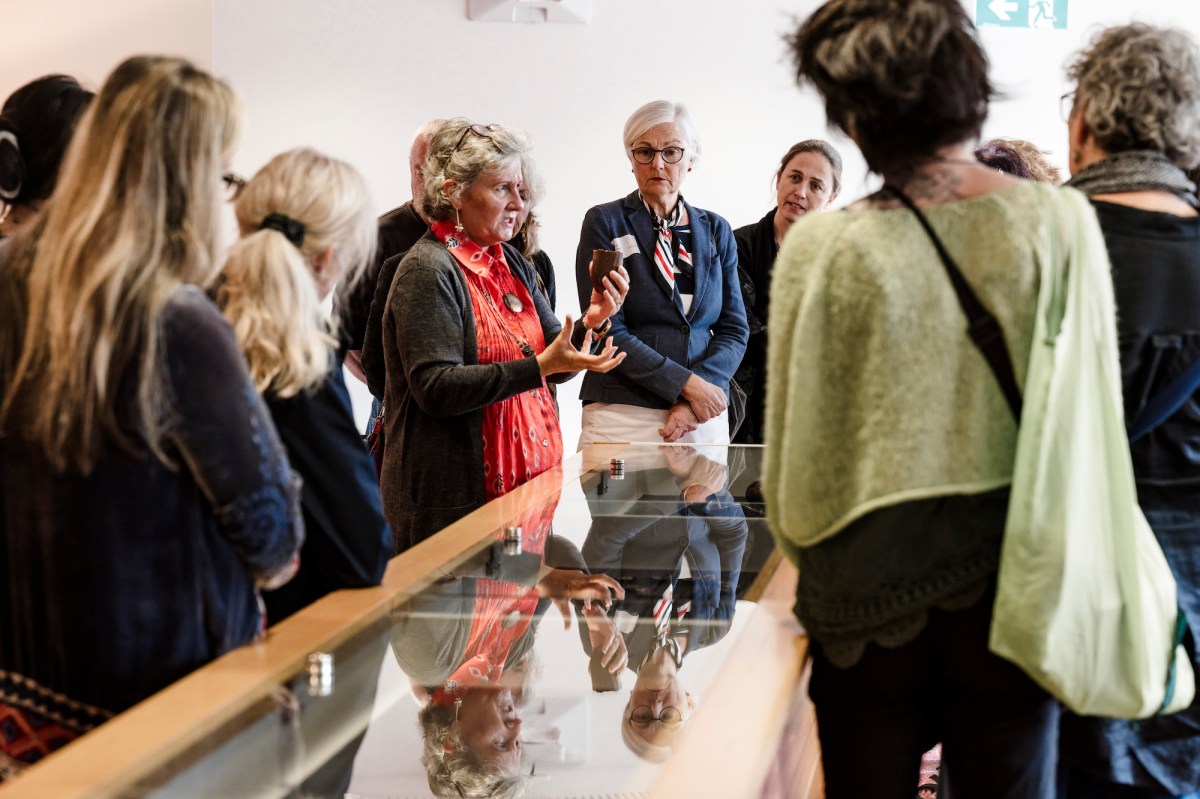
Australia’s craft and design sector is at a turning point. That was the message from the panel A Nation of Makers at Artisan’s inaugural MADE 2026 symposium in Brisbane on 10 September, where leaders from craft, design, glass and First Nations arts organisations considered what the next decade could hold for making in Australia.
MADE 2026 symposium – quick links
To survive, craft must broaden the conversation
Australia’s craft and design sector needs to stop talking only to itself and start making a stronger case for its cultural and economic value, according to leaders gathered at MADE 2026.
The message emerged from the A Nation of Makers panel, which brought together JamFactory CEO Brian Parkes; Design Tasmania CEO Travis Tiddy; Canberra Glassworks CEO and Artistic Director Aimee Frodsham; Hopevale Arts and Cultural Centre and IACA Director Melanie Gibson; and Artisan CEO Carmel Haugh.
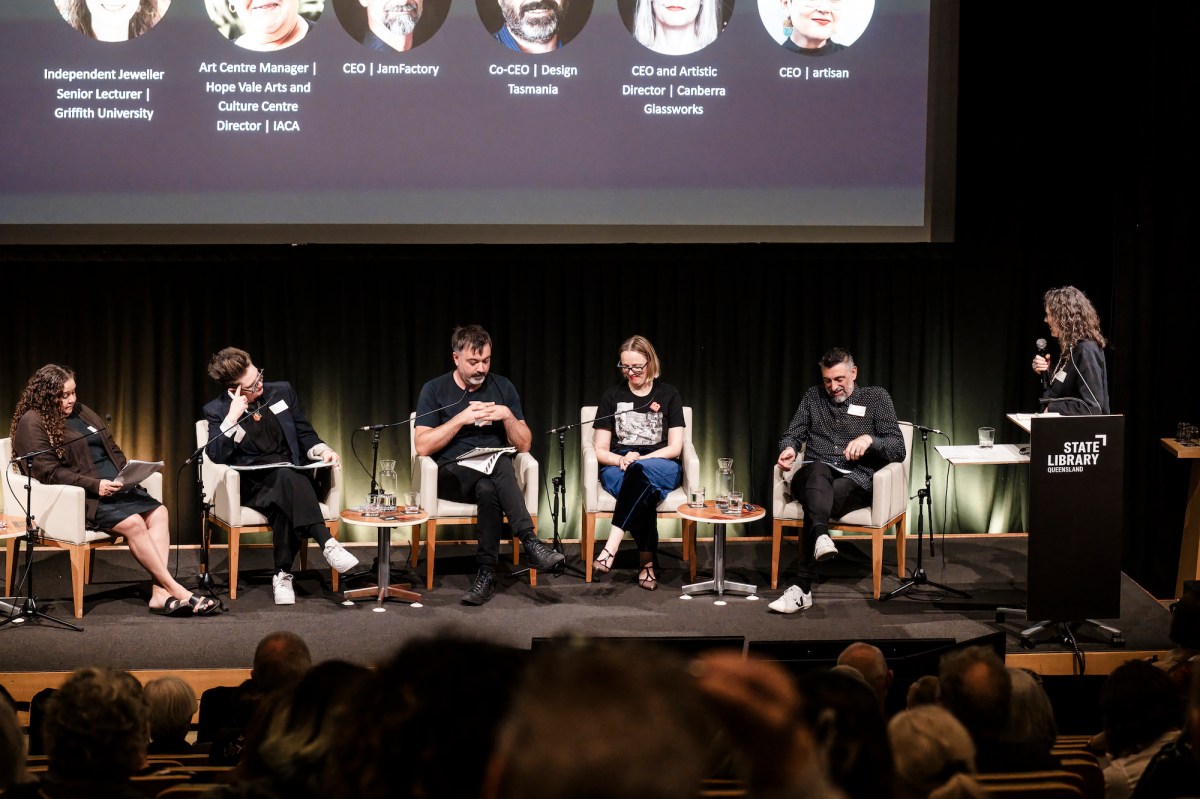
Moderated by Dr Elizabeth Shaw, the discussion explored what it would take for craft, design and making to be recognised as a coherent national sector, and how organisations can work better together to build sustainable careers for makers.
As Haugh observed, it has been decades since Australian craft and design was ‘recognised as a whole, as one sector and in one voice’. She believes the coming decade offers an unusual opportunity to change that.
‘There’s something going on here,’ Haugh said of her conversation with the other panelists. ‘We can all feel it. So, we’ve got to get ready for it and not lose it.’
Rebuilding a national ecosystem
Building a stronger sector does not necessarily mean creating another layer of bureaucracy. Instead, the panelists argued for making better use of the organisations, networks and infrastructure already in place.
Haugh argued for collaboration rather than duplication. ‘We’re not going to spend money reinventing the wheel and doing things that might, or might not work,’ she said. ‘Let’s have a look around and see what does work and then build on that.’
The need to share resources is particularly pressing as arts organisations and practitioners face significant financial constraints. ‘There’s just not enough resources going around at the moment,’ Haugh said, echoing the sentiment in the room, and arguing that shared resources need to be targeted where they can have the greatest impact.
The Australian Craft and Design Centres network, originally founded in the 1990s and relaunched in 2020 after a period of reduced activity, was highlighted as an important catalyst in developing that collective voice.
For Tiddy, the network is evidence that something is beginning to shift nationally. ‘There is a void of leadership,’ he said, describing the need for a greater visibility of craft and design in policy and funding.
‘There’s something about craft, design, making, that can help to answer some of the issues that relate to all people everywhere,’ he continued. ‘That’s not trying to position artists and creatives as the antidote. There’s a validity of crossing industries in a beautiful way, and then to take that to cultural policy work, and really go hard with that.’
Going in the back door to open the front door
For Parkes, one of the challenges facing craft institutions is that they can become too inward-looking, what he described as a ‘kind of insularity of the organisation’. He recalled JamFactory in its earlier days, when the need to find new sources of income forced the organisation to become more open. ‘Insularity wasn’t just a problem of access and culture. It was also economic change. They needed to find new ways of getting more support.’
By making better use of the organisation’s assets and entering new partnerships, JamFactory was able to reach new audiences and create commercial opportunities while repositioning itself within the broader cultural landscape.
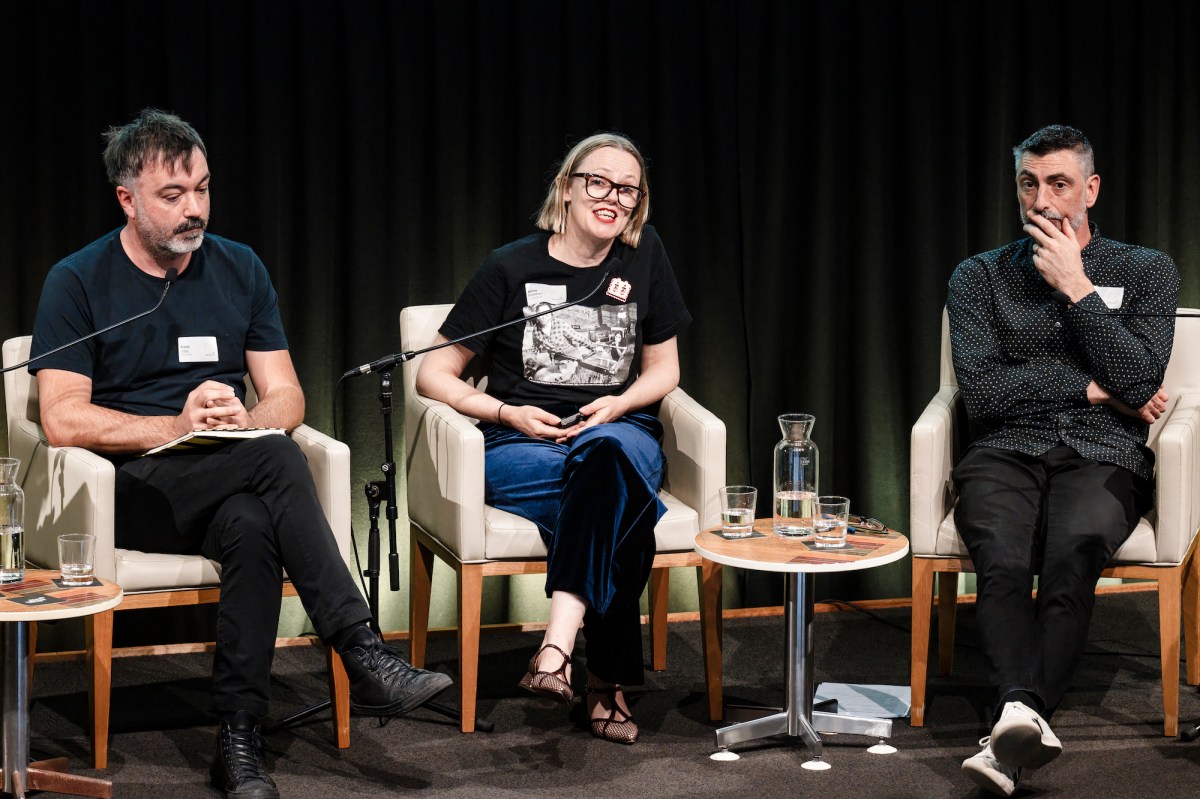
Frodsham offered a similar story from Canberra Glassworks, where she has worked to position glass as a material available to artists across disciplines, rather than a narrowly defined artistic discipline.
‘In the 90s, there was this huge boom in glass. But then, we saw the bottom fall out of the glass collecting scene internationally, and it left us desperate,’ explained Frodsham. ‘We realised that we don’t ever want to be in that position again. So, we made a really conscious decision to share glass as a material so that anyone can come and work with it.’
The response was to become more open, working with contemporary artists and commercial galleries to introduce glass to new audiences. Rather than asking galleries to represent glass artists, Frodsham created projects that made galleries want to sell glass.
‘If I went to a commercial gallery and I said, “I’ve got this phenomenal artist and I think you should represent them,” they would have come back to me 10 years ago and said, “Glass is too niche to sell it, it’s too fragile. I don’t know what to do with it.” So, rather than pushing artists who I believe deserve this level of being seen and being represented, I decided just to flip that narrative.
‘That was a real decision for me – to force our way into that commercial sector,’ she said, citing collaborations with artists including Tony Albert and the commercial gallery Sullivan + Strumpf.
The strategy reflects a broader lesson: sometimes the way to change the market is not to ask for permission to enter it, but to create a reason for others to come in. That theme surfaced during the keynote by Sally Brand, the Associate Director, Australian Art at the Queensland Art Gallery & Gallery of Modern Art, and in questions from the MADE 2026 audience.
Brand described a $300,000 project for the National Indigenous Art Triennial with Canberra Glassworks that divided across three scales of production: a major ambitious work, smaller commercial pieces that could generate revenue, and domestic-scale works suitable for institutional or private collectors. Rather than just one large commission then, the project provided multiple points of entry into the market.
For a sector focused on sustainable incomes, that model offers an important lesson. Artistic ambition and commercial viability do not necessarily have to compete.
Cracking collections – changing invisibility
Craft and design have not always been a high priority in institutional shopping lists. Frodsham argued that part of the problem is craft’s relative invisibility on the national stage. ‘A big part of changing that is looking outside, to what opportunities lie in terms of other funding, not necessarily just for the arts funding. I don’t really care what they label it, as long as we can use it.’
She also pointed to changing curatorial structures at major collecting institutions and the decline of specialist decorative arts positions. The National Gallery of Australia, for example, has been without a dedicated curator in the field for several years.
‘We have to find new ways in with the contemporary art curators who are looking after collections,’ Frodsham said. ‘Working with people like Sally Brand, and other curators, to tell them about what we are doing.’
Rather than seeing this as a threat to craft’s identity, Frodsham sees it as an opportunity to broaden its audience. Brand offered a rare glimpse into QAGOMA’s collecting strategy. Since joining the gallery, she said, the institution has been looking at contemporary practitioners, First Nations artists and historic work connected to Queensland, with collecting activity spanning ‘ceramics, jewellery, wood, weaving, glass’ and other forms of craft and design.
So how can the sector make a stronger case for acquisition? Part of the answer, Brand suggested, is visibility. Asked where she looks for work, her response was blunt: ‘Everywhere.’
That includes Instagram, galleries, shops and recommendations from other people in the sector. ‘I’m thirsty for images,’ she told the audience, adding that curators are constantly looking at what artists and makers are doing.
Her advice to makers was straightforward: ‘Keep working, keep making, and keep going.’ Gallery representation can help, she acknowledged, but it is not a substitute for building relationships and getting work into the world. ‘Most successful [people] in our industry are the ones that go and do all the hard yards themselves,’ Brand said.
Exit the echo chamber
It is part of a longer-term effort to change perceptions of what craft can be and where it belongs. Frodsham believes Australian craft has suffered partly because it has not always been successful at communicating its value beyond its own community. ‘We were really good at talking to ourselves – and we are just unbelievably great – but we were not very good at telling everyone else.’
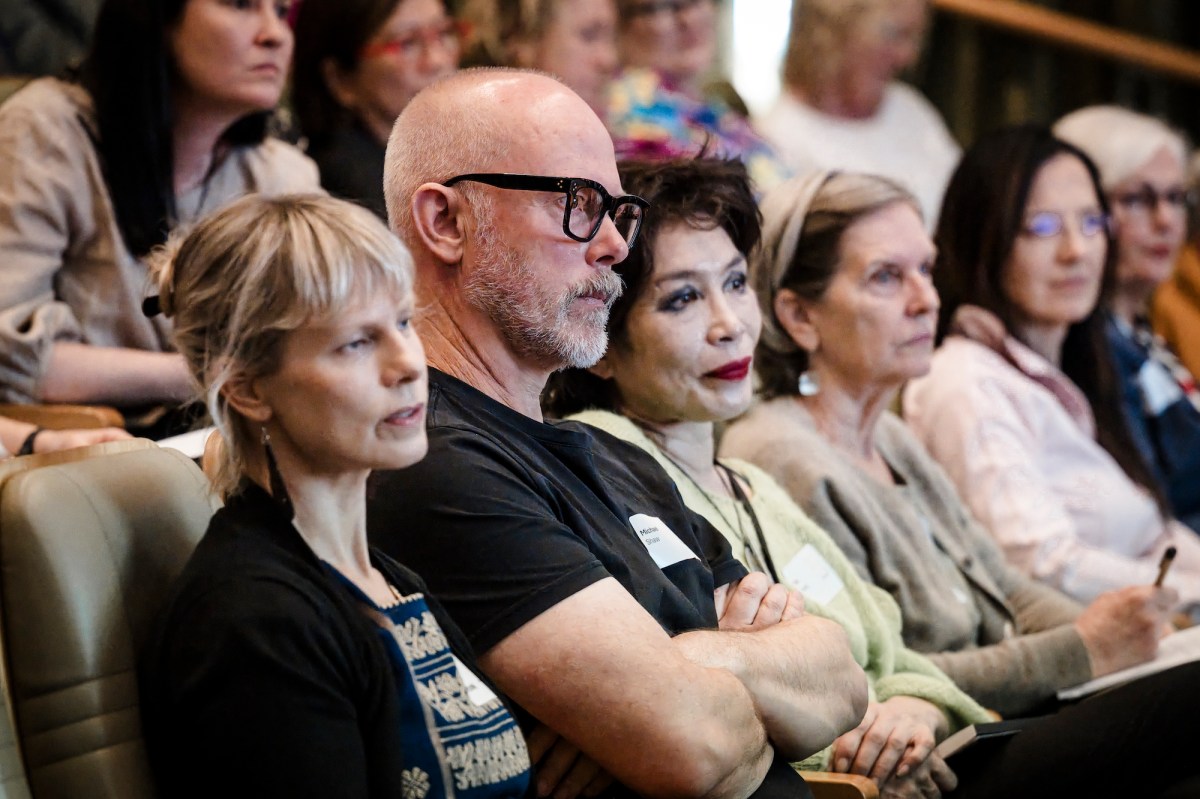
The lesson from Canberra Glassworks is that opening the gates can create new markets while also giving traditional skills and materials a contemporary life. ‘We use those projects to elevate our own community,’ Frodsham added. ‘We really see ourselves as material custodians, and we try and keep alive these parts.’
Distinctive geographies
Geography emerged as a powerful force shaping how craft is made, supported and valued across Australia.
In Queensland, the Brisbane 2032 Olympic and Paralympic Games loom large over cultural planning, but Haugh was careful not to position them as an end point. Rather, they are a catalyst. ‘Remembering that 2032 [Olympic] Games, it’s two weeks in that year. It’s not the goal, okay? But what it does is hold focus.’
The opportunity extends beyond the games themselves, she suggested, creating a platform for cultural tourism, regional networks and new markets while encouraging the sector to better organise and tell a stronger national story.
There are already signs that Queensland’s craft sector is attracting international attention. Last year, Artisan joined partners including Tourism and Events Queensland and the Brisbane Convention and Exhibition Centre in a bid to host the 2030 International Academy of Ceramics Congress. Queensland came second to Tajimi in Japan – a city with more than 1000 years of ceramic history and one of Japan’s most important ceramic traditions.
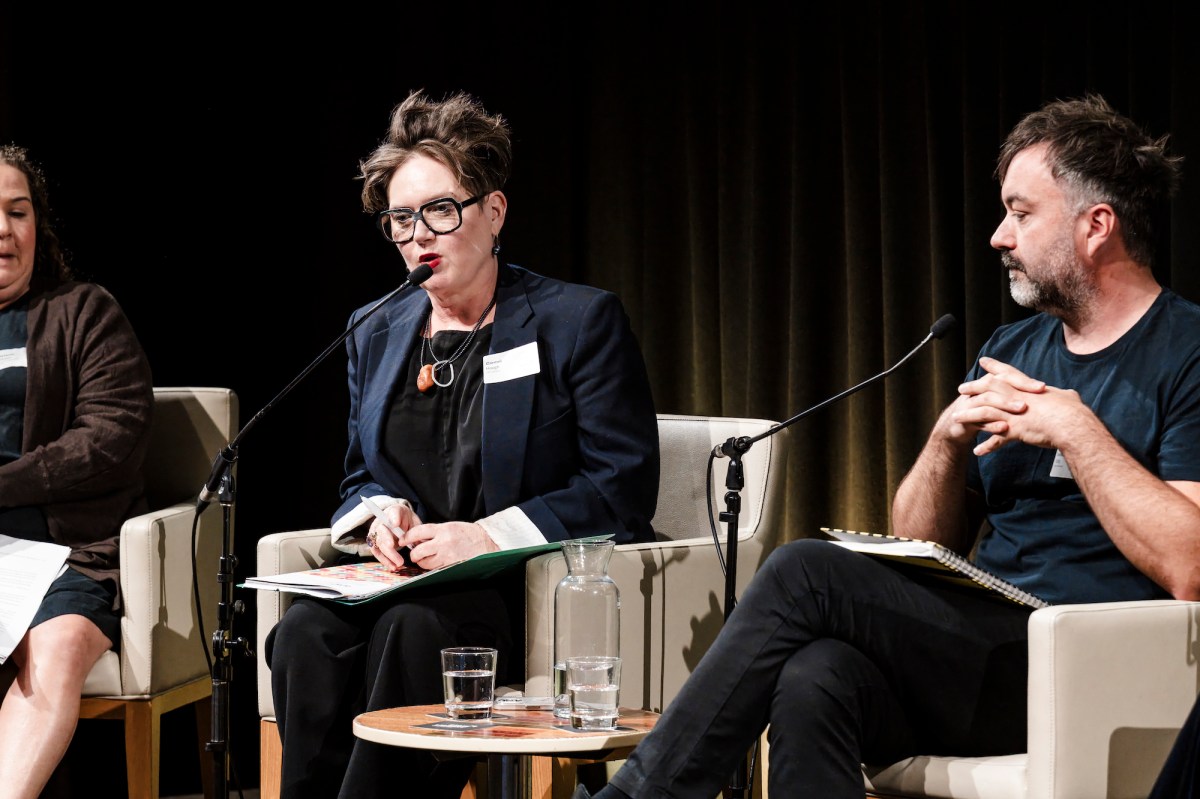
For Haugh, coming second was less a disappointment than a useful reality check. ‘If the world’s ceramics community looked at Queensland and said, you’re the closest challenger to that … I think that’s telling you something very, very strong.’
The result has already opened another door, with representatives from Tajimi expected to visit Queensland later this year. For Haugh, it is evidence that the state should stop underestimating its own creative infrastructure.
For Design Tasmania’s Tiddy, geography is a more immediate economic reality. The cost of moving materials and artworks on and off the island adds to the precarity of creative careers, even as isolation creates ‘different conditions of making and being and moving’.
Design Tasmania, now 50 years old, is reconsidering whether the ideas that founded the organisation still have ‘the urgency of the right now’. Tiddy described a period of ‘rebirth’, with the organisation reassessing its role in advocacy, professional development and industry partnerships.
Gibson, representing Hopevale Arts and Cultural Centre and IACA, offered another model. For Indigenous art centres, economic sustainability cannot be separated from cultural responsibility. ‘For us, art is never just about producing an artwork,’ she said, describing a model based on ‘community, ownership, cultural authority, and self determination’.
She continued: ‘We are cultural organisations, we are community organisations, and we are economic organisations.’
Together, these perspectives challenge a single definition of Australia’s craft economy. From Brisbane to Tasmania and remote Indigenous communities, making is embedded in place – and supporting the sector means recognising the very different ecosystems in which it is produced, sustained and valued.
Artisan shows us a different business model
Haugh acknowledged that Artisan’s former bricks-and-mortar retail model was no longer financially sustainable. “To be honest with you, it was costing us over $200,000 a year,” she said. Rather than abandoning the goal of generating income for makers, Artisan is experimenting with online retail, in-shop models, commissions, and corporate gifting.
ArtsHub: Times of precarity require bold change – and Artisan shows how
The organisation is also placing increasing emphasis on regional partnerships. Its exhibition program is being developed with state and regional galleries, with the aim of creating audiences and markets for makers across Queensland, rather than concentrating activity in Brisbane. It is a great model for action without infrastructure.
‘Exchange is exactly that: skills exchange; ideas exchange, friendship exchange, opportunities exchange,’ Haugh said. That idea of exchange – between regions, disciplines, institutions and generations – was perhaps the clearest thread running through the entire discussion.
The final word – invest in talent
Asked what the single biggest opportunity of the next decade might be, Parkes returned to a deceptively simple proposition: invest in people.
‘As a leader I’ve tried to do all kinds of bold things to change the dial. Some of them have worked really well, others haven’t. When it all comes down to the things that are most valuable and most sustained, it is the backing behind the talent of individuals,’ he said.
That means more than funding exhibitions. It means education, professional development, market development, mentorship and the creation of genuine career pathways.
The conversation at MADE 2026 was ultimately optimistic, but it was also a call to action. The message was not simply that craft needs more funding. It is for making to be understood as a vital part of Australia’s cultural, social and economic life.
That means opening up the remit of institutions, investing in emerging talent, supporting regional and First Nations communities, creating new markets and building a national voice capable of influencing policy. It also means telling the story better.