This week, I submitted an application for an end-of-year market, as part of that Christmas season flurry which descends upon makers quicker than one would wish.
Rolling out the usual line about creating bespoke, handmade pieces lovingly crafted over time in my studio (you know the spiel), this time the sector soundbite lacked the usually pep, and felt slightly disingenuous.
Is it because we are leaning so heavily on the handmade label to counter the creep of generative artificial intelligence? Let’s take a look at this branding, which has functioned as a golden key in the artisan economy for so long, and ask what is its real value today?
How to market handmade work – quick links
The handmade brand: what’s changed?
As makers, we have long been working against the tide of e-commerce algorithms – trying to have our work seen in a genuine way, while pushing back against the churn of factory-made items masquerading as ‘artisanal’. This is not new.
What is new is seeing AI-generated imagery manifest as real, saleable craft and design objects, competing against our own handmade pieces and challenging the very nature of creative output.
With a few text prompts – and in seconds – image generators can churn out hyper-realistic visual concepts: a ceramic glaze dripping over a much-desired pot, a textile that looks homey and hand-spun, or a highly polished silver ring on what appears to be someone’s hands. Add faux-organic flaws, a studio setting and the appearance of natural lighting, and the competition becomes very real.
And, when used alongside mass-manufactured craft objects – where AI design tools are now used to create prototypes and reproduce the visual narratives of slow craft, even before a maker finish a single studio run on a new design – small studio business are under even greater threat.
So, as we gear up for that crucial end of year push – the period when many independent creative practices make or break their annual revenue – we need to be smarter about how we promote our studio businesses. We have to leave less to assumption, and keep the human in the handmade.
The limits of ‘handmade’ as a standalone pitch
The fundamental challenge with relying solely on ‘handmade’ is that it describes how something was made and not why it matters.
In a climate marked by rising material costs, market fatigue and fierce digital competition, consumers and collectors are increasingly discerning. They don’t just want to know that a studio potter spent three hours at the wheel. They want to know why this potter’s form, palette and philosophy deserve space in their home over the hundreds of similar ceramics populating their social media feeds – AI generated or not.
ArtsHub: Craft is in crisis – but it seems only in Australia
Without a clear identity, makers prepping for end-of-year sales fall into familiar traps:
- competing on price against semi-industrial producers who use the ‘handmade’ moniker loosely
- producing high volumes of inventory without a clear narrative direction, leading to burnout before market season even peaks
- struggling to reach buyers who understand – and are willing to pay for – slow craft
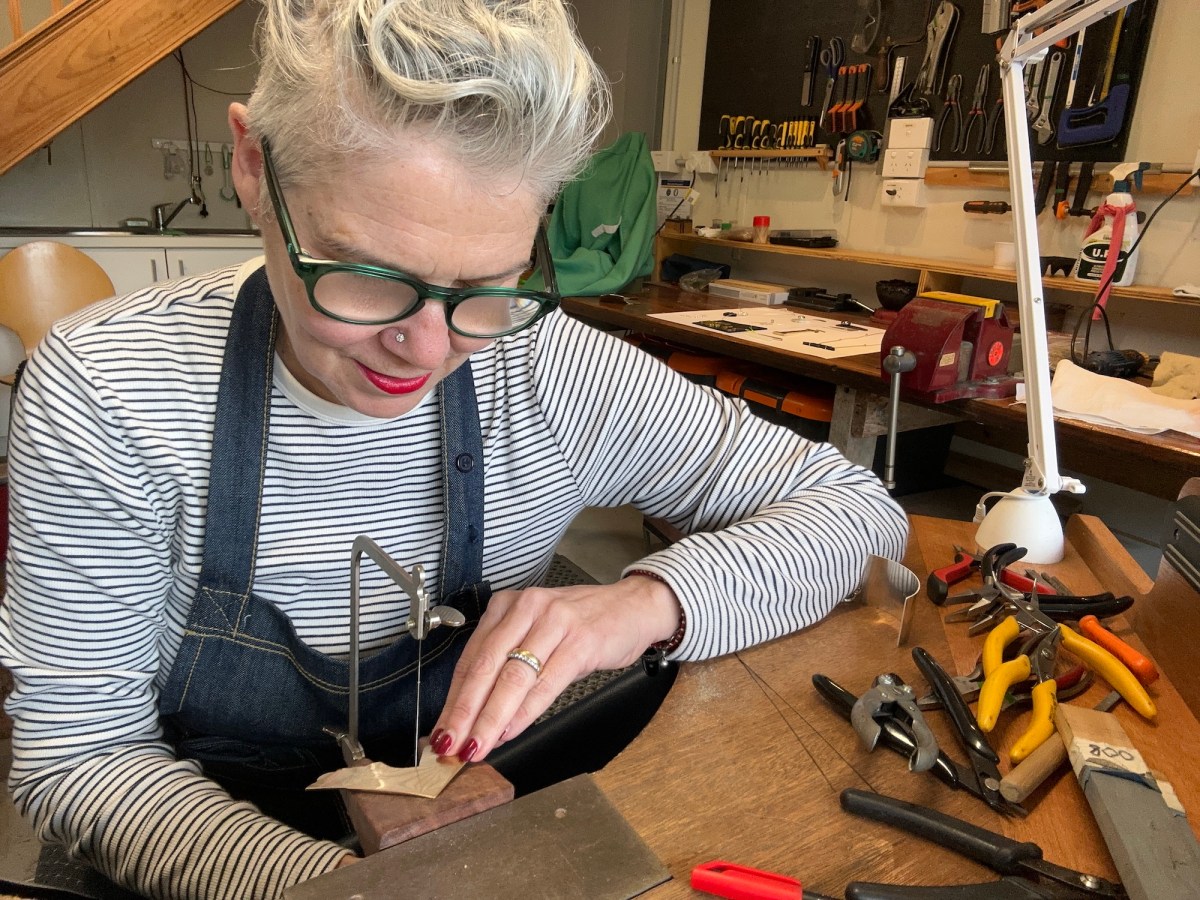
As a maker myself, these concerns sit so far in the background when I have the time to get hands-on at my jewellery bench. But it is that ‘hands-on making’ that is the absolute heart of my studio business.
So, if the look of the human touch can be synthesised and mass-produced in minutes, can the brand of ‘handmade’ be a reliable differentiator? The short answer is no.
‘Handmade’ is a process, not a brand identity and this is precisely where we can push back against the bots and factory churn. We need to shift the emphasis from a single brand word – handmade – to a visible identity built around evidence of process.
And, now is the time to do start that narrative journey to make the most of your peak season income.
Tips on refining brand strategy
As makers begin batch-producing work for the end of the year, striking the right tone in messaging is critical. Consumers in 2026 are wary of hard-sell commercialism, but remain hungry for genuine human connection, localism and lasting material quality. That remains a win for us.
However, mention the words ‘brand strategy’ in a studio, and many artists recoil. I know I do. It is such a heavy phrase that barks ‘admin burden’. It also feels like the rigid style guides of the corporate world – exactly what many of us have chosen not to embrace as creatives.
Stripped of this jargon, however, a brand strategy for a craft practitioner can be surprisingly simple. Here are three guiding tips.
1. Proof of origin is paramount
Collectors no longer evaluate just the final object; they evaluate the human context, material integrity, and embodied time behind it.
2. Authenticity requires evidence
Your brand identity must actively highlight what an AI tool or automated factory cannot fake: physical presence, local material sourcing, bodily risk, and personal narrative.
It is lived studio intuition.
3. Tell the story, not the process
When you speak about handmade, shift the language from technique to narrative.
Focusing on material, ethics and perspective
Think of it another way. Branding is not about restricting your creative freedom or bogging you down, rather it offers guardrails to keep you on track.
The label ‘handmade’ may get someone to pause at a design market or stop on an image on social media. Use that, but also expand upon it. It is the clarity of your story, the transparency of your process, and the particularity of your practice that can turn a casual shopper into a sale, and more importantly, into a supporter.
The most successful contemporary craft practitioners, whether working in glass, studio jewellery, textiles or ceramics, tend to frame their work through their material, their ethics and their distinct perspective.
ArtsHub: Wabi-sabi or sloppy? How to tell authentic from slapdash
As I sit at my jewellery bench, planning a new order of boxes and branding cards for the Christmas season, the thought of making myself more visible – to align with my brand and present myself as a genuine maker – just feels like more work to an already stretched one-person-band.
But it need not be. Yes, showing process in strong images and video is a win, but so is shifting the language you use. Consider how language can change the perception of value. ‘Handmade silver ring with bottle glass’ tells us what the object is. ‘Reclaimed gin bottles that have been hand-formed under the flame and paired with Sterling Silver to capture wearable memories’ lets us into the practice.
The second approach does not hide the craft in a ‘look’ – it elevates it. It gives the collector a human connection to the material that no algorithmic prompt or automated assembly line can substitute – a bodily connection with the material, its past and its future. It also invites the wearer to be part of this narrative.
There is another hidden win here, as the trend today moves away from highly choreographed, polished studio photography, edited and airbrushed within an inch of its existence. Today, more creative, in-studio alternatives are gaining traction, and at a fraction of the cost.
The verdict: keep it real
Has the ‘handmade’ tag has lost its punch and purpose, or has its value intensified? I think it is still a potent word for makers. But recycled packaging and a handmade byline are not enough on their own to guarantee authenticity today, or capture discerning buyers.
Think about what you dislike about AI, and turn that around to guide your message in the other direction. Be creative; be real – but most importantly – be you. That is what no algorithm can do.