It’s impossible to discuss Mari Hitari’s new exhibition at PUNQ in Queensland without thoroughly investigating its context.
In what may be one of the most delightful and whimsical locations in northern Queensland, the pieces in The House of Floating Flowers have been placed in carefully considered spots in a suburban Japanese house.
You read that right. In the modest country town of Ingham, about an hour or so’s drive north of Townsville, next to a railway station sits a row of houses. And one of those houses is a traditional Japanese house, originally built in Kobe, transported to Brisbane in 1887 by District Court Judge George Paul, and eventually dismantled and relocated to Ingham, where it sits today.
It is currently inhabited by a remarkable couple – an architect and filmmaker – who are the latest residents, following a series of owners, including the CWA at one point, before the mother of the current owner bought it at a public auction in 1962.
House of Floating Flowers review – quick links
Coming back to life
Following decades of wear and tear and severe ceiling leaks, the old lady is looking a little frayed inside, but is being slowly and lovingly restored. The roof – with some of the original tiles, some sourced from Japan and some created from a unique manufacturer closer to home – has understandably been the priority, with specific rooms – the bathroom apparently – next in line.
But as it stands, the less than pristine bits are part of the joy for PUNQ visitors. The old sheets of newspaper used behind the paper screens – some Japanese, some from Brisbane’s Courier Mail – tell their own story, as do the many different pieces of timber, some dating right back and some more recent, replacing those that were no longer fit for purpose.
There is a fascinating tale about why Judge Paul brought the house to Australia in the first place, believing its modular, ‘no nails’ design could be a template for easily replicable housing. It was an erroneous belief as it turned out, but the original remains and, fortunately for art lovers, its owners are happy to regularly open its doors and share it with not only the general public, but artists.
Two years ago, at the previous biennial PUNQ festival, Elysha Rei, a Japanese Australian artist based in Meanjin/Brisbane, installed a series of intricate paper cuttings in an installation entitled Kiri-edo – and they remain, now as much a part of the house as the paper screens, timber-framed nooks and half-curtains embellished with a Japanese cat design.
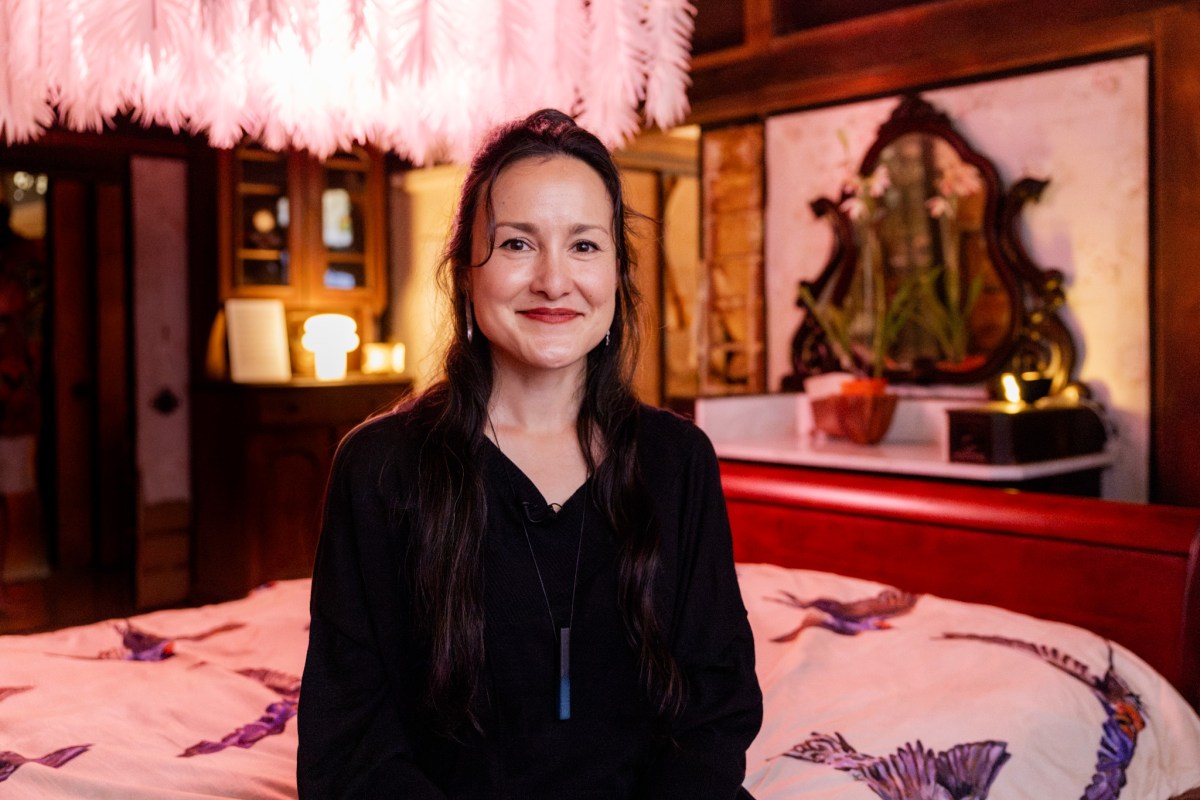
But this year’s focus is on Mari Hirata, who has responded to the house with a site-specific exhibition she calls The House of Floating Flowers (Ukibana No Ie), developed after a recent artist residency at the location.
Floating florals
The flowers referred to in the title of the work are peonies. With both Japanese and Australian heritage, Hatari is referencing her own ancestry to speak to the joy inherent in this particular bloom, which acts as a symbol for the house’s history – the stories, inhabitants and visitors who have been there and had an impact on the place. The pieces are modest in number and are placed to surprise and offer moments of unexpected pleasure rather than overwhelm.
There’s a particularly delicate display in the master bedroom – comprising a small mound of stones encircling a mirror, from which spouts a handful of exquisitely crafted copper-coloured blooms. It sits across from the foot of the bed like an intimate oasis or shrine to the beauty of the floral world.
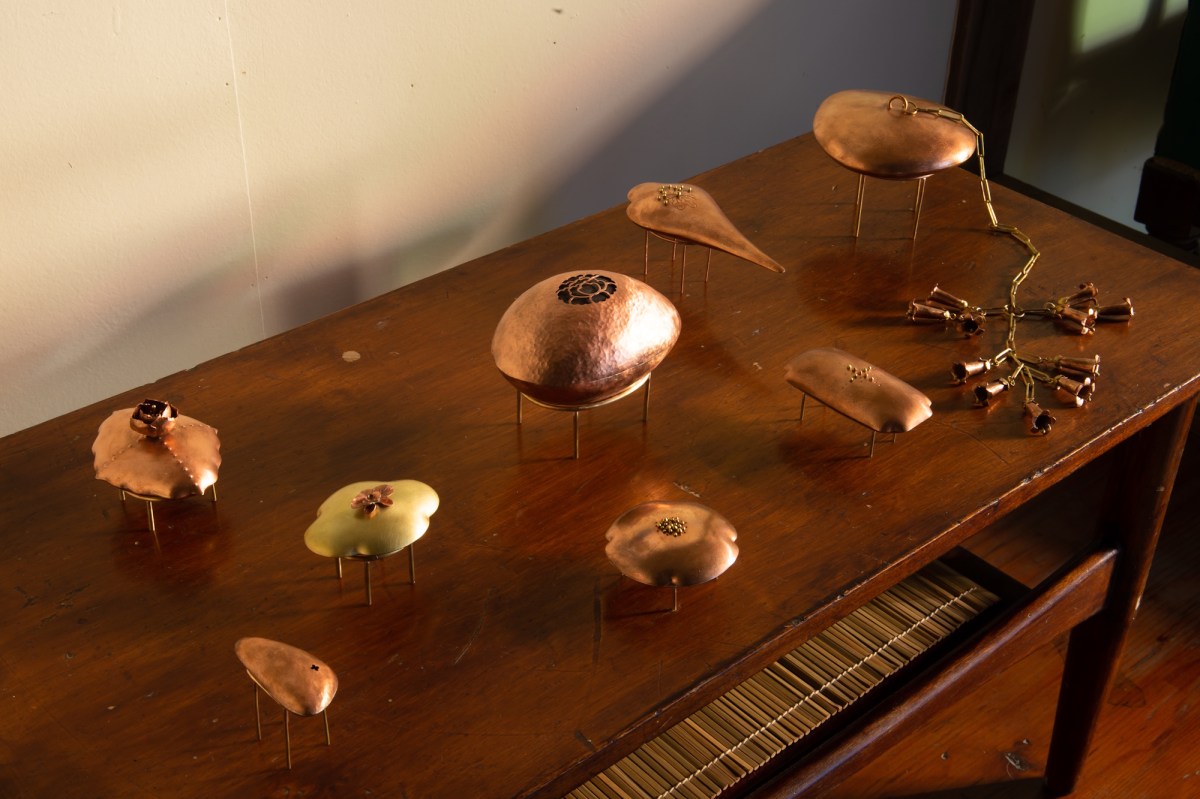
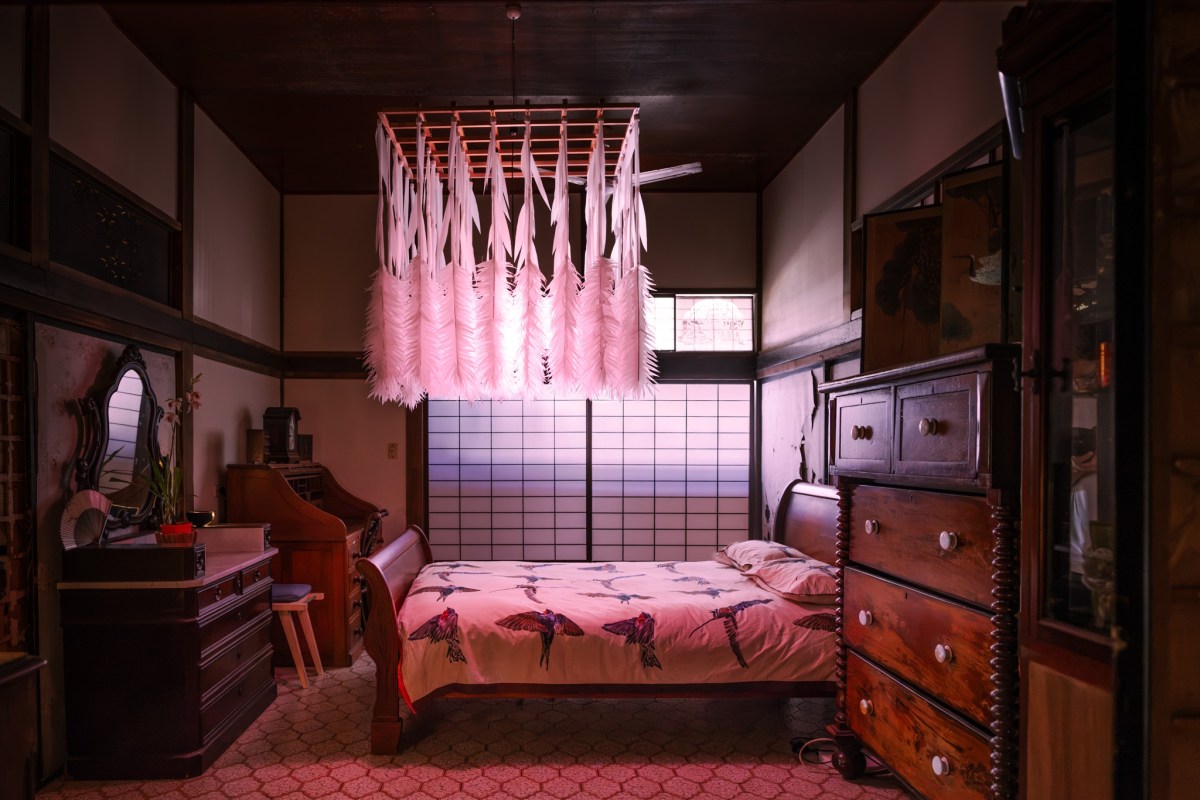
Above the bed in another room is Sweet Spear, a much larger though more ephemeral installation, made from paper and fashioned to evoke feathers and wind. A collection of Omamori Shakers – sculptural objects created from copper, wax and brass – distinguishes one of the living spaces.
There is also a video on a loop in which Hirata reveals something of her process and practice. And in the same room a rippling wall hanging made from metal evokes a running stream or waterfall.
How much of the installation will remain post-PUNQ is unknown – although it seems probable that, unlike Rei’s paper cuttings, it will be removed – leaving the house to continue its restoration process and prepare for future exhibitions and imaginings, at the 2028 PUNQ, if not before.
The House of Floating Flowers (Ukibana no ie) by Mari Hirata was installed as part of PUNQ 2026.
The writer visited Townsville as a guest of Umbrella Studio Contemporary Arts.