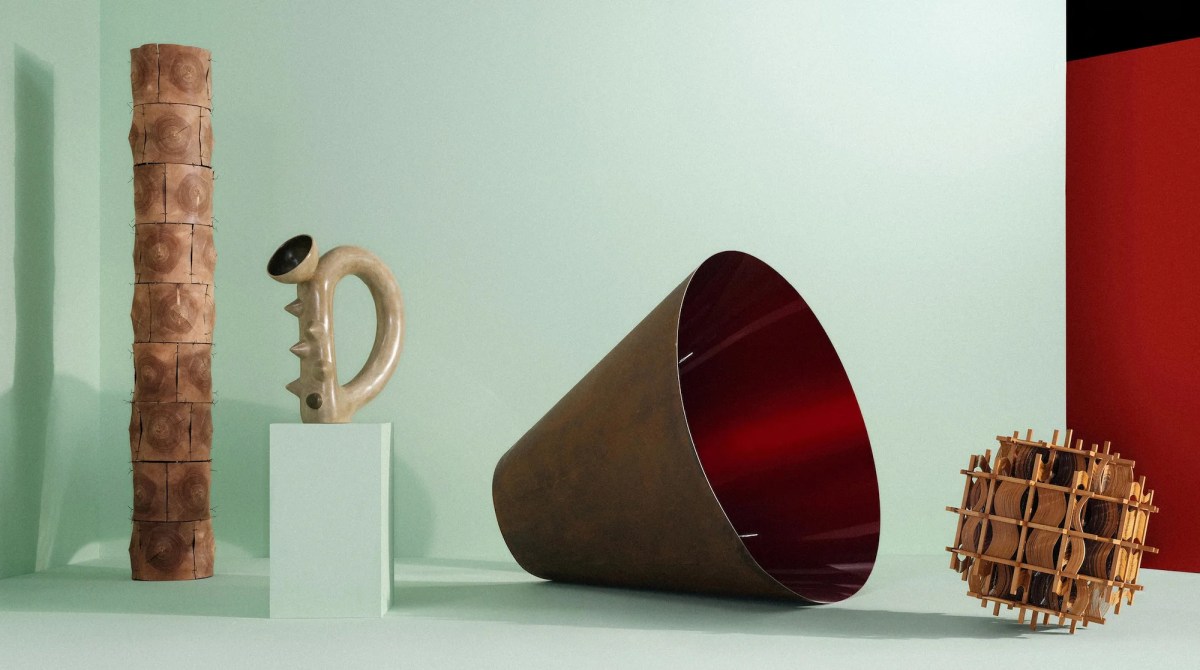
As AI rapidly transforms creative industries, from architecture and fashion to writing and design, one question hovered over a recent conversation at National Gallery Singapore: what makes craft indispensable in an increasingly automated world?
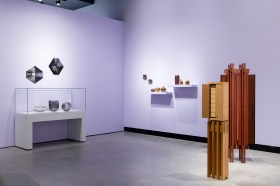
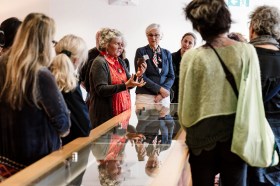
Hosted alongside the 2026 Loewe Foundation Craft Prize exhibition, the panel brought together Loewe Foundation President Sheila Loewe, Mexican architect and prize jury member Frida Escobedo and Madrid-based design curator and jury member Anatxu Zabalbeascoa for a discussion that ultimately became less about defining craft than defending its future. And, their answer was strikingly optimistic.
Crafts in crisis – quick links
Craft as future thinking
Fatigue from doomscrolling AI’s crushing conquests has settled over our sector. But, in a refreshing turnaround, this panel discussion rejected the assumption that making by hand belongs to history while AI represents the future.
Zabalbeascoa argued that this binary misunderstands both. ‘It would be a mistake to think of craft as something from the past,’ she said. ‘It can become something even more futuristic.’
Craft need not be a relic threatened by AI, but is a living practice that offers an alternative model for thinking about innovation. Design itself, Zabalbeascoa observed, has expanded far beyond the creation of objects. Today it shapes systems, experiences, travel and daily life.
ArtsHub: Anna Goldsworthy on the threat and promise of AI
‘Thinking about the future doesn’t necessarily mean changing everything,’ she continued. ‘It means reconsidering what should remain and what should change.’ She added that craft’s greatest value lies precisely in what machines cannot reproduce.
It is a timely conversation for Australia, as our craft sector feels increasingly fragile.
Craft beyond nostalgia
Since it was established in 2016, the Loewe Foundation Craft Prize has become one of the world’s most significant awards dedicated to contemporary craft, attracting around 5000 submissions each year. And it’s growing.
That optimism stands in stark contrast to the mood within Australia’s craft sector, and the irony is difficult to ignore. As international institutions, including the Loewe Foundation and the digital craft platform Homo Faber, are investing in contemporary craft as a vital cultural practice, Australia is debating the future of the very organisations that have long supported its makers.
Recent events have exposed just how fragile the country’s craft ecology has become. The Australian Design Centre recently closed following the loss of core government funding. (The ADC has since announced ‘Legacy Projects‘ to continue supporting the sector without a bricks-and-mortar base. These include several partnerships, including a new award to be delivered by Adelaide’s Jamfactory, an exhibition at Sydney’s Bondi Pavilion Gallery and a podcast with Canberra Glassworks.) We have also seen the restructuring of long-standing organisations including Artisan in Queensland and Sturt Gallery and Studios in regional NSW.
For Sheila Loewe, whose family’s luxury house began as a collective of leather artisans in Madrid in 1846, legacy can also equal future. The prize, she explains, was never intended simply to preserve tradition. ‘We started travelling around the world wanting to understand what the craft world needed,’ she said. Over the past decade, the answer has become increasingly expansive.

‘We’re not trying to pin down what craft is,’ Escobedo explained. ‘We’re trying to expand it.’
That philosophy has seen the Loewe Foundation Craft Prize deliberately resist narrow definitions of craft and the siloing of makers by genre. It’s witnessed in the diversity of works selected each year, but also in the jury itself, bringing together architects, designers, craftspeople and curators from around the world to explore the currency of craft in our times.
Australia is playing an increasingly visible role too. This year’s prize attracted the highest number of Australian applications in its history – an indication that makers are looking for recognition elsewhere as our own craft ecology feels increasingly tenuous.
Furthermore, last year Australian glass artist Scott Chaseling was part of the International Expert Selection Panel, a mantle passed to Adelaide artist Jessica Louglin for the 2027 edition – signalling a place for Australian makers on the global stage.
ArtsHub: What I learnt as an artist judging an international craft prize
Slowness as resistance
During the panel discussion in Singapore, there was one recurring theme – time. ‘We live in a very visual, high-speed culture,’ Escobedo said. ‘But trends disappear.’
Escobedo added that what remains are deeper concerns: memory, collaboration, sustainability and the passing of time.

Craft, she suggested, cannot be rushed. ‘It takes years to master a technique.’ That investment of time fundamentally distinguishes craft from the speed of digital culture. But rather than seeing slowness as inefficiency, the panel suggested it has become one of craft’s defining strengths.
Zabalbeascoa argued: ‘It would be a mistake to think of craft as something from the past. It can become something even more futuristic, not because it competes with technology, but because it offers another way of thinking about progress.’
‘Thinking about the future doesn’t necessarily mean changing everything,’ she added. ‘It means reconsidering what should remain and what should change.’
What AI cannot replicate
The conversation inevitably turned to AI. The timing was apt. June saw the opening of DATALAND in downtown Los Angeles, billed as the world’s first permanent museum dedicated to AI-generated art. Its arrival has intensified debate around authorship, originality and creativity across the cultural sector.
The panel, however, resisted framing AI as the enemy. Instead, they suggested its rapid development only sharpens the question of what remains uniquely human. ‘There are many aspects of architecture that can easily be replaced,’ Escobedo acknowledged. ‘But in every profession there is something beyond imagination. It’s human emotion.’
ArtsHub: Artists can help us fight AI’s existential threats
The conversation also challenged the common assumption that craft is defined solely by manual skill. Equally important is what the jury repeatedly called truthfulness: an authenticity that emerges from sustained engagement with materials, ideas and lived experience.
As Zabalbeascoa put it, the jury increasingly thinks of craft as ‘the hand and the mind’, recognising that making is as much intellectual and emotional as it is physical. And here comes in the role of innovation too, though this is typically more aligned with the digital sphere.
Zabalbeascoa suggested the true value of the Loewe Foundation Craft Prize is not simply recognising technical excellence but creating opportunities for artists to meet, exchange ideas and build lasting creative communities. ‘The biggest prize isn’t winning,’ she said. ‘It’s the emotional exchange.’

That sentiment was echoed by 2025 Loewe Finalist Scott Chaseling, who described the exhibition as a gathering of makers united by authenticity rather than competition.
‘What I see in the prize finalists’ works is dedication through passion, and a shared understanding of individuality in our times through hand-making.’
What Australia is choosing to value
The conversation in Singapore offered no easy answers for Australian makers or craft organisations. Nor did it suggest craft somehow exists outside technological change. Instead, it proposed something quieter. That as AI accelerates, the qualities embodied by craft – attention, patience, imagination and embodied knowledge – become increasingly valuable rather than obsolete.
The irony is difficult to ignore. At the very moment AI is forcing artists to defend the value of human creativity, many of the organisations that nurture Australia’s makers are themselves fighting for survival.
As governments increasingly speak about innovation, productivity and creative industries, the infrastructure supporting craft practice has become increasingly fragile. This has prompted renewed calls for the return of a dedicated national craft and design body within Australia’s arts funding framework, arguing that our makers need more than project funding – they need long-term institutional support and advocacy.
The debate is, therefore, no longer simply about preserving legacies. It is about deciding what kinds of creativity Australia chooses to invest in.
Internationally, craft is being reimagined as a critical form of contemporary cultural practice. The success of the Loewe Foundation Craft Prize and Homo Faber suggests the handmade is experiencing a global resurgence rather than a decline. The challenge for Australia is whether it will recognise that shift.
If the conversation in Singapore demonstrated anything, it is that craft’s enduring value lies not in resisting technology, but in reminding us what technology cannot replicate. Craft cannot compete with AI on the grounds of speed. It was never meant to. The more urgent question is about deciding whether Australia will continue to invest in the people and institutions that make craft possible, or will it allow them to disappear just as the rest of the world begins recognising their worth?
Perhaps the most revealing moment came not during the formal discussion, but in an anecdote shared by Escobedo. Arriving in Singapore, she realised she was scrolling through her phone instead of looking out the taxi window at a city she had never visited before.
That instinct, she suggested, is precisely what craft asks us all to resist.