For makers and craftspeople, the final months of the year can feel like both an opportunity and a trap. Whether it is supplying stockists or doing markets, the festive season brings promises of sales, commissions and a welcome cash injection.
But getting there costs money, and the recent rise in material costs, studio rent, freight and living expenses add pressure. The trick this year will be to approach the end-of-year rush not as a production marathon, but more as a financial strategy. Here are a few tips that I have found helpful.
Studio tips for makers – quick links
Tip 1: Understand volume
Before buying another slab of clay, an expensive supply of sterling silver, or booking extra furnace time as a glass artist, realistically project how much work you will need to see you through the festive season – and your capacity to deliver it.
Once you have worked out your stock strategy – what you are going to sell, where you are going to sell it, and when it needs to be made by – you will have a good idea of what materials you need to order.
Keeping in mind that materials are more expensive than ever this year, you will need to revisit your pricing to accommodate the extra costs you are shouldering. This also raises another vital question: how far will your customers stretch in the current economic climate?
ArtsHub: Will material costs kill my practice as a jeweller?
Putting aside a day now to make some realistic projections might save you unnecessary or last-minute expenditures. Our guess is that shipping will increase this holiday season, which is another good reason to get on top of this now.
You also need to audit your packaging supplies, business cards, market fees, extra hours of assistants – those necessary costs are the ones we often forget.
Tip 2: Build a range, not a mountain
The temptation before Christmas is to produce everything you possibly can in the hope of selling more. Each year, I find myself falling into the trap of batch-making certain designs I know sell. But this is no guarantee, and quite often is misused time and money.
Rather, think of creating a range of pieces at different price points – especially as spending is a little tighter this year. Consider a small, accessible item that can introduce a new customer to your practice, while a more substantial work can lift the value of your sales.
Also think of including limited edition or one-off pieces to keep you practice at an elevated level. Think about what can be made efficiently without compromising the integrity of your work.
ArtsHub: Makers are not factories, so stop treating us like one
And remember, talk to your stockists and gallerists and ask what they are observing in terms of buying trends this year, and how they best feel they could present and sell your work.
In recent years, shopping trends have swung towards more responsible and ethical giving, and supporting a local maker is great fit for that kind of unique and thoughtful giving. I recommend offering an exclusive in-studio sale. It is a great way for people to connect with your making practice more deeply – to see where you work, and bring that genuine experience back into end-of-year shopping.
Tip 3: Cash flow is the priority
We are schooled to believe that steady sales equal a healthy cash flow. But this is not always so. If you are spending heavily now on materials for products that will not sell until late November or December, you are effectively financing your own Christmas campaign.
Where possible, stagger purchases and avoid tying up cash unnecessarily. Think strategically about what you need to make, and don’t over-make and eat up your resources. You might even want to offer a few popular items as pre-orders, to get the cash flowing earlier.
For commissions, consider deposits or staged payments rather than carrying the entire production cost yourself.
Keep a simple calendar of expected expenses and incoming payments. Knowing when the lean weeks are coming is considerably less stressful than discovering them when your bank balance runs dry. And remember, times are tough right now and there are no guarantees, so be very honest with yourself about what you can shoulder, without limiting your opportunities (did someone say crystal ball?).
Tip 4: Sell the story, not just the object
Customers buying handmade work are often buying more than an object – and they love to make that connection. They are buying the maker’s passion, process, skill and their story. As generative AI becomes increasingly sophisticated – and a real competitor to studio businesses – you need to hone in on that very aspect that can’t be reproduced: you.
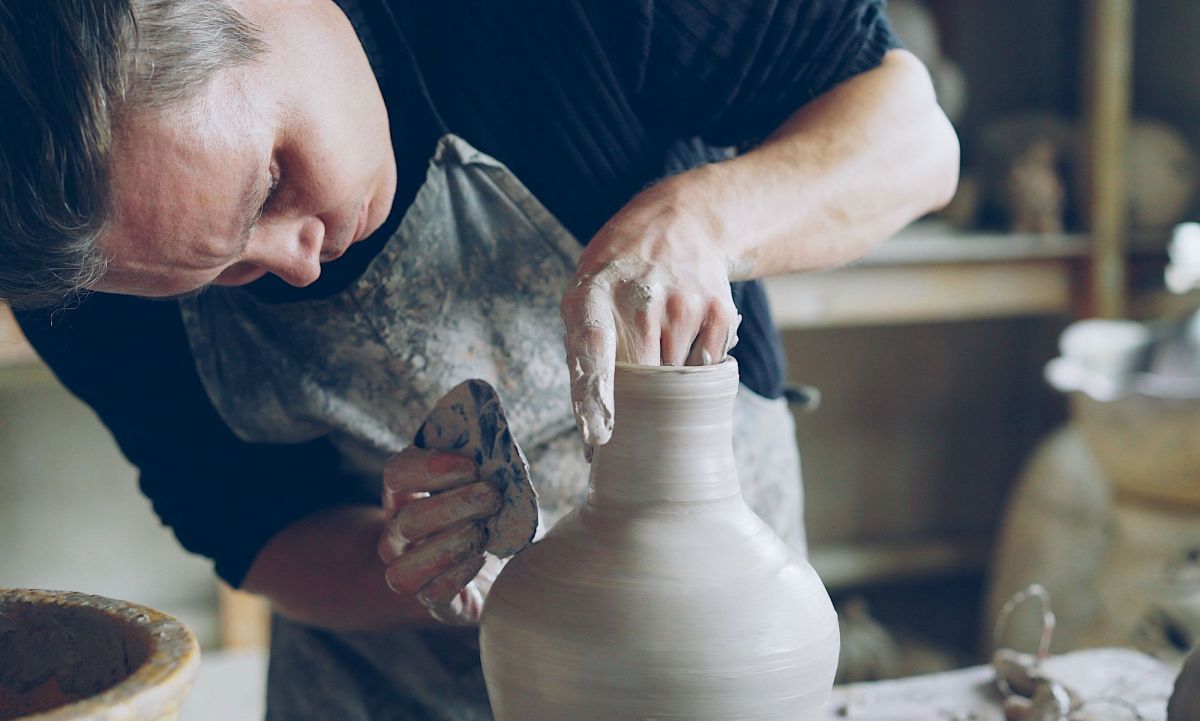
Show your studio; show hands at work; show pieces in progress, and your excitement in making them. Don’t worry about the flawless photoshoot – today genuine snaps are what have traction.
ArtsHub: How can artists make the most of the rise in affordable art fairs?
Explain why you choose your materials and your passion for using them. And don’t forget the details and how to contact you. You don’t need to be too ‘selly’ or have an online shop; most people today know you are only a quick DM away.
Tip 5: Don’t discount your way out of trouble
This is a trap that we have all fallen into at some point. When sales are slow, discounting can feel like the quickest solution. But you are effectively schooling your customers to wait for the sale, which can start to erode the value of your work.
If you need to move stock, think creatively. A small gift-with-purchase, a studio seconds sale or a thoughtfully bundle can create an incentive without announcing that your original price was wrong.
And don’t forget corporate gifts – companies are also wanting to align themselves with more ethical gifting and local artisans. This could be that boost you need, but plan early to make those connections work for you.
Most importantly, don’t mistake being busy for being profitable. The end-of-year season is a sprint, but your practice is a long game. Leave enough capacity for January – and enough money in the bank to keep making when the Christmas lights come down.
For makers, financial resilience is not about producing endlessly. It is about knowing what your work costs, understanding what your customers value, and making deliberate choices about where your limited time, energy and cash will go.