Pivoting – the ability to do a sharp 180 when things go sideways – has been one of the most vital adaptability skills in the last two years.
COVID not only prompted those in lockdown to ramp up their digital offerings, but even for those not in lockdown, going online was essential to maintaining engagement with interstate and international audiences.
As we reach the end of another year full of changes and challenges, it’s time to celebrate successful pivot-efforts that not only delivered an uncompromised online experience, but improved accessibility, reduced costs, and shone light on what the sector had to offer during a time of crisis.
Read: Don’t ditch the digital
WINS FOR THE SECTOR
After a blazing inaugural digital event in 2020, the Darwin Aboriginal Art Fair (DAAF) hosted its second iteration in August. The event continued its first year success, generating $3.12M and topping its 2020 sales of $2.6M, with 100% of funds going back to the art centres, artists and communities.
Similarly, while having to do another online fair this year, Sydney Contemporary created a new purpose-built platform and collaboration with ArtsPay to give back to the community. With over 40,000 visitors, 80 Australian and New Zealand galleries, and works by over 560 artists, this pivot is said to have made Explore Sydney Contemporary the largest online platform in Australasia of its nature. Artbank, the Australian Federal Government supported contemporary art collection, purchased four works by emerging Australian artists including Zaachariaha Fielding, Annika Roselyn and Georgia Morgan. Overall the fair secured sales in excess of $4M during its 11-day presentation.
Read: Are we funding this digital pivot the right way?
Writers have also had a fair share of last minute reinventions, including having to pivot writers’ festivals, talks, and book launches. While many reflected that virtual events may be tougher at generating direct sales (compared to being hosted in a bookshop), moving book launches online comes with the benefit of a wider audience reach and the possibility of attending international events.
Just last month the Terror Australia Readers and Writers Festival (TARWF) took place entirely digitally, starring 35 writers of local and international talent, with conversations available on-demand for 12 months after the festival weekend.
Many others also went out of the way to celebrate literary talent and inspire critical thinking throughout the lockdown period, including Boundless, Melbourne Writers Festival, and a hybrid Austen Con 21.
POSSIBILITIES OF THE DIGITAL
In October, one month after cancelling 90% of its planned program due to Melbourne’s ongoing COVID restrictions, Melbourne Fringe Festival launched a revised program featuring dozens of new events created for online audiences. Performing Arts Editor Richard Watts reported that the phoenix festival added 44 new shows for the digital sphere, while pivoting 55 in-person shows online. Melbourne Fringe said despite difficulties, its 2021 iteration provided ‘more than $293K in creative commissions and funding to our artists in a tumultuous year.’
Channeling the popularity of performance streaming, the Sydney Opera House took a leap with their online streaming programs this year to launch the dedicated platform Stream. In an earlier interview, Sydney Opera House Head of Digital Programming Stuart Buchanan told ArtsHub that Stream was an opportunity to ‘give people a better sense of the type of work that we present on an everyday basis. Being able to experience some of that from home, they may then be more likely or less reticent to attend something in person at a later date.’
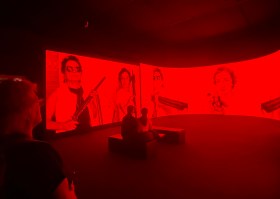
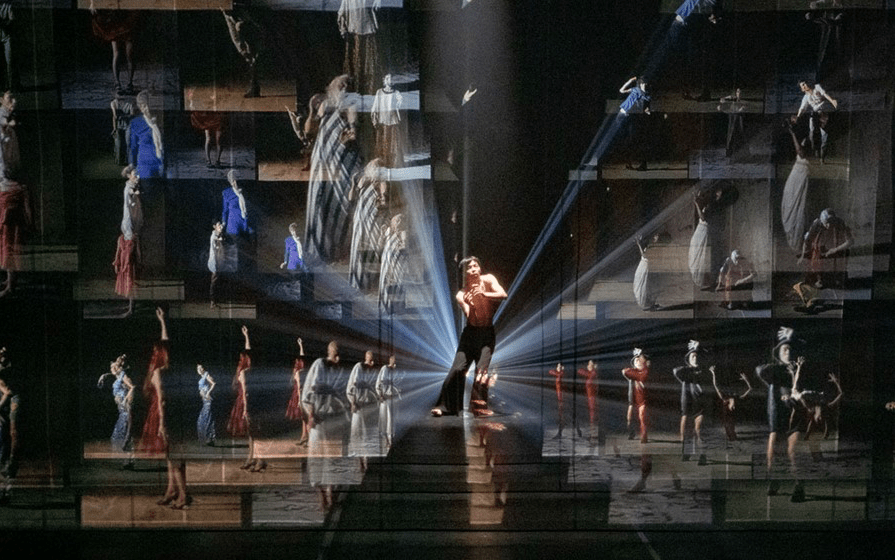
Another example pf the live stream pivot is the Liveworks Festival of Experimental Art by Performance Space and in partnership with Carriageworks. Among the programs were invigorating conversations, artwork presentations, and a major cross-disciplinary performance On View: Panoramic Suite which combined video, installations and live-streamed performers from Carriageworks. The experience was one described as ‘unapologetically showcasing the advantages of streaming online.’
Read: Artists Essentials Toolkit #6: How to document and livestream your art online
Unique conditions of 2021 also saw many graduate shows move online, in many cases making it available for viewing for the first time to the broader public around Australia. VCA partnered with the Melbourne International Film Festival (MIFF) to allow free streaming of 40+ graduating films from VCA’s class of 2020, which includes fiction, documentary and animation.
Similarly, the University of Melbourne’s Faculty of Fine Arts and Music brought their graduate showcase online with more than 35 events, performances, and exhibitions. Head of Performing Arts Professor Jane W Davidson reflected: ‘The students have had to learn many different skills, which is something that many of them would not have the opportunity to do in the past. And that will be de rigueur going forward; it will be part of the curriculum henceforth.’
The good thing is that live-streaming doesn’t necessarily require expert equipment and 360 surround sound, and many artists have the capacity to experiment with live-streaming themselves. In ‘Why we need online theatre after lockdown’, performer Jamila Main said she has live-streamed her works since 2016 and argued that ‘once nondisabled artists can return to the physical stage, there will still be artists and audiences who need to make and watch theatre remotely.’ Some examples of organisations with a digital commitment she mentioned include Replay Creative, Slingsby Theatre, Melbourne Theatre Company and Queensland Theatre.
ONLINE RESIDENCIES FOR COVID-ADAPTED CAREERS
The digital pivot is not only relevant for events, but also for professional development opportunities that often involve in-person workshops, travel trips, and time in the studio. However, artists and hosting organisations have also learnt to navigate the online sphere to continue supporting a generation of artists and creatives.
During the 2021 Res Artis international conference, Res Artis Executive Director Eliza Dawson said the digital pivot was ‘an opening to make virtual residencies more diverse and [allow] access to a greater audience, who could not otherwise attend.’ This year more than 220 residency organisations from 46 countries gathered online to explore the potential of the virtual platform and the possibilities of creating an equally engaged program.
Innovative residency models bring surprising gains and they have allowed for greater flexibility, accessibility and a broader international engagement. A participant of the 2022 Digital Diasporas program, Sydney-based curator Tian Zhang told ArtsHub: ‘Prior to the pandemic I wouldn’t have thought to structure projects online … But through the digital format, I’m actually able to connect people in Sydney, or in Australia and Canada through [Digital Diasporas] whereas an in-person model would be more focused locally.’
Similarly, Melbourne City of Literature’s Virtual Writer in Residence invited writers from UNESCO Cities of Literature to partner with Melbourne organisations and develop their work. A virtual resident at the Emerging Writers’ Festival (which also delivered a completely online event second year in a row), shared a personal essay exploring the contradictory roles women are asked to play in society and how magical feminism can translate that challenging – often surreal – experience onto the page.
It is clear that while the return to much-missed physical experiences is worth celebrating, holding on to our commitments to accessibility and digitisation efforts will be beneficial for a more inclusive and accomodating sector.