It’s been a long time in the baking, but Waitress The Musical has finally landed on the Australian stage – much to the relief of musical theatre fanatics who have found themselves moved to tears by renditions of its break-out song, She Used To Be Mine.
Based on Adrienne Shelly’s 2007 film – an indie hit from the same era that gave us Juno and Little Miss Sunshine – Waitress tells the story of Jenna, a waitress and gifted pie maker hailing from a small town in the American South, who longs to escape her rocky marriage and make a fresh start.
With music and lyrics by the Grammy Award-winning Sara Bareilles and a book by Jessie Nelson (known for her work on films like I Am Sam and Corrina, Corrina), the musical was hailed a heartwarming, feminist hit when it made its Broadway debut in 2016. As the legend goes, it would have won a lot more awards, had it not debuted the very same year that Hamilton swept the Tonys.
Off the back of that hype, the Australian premiere of Waitress was set to land at Sydney’s Lyric Theatre in 2020 – and, well, we don’t need to rehash what led many plans to be cancelled that year. But now, finally, the pie is out of the oven – with Waitress opening at Melbourne’s Her Majesty’s Theatre with Natalie Bassingthwaighte leading the cast as Jenna.
Waitress review – quick links
All the ingredients
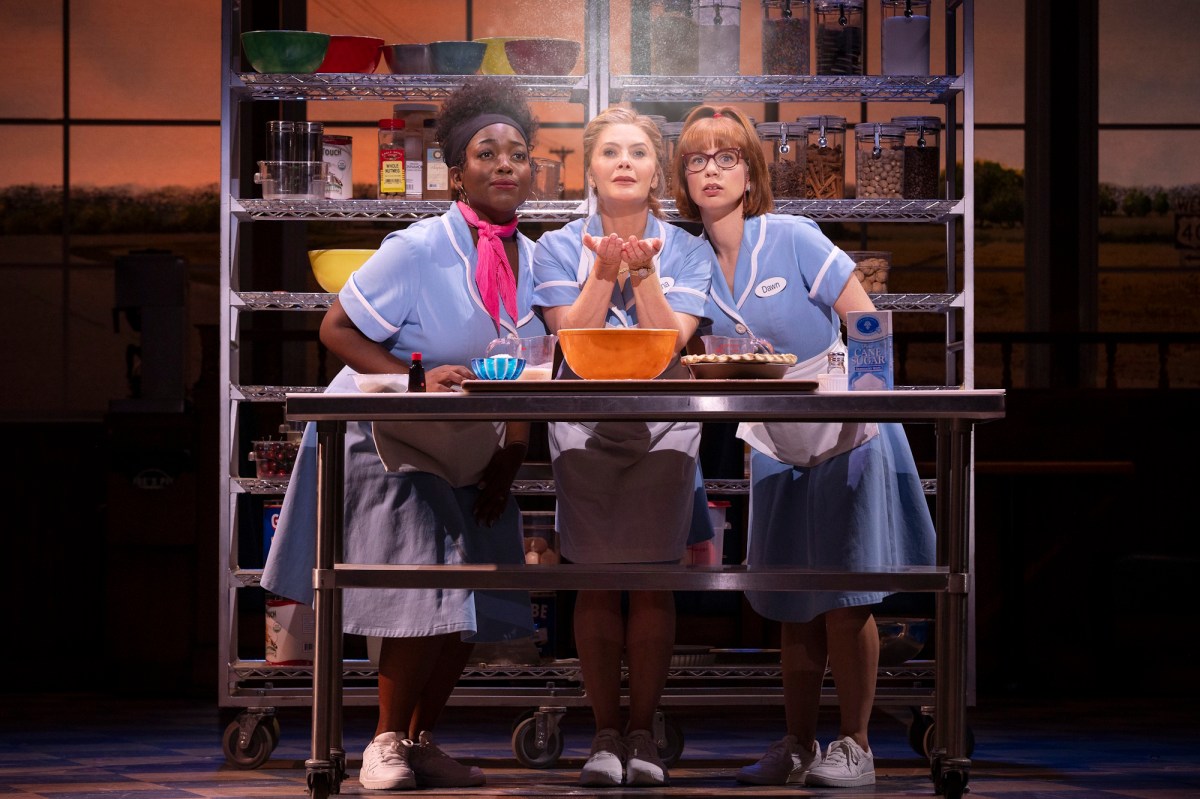
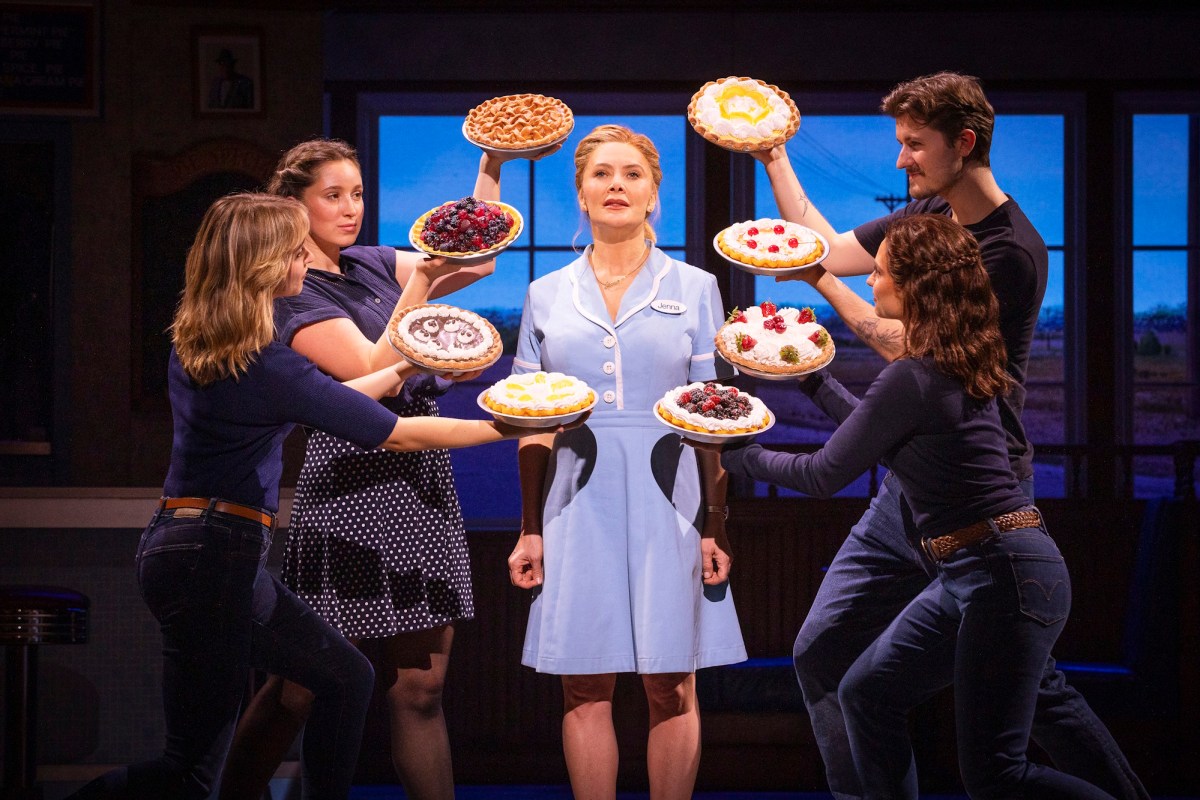
Waitress is a glossy spectacle filled with promising ingredients: Broadway credentials, slick production, a strong local cast, choreo punctuated by pluming clouds of flour, and an ultimately-uplifting narrative about female empowerment and solidarity.
However, after all this anticipation, what lands on the table is, honestly, a little stale. The writing doesn’t so much tackle the hardships that its characters face, as skim through vague plot points that gesture at universal issues – such as the domestic violence dealt by Jenna’s cartoonishly villainous husband, and an unwanted pregnancy that she doesn’t even discuss terminating – without ever delving too deeply into the complexities at hand.
Much of the first act is tied up in exposition. We’re introduced to the diner where Jenna works, her passion for baking and its associated memories of her mother, her colourful colleagues, the regulars, her slimy husband, a certain dilemma resulting from a drunken evening, and her distractingly handsome new doctor … but the details are only lightly sketched.
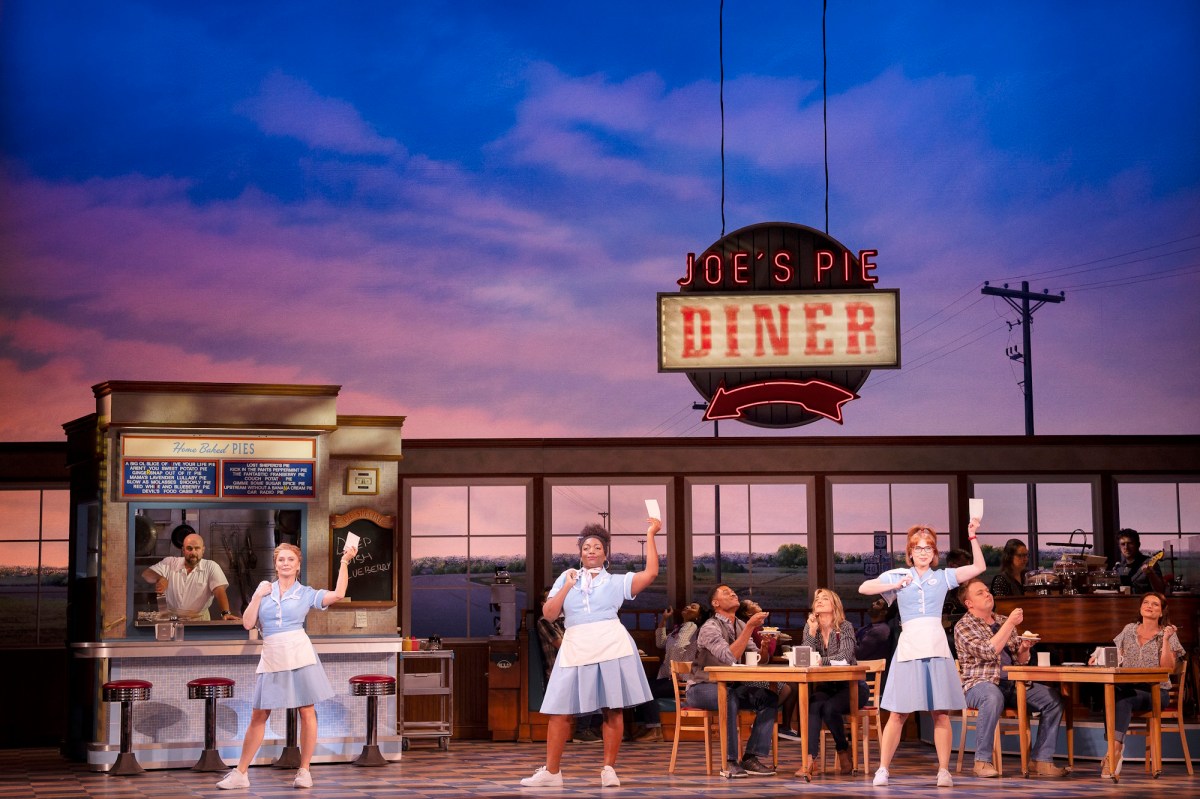
Audiences crave slice-of-life dramas and an underdog that we can root for – even, and especially, when she flirts with the idea of cheating on her no-good husband – but we don’t have much of a chance to truly get invested in these characters and understand their motivations for their bad decisions and confessional musical numbers.
The show labours over setting up a story that it never fully allows us to sink our teeth into, and we’re left craving a certain depth of flavour that was promised.
Natalie Bassingthwaighte’s Jenna lacks grit
Another disconnect may arise from a recurring issue we see when it comes to mainstage musical theatre in this country: the decision to cast a name that producers perceive as marketable, rather than the best fit for the role.
Now, let the record state that this reviewer is an unapologetic Nat Bass fan (who unironically wants to throw down to Voodoo Child at the The Rogue Traders reunion tour later this month). But her performance in Waitress lacks the requisite heart to bring us fully onboard – even if there is a certain joy to watching her onstage dynamics, especially opposite Rob Mills’ light and charming take on Dr Pomatter.
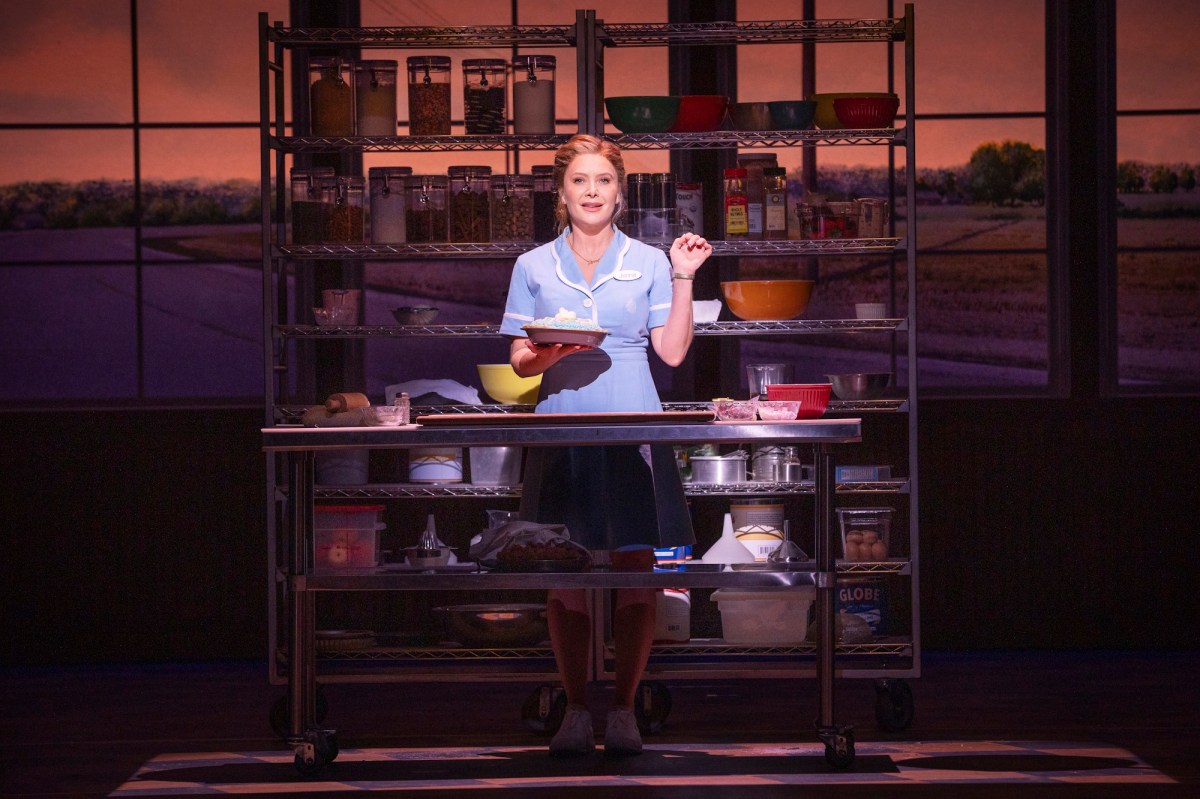
Jenna is written as wholly ‘nice’ and ‘good’ but there’s also a grit and a deep yearning that underlies her sweetness. We saw Bassingthwaighte powerfully channel an energy like this with her performance as Mary Jane Healy in Jagged Little Pill – a waspy, soul-cycling mother battling a secret opioid addiction – but this downtrodden baker could have used an extra helping of her determination.
The word on the street is that industry insiders will be checking the performance schedule for the dates when Annie Aitken (who recently impressed as Sarah Brown in Guys & Dolls on Sydney Harbour) will be alternating the role.
Act Two picks up the narrative pace, leading us to a fairly satisfying conclusion. While things don’t quite turn out as planned, our heroine saves herself (more or less) and proves that a life filled with love need not depend on leaning on a new suitor to escape the guy who lured her into a loveless union by strumming a guitar and reciting some pretty words (we’ve all been there, right?).
This is the fast food equivalent of musical theatre, more aligned with the kind of hot apple pie you’d pick up from the Maccas drive-through than a lovingly home-baked dessert. But if you set aside the promise of an empowering feminist narrative, Waitress does ultimately do exactly what it says on the tin: it serves up a sugary sweet slice of entertainment. Just don’t think too hard about it.