Audible Edge is Perth/Boorloo’s one and only artist-led international festival of exploratory music. Running since 2017, it’s presented annually by local experimental music label Tone List. Both are founded by local experimental composer and saxophone player Josten Myburgh, who curates the festival and label with local songwriter and sound artist Annika Moses.
Previous iterations of Audible Edge have been spread out across multiple locations and even across the year, but in 2026, it all happened in one place over three days in the charming late 19th century Victoria Hall in Walyalup/Fremantle.
Audible Edge review – quick links
Showcasing experimental work by local and international artists
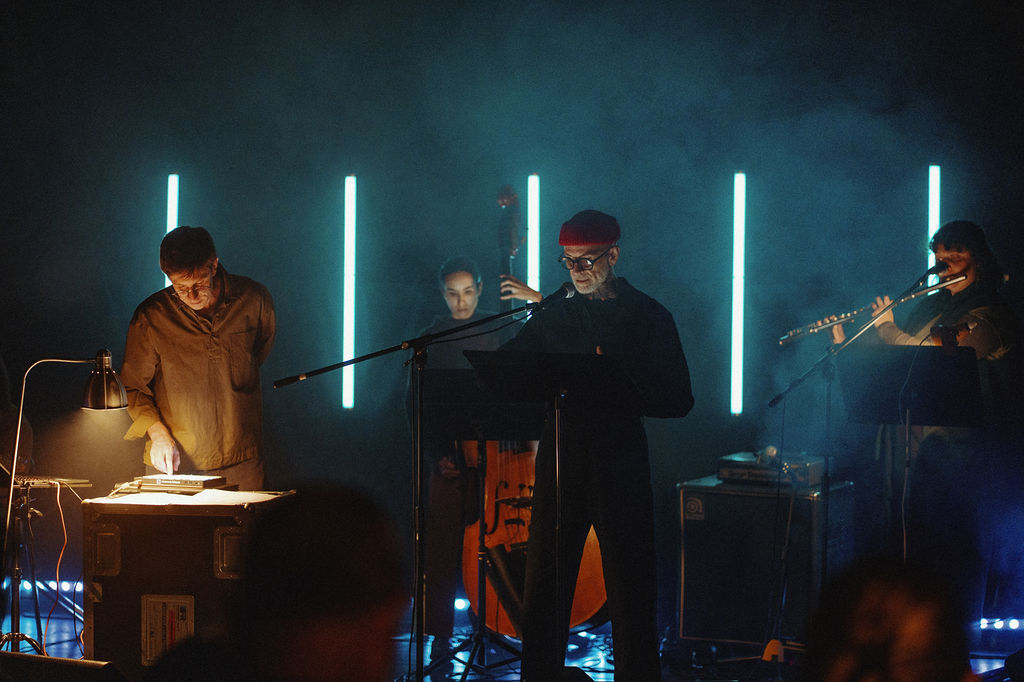
On the opening Friday night, a rousing Welcome to Country was followed by Pressure Bells, a new work by Western Australian artists, the poet John Kinsella and composer Simon Charles. The work evoked the landscape and history of the WA’s Wheat Belt region using a mixture of field recordings – including of crested bell birds and regional town church bells – and live instruments. Kinsella’s text was sensitively delivered by WA performer Matthew Morris.
Next came a moody and poignant set by much loved local post-pop songwriter and multi-instrumentalist Lyndon Blue with saxophonist Flora Carbo. They featured work from Blue’s new album Winding and the set was followed by a thrilling recital delivered from up in the gallery by Aotearoa-based throat-singer and electronic artist Johnny Marks, who made incredible sounds and overtones with his voice alone as well as augmenting and integrating them with live bells and synth effects.
The last item in the main hall that evening was billed as a ‘soap-rock opera/love triangle’. The Irish folk-based work was written and performed by Dublin/Baltimore songwriter and fiddle player Cal Folger Day, with fellow band members Phil Christie on keys and vocals and Jack Duffy on Uillean pipes. Great fun was had by all.
Journeying through soundscapes
On the Saturday evening, first up was an intense ambient set by noise artist amby downs using live-mixed and looped field recordings, including some nightmarish urban bird-cries that banished all memory of the bird calls in Pressure Bells the night before.
Then came a more soothing and meditative acoustic recital by string trio Umbel, which featured exquisitely extended harmonic progressions and swooning microtonal shifts on two violins and a Chinese two-stringed erhu.
This was followed by another ambient set by sound artist Davaajargal Tsaschikher that was also more meditative and even spiritual, and that once again featured recordings of bells as well as some haunting live-mixed mouth-harp.
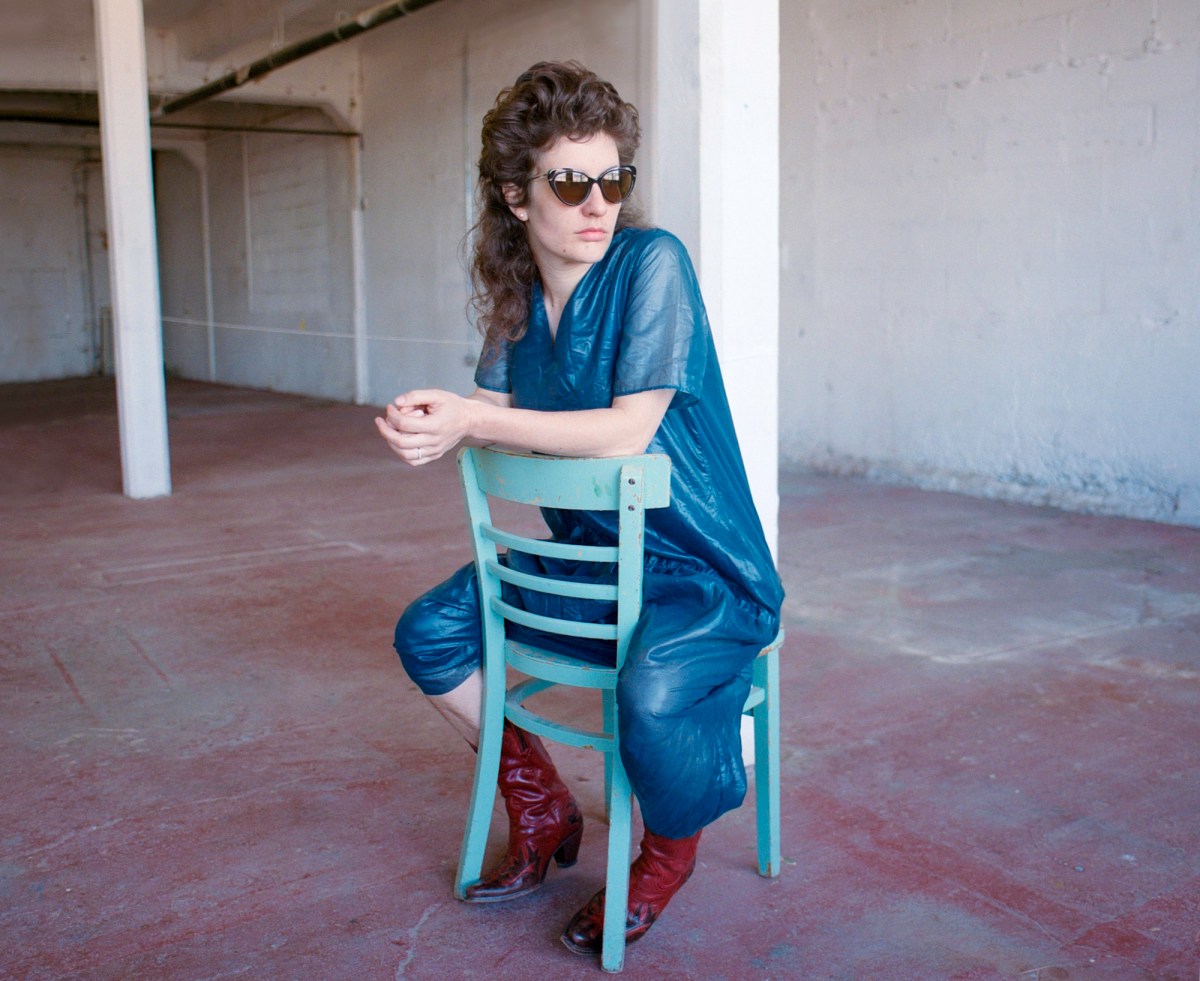
The evening culminated in a delicate, haunting and tender set by singer-songwriter Jonnine, accompanied by percussionist Maria Moles. It involved a bricolage of tiny sounds generated and looped by Jonnine herself using her voice alongside a collection of small household objects.
I returned for the final sessions in the main hall on Sunday afternoon, which began with Berlin-based sound artist Ira Hadžić’s deeply meditative improvisation using a Chinese gong, two tom-toms and a pair of small, carefully placed and deftly manipulated transducers to activate the surface of the gong and tom-toms.
Exploring sound and movement
Watching and listening to Hadžić’s work was the perfect preparation for what followed: Alice Cummins’s spellbinding movement and voice/breath work hear her breathe, a duet for a dancer and a large sheet of brown paper.
Cummins improvised movements and shapes as she manipulated and danced with the paper – which transformed from inert object to sculpture, puppet, mask and costume. The sound of the paper rustling and crackling was in conversation with the sound of her movement, breath and voice, punctuated at intervals by three soft strokes of the gong.
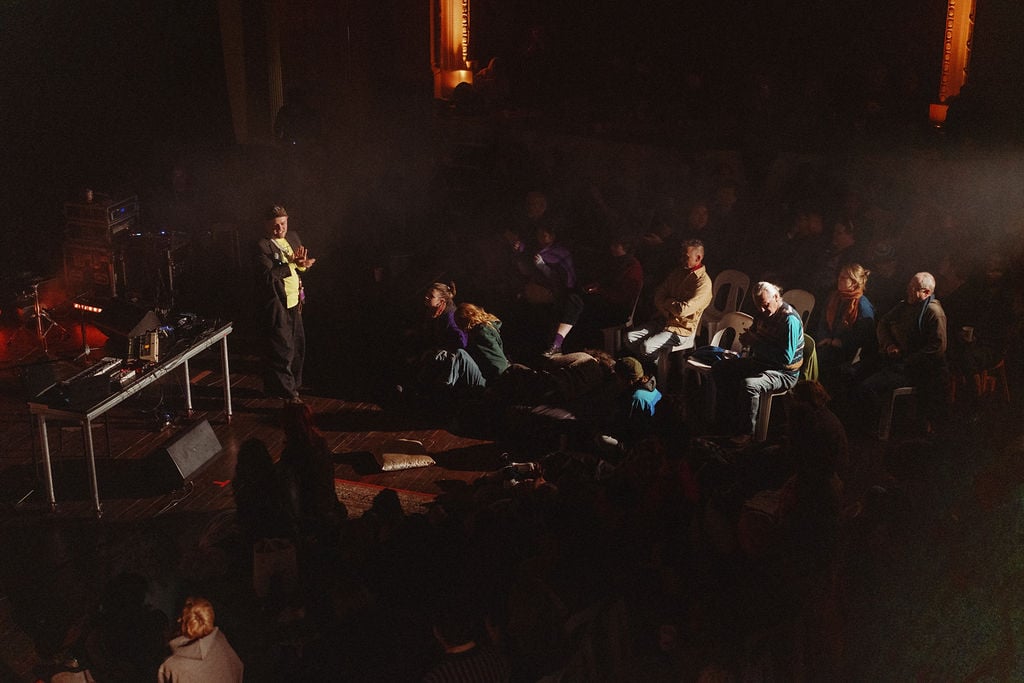
The final work of the evening and Audible Edge festival in the main hall was by two younger Perth sound artists, Lia T and Rory Glacken. The prevailing mood became more uplifting and playful as dance beats and sonic fragments came and went. Much of the pleasure for me came from watching the artists silently interact with each other behind their sound-desks and laptop screens using glances, gestures and smiles. It was the perfect finale.
Myburgh and Moses are to be congratulated on a sublimely curated Audible Edge festival that also felt in deep conversation with the venue and location and across multiple genres and generations. Victoria Hall and Walylup/Fremantle have a long history of art and culture, and especially music and performance, that goes back to the 60s and 70s – and for millennia before that.
Long may it all continue.