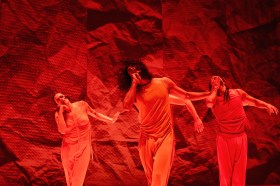
The Other Side of Me is a story told from the heart. It is born from the grief of the Stolen Generation and it is expressed through the purity of physical expression, curated visual imagery and poignant sound design. These elements combine to create an honest, succinct and powerful production.
Led by Artistic Director and Choreographer Gary Lang, The Other Side of Me was first presented in Darwin in 2023 and this latest staging at the Sydney Opera House retains the same integrity and quality.
The 1960s was a time – and a very recent one – when First Nations children were removed from their families, placed in orphanages, and offered for adoption to white families. While The Other Side of Me is fictionalised, the story is based on the letters and experiences of two brothers living in the Northern Territory in the 1960s, who are taken from their family and adopted by English parents, and then removed from Country to live in a hamlet in the United Kingdom.
The Other Side of Me review – quick links
Taken from Country
This season, Lang, a Larrakia man, is participating in a short Q&A with the audience following each performance. The night I attended, he offered the reminder that First Nations people were still being considered ‘flora and fauna’ until the 1967 referendum, which saw Aboriginal and Torres Strait Islander peoples finally being counted in the census.
The Other Side of Me does not over explain this shameful chapter in Australian history, choosing instead to deftly scaffold the performance with a brief voice-over at the start explaining the characters’ situation. These brief facts are enough to put the audience in the picture.
At the end, historical images are used to then remind the audiences that the Stolen Generation still has profound and ongoing ramifications for First Nations peoples – as well as for the broader Australian community.
In between this concrete beginning and end, we enter the world of the two children who were stolen. One, played by Alexander Abbot, is now an incarcerated adult in the UK. Throughout his life, he has had trouble off and on with the law. It means he has no prospect of ever returning to his home or to family due because of restrictions preventing those with a criminal record to leave the country.
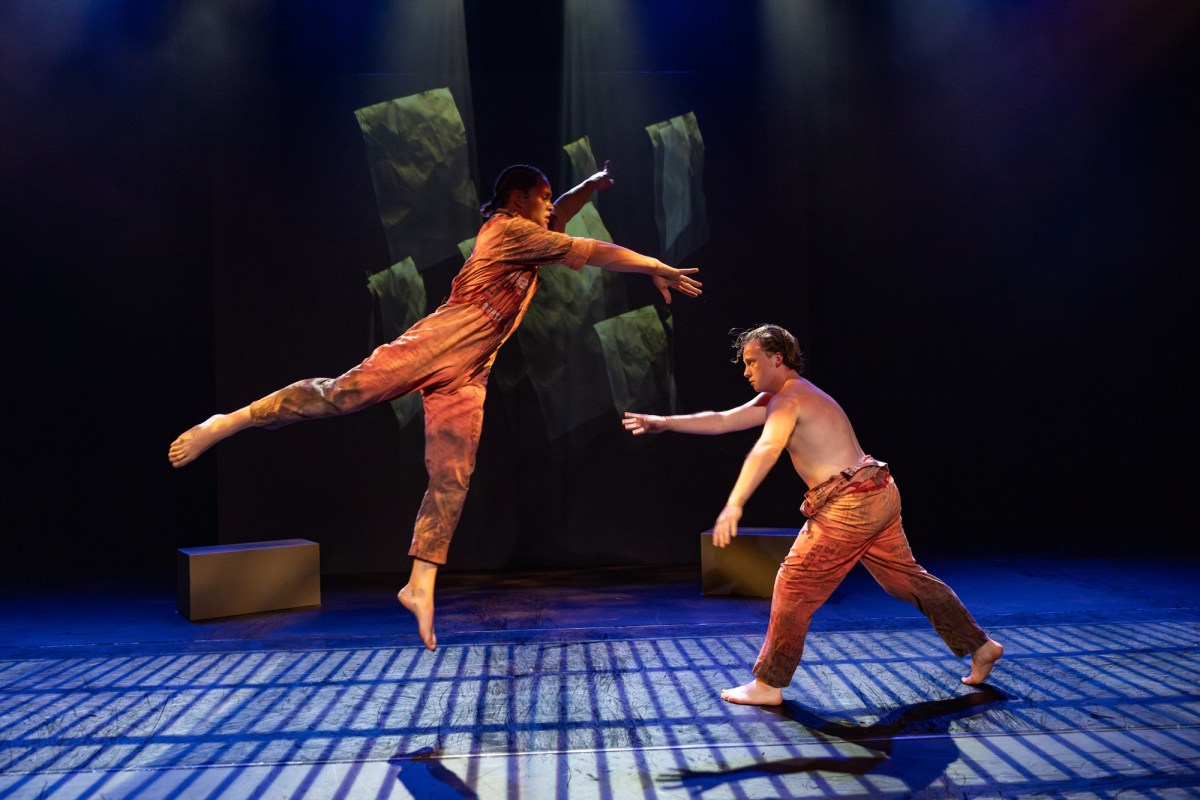
The story unfolds with the character played by Abbot in his prison cell, assisted by a second dancer, the Dhunghutti and Worimi performer Blake Escott, who appears to variously represent elements of Country, Abbot himself, Abbot’s brother and colonial indoctrination, though this remains unclear. We are left questioning Escott’s role and what exactly he represents.
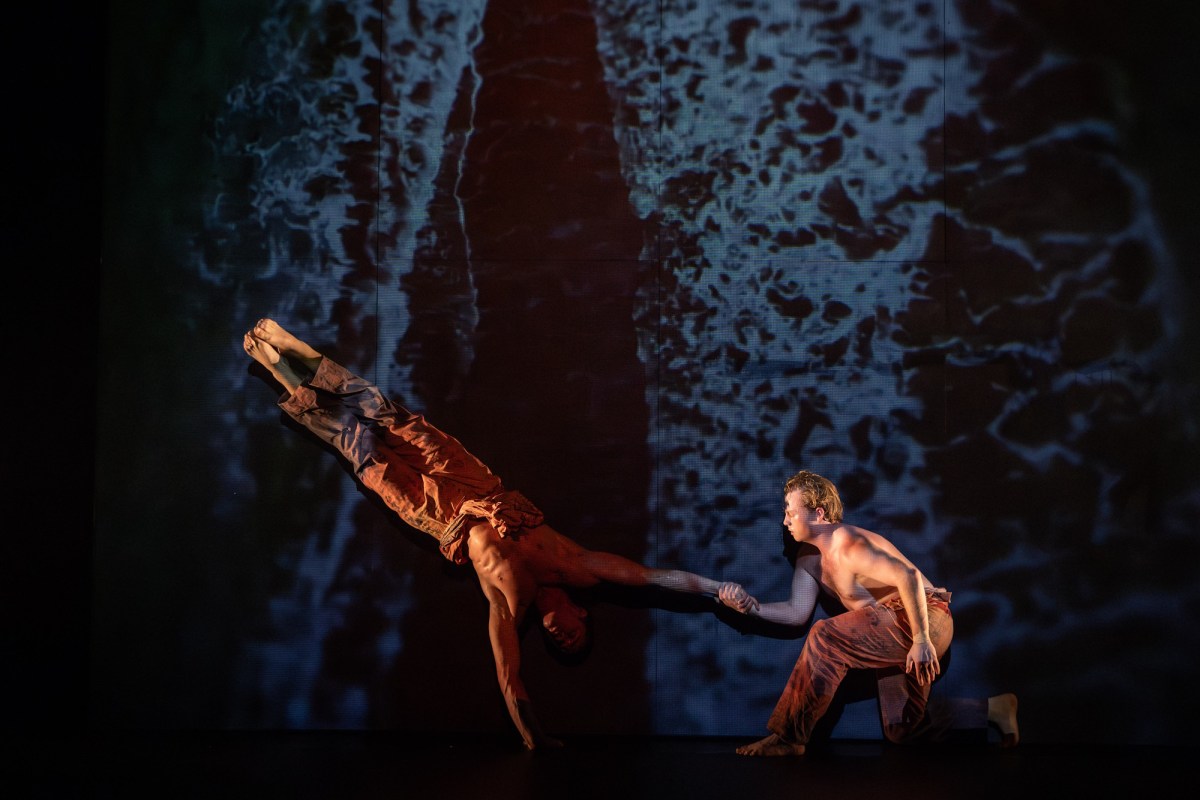
Throughout the performance, we witness the struggle with displacement, identity and isolation, communicated through physical movement combined with reverberating sound and fluid visual imagery projected onto a screen at the rear of the performance space.
The sound of struggle
The soundscape is complex, evocative and effective. It moves from clapsticks to acoustic guitar, featuring Indigenous voices, techno and violins. At times, the sound reverberates so intensely that it vibrates through the bodies of the audience. There is no way to remain numb or disconnected from the struggle on stage. Viewers move through the same range of emotions.
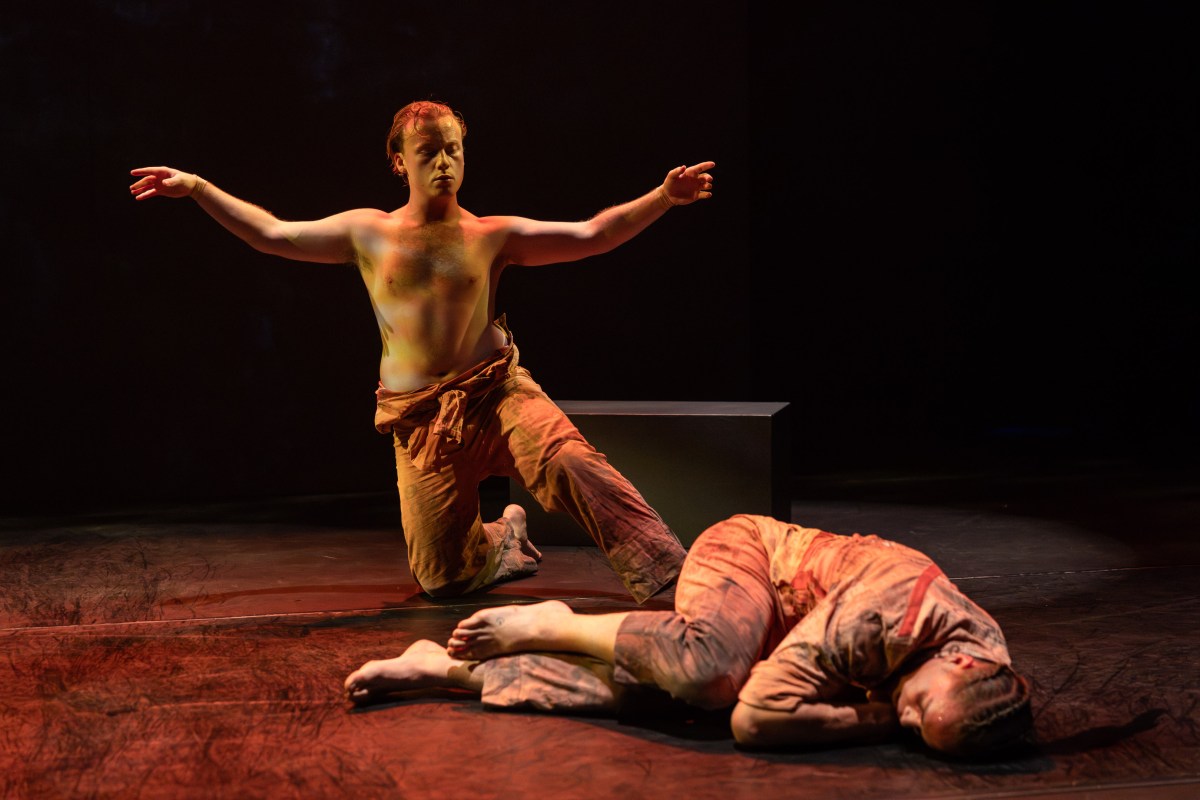
The longing for Country does not leave this young man. Eventually he dies in custody, but his spirit is called to make the journey home by his ancestors. Perhaps this is the most powerful moment of the entire performance. As the tension built throughout the performance is released, it generates a climactic outpouring of both grief and relief.
Abbot’s spirit makes the return journey home, accompanied by the earthy organic resonance of the Manikay, sung by Banula Marika, a senior loreman of the Rirratjingu clan. As Abbot rejoins Country, he blends into the changing imagery in the background.
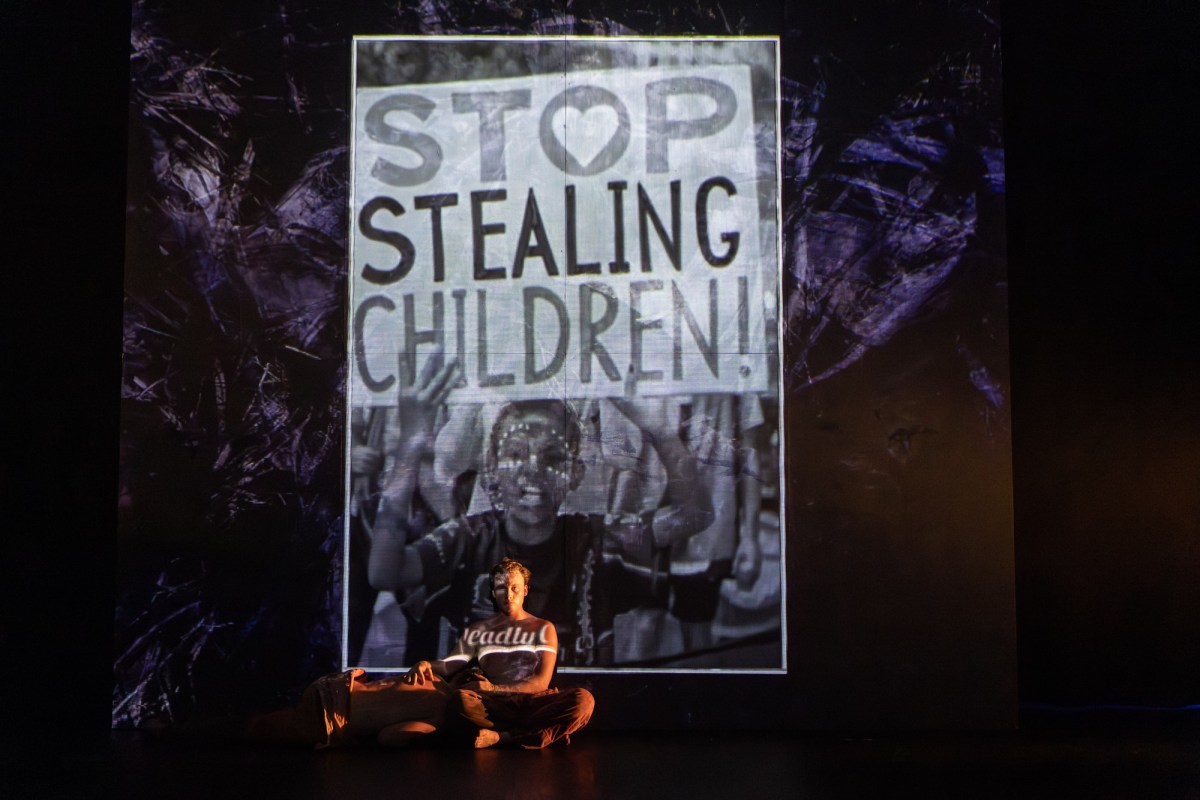
Lang cites Abbot as his muse, and credits him for creating and implementing many of the artistic elements in the performance. However, both performers, Escott and Abbot, are superb, conveying strength and dexterity in their performances. Escott was visibility moved by the end of the show and this emotional energy carried to the audience.
Watching this performance is like riding a wave. Dance has been used for generations to express complex emotions that textual narratives are not always able to capture. This production is skilfully executed, resulting in an immersive experience that exists beyond words and requires us just to feel.


![[GAMEBOY] from choreographer Amy Zhang tours as part of ORBIT 2026. Photo: Supplied.](https://www.artshub.com.au/wp-content/uploads/sites/2/2026/08/7.-ORBIT_ARTWORK_gameboy-by-Amy-Zhang.webp?w=280)