Through line, curated by Goulburn Regional Art Gallery Director Yvette Dal Pozzo, brings together 32 works in a wide-ranging collection hang of key acquisitions made by the gallery over the past decade.
The collection officially began in 1982 with the opening of the gallery, bolstered by a small collection of works that had been gifted to Goulburn Mulwaree Council prior to this date. Since then, it has grown to include nearly 600 works.
As the only collecting institution in the Southern Tablelands and Southern Highlands of New South Wales, the Goulburn Regional Art Gallery Collection plays a crucial role, not only representing key artists with a connection to the region, but also bringing key examples of Australian and international contemporary art practice to local communities.
Relative to its state counterparts, Goulburn Regional Art Gallery is smaller in scale, with an exhibition space that usually accommodates one major exhibition or two smaller shows. While the gallery does make efforts to share the collection through public art displays and loans to local and interstate organisations and institutions, there is no ongoing permanent display of the collection, which is what makes a temporary collection hang such as Through line so significant.
Through line exhibition – quick links
A decade of collecting
Through line demonstrates the strength of the collection, and the approach that the gallery has taken to collecting over the past 10 years.
‘Ten years is a neat encapsulation of the recent history of the collection, but it’s also a time period in which the nature of what we do day-to-day in supporting artists and presenting their work is changing, becoming more adventurous and experimental,’ says Dal Pozzo.
‘There’s a greater emphasis on installation and production to support different works. It has a true contemporary character.’
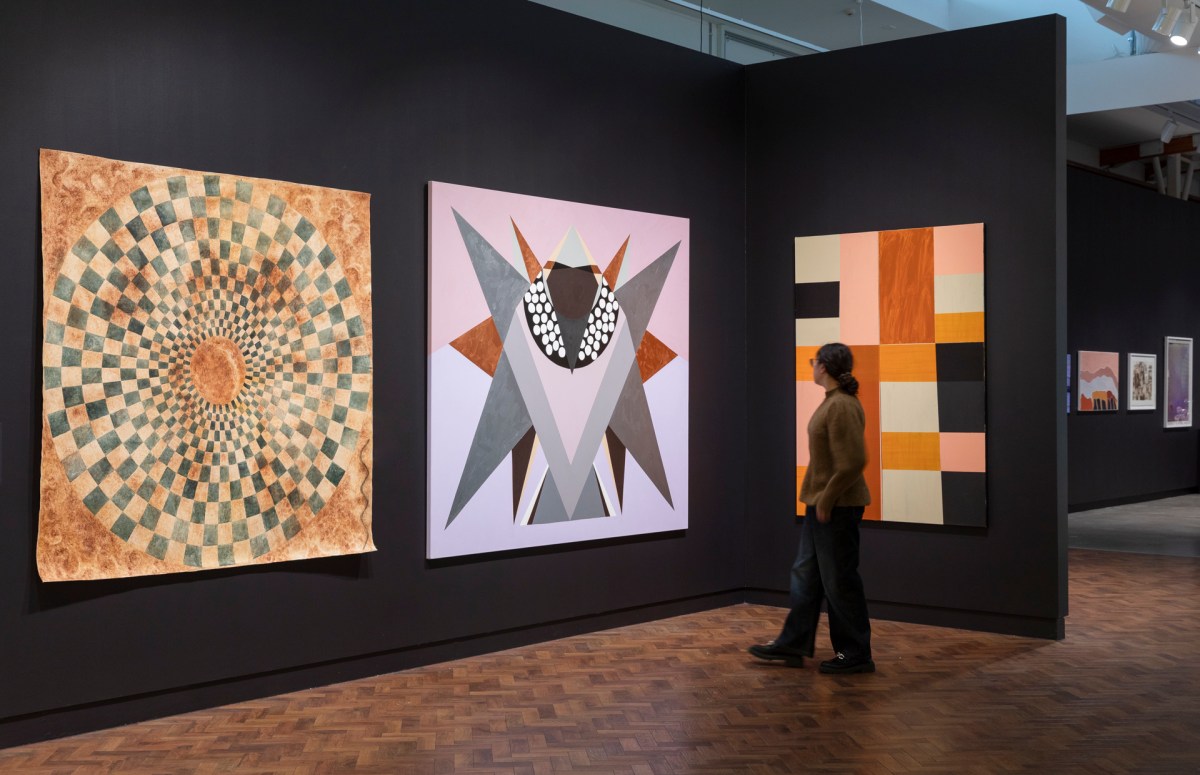
The exhibition spans painting, photography, printmaking, sculpture, ceramics, audio-visual and installation work, by artists at the height of their careers and emergent. The challenge of a collection hang as diverse as this is how to draw connections between seemingly disparate works, apparently only related by their relevance to the region and contemporary art practice, and the quality of the work.
Through line takes a dual approach to this challenge: drawing on connections that have been purposefully forged as the collection developed; and also pulling on some of the more unexpected threads between works, which only became visible as the exhibition came together.
Exploring relationships and connections
‘I tried to move away from the more obvious connections, such as artists that work in similar mediums or have personal connections to one another, in favour of connecting works that really draw something out of each other,’ says Dal Pozzo.
‘There are moments where it is visually harmonious, and others where the connection is more thematic.’
These subtle relationships are drawn out in unexpected ways, such as a grouping of abstract works by Emma Beer, Mikala Dwyer and Diana Wood Conroy. An unlikely but delightful connection is made to Maria Fernanda Cardoso’s Male and Female Spiders Maratus Spendens—Unrecognised Artists (2015). A hyper-close-up photograph of a spider’s colourful abdomen is a figurative representation of the natural world, which Cardoso likens to an abstract painting.
The environment, along with abstraction and colour are the most prevalent themes in Through line, and these relationships quietly build as you move through the exhibition. The blue of Cardoso’s spider is echoed in Christian Thompson’s The Devil Made Him Do It (2011), in which Thompson critiques impersonations of First Nations people and notions of cultural ‘authenticity’.
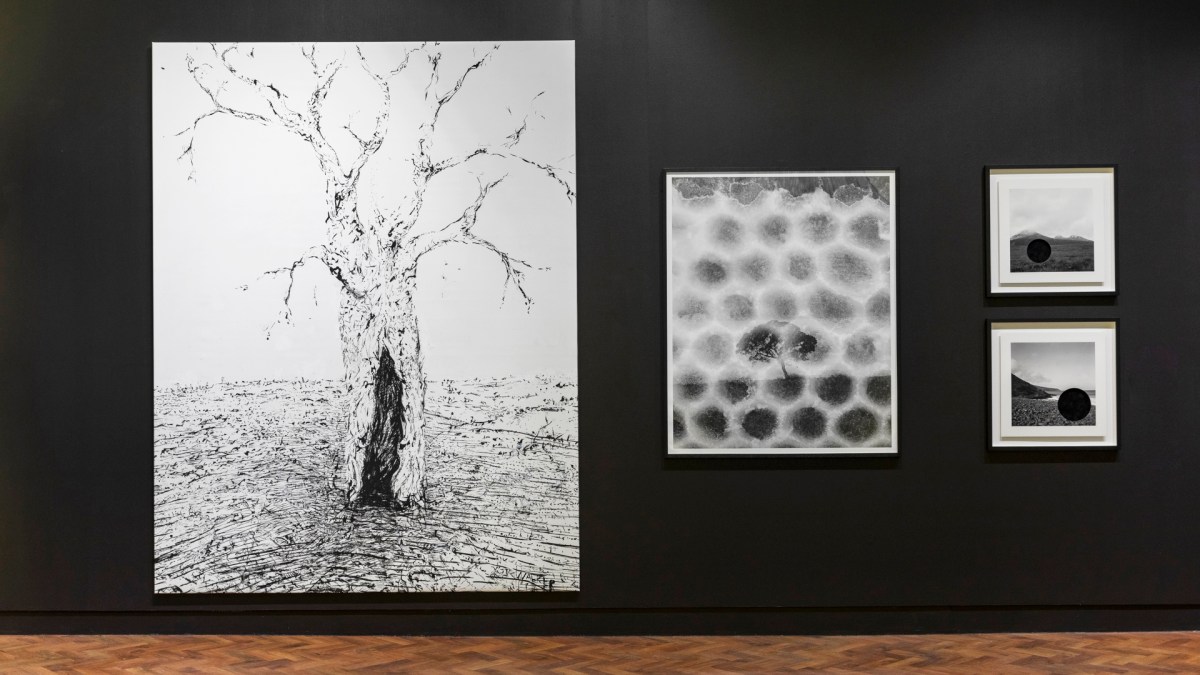
Monochrome photographic works by James Tylor and Sammy Hawker reflect on the impact of colonisation on the landscape. Hawker’s photographic negatives of ecologically disturbed sites along the shoreline of Lake George were developed within honeybee hives, a reference to the Celtic tradition of ‘telling the bees’. Here, ghostly honeycomb obscures the image of a tree.
The tree is echoed in John R Walker’s Scar (2025), part of a body of work that looks to trees as witnesses of the changes to country that have occurred over the past 200 years.
The colour of the gallery experience
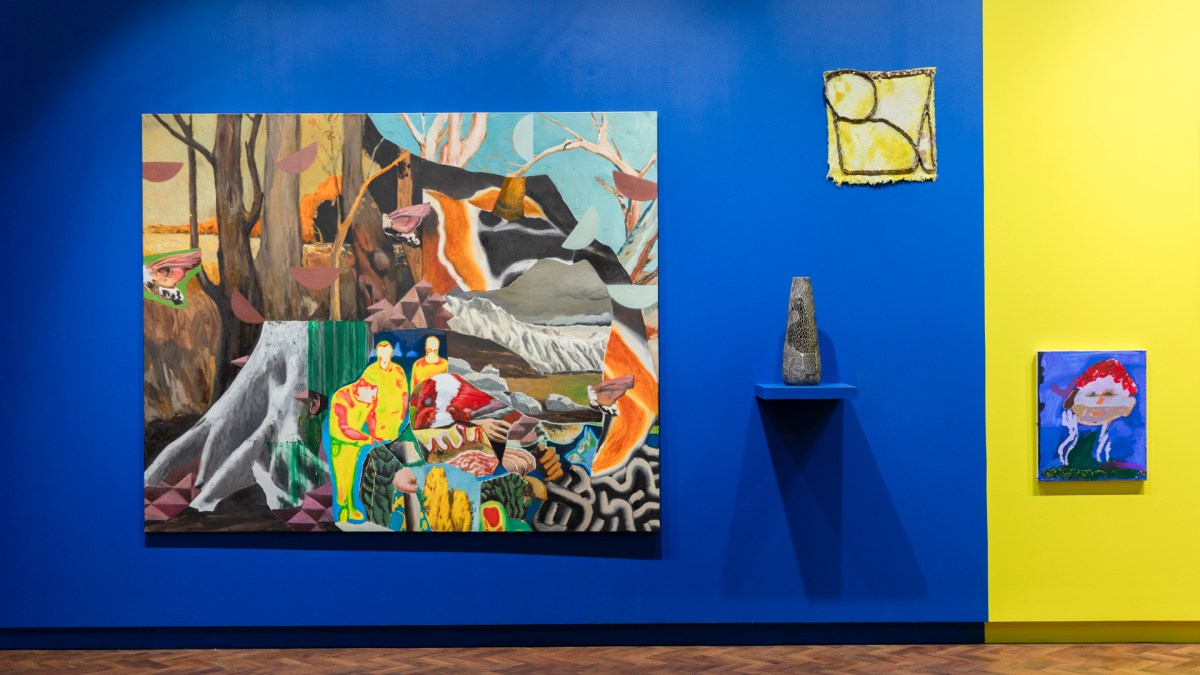
The works relate to each other by colour as much as concept. Hues that recur throughout the hang, such as acid yellow or Mondrian blue, are painted onto the gallery walls, strengthening the threads between works. ‘The transformative gallery experience is really important,’ says Dal Pozzo. ‘Audiences look to these spaces as a place of total immersion and escape. It might energise you or take you into a contemplative state.’
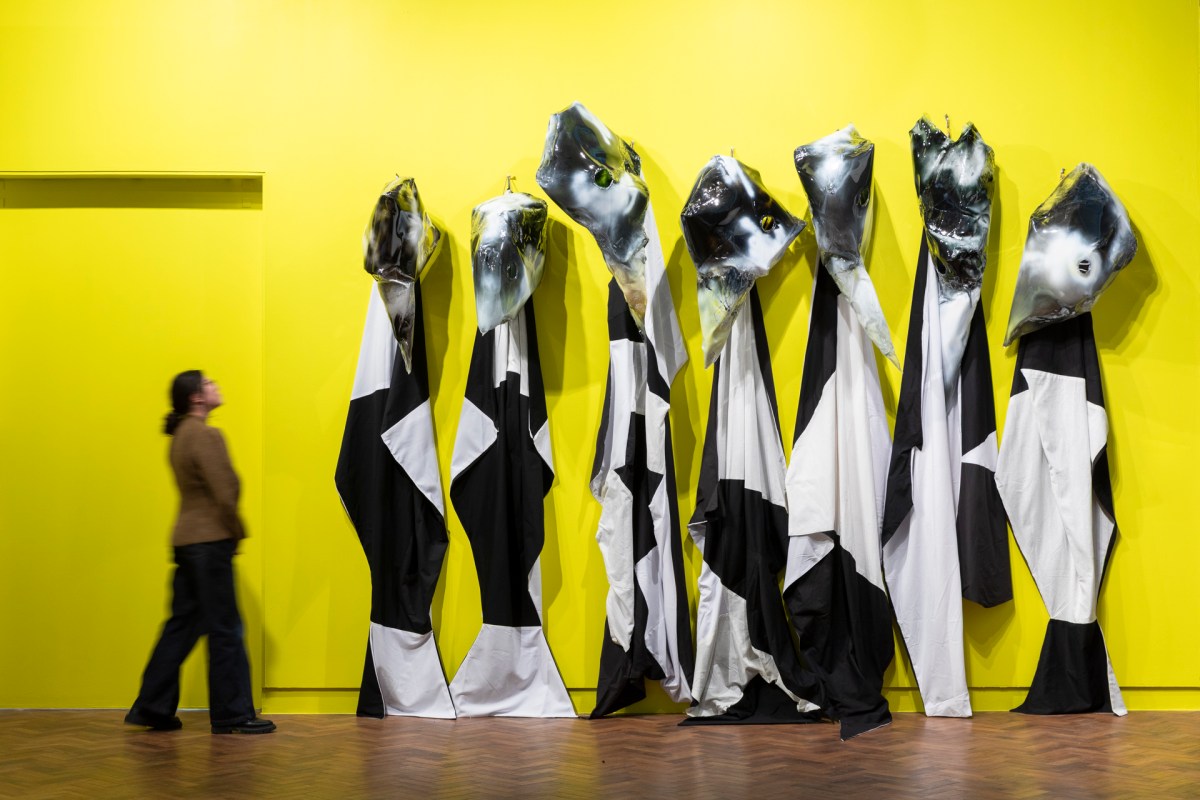
In a large-scale installation by Mikala Dwyer, The Nurses (2020), abstract monochrome figures call to mind magpies, or the elongated beaks of plague doctor masks. The figures are set against a neon yellow wall that references historical and contemporary signifiers of sickness and quarantine, creating a collision of natural and constructed worlds.
The yellow is also reflected in Guido Maestri’s Future Nature (2023), another work that contends with the ways in which we interact with the natural world, our built environment and screen environments.
The gallery’s exhibition text describes Through line as an invitation to look and linger. It achieves this aim, providing small moments of connection – whether by colour, thematic, process or form – alongside moments of breakthrough.
These connections are at once locally relevant and universal. The exhibition’s interpretation of the environment is nuanced, considering the natural world, our changing climate, the impact of colonisation on the Australian environment, our built environment and the region that the gallery serves, as well as the ways that our environment is mediated through screens.
Most impactful are the subtle and unexpected dialogues that occur between works that otherwise may not have come together in an exhibition. ‘That’s the endless joy of working with collections,’ says Dal Pozzo.
‘You can bring something new out of them depending on how you present them. It makes for a more interesting collection to have conversations across artists at different stages, perspectives and backgrounds. It’s a way for distinctions to be broken down, so that these works can be in conversation together where they might not be in other contexts.’