Art’s indivisibility with politics is a subject as old as time. Yet the last few iterations of the Venice Biennale have prompted some to question whether artists’ political beliefs are collapsing the foundations of this blockbuster art event, and taking precedence over the art.
Amid artists shutting doors to their shows in solidarity with political causes, and with the biennale’s entire prize jury resigning over the decision not to bar certain countries’ artists from being eligible for prizes this year, one has to wonder whether the 61st Venice Biennale will be the most politically explosive in its history.
But a quick look at this biennale’s past reveals that its structure and design to have been inextricably linked with politics from the start.
Unravelling Venice Biennale politics – quick links
Artists caught in political actions beyond their control
In a recent article for arts journal Frieze, arts writer and curator Matthew Holman made the important point that Venice Biennale protests such as those currently unfolding are nothing new.
Holman recalls the 1968 student-led protests that stole the spotlight at Venice that year. Students from the city’s Accademia di Belle Arti (Academy of Fine Arts) chanted anti-war and anti-racism slogans around the American pavilion in particular. But protesters were critical of the biennale at large for what they saw as its market-driven structure built on hierarchical, authoritative principles.
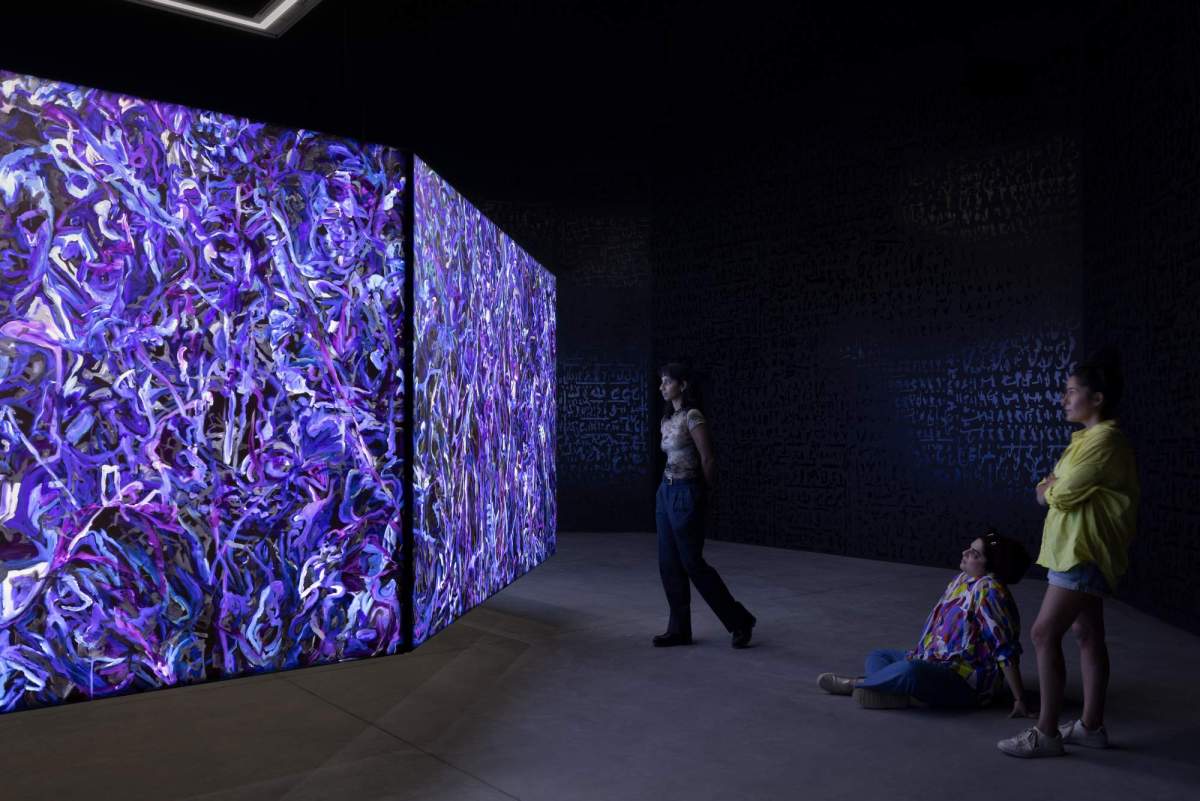
ArtsHub: Khaled Sabsabi reveals details of two installations at Venice Biennale
But it’s Holman’s recollection of the hubbub surrounding the 1964 Venice Biennale that perhaps provides the most interesting parallel with events playing out at this year’s biennale.
In 1964, the work of American artist Robert Rauschenberg was chosen as the winner of the Venice Biennale’s International Grand Prize for Painting. The saga surrounding the jury’s choice reveals a lot about the manifold dilemmas the Venice Biennale has always been vulnerable to when it comes to matters of art and politics.
As Holman notes, Rauschenberg’s prize-winning assemblage work Express (1963) – while not at all a political work, aside from challenging high art’s definition of painting at the time – was hampered by layers of government-led political manoeuvrings that are not unlike some of the political controversies plaguing the biennale today.
First, Rauschenberg’s work had to be moved from its original display area at the former US consulate in Venice to America’s official biennale pavilion to be considered for a prize. Somewhat conveniently, that pavilion was sponsored for the first time by the US Information Agency, a US Government department that in Holman’s words, was effectively ‘Washington’s propaganda outfit for fighting the cultural Cold War’.
The Venice Biennale jury’s choice of Rauschenberg as a prize-winner was therefore judged harshly by many left-leaning art critics at the time, who saw it as an act of dubious political and financial leveraging by the US Government to help it push its liberal Western political agenda to the world amid cold war tensions.
In response, Rauschenberg apparently declared he wanted to ‘stay out of politics’ – echoing the sentiments many artists since then have adopted when their work has been taken out of their hands and aligned with political agendas beyond their control.
Can artists ‘stay out of politics’ at the Venice Biennale?
The Venice Biennale was built on 19th century World Fair-style foundations, and has a legacy of soft power diplomacy and competition between nations at its core. Today, it’s regularly referred to as the ‘Olympics of art’.
So, can Venice Biennale artists representing their countries at this particular art event – especially when they are funded by their governments to be there – realistically expect that their work won’t become enmeshed with the international politics of the day?
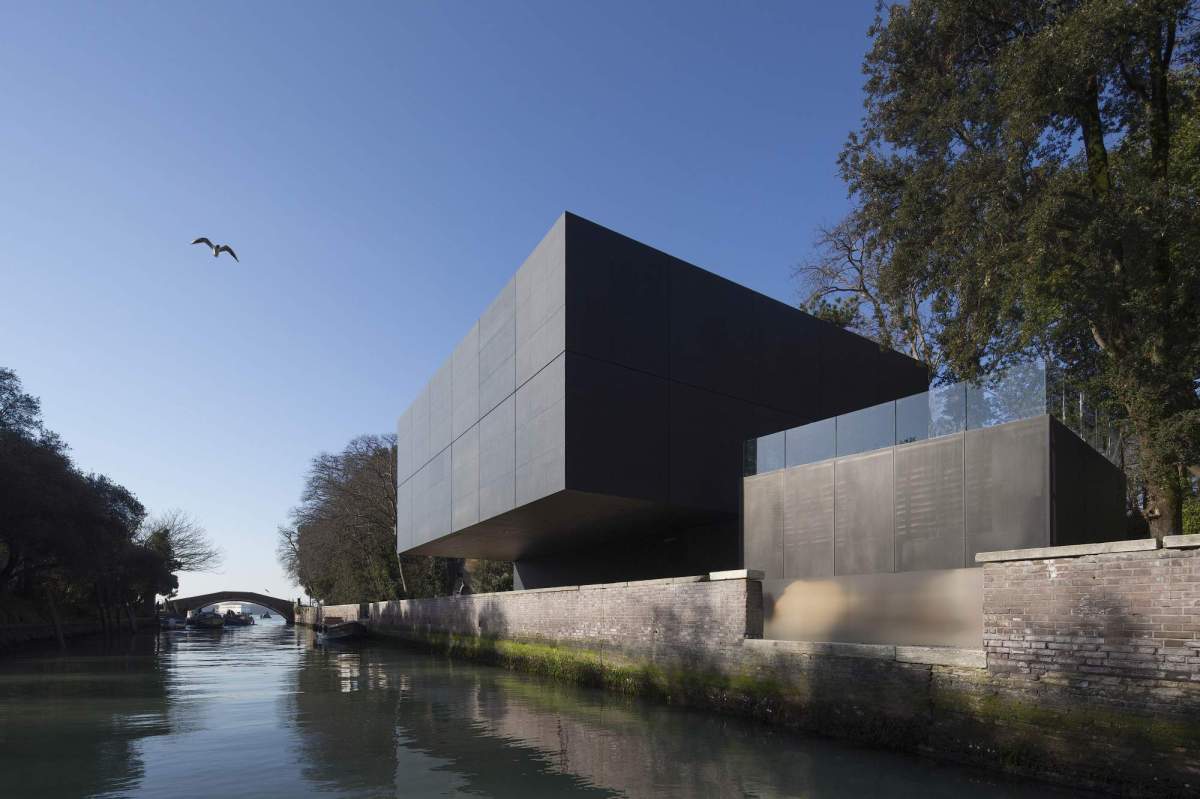
This paradox is surely one of the thorniest problems within current discussions of the Venice Biennale’s relevance to contemporary audiences. As long as artists remain chained to their governments by way of ‘representing’ their nations at Venice, then the question remains whether their work – even when it has been selected for exhibition via arms-length non-government processes – can ever be free from its nation’s political baggage?
One example of this conundrum is Israel’s 2026 Venice Biennale artist – the sculptor Belu-Simion Fainaru, who is at the centre of the prize jury’s resignation in protest of the participation of nations whose governments are facing International Criminal Court charges.
While most remain focused on Fainaru’s response to the politics surrounding the recent resignation, hardly anyone, at least in the media, is talking about at his art.
ArtsHub: Richard Lewer wins 2026 Archibald Prize with portrait of Iluwanti Ken
Fainaru’s Venice Biennale work is titled Rose of Nothingness and draws on ideas from poetry around the conjoining of life and death, matter and spirit. It’s a highly contemplative work that takes shape as a ‘black milk’ body of water that ripples when precisely patterned droplets hit its surface.
Intended to create a space for reflection, on the surface, Fainaru’s work seems a million miles from the noisy demonstrations taking place on the streets outside the Israeli pavilion.
For many, the greatest concern is whether it was appropriate for the Venice Biennale to allow Israel to send an artist to this year’s biennale in the first place. But since the biennale committee decided to include Israel in this year’s show – and since Fainaru accepted the exhibition – he has found himself the target of political backlash.
As the artist recently expressed, he is concerned the prize jury members’ position (which effectively states he should be ineligible for a prize) has discriminated against him on a racial basis, and that he should instead be judged ‘on the quality and message of [his] art’ and not on the basis of his nationality.
For Fainaru, who presumably would prefer to do as Rauschenberg tried to do in 1964 and ‘stay out of politics’, it has clearly become impossible to avoid a political storm on account of his work appearing under the banner of his country, and his government, at this biennale.
Following the resignation of the prize jury, the Venice Biennale has since announced it will not award the Golden Lions for best artist and best pavilion this year. Instead, it has instituted Visitor Lions, or people’s choice awards. The Russia and Israel Pavilions are eligible. Fifty-two artists have now withdrawn their work from consideration for the new Visitor Lions.
Protecting artists’ right to protest in international forums
In a similar vein, one wonders how Australia’s own 2026 artist representative Khaled Sabsabi is feeling amid the abundance of political action in Venice this year, given his own path to the biennale was mired in intense political commentary, with his work subject to close political scrutiny that was not at all of his own making.
In some ways it’s a bitter irony that Sabsabi, like so many other artists whose work is not overtly engaged with current geopolitical actions and debates, will still likely face hard choices over whether or not to take a stance and join the political protests playing out at this year’s biennale events.
In the lead up to the Venice Biennale’s opening on 9 May, and before the current protests unfolded, Sabsabi and curator Michael Dagostino were interviewed by the ABC about their work, and were also asked whether the biennale should be used as a platform for boycotts and protests.
Sabsabi replied: ‘Isn’t it great that art can be a platform, or a possibility for these conversations to be had in a way that is civil, and people can exchange ideas and have those moments? This is what art is meant to do.’
Of course artists have the right to express their political beliefs – whether that’s through their art or otherwise. But so long as they are funded by their governments to exhibit in their county’s national pavilions at the Venice Biennale, in this particular artistic forum, with a structure and design built on outdated ideals of empire and nationhood, they cannot avoid finding themselves in complicated political positions.