Australian artist Khaled Sabsabi – selected in February 2025 to represent Australia at this year’s Venice Biennale, only to be quickly dismissed by Creative Australia following a conservative media storm and subsequently reinstated after an external review – has revealed details of the two works he is presenting in Venice this year, which officially opens 9 May.
Sabsabi says his two installations – his major work in the Australia Pavilion and a second work in the exhibition in the Arsenale – ‘continue my poetic inquiry into spiritual and everyday journeys shaped by commonality and difference’.
Despite being in separate locations, the two works are connected by their shared themes, and are part of Sabsabi’s ongoing exploration of identity, displacement and collective experience.
Khaled Sabsabi at Venice Biennale – quick links
Khaled Sabsabi’s conference of one’s self
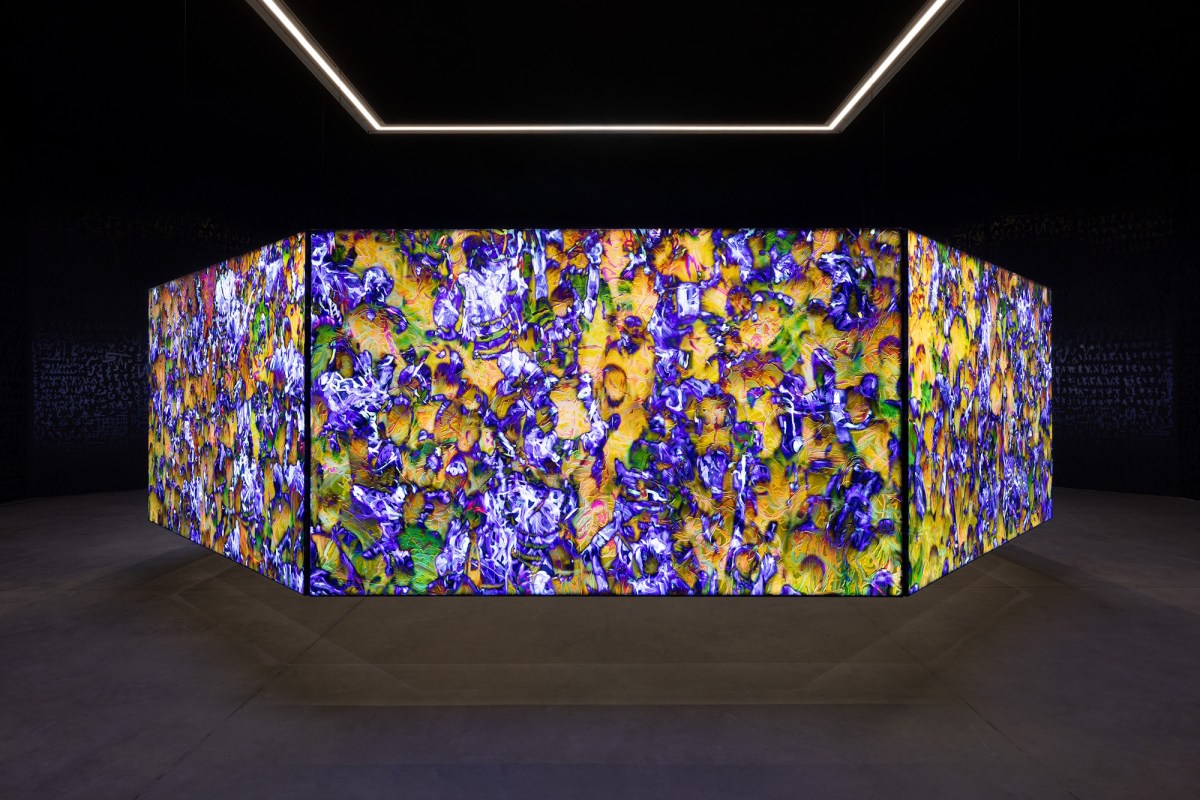
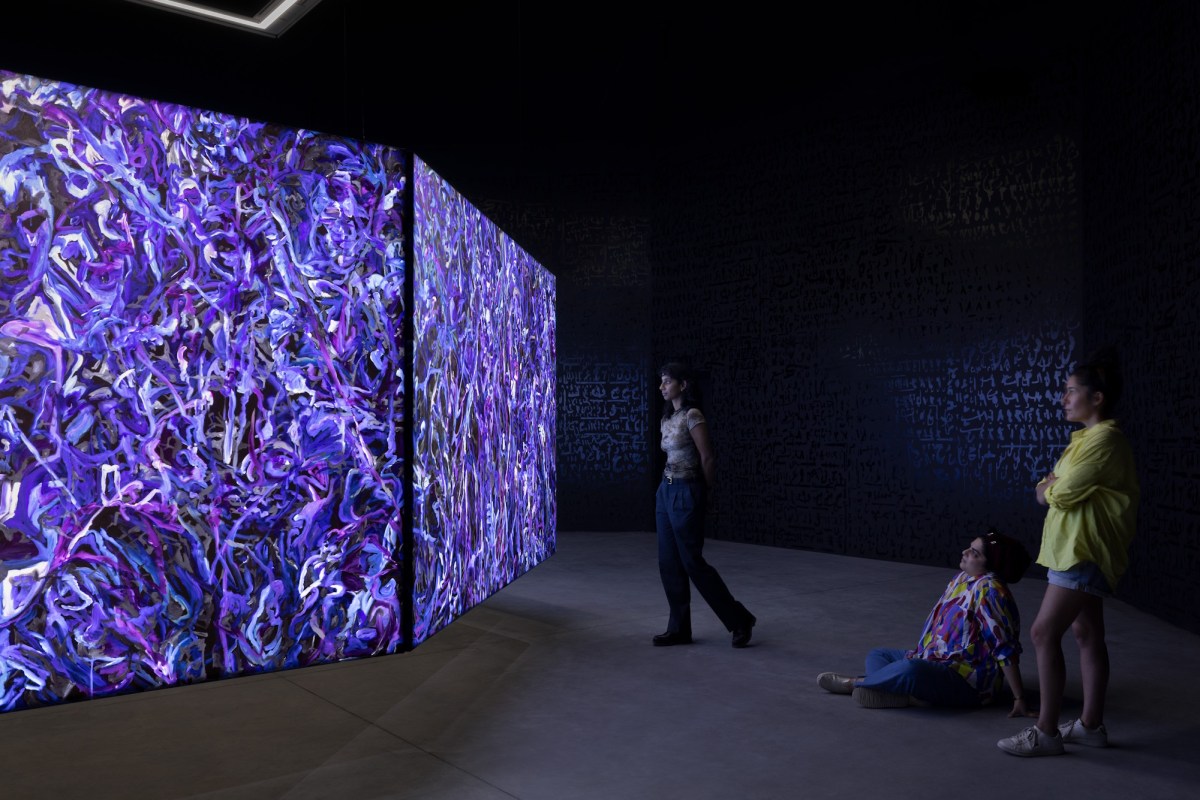
Sabsabi’s immersive work for the Australia Pavilion is titled conference of one’s self. Curated by Michael Dagostino and commissioned by Creative Australia, it features eight large paintings, each measuring three metres by two metres and arranged in an octagonal formation. Moving images are projected onto the paintings, accompanied by a soundscape of everyday sounds recorded on analogue tape.
The installation is inspired by Farid al-Din Attar’s 12th century Sufi allegory The Conference of the Birds, and explores the idea of a collective spiritual journey. The eight paintings also reference the significance of the number eight in numerology in many cultures.
Running on a 54-minute loop, conference of one’s self explores themes that have preoccupied Sabsabi creatively for many years.
Born in Lebanon and arriving in Australia as a child after fleeing civil war, his family then settled in Western Sydney. Over an artistic practice of more than 35 years, Sabsabi has frequently engaged with histories of migration and the complexities of belonging in his work – themes that he now brings to the international audiences in Venice with conference of one’s self.
The work also reflects the multicultural and multi-faith character of contemporary Australia.
A historic first
In a historic first for an Australian artist, Sabsabi has also been selected for the international exhibition in the Arsenale, curated by the late Koyo Kouoh. For this exhibition, In Minor Keys, Sabsabi presents a second, meditative multimedia installation, khalil (the Arabic word for ‘friend’).
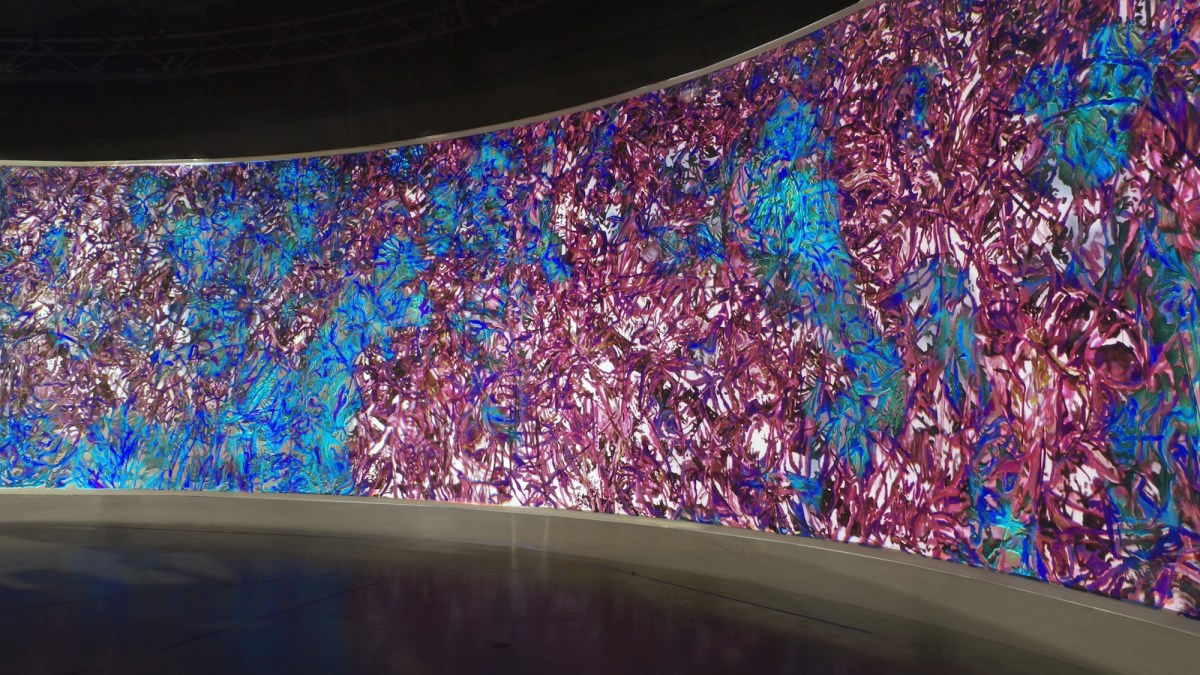
A site-specific, multisensory artwork, khalil unfolds across three chapters. It comprises a floating lamp-like installation with 40 metres of painted canvas. Sabsabi’s paintings are projected onto this surface, running on a 48-minute loop that is accompanied by a soundscape and the scent of black oud.
Together, the two works connect the Australia Pavilion and the Arsenale through a shared philosophical framework rooted in tasawwuf belief (Sufism).
Speaking to the two works, Sabsabi said: ‘conference of one’s self and khalil continue my poetic inquiry into spiritual and everyday journeys shaped by commonality and difference. The installations invite audiences to move through a shared space of reflection, where collective emotions and experiences may meet and transformation becomes possible.’
Shared histories of migration and exhange
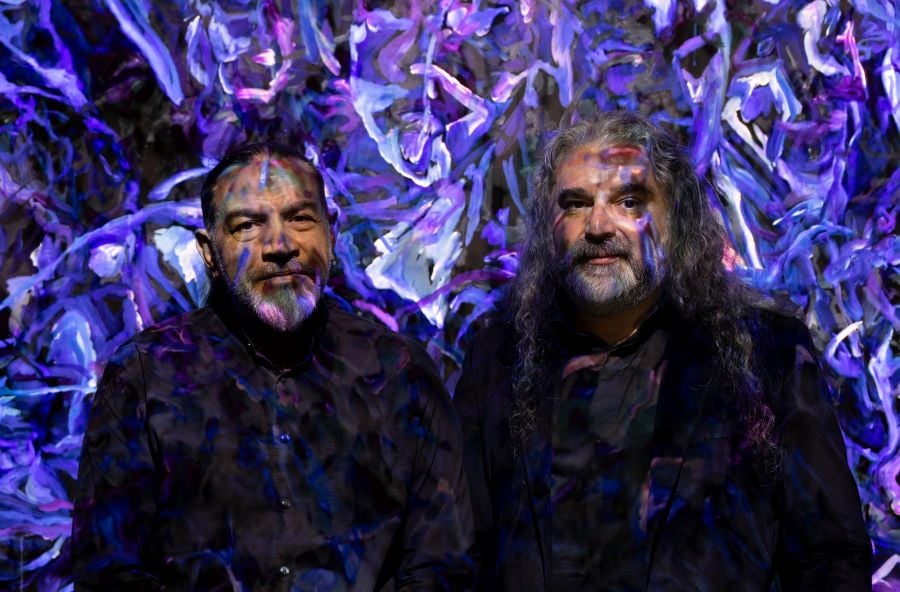
Noting the histories of migration and cultural exchange that have shaped both Venice, where the installations are presented, and Western Sydney, where he is based, Sabsadi said: ‘These histories of resilience, coexistence and movement have anchored the conceptual framework of the work and informed the environment[s] created.
‘Although the two works are presented in different locations across the biennale, they speak to one another and emerge from the same philosophical inquiry. They are one body with two limbs, and together they explore the relationship between inner and outer experience, inviting audiences to reflect on the shared human values of compassion and kindness that connect us.’
Australia Pavilion curator Michael Dagostino added: ‘Khaled’s work welcomes audiences into a space that embraces the tasawwuf (Sufi) sensibility that everything flows and nothing remains fixed. Having worked with Khaled for more than 25 years, I have seen how his practice consistently centres empathy and the possibility of bringing people together through shared experience.
‘In conference of one’s self, the pavilion becomes a contemplative and nurturing environment where painting, moving image and sound converge. Through this immersive experience, the work speaks to Australia’s contemporary identity as a society shaped by migration and cultural exchange while offering a broader meditation on shared human experience.
‘In the end, we have a chance to come together despite our differences and recognise what we share. We hope you find yourself within conference of one’s self, and bring that understanding into your encounters with others,’ Dagostino concluded.
On his social media, Sabsabi acknowledged the tumultuous journey, sharing a joint statement by himself and Dagostino: ‘There are not many words to share beyond our deep gratitude to have reached this moment due to the sheer collective effort and advocacy of so many. We are humbled and feel the love of every person who fought for our participation.’
The statement continued: ‘We firmly believe that the power of art lies in its potential to create conversations and platforms, even when those conversations are difficult. In this way, the journey we have undertaken to reach this point has resolved the initial intent we had in deciding to propose a work for the Venice Biennale.’