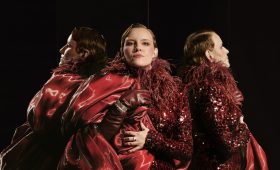
The world premiere of The Shepherd’s Hut, which received a standing ovation on opening night, is an impressive theatrical adaptation of Tim Winton’s acclaimed novel of the same name. Written by Tim McGarry and directed by Matt Edgerton, the stage production grapples with the challenges of overcoming trauma and learning to recognise reality. A troubled tale of attempted redemption, it serves as a dark reminder there are some mistakes you don’t come back from.
Two lives – one waxing, the other waning – are united by the need for both concealment and connection. But what happens when self-preservation becomes analogous with erasure?
The Shepherd’s Hut review – quick links
Adapting The Shepherd’s Hut for the stage
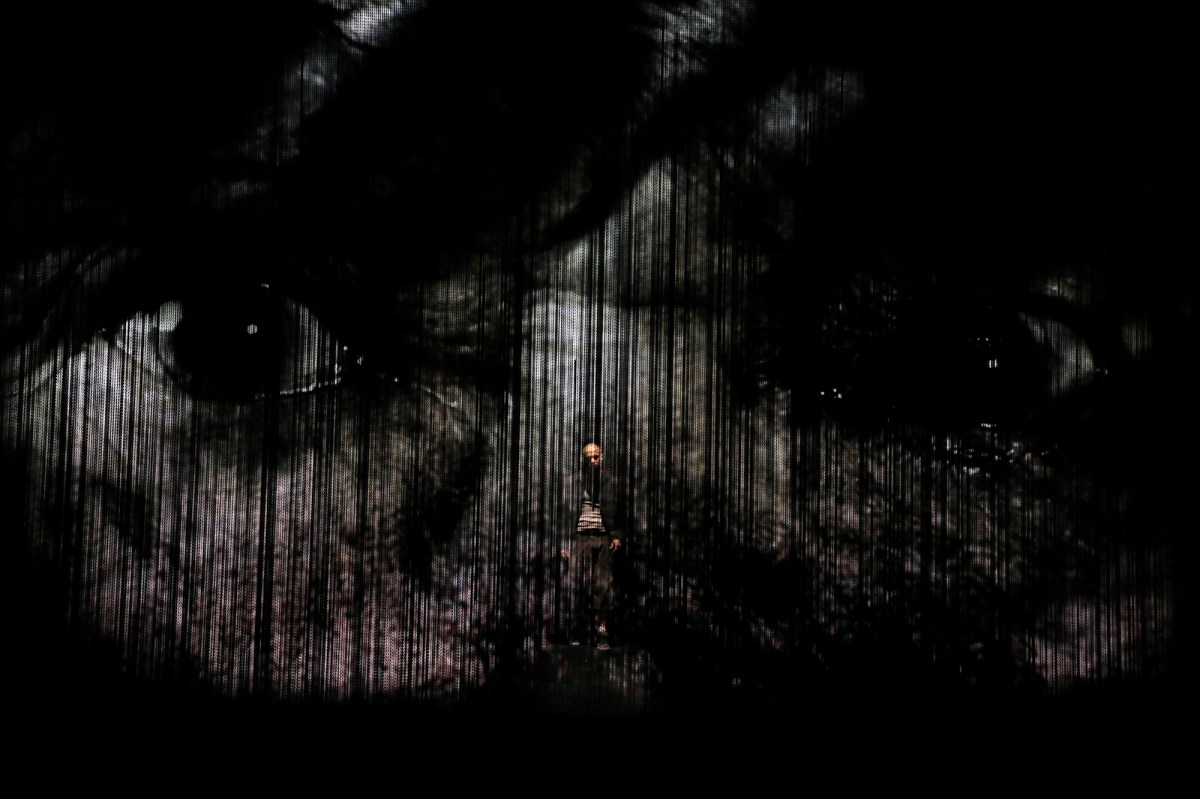
The Shepherd’s Hut opens with veiled video of Australian landscapes overlaid with angry eyes. Discordant music almost drowns out vicious words of verbal violence before the scene transitions to reveal a bare stage and three figures. The story has begun.
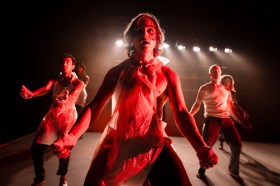
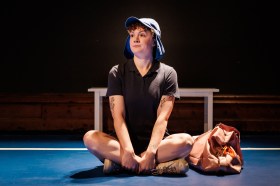
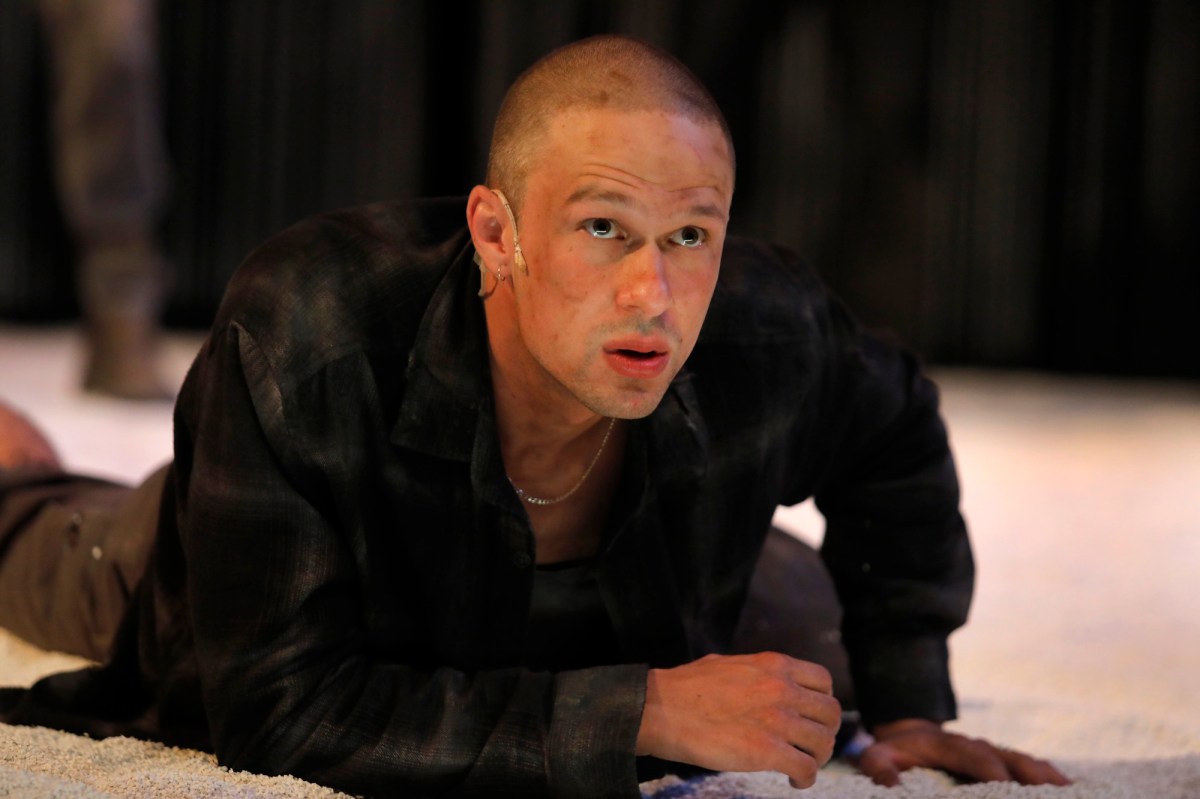
Jaxie Clackton (Ryan Hodson) hides in the desert, injured and alone. He is flanked by two narrators (Ella Prince and Ben Mortley), who paint scenes with words and use their own physicality to convey emotional tone.
The descriptions given by the narrators are as much a part of the setting as the sand that covers the stage. While this sounds like a sloppy attempt to fill gaps with exposition, the approach succeeds both aesthetically and narratively while injecting the play with a literary flavour. This is the closest you’re likely to get to reading a book and watching a play, simultaneously.
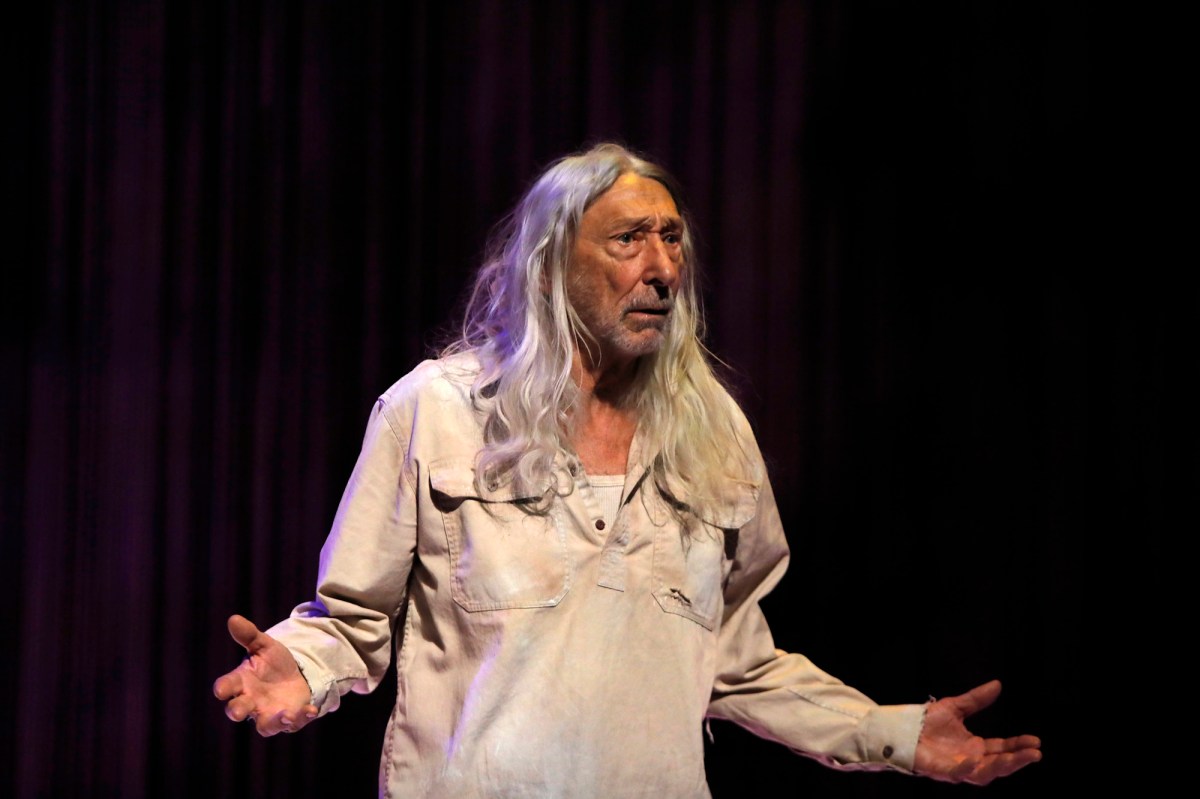
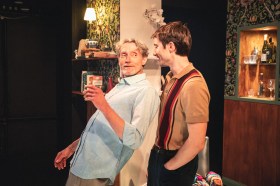
The audience first meets Fintan MacGillis (George Shevtsov) when Jaxie stumbles across a remote hut inhabited by an ‘old fella’ in ‘baggy-ass pants’. Fintan is a disgraced Irish priest who has been living in isolation for the last eight years. He expends considerable effort convincing Jaxie to stay with him rather than perishing in the wilderness.
Jaxie, who is deeply suspicious of the old man, isn’t exactly the most pleasant houseguest. Nonetheless, Fintan appreciates the company of another human as much as he benefits from the extra pair of hands.
Blurring memory and reality
Jaxie is equal parts frightened and frightening. He is obnoxious, paranoid and uncouth, with all the self regulation of an enraged toddler. Through his character, the play explores what it means to be possessed by the past, and to crave peace without attempting to be peaceful. Jaxie’s memories resurface constantly, barging into his present at the slightest hint of a trigger.
George Shevtsov is magnetic as Fintan, and ominous as the representation of Jaxie’s abusive father. This dual casting reflects the way Jaxie repeatedly projects his childhood trauma onto Fintan, often blurring the lines between memory and reality.
Like Jaxie, Fintan is trapped by his own regrets, but his lighthearted empathy makes him an easier character to sympathise with than his emotionally immature counterpart.
Jaxie is a youth at the beginning of his life, and Fintan is a man at the end. They almost meet in the middle, but struggle to completely connect. Their evolving relationship is the main focus of the narrative, interspersed with Jaxie’s nightmarish flashbacks. Neither sees the other (or himself) with genuine clarity, and maybe that’s the point.
Bringing the desert indoors
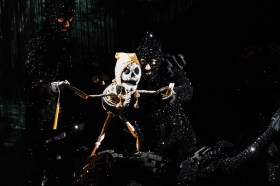
More expressionist than minimalist, Bruce McKinven’s set design augments the character’s emotional isolation as much as the geographical loneliness of the setting. The stage is a literal sandpit, evoking the uncanny weirdness of the West Australian desert. A versatile curtain of countless threads functions as a veil of nightmares, a series of doorways, a dead sheep, a body of water and the night sky.
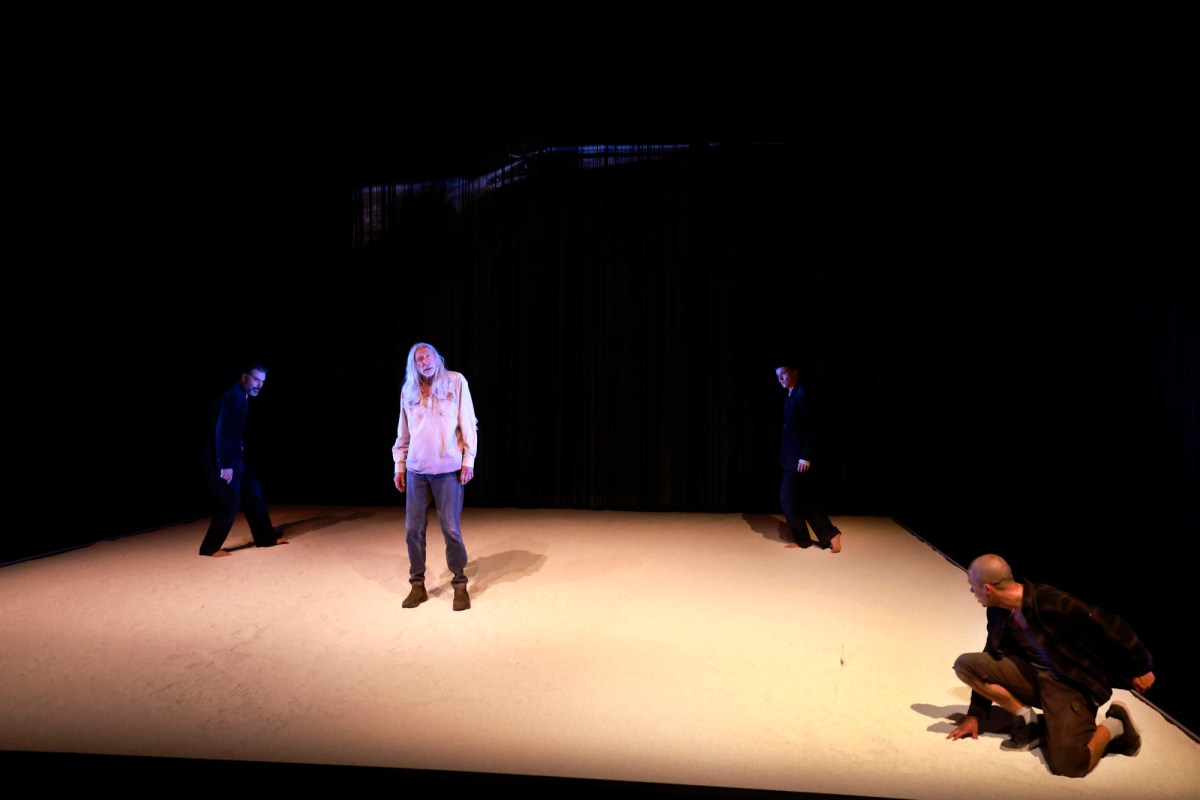
Roly Skender’s video design both complements and extends the physical set to great effect, while Rachael Dease’s haunting compositions hold, build and release tension in perfect proportion to the plot. The invisible ambience of Tim Collins’ sound design incorporates ticking clocks, chirping crickets, birdsong and unsettling hums, creating aural illusions to evoke an expansive world.
Commissioned by Black Swan, this outstanding production is a unique example of Western Australian storytelling, innovative adaptation and world-class theatrical escapism.
The Shepherd’s Hut asks questions like, ‘What’s a good death?’ without looking too hard at what a good life might entail. Sometimes the real story lives in the negative space between the plot beats. Themes of domestic violence, intergenerational trauma and redemption (or lack thereof) highlight the importance of being seen, seeing others and – hopefully – finding peace.
At its core, The Shepherd’s Hut is the story of a traumatised boy and a reclusive old man, hiding from their pasts and, by extension, from themselves. Just as the vast Australian desert maintains echoes of its history, so too do the psyches of these characters.