Oscar Wilde’s iconic comedy of manners, The Importance of Being Earnest, concludes with Jack declaring, ‘I’ve now realised for the first time in my life the vital Importance of being Earnest’ and with that epiphany everyone tumbles, more or less ecstatically, into the next phase of their complicated lives.
Jack passionately kisses Gwendolen, Algernon smooches Cecily, Lady Bracknell surveys the proceedings with imperious approval, Miss Prism clutches Dr Chasuble in an embrace capable of thawing decades of repression, while the butler observes from nearby with palpable relief that all romantic entanglements are finally ‘out’ – pun unapologetically intended.
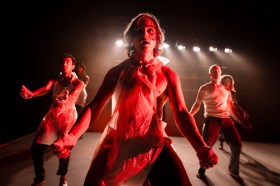
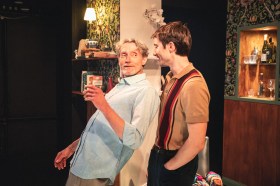
In director Petra Kalive’s exhilarating production for the State Theatre Company South Australia, gender reversal is not employed as a gimmick but as a lens through which Wilde’s text blazes anew. The final tableau is a celebration of flirtation and desire: girl kissing girl, boy kissing boy, and – in Wildean comic spirit – even boy kissing girl.
The result is not merely mischievous but intellectually persuasive and highlights the indefiniteness of identity that Wilde playfully embedded in the play itself.
The Importance of Being Earnest – quick links
The enduring appeal of Oscar Wilde’s wit
If one asks why this production leans so unapologetically into gender bending, the answer is straightforward enough. Wilde encoded the play with queer references, homoerotic insinuations and artful assaults on the rigid hypocrisies of Victorian social and sexual convention.
Kalive understands this is fundamental to the play’s beating heart. Yet crucially, the production never mistakes ideology for artistry. Rather than reducing the comedy to a didactic exercise in modern sexual politics, Kalive allows Wilde’s wit, elegance and emotional intelligence to carry the argument.
Premiering in February 1895, The Importance of Being Earnest has been performed so frequently that one might imagine its capacity to surprise audiences was exhausted long ago. Wrong. Its sparkling language, acerbic wit and relentless cascade of comic one-liners remain irresistibly alive, and this production does far more than simply preserve them – it invigorates them.
The opening-night audience in the Dunstan Playhouse responded with near-constant laughter. Smiles broadened into helpless grins and many spectators seemed scarcely able to recover before the next line landed.
Productions of the play often fall into one of two camps: the polished ‘straight’ interpretation in which Wilde’s innuendo drifts delicately past unsuspecting ears, or the more assertive reading in which the playwright’s queer coding is thrust firmly into the foreground. Kalive’s production belongs decisively to the latter category, though it is executed with such refinement, intelligence and generosity of spirit that it never feels dogmatic. The comedy remains gloriously intact.
Building a world of excess
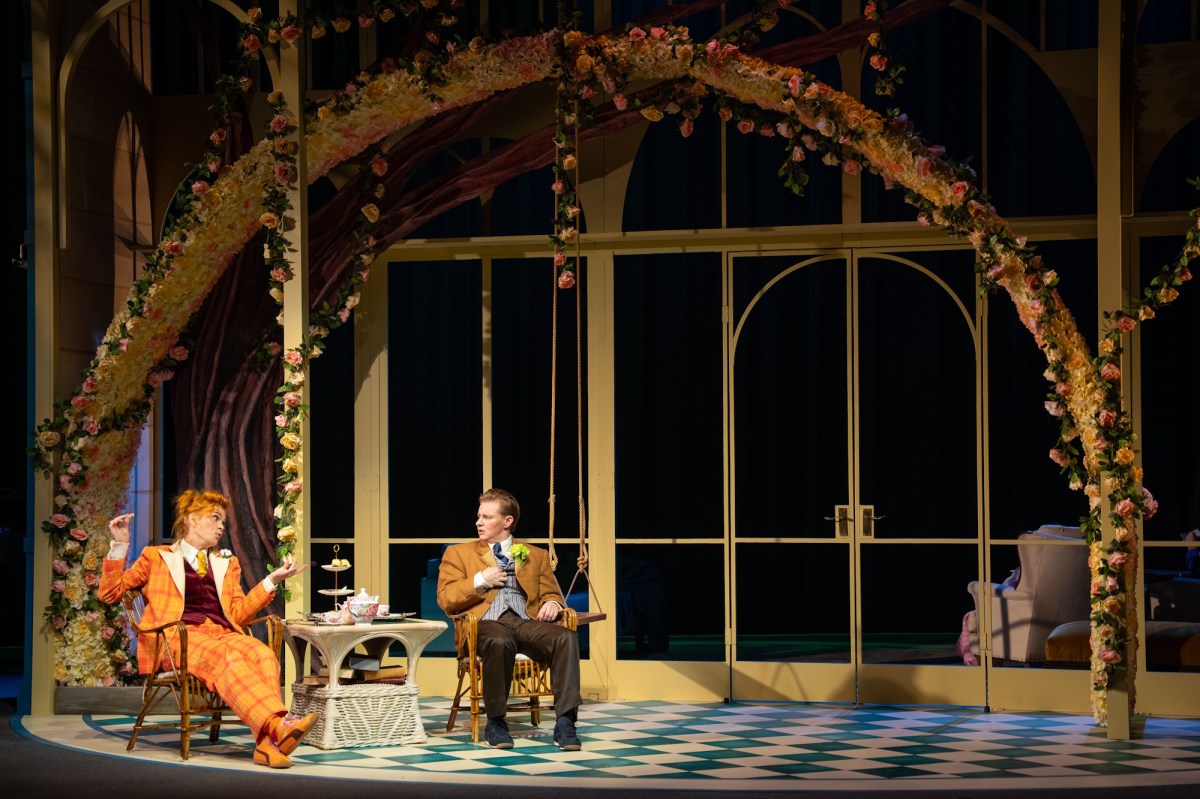
Kathryn Sproul’s set is exquisite. A large freestanding wall with French doors divides a luxuriously appointed drawing room from an exterior garden, perfectly evoking a world of aristocratic aspiration and decorative excess.
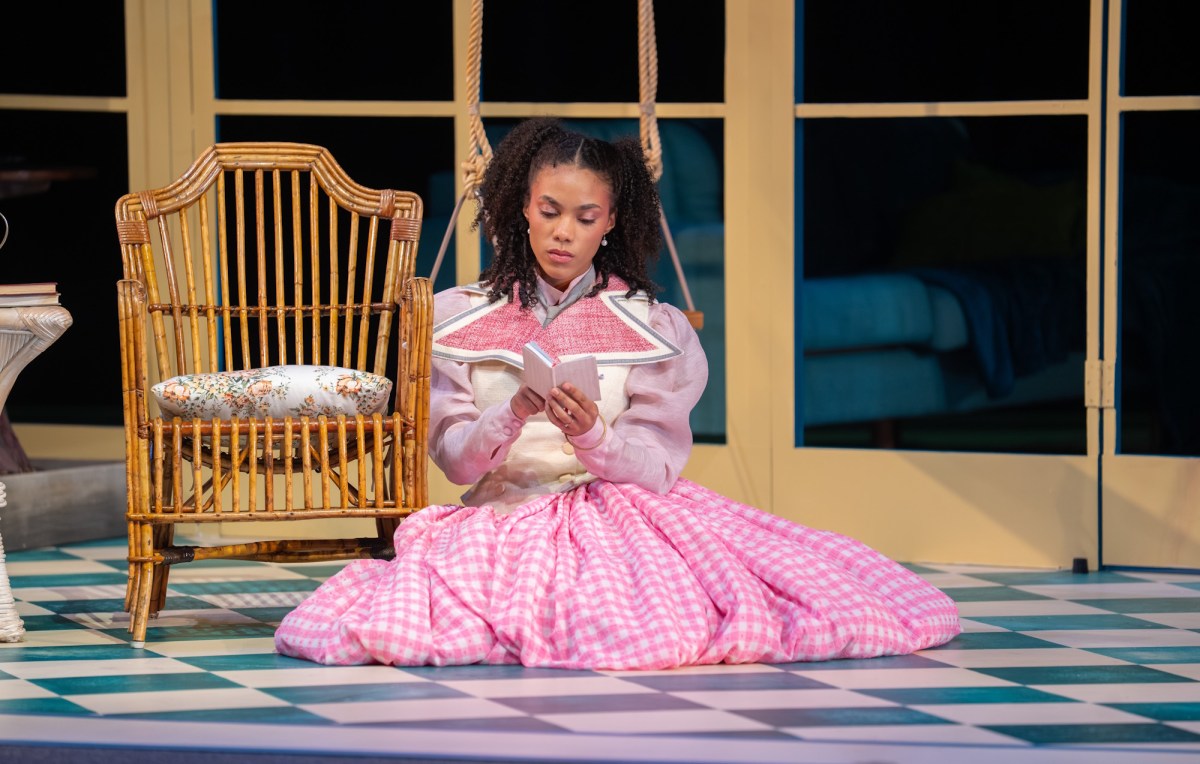
The colour palette – all spring freshness and autumnal pastels – both harmonises and subtly clashes, creating a visual tension that mirrors the play’s undercurrents of deception and desire. Sproul’s richly detailed costumes cleverly blend period and contemporary elements, gently insisting on the play’s continued relevance without labouring the point.
Katie Sfetkidis’ lighting design is warm, generous and emotionally attuned to the action, while the revolving stage allows scenes to glide seamlessly from one domestic setting to another with fluidity. The production’s visual sophistication never overwhelms the text. Rather, it supports Wilde’s dialogue like an elegant frame around a valuable painting.
A particularly inspired innovation is the inclusion of original songs and music by Geoffrey Crowther and Carla Lippis, which accompany scene changes with tongue-in-cheek charm. The lyrics are witty and unexpectedly thoughtful, underlining themes already bubbling beneath the surface of the play.
Lippis, who also appears as two butlers, proves a magnetic stage presence – a chanteuse of unmistakably Weimar flavour, smoky-voiced and deliciously ironic. She looks and sounds as if she’d be entirely at home in a Berlin cabaret of the 1920s. Andrew Howard’s sound design complements the production like a fashionable glove does an elegant hand.
Impeccable comic timing
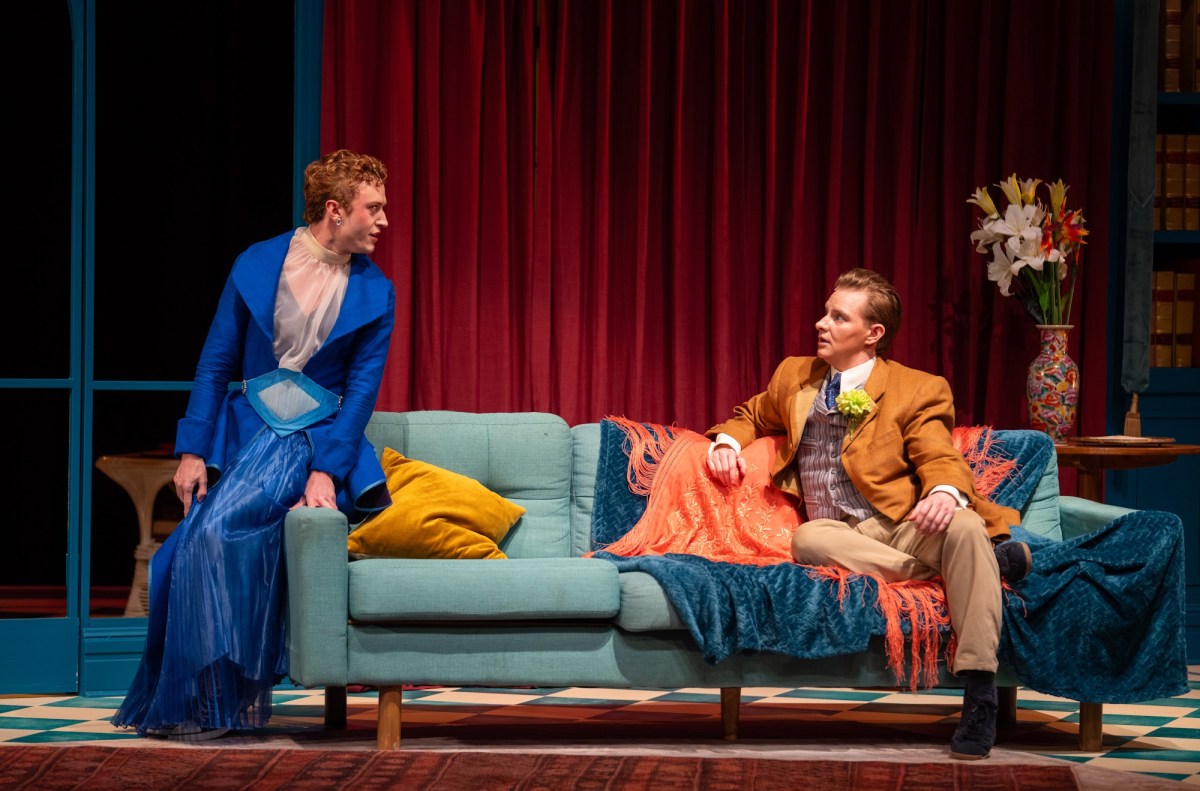
Teddy Dunn and Anna Lindner play Jack Worthing and Algernon Moncrieff with energy, polish and impeccable comic rhythm, though it is Lindner who most dazzlingly mines Wilde’s dialogue for every iota of wit and cynicism.
Dunn gives Jack an appealing veneer of seriousness and respectability while allowing flashes of panic and indignation to erupt whenever his carefully maintained deceptions begin to unravel. Though Jack is the more grounded and ostensibly ‘straightlaced’ of the pair, Dunn ensures he never becomes merely the comic foil. His growing frustration and hypocrisy are played with subtle comic intelligence.
Lindner’s Algernon, meanwhile, is a triumph of languid selfishness. The performance transforms indolence and hedonism into something approaching artforms, delivered with razor-sharp timing and glorious physical expressiveness. Even the actor’s posture and extravagantly bendy feet become comic instruments. One could happily watch this Algernon sprawl for hours.
Pia Gillings and Connor Pullinger bring tremendous vitality to Cecily Cardew and Gwendolen Fairfax, the women determined to marry someone – anyone – named Ernest. From their first appearances, both performances reject the passivity expected of Victorian heroines. These women are sharp, wilful and entirely capable of orchestrating their own romantic destinies.
Pullinger is especially hilarious as Gwendolen. Kalive appears deliberately to have resisted dressing Pullinger to look conventionally pretty, a choice that frees Pullinger from merely echoing Lady Bracknell and instead allows a more eccentric, independent comic creation to emerge. Gillings and Pullinger imbue their characters with intelligence, forcefulness, strength and feistiness, representing the emergence of ‘liberated’ women within a society determined to repress them.
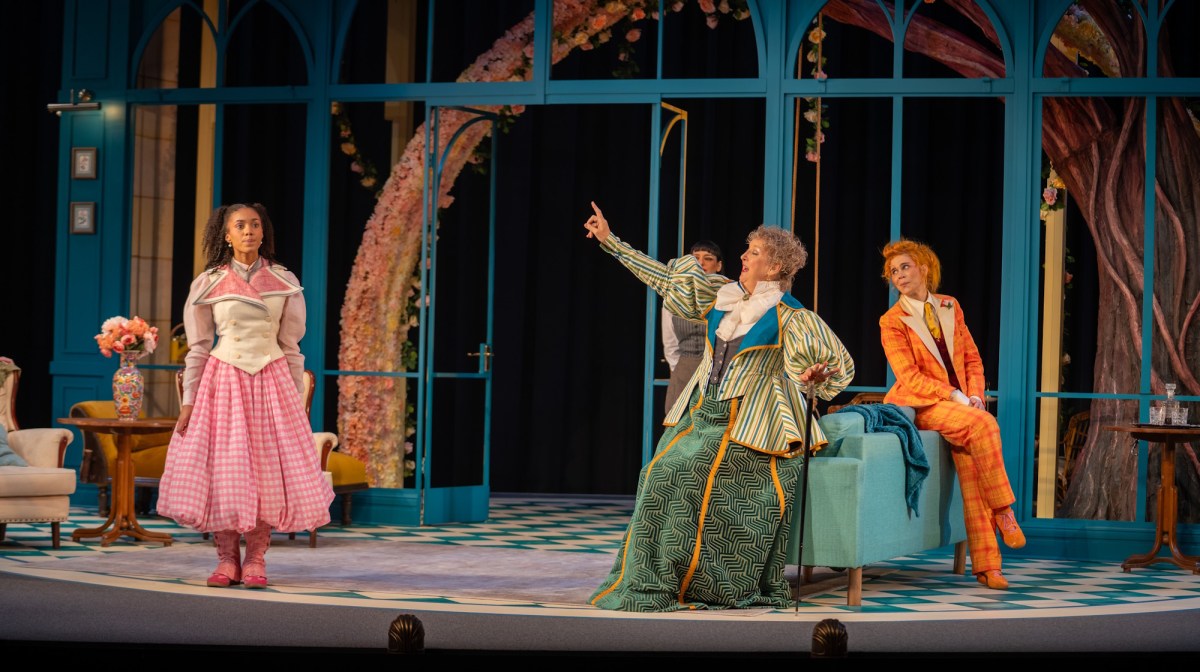
Pleasingly, Kalive avoids the now rather common choice of casting a man as Lady Bracknell. Glenda Linscott delivers a Bracknell of formidable authority and comic grandeur. Since the character functions as Wilde’s principal satirical weapon against Victorian England, the performance needs to dominate without descending into caricature, and Linscott achieves precisely that balance. Every line lands with immaculate diction, superb timing and icy assurance.
The supporting cast is equally strong. Caroline Mignone makes Dr Chasuble delightfully bumbling and faintly absurd, while Nathan O’Keefe’s Miss Prism is a wonderfully eccentric creation, played with a broad physicality that recalls a character from The Aunty Jack Show!
Petra Kalive’s production of The Importance of Being Earnest for the State Theatre Company of South Australia is entertaining, astute, visually lavish and gloriously funny. It understands that Wilde’s power as a playwright derives not from the obvious laughs rippling along its surface but rather from the rebellious ideas that lurk not far below its polished surface. This production captures both the sparkle and the subversion. It is a complete joy.