
On Thursday night (20 November) there was a buzz in Sotheby’s New York auction rooms. A 1940s self portrait by Frida Kahlo, titled El sueño (La cama), was already tipped as a potential record breaker.
It did not disappoint. The hammer fell to a phone bidder at $84.6 million (USD$54.7 million), making Kahlo’s painting the highest ever by a woman artist sold at auction.
But this desire to own a piece of Frida Kahlo is not news. She previously held the record for her 1949 painting Diego y yo, which was also sold by Sotheby’s in 2021. It was not only the highest value for a woman but for a Latin American artwork at the time.
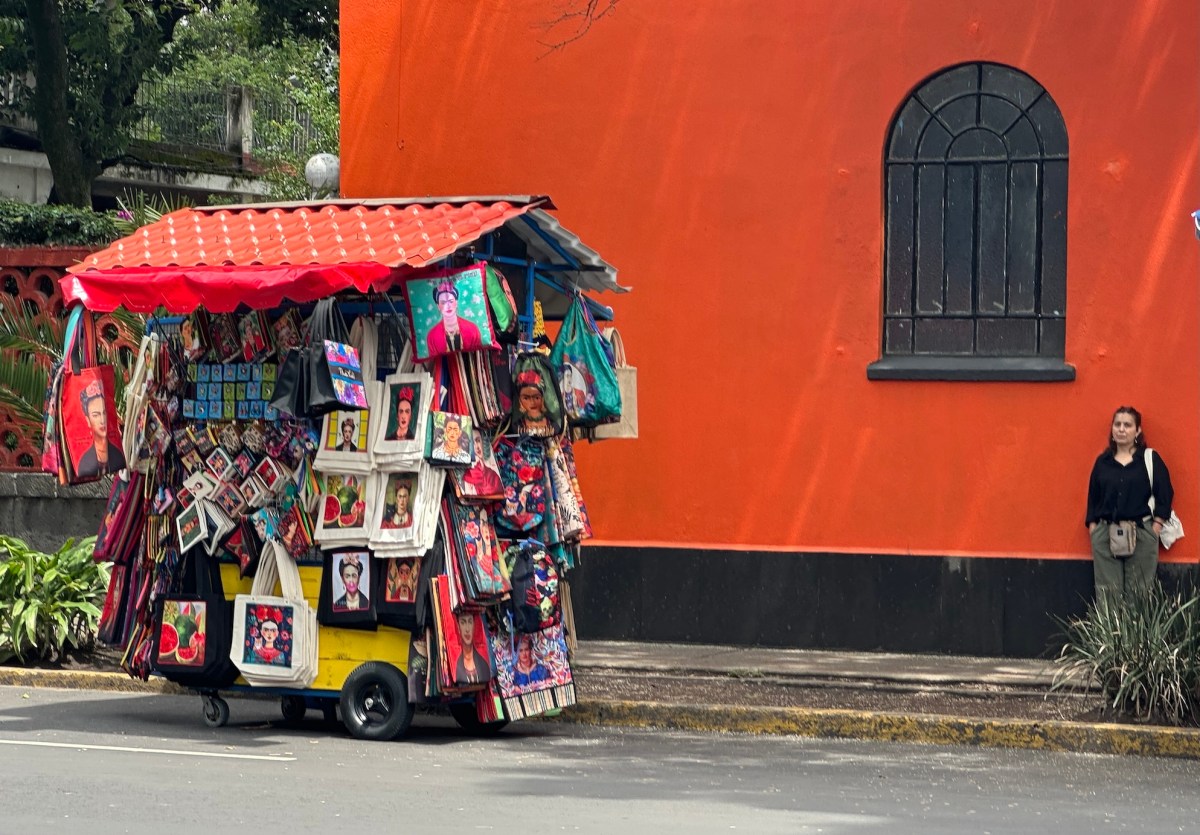
While auction prices are headline grabbers, they are just a tip of the frenzy for all things Frida – colloquially known as ‘Fridamania’. Indeed, the last time I was coming through Mexico City’s airport I was spritzed with the latest Frida cologne, with fridge magnets, water bottles and totes all sporting her image in the convenience store.
Why this pervasiveness of her image – and kind of freakish need to own it – and why is it on the rise in 2025 and heading into 2026?
Frida on my mind – quick links
Monobrows aside… unplucking the pervasive image of Frida Kahlo
While Frida Kahlo has possibly the world most celebrated monobrow and single-name status, it is her paintings – as much as the enigmatic character – that have captured the imagination of audiences.
These have been fueled by countless exhibitions and publications (perhaps the most well known is her biography by Hayden Herrera) through to immersive experience exhibitions and an Oscar-winning biopic staring Salma Hayek (2002) that cleverly captured her paintings on the silver screen.
It was not the first film on Frida. Indeed, her life was brought to the screen in the 1981 film Frida, Still Life by director by Paul Leduc, and most recently in 2024, in the documentary by Carla Gutiérrez – also simply titled Frida – which debuted at the Sundance Film Festival. It is narrated in her own words, which have been lifted from archival material, with animators Sofía Inés Cázares and Renata Galindo bringing versions of her paintings to life.
Read: Why does Frida Kahlo’s fame outshine other women artists?
Kahlo’s painting entered the public domain in 2025
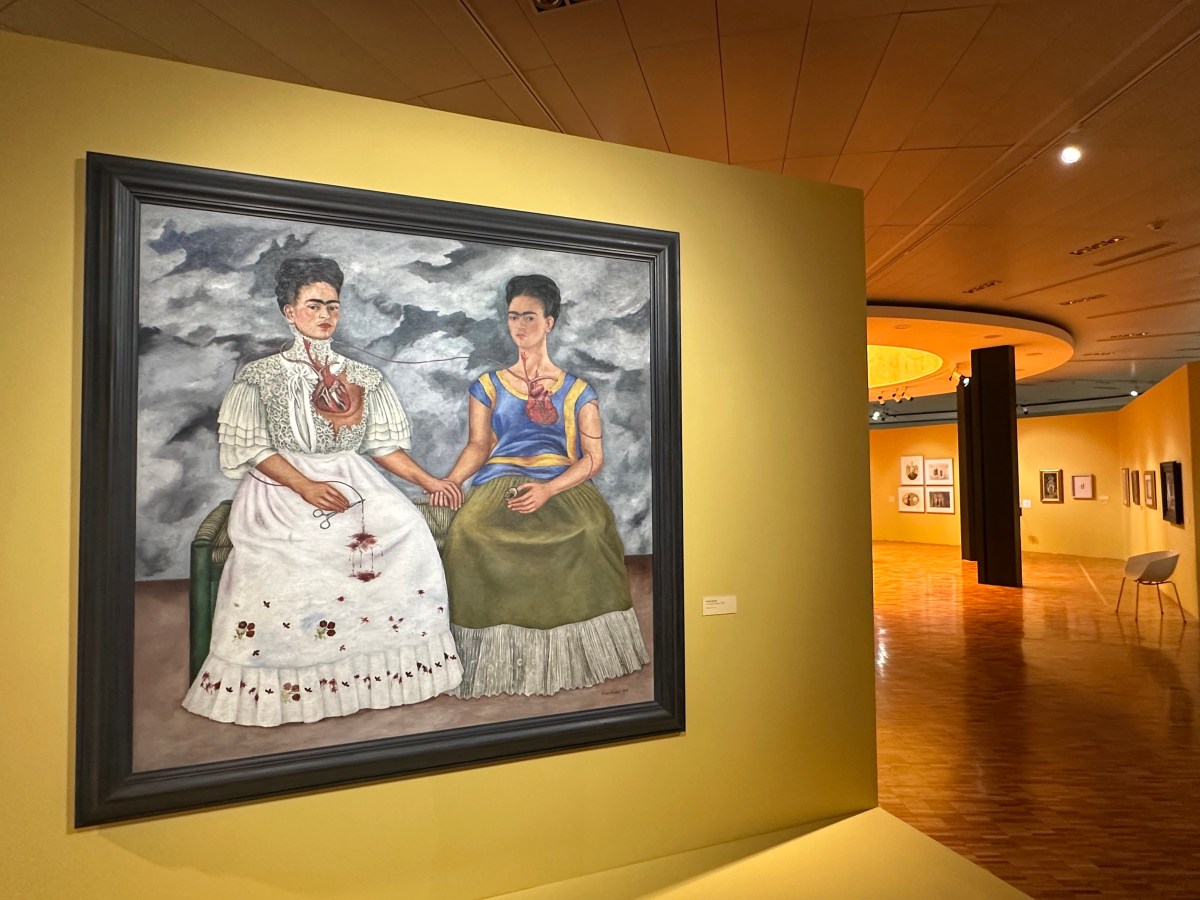
While Mexico has hit the list as one of the hot tourism destinations of 2025 and 2026 – fueled also by the popularity of Mexico’s female President Claudia Sheinbaum – another gateway that opened up in 2025 was the copyright protection on Frida Kahlo’s paintings.
In January this year, they entered the public domain in the US and UK, South America, and most of the European Union, which allows free use 70 years after an artists’ death.
On the one hand, this has seen a new flood of tchotchkes and knick-knacks bearing Frida’s image entering the market this year – continuing to fuel Fridamania – but on a more positive note, it has opened up the use of her images for other creatives, educators and media sources, and I predict we will see more of these deeper dives beyond ‘the merch’ in 2026.
Frida on the calendar in 2026
Whether it was because of the 70th anniversary of her death or not, there was a flurry of exhibitions that attempted to take fresh views on Kahlo’s life in 2025, including Frida: Beyond the Myth at the Dallas Museum of Art, and touring the US; Frida Kahlo: Picturing an Icon at the Washington County Museum of Fine Arts, US; the photographic exhibitions, Diego y Frida: Un Universo at Librería Porrúa, Mexico City and Frida Kahlo Through the Lens of Nickolas Muray at the Museum of the Shenandoah Valley, Virginia, US; and Frida Kahlo – Her Photos at Thessaloniki Museum of Photography, Greece.
In Australia, we had our own major exhibition on Frida Kahlo’s life this year, with the exhibition at In her own Image at Bendigo Regional Art Gallery, adding to Art Gallery of South Australia’s earlier exhibition Frida and Diego: Love and Revolution and the 2023 Sydney Festival’s immersive experience Life of an Icon.
But the show everyone has been awaiting is Frida: The Making of an Icon, which opens in January at the Museum of Fine Arts Houston in the US before touring to Tate Modern in London in June 2026, with 130 artworks, photographs and memorabilia.
Sotheby’s lot description for El sueño (La cama) says the painting had been requested for the Tate iteration of the exhibition. It may be the last time to see this painting before it moves to the new owner’s private collection.
And, capturing the zeitgeist in 2026, the Art Gallery of New South Wales Members have included Frida Kahlo with a visit to Mexico City and Oaxaca in its new International Study Tours in April 2026 – which in full disclosure, I am leading to bring all things Frida to life.
Read: Postcard from Mexico City: Modernist architecture to famed murals and the hottest art galleries.
New museum dedicated to her life opened this year
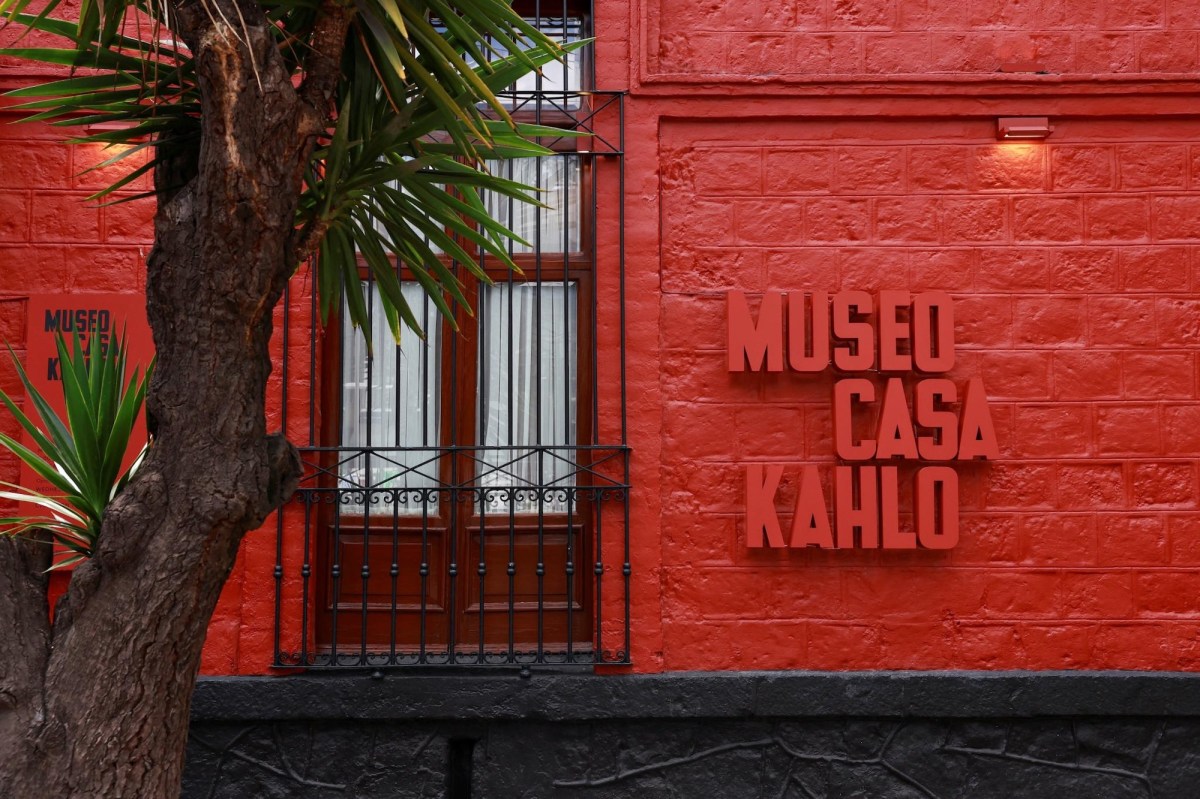
Frida’s home, the famed Casa Azul or blue house, is a must visit for any art loving visitor to Mexico City. However, now tourists can double dip with the opening of Museo Casa Kahlo – or the Red House – in September this year, just a few doors away. While Casa Azul focuses on her adult life (and has been a museum since 1958), Casa Roja highlights her early life, her family and her upbringing and is run by her relatives.
Frida’s parents had owned the house before she bought it and gifted it to her sister Cristina Kahlo when she split from her husband. It is Cristina’s granddaughter Mara Romeo Kahlo – and her daughter Frida’s great-grand nieces – who have transformed it into a museum. Among the highlights is Kahlo’s first oil painting, childhood toys and embroidery, as well as the only mural that Kahlo ever painted. It also touches on her relationship with her father, photographer Guillermo Kahlo, who she often assisted.
More about El sueño (La cama)
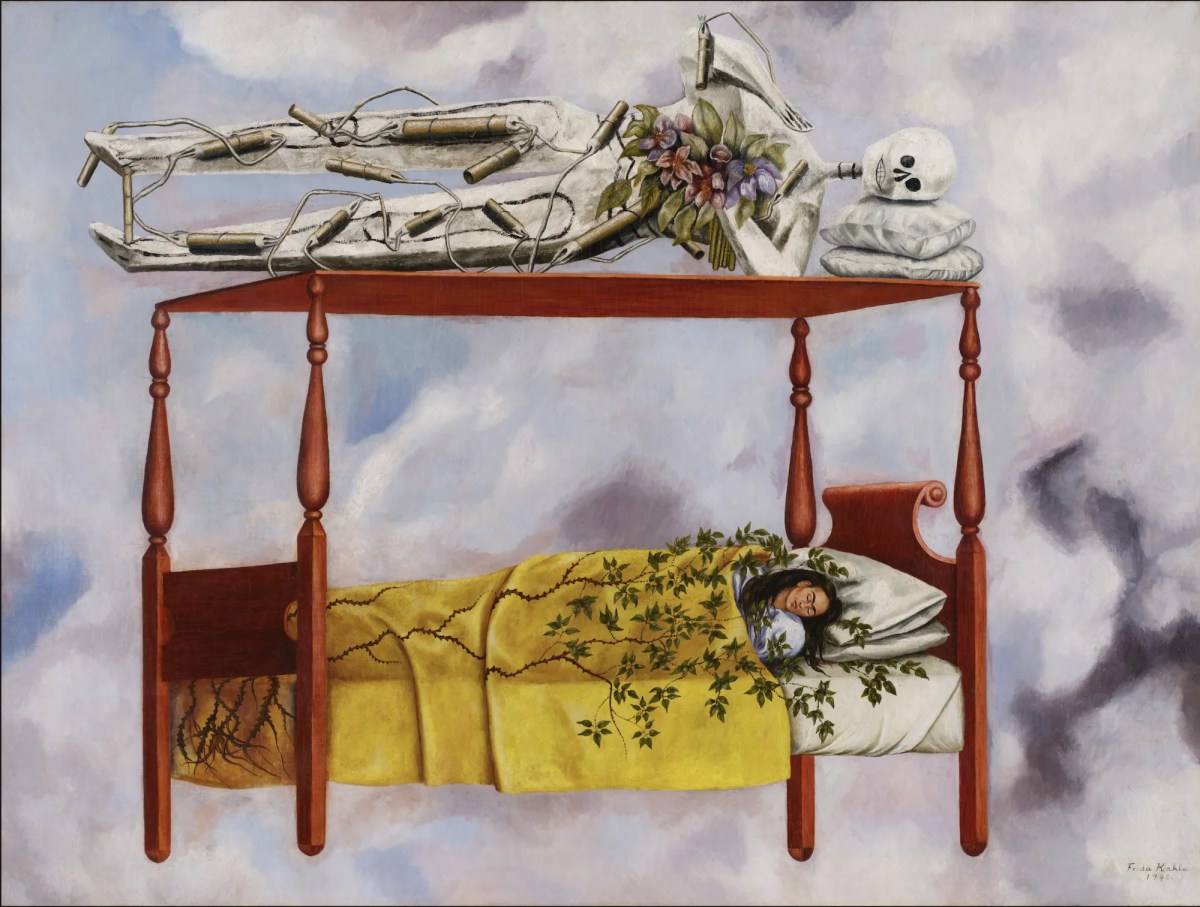
Curiously, Kahlo’s record-breaking painting was presented in Sotheby’s Surrealism auction this month – a movement she is said to have had a vexed relationship with, persistently pushing back against her labelling as part of this coterie of artists.
The painting depicts Kahlo reclining on a floating bed, on top of which lies a skeleton. Anyone visiting Casa Azul will see her tiny bed, which has larger-than-life notoriety. The painting was featured in art historian Whitney Chadwick’s landmark 1985 book Women Artists and the Surrealist Movement, where he describes, Kahlo’s ‘identification with the Mexican belief in the indivisible unity of life and death’.
We have to remember that Kahlo was adamant that her work was based on her life experiences rather than the subconscious imagination of Surrealism, famously writing in a letter: ‘They thought I was a Surrealist, but I wasn’t. I never painted dreams. I painted my own reality.’
The painting came to Sotheby’s from the estate of Selma Ertegun (and her late husband Nesuhi Ertegun). The buyer has not been disclosed.