It was a perplexing relationship with his own dog that sparked the idea for seasoned writer, director and actor Leon Ford’s latest series, Dog Park.
‘I’ve got a really beautiful family dog. She’s very smart and very cute and everyone thinks she’s the most adorable dog in the world, but I always just found we had a very different relationship,’ he tells ScreenHub.
‘She hovers in doorways and she stares at me when I’m trying to work. If I was paranoid, I would think she’s playing mind games with me.’
It was this contradiction between affection and anxiety that set the backdrop for Ford’s foray into television co-creation, developing the new ABC comedy-drama series Dog Park.
Developing ABC’s Dog Park – quick links
Building the Dog Park pack
Along with writing four episodes of the series, Ford also stars as the show’s central character, the prickly and irritable Roland.
‘I think it came organically out of just telling stories about our own dogs,’ he says of the series, ‘and I think my experience formed Roland’s relationship with his dog to an extent.’
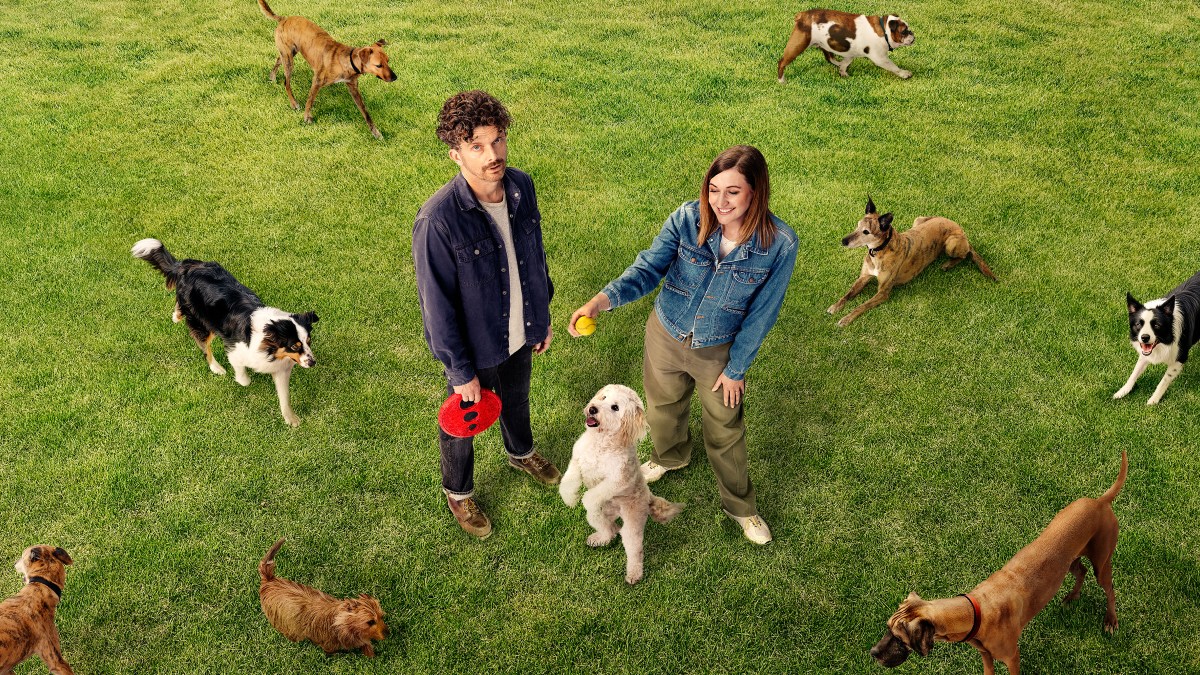
Newly separated and saddled with the dog he never wanted, Roland is reluctantly pulled into the orbit of a local dog park. When his mischievous mutt Beattie keeps sneaking off to the park, he’s drawn into repeat encounters with the same loose-knit group of dog owners – a ragtag ensemble that slowly but surely begins to feel like a pack.
‘I didn’t necessarily have the role the whole time,’ Ford explains. ‘I think I always put my own story and myself into characters that are played by other people. I was always hoping to play the role but I was never expecting that.’
For Amanda Higgs, Creative Producer at Matchbox Pictures and Ford’s co-creator on the series, that decision became increasingly obvious as the project took shape.
‘I think [Ford] has a very particular sensibility about how Roland operates in the world, and the more that he talked about things that annoyed him with his dog, the funnier and more relatable it seemed to be.’
A setting ripe for chance encounters
Higgs had long been interested in developing a show centred on people finding community in unexpected places and for her, dog parks offered a quietly rich setting.
‘I think I’ve been drawn to places where people find family and their tribe. With the rise of the dog population, especially in Melbourne, it felt like dog parks were the new home that people gravitated towards.’
That pull towards dog parks wasn’t just about location but setting the right tone. By anchoring Dog Park in an ordinary, almost overlooked setting, the series leans into a gentler mode of storytelling – one built on chance encounters, small world communities and everyday relationships.
It’s an environment that naturally lends itself to intimacy, letting connection creep in rather than relying on heightened stakes. In many ways, it reflects a broader move towards more hyper-local Australian stories, where the most ordinary places end up carrying the most emotional weight.
Ford agrees the dog park offered a well-worn dramatic function – bringing disparate people together – but with a crucial distinction.
‘When you get workplace comedies or dramas, you always have people from different backgrounds being thrown together, and that’s a good starting point for any story,’ he says. ‘But I think for this show…the benefit of the dog connection is that it brings different people together but they want to be together – except for Roland of course.’
A clash of personalities
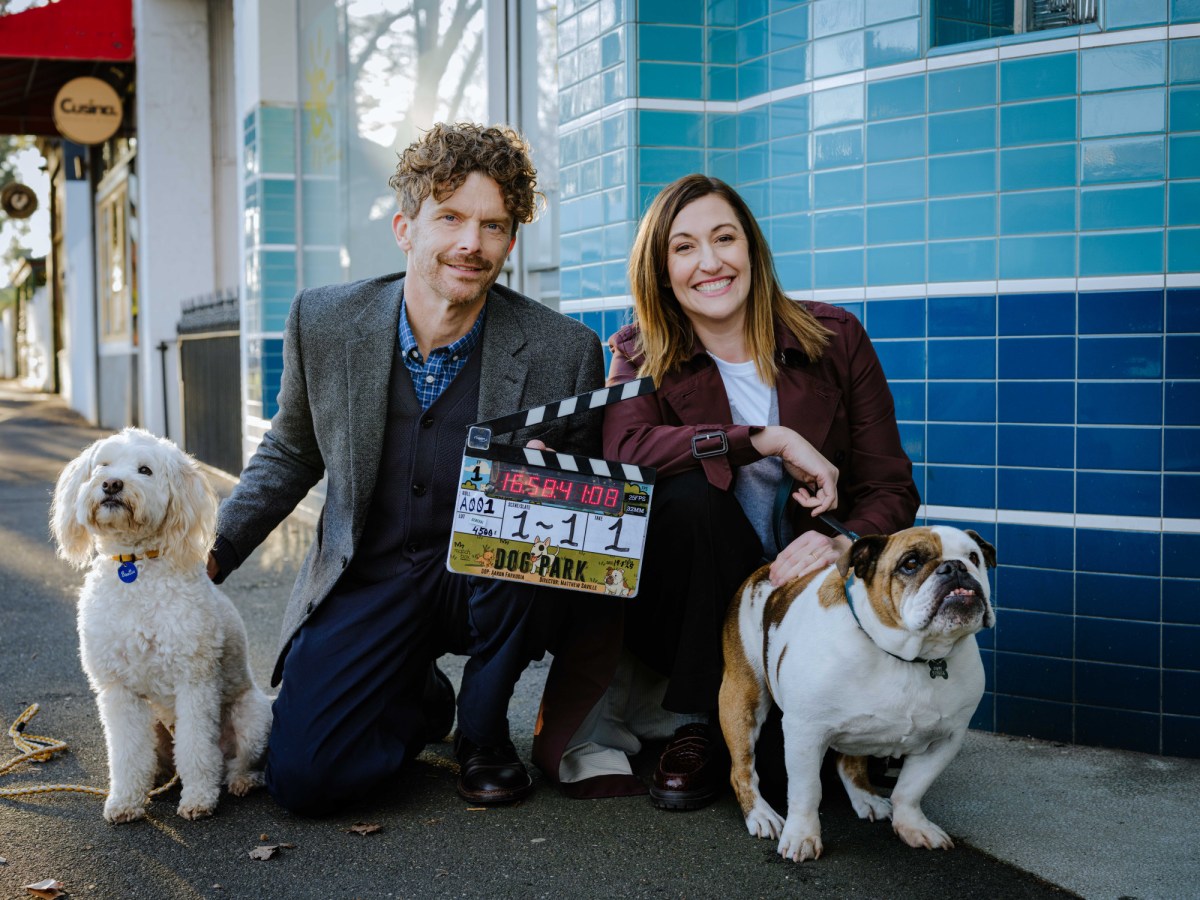
That sense of reluctant participation sits at the heart of Roland as a character. Grumpy, defensive and quick to fixate on life’s minor frustrations, he’s a man slowly realising things haven’t turned out quite how he expected – his marriage and family life, even the version of himself he thought he’d be by now. It’s a temperament Ford believes is common in the ‘the middle-aged man’ archetype.
‘Roland sort of represents the fly in the ointment, the unwanted guest at a dinner party,’ he laughs. ‘I’ve got a lot of mates where I notice similar behaviour [to Roland]. They’ll start to get annoyed at the little things in life like, the injustices of not putting your blinker on at the intersection,’ he observes, ‘but I think that may have something to do with a loss of control of the big things, or life not going the way anyone expects.’
Set against Roland’s simmering irritability is the dog park ensemble itself, a mismatched group whose collective outlook offers a gentle counterweight to his cynicism.
‘I think the real point of it,’ Ford says, ‘is the whole dog park cast who just go, “Mate, enjoy life! Stop regretting the past and worrying about the future!”‘
One of the most important figures in that sphere is Samantha, played by veteran Aussie comedian Celia Pacquola, whose boundless optimism and emotional openness make her an unlikely foil – and companion – for Roland’s grouchiness. Where Roland resists connection, Samantha leans into it, and it’s that push-and-pull that gives the series much of its warmth and humour.
Wrangling the canine cast
While the human ensemble provides the heart, Dog Park’s most scene-stealing performances often come on four legs. Despite the old adage never to work with dogs or children, Ford says the canine cast contributed to a ‘really positive feeling’ on set.
‘The funny thing is, the five or six main dogs have their own personalities, so some of them were really good and some of them were very naughty and would try to make the others naughty. It does feel like a bunch of kids really.’
That energy, unsurprisingly, can always go a little off leash once the cameras roll.
‘Any time there are dogs looking in a particular direction,’ Ford says, ‘there are always one or two people off camera going, “Look over here! Look over here!” So, you just get a chorus of people going, “Stay, sit, stay, sit!” and they’re waving all these chickens on the ends of sticks. As an actor, you normally have to block out the crew – but this was even more so, you really had to concentrate.’
For Amanda Higgs, all of that – the humour, the mess, the misbehaving pooches and the relationships that slowly click into place – feeds into what she sees as the show’s core appeal.
‘I think it’s about human connection and kindness,’ she says. ‘I feel like audiences want to watch something that feels hopeful right now, and that feels that we’re able to tap into what’s good and kind about us – especially when we come together and find friendship.’
Dog Park premieres 1 February on ABC TV, with all episodes available to stream on ABC iview.

This article is published as part of ArtsHub’s Creative Journalism Fellowship, an initiative supported by the NSW Government through Create NSW.