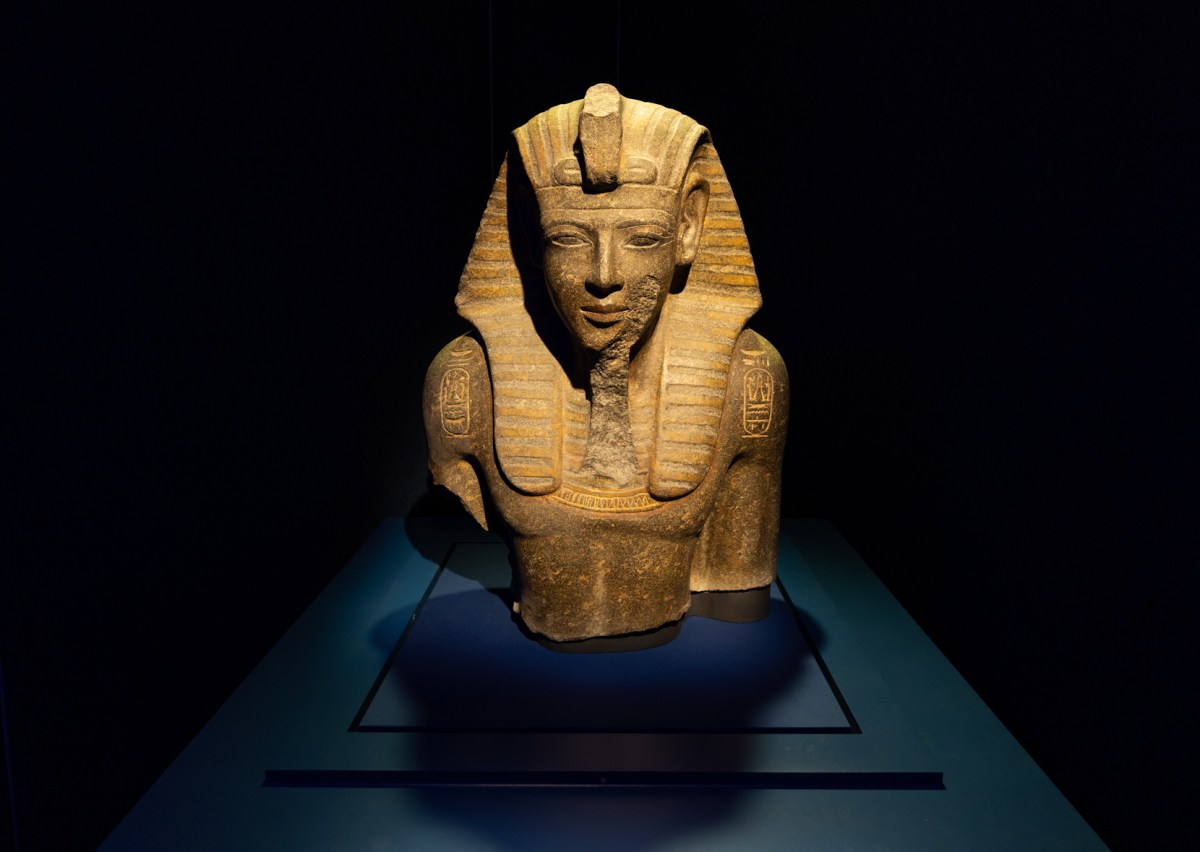
It all feels very familiar – images of pharaohs and mummies – in an Indiana Jones-cum-Tomb Raider kind of way. As audiences, we have been tutored into the world of Egyptology via the big screen, coffee table books, TV documentaries and even graphic cartoons. So, what does it feel like to stand in front of these objects? And is it worth the cost of bringing these exhibitions to Australia?
But there is no loss to be felt with Tut replaced. Born circa 1303 BCE, Ramses the Great (Ramses II, who reigned from 1279 to 1213 BCE) lived longer than any other Egyptian pharaoh – including King Tut – had 100 children, and was a zealous architect and self-promoter. ‘Ramses would have been the rock star of the ancient world,’ Fran Dorey, Archaeologist and Head of Exhibitions at AM tells ArtsHub.