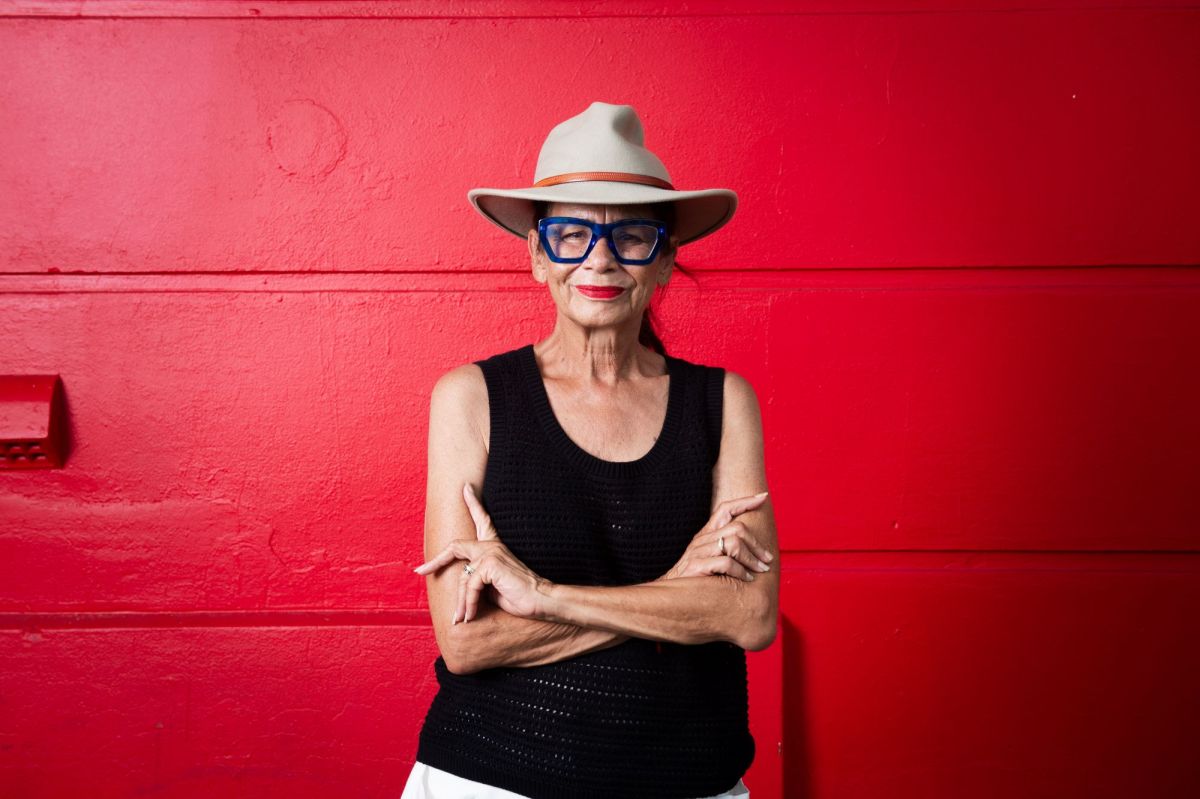
Aboriginal and Torres Strait Islander readers are advised that this story references a deceased person; her family has given permission for her name and photographs to be used.
Cultural visionary, festival founder, artist and arts leader Rhoda Roberts AO, a Widjabul Wiyebal woman of the Bundjalung Nation who introduced the now-traditional ‘Welcome to Country’ to the national conversation, has died aged 66.
She is remembered as a champion of First Nations rights in Australia, a guiding force who advanced cultural conversations nationally, for her humility despite her many achievements, and for her energy, wisdom and her sense of humour.
Among her many honours and awards, Roberts was made an Officer of the Order of Australia (AO) in 2016 for ‘distinguished service to the performing arts through a range of leadership and advocacy roles in the development, promotion and presentation of contemporary Indigenous culture’.
Roberts’ death was announced in a social media post by family on Saturday (21 March), which advised that ‘our beautiful Rhoda Roberts has returned to the Dreaming on Saturday, March 21 at 1:00pm. She passed peacefully in hospital after a 7-month fight with a very rare type of ovarian cancer’.
The statement continued: ‘Words fail to capture the true love, depth, intelligence and warmth that was our beloved Rhoda. She dedicated her life to culture, country and people from all walks of life. She never judged and never discriminated, she always wanted to help uplift people’s lives and provide love and care. She faced so much trauma in her life, but continued fighting and never gave up. Her strength, dedication and pure love will forever be remembered. She helped make incredible, positive change for so many and for this Country.’
The family added that they would ‘share details regarding her celebration of life when they are finalised. At this time our family asks for understanding and privacy as we navigate this grief and celebrate the life of a woman who lived with joy, warmth, intensity, creativity, imagination and heart’.
Vale Rhoda Roberts – quick links
Who was Rhoda Roberts AO?
Born a twin in Sydney’s Canterbury Hospital on 8 July 1959, Roberts grew up in a loving family where Language was still spoken (‘even though it was outlawed, you just didn’t do it in front of white people,’ she told the Facebook page Humans of Lismore in 2024).
In childhood, she was surrounded by inspiring Aboriginal leaders, including her father, Frank Roberts Jnr, a key figure in the 1976 Referendum and a co-founder of the Koori Times, along with Faith Bandler and Pastor Sir Doug Nichols. She also battled racism, discrimination and tragedy growing up, including the disappearance and murder of her twin sister Lois in July 1998.
Roberts began her professional life as a nurse, though her childhood ambition was to become a writer. She went on to become the first Indigenous presenter on Australian prime time television, and the first Aboriginal Australian to present a prime time current affairs program, the 1990 SBS program, Vox Populi.
She co-founded the Aboriginal National Theatre Trust in 1987, established Sydney’s Dreaming Festival in 1998 (the festival became part of Woodford Folk Festival in 2004 and Roberts remained its Artistic Director until 2009) and co-created, with choreographer Stephen Page AO, Awakening, the First Peoples section of the Sydney Olympics opening ceremony in 2000, which presented Aboriginal and Torres Strait Islander culture to the world.
Speaking about the importance of uplifting First Nations art and culture at the 2019 National Indigenous Arts Awards, Roberts said, ‘Every action, every sound, every step, every paint, every piece of music that we make as First Nations people has an impact on our society, and we grasp that with pride.’
Roberts introduced the ‘Welcome to Country’ to the arts sector, and subsequently to wider Australia, while working on Woodford’s Festival of the Dreaming, inspired by an uncle’s words in 1973 according to her ABC obituary.
‘Everyone kept trying to correct it, “Welcome to the Country” or “our Country”, and I said, “It’s not ours. We live with it.” So that’s how it became Welcome to Country,’ Roberts told ABC’s Indigenous Affairs Team in late 2025.
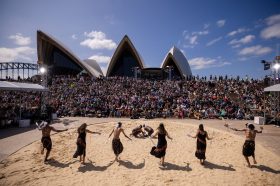
She was also an actor, writer, playwright, board member, the inaugural Head of Indigenous Programming at Sydney Opera House, and Creative Director of Parrtjima Festival in Mparntwe/Alice Springs.
Speaking on behalf of the Parrtjima team, Suzana Bishop, Tourism and Events NT CEO, said, ‘I want to express our heartfelt sadness at the passing of Rhoda Roberts AO. Rhoda was the guiding creative force behind so many iconic Australian events including Parrtjima. Rhoda was a gifted curator, storyteller and cultural leader whose vision shaped events in ways that will stay with us forever.
‘Rhoda’s impact reached far beyond Parrtjima. She helped bring to life light installations and cultural experiences from Uluru to Alice Springs and everywhere in between, leaving her mark on some of the Territory’s most iconic moments.
‘Her generosity, wisdom and deep respect for community and Country touched everyone who had the privilege of working with her. We are profoundly grateful for all she gave to the Northern Territory, and her legacy will continue to shine,’ Bishop said.
Remembering a funny, tough and loving Renaissance woman
‘Rhoda kept changing,’ Quandamooka man, playwright, director, artistic director and Creative Australia Board Chair Wesley Enoch AM tells ArtsHub.
‘When you think about her early career as a nurse, and then in the media, in terms of her journalism and also then as an actor, then as a producer, festival director, it’s really hard to kind of isolate what her real contribution has been – and nor should we. She was an absolute Renaissance woman with the ability to move through a whole range of spaces and influence them,’ Enoch says.
He adds: ‘My career is only possible because … Rhoda Roberts opened up that conversation for people to see us [Australia’s First Peoples] as significant contributors to the cultural life of this country, not just to our own cultural milieu … and I love that. She really pushed the envelope.
‘I re-watched some of [SBS series] The Whole Table, a thing that happened … during Covid around some big conversations, First Nations conversations. And listening to her talk – not just from a cultural perspective, from an arts perspective – about the broader cultural influence of this nation; this idea that the liberation of the whole country comes through the liberation of Aboriginal Australia – liberation meaning we can free non-Indigenous Australia from the shackles of its own colonial history, if you just engage with us from a strengths-based conversation, rather than a deficit conversation – she kept saying that over and over again,’ Enoch continues.
‘And now it’s pretty much common knowledge, common conversation now – because Rhoda put the words into everyone’s ears that they could then understand the idea.’
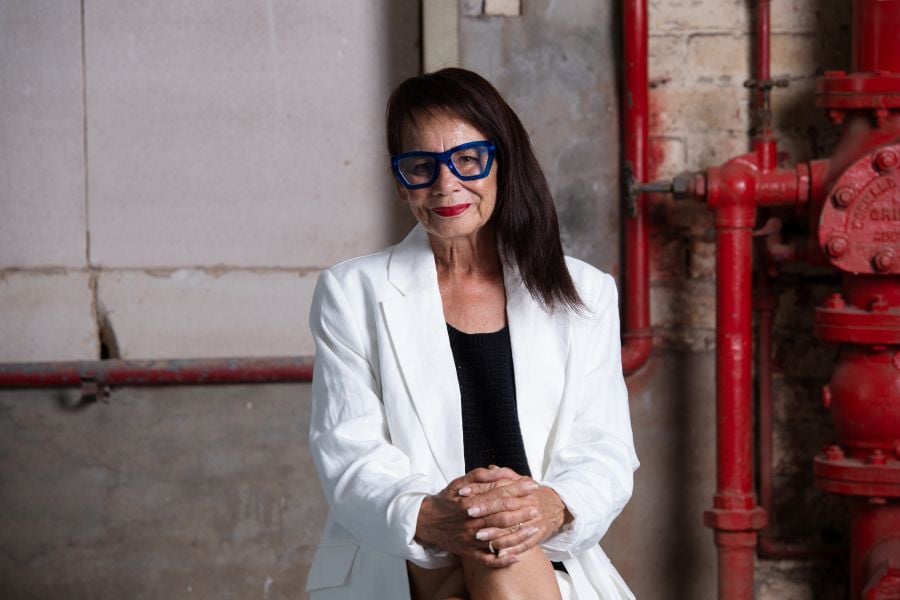
As for describing Roberts as a person, Enoch says, ‘Jeez, she was funny. Oh, so funny. Like, she would just tell a joke and laugh, and then she would then give you some really cutting information as well. She would help you understand the idea of survival through joy and through kind of lifting people up, but then also not be scared to tell you the hard truths.
‘I’ve learned a lot from her, because she wouldn’t make excuses, she would help you understand how you could be better. And I love that about her. She was tough, but she was always loving,’ Enoch tells ArtsHub.
Dignitaries remember Rhoda Roberts
Her Excellency the Honourable Sam Mostyn AC, Governor-General of the Commonwealth of Australia, called Roberts, ‘a trailblazing national treasure – an immense talent, dynamic leader and innovator and beloved colleague and mentor to so many. On stage and screen, in the media, storytelling, and guiding institutions, across a career spanning five decades, Rhoda inspired audiences, and us all.
‘Her impact as a leader, especially in mentoring and developing other creatives and promoting First Nations storytelling and voices in media in Australia and globally was profound. Her commitment to the SBS as inaugural Elder In Residence, and cultural institutions across her life was remarkable,’ the Governor-General continued.
‘But most of all she was a dear friend to so many … Her short battle with cancer is now over, and the Governor General’s love and warm wishes are with her family, friends and communities where she will be so missed, but never forgotten. Vale.’
In December 2025, Mostyn was one of the speakers at a ‘living wake’ held for Roberts at Sydney Opera House, in light of her Stage 4 cancer diagnosis. Prime Minister Anthony Albanese paid tribute to Roberts at that same event in a video message acknowledging her ‘generosity, her mentorship, her courage and her unwavering commitment to truth telling and cultural sovereignty’.
The Federal Minister for the Arts, the Hon Tony Burke MP, this week said Roberts paved the pathway for ‘First Nations First’ in Australia’s National Cultural Policy.
‘At the 2000 Sydney Olympics, when the world was watching us, it was Rhoda’s choreography that was shown to the world. She took us on her journey through ocean and fire, a way to truly understand the land that we are on is First Nations Land,’ he said in a statement.
‘For every step Rhoda took forward she took a generation of people with her. We have more creativity, more Australians dreaming bigger and a better understanding of our nation because of Rhoda Roberts.
‘From her work with the Aboriginal National Theatre Trust, to her recent performance at the Sydney Opera House with My Cousin Frank, Rhoda never stopped backing First Nations talent, stories and creativity,’ Burke continued.
‘There are generations of artists who credit Rhoda as the catalyst for their careers. Rhoda Roberts, you will always be respected, revered and loved. We are grateful for you. Rest in peace,’ he concluded.
Tributes flow for Rhoda Roberts
A statement from the Koori Mail read: ‘During her life, Aunty Rhoda broke ground as the first Aboriginal host on mainstream television, the inaugural head of Indigenous programming at the Sydney Opera House, the Indigenous coordinator at the Sydney Olympics, and the first Elder-in-residence at SBS. Her career ranged from nursing, creative director, acting, festival director, producer and cultural adviser. As the Koori Mail’s cultural lead from December 2024, Aunty Rhoda spent her final years doing what her father Frank Roberts Jnr, a founder of the newspaper, had envisioned. Continuing to share the stories of First Nations people.’
A spokesperson for Woodford Folk Festival said: ‘Rhoda moved through the world with a rare kind of brilliance, a presence that carried story, fire, and deep knowing. At Woodfordia, as Festival Director of The Dreaming Festival, she shaped a gathering that breathed with culture and connection, a place where ancient voices were honoured, where truth was spoken, and where community was felt in its fullest sense.
‘Rhoda paved the way for First Nations artists and communities across the country to tell and share stories of their choosing. Throughout her life, Rhoda created places and platforms for this to happen, and in doing so, gently and powerfully shifted the cultural landscape of this country.
‘To be in Rhoda’s orbit was to feel something unmistakable, a vibrant energy, a sense of joy, a generosity of spirit, a fierce clarity, a way of being that brought presence to each moment. There was light in her, and a powerful current that stirred imagination, courage, and care in those around her. Her imprint here runs deep.
‘We extend our love and deepest respects to Steve, Emily, Jack and Sarah and to her wider family and community. We know this loss is profound. We honour her, and we remember. Vale Rhoda,’ Woodford Folk Festival’s statement concluded.
Arts sector remembers Rhoda Roberts
Adrian Collette, CEO of Creative Australia said: ‘Rhoda’s influence shaped not only Creative Australia, but the cultural life of this nation. Her leadership and commitment to cultural truth-telling will remain foundational to our sector. We honour her contributions and mourn her deeply.’
His colleague Franchesca Cubillo, Executive Director, First Nations Arts and Culture, said: ‘Rhoda’s work redefined what creative leadership could be and to work alongside her was a privilege. She built bridges between communities, elevated countless artists, and ensured that First Nations stories were celebrated with integrity. Her legacy is both immense and enduring.’
Roberts was closely connected with Lismore-based theatre company NORPA, working as the company’s First Nations Creative Director and spending time on the Board. She also developed her one woman show My Cousin Frank – about Australia’s champion boxer and first Aboriginal Olympian, her cousin Francis ‘Frank’ Roberts, a champion boxer – with NORPA. The production’s 2024 world premiere season in Lismore and Byron Bay sold out; Roberts gave her final performance in the production at Sydney Opera House in December 2025, following performances at Adelaide Festival and Arts Centre Melbourne earlier in the year.
‘The NORPA family pay our deepest respect to our dear friend, colleague and cultural leader Rhoda Roberts AO on this day of her passing and send our heartfelt condolences to her cherished family,’ a NORPA spokesperson said in a statement on Saturday. ‘Rhoda’s strength, wisdom and kindness will always be remembered and we will miss her deeply.’
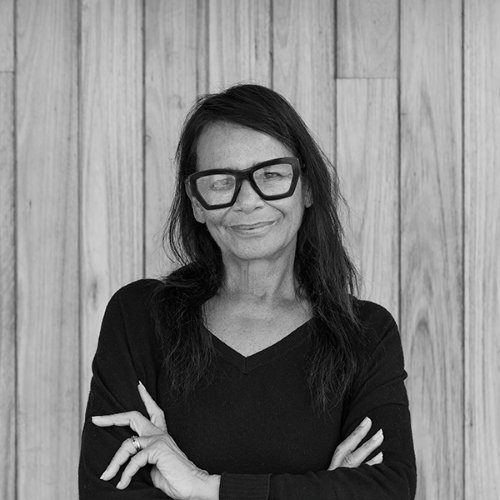
An ILBIJERRI spokesperson said Roberts’ ‘influence and drive as one of the co-founders of the Aboriginal National Theatre Trust (ANTT) also inspired the formation of ILBIJERRI Theatre Company itself. A fact we will forever be grateful for. Her work lives on in every production we do, every Aboriginal and Torres Strait Islander artist who can share their story on the world stage. Thank you for the foundation you left us to stand on. We stand taller for it.’
Rhoda Roberts is survived by her partner Stephen Field, their children Jack and Sarah, and a niece, Emily (the daughter of her late twin Lois; Roberts became the newborn baby’s guardian in 1994).
Funeral details have yet to be announced.