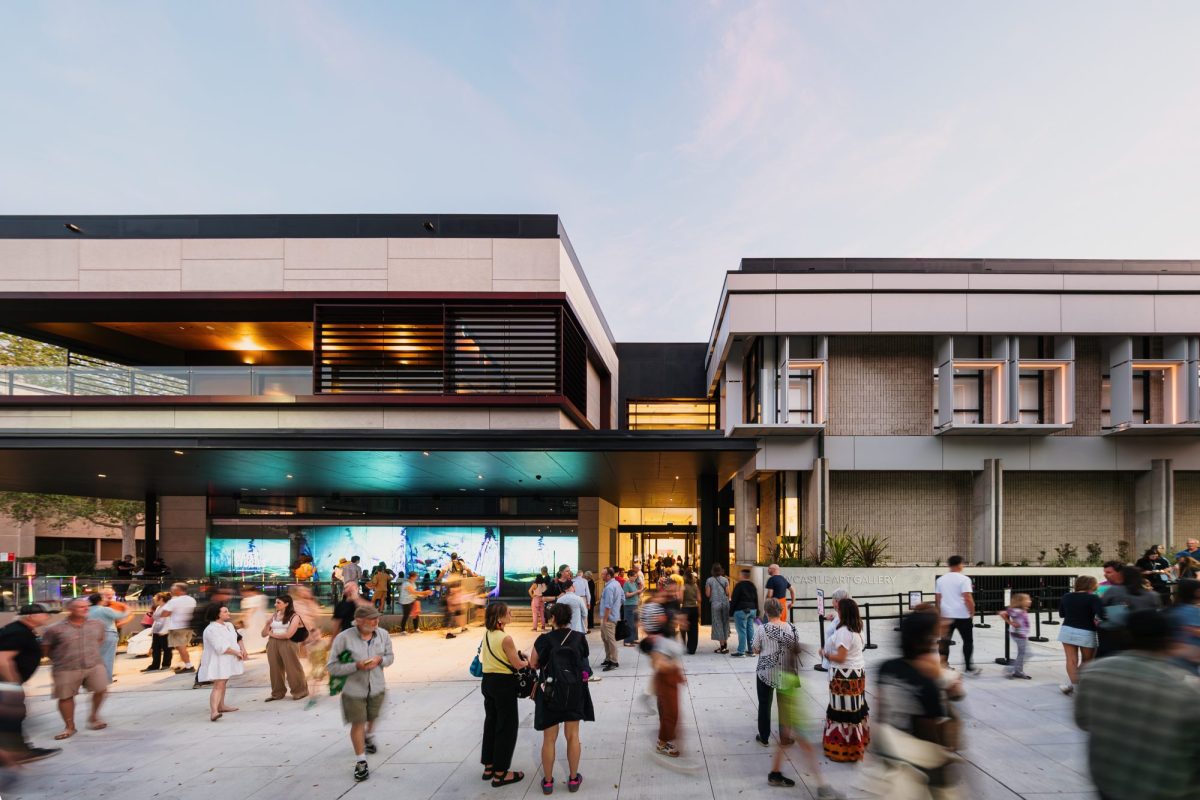
It’s been a whole four years since Newcastle Art Gallery closed its doors to the public and construction began on its major expansion. This ambitious project has more than doubled the gallery’s footprint – officially making it the largest public art institution in New South Wales outside of Sydney.
The reopening date is quickly approaching and 28 February will mark the start of a bold new chapter – not only for one of Australia’s most important regional public art institutions, but also for the city’s cultural landscape.
‘It’s taken such a village to get here, and you want to make sure that you’re going above and beyond and over-delivering what you’ve promised,’ says Newcastle Art Gallery Director Lauretta Morton OAM, speaking with ArtsHub ahead of the full reopening.
Newcastle Art Gallery reopens – quick links
Transforming Newcastle into a cultural destination
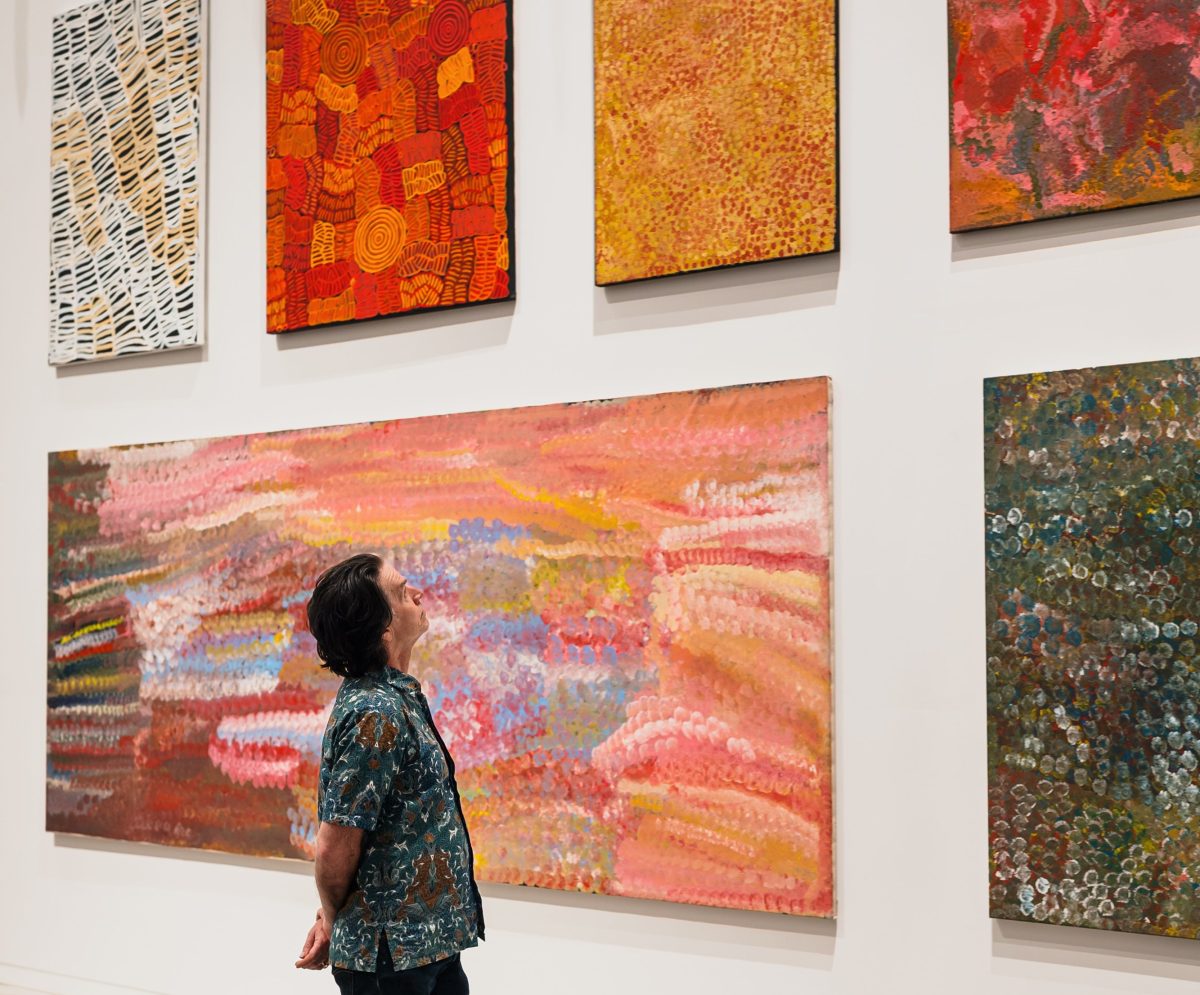
There has already been a ‘phenomenal’ response to the revitalised gallery’s soft launch, Morton says, with first-look tours totally selling out in September as part of New Annual festival. Many more visitors are also heading through the doors each Friday, Saturday and Sunday, when certain areas of the gallery are open for public displays and art-making workshops. But that’s only the beginning.
Through its expanded facilities and the launch of the opening exhibition – Iconic Loved Unexpected – the gallery enters a new phase that enables more ambitious exhibitions, long-term collection displays and deeper engagement with artists and audiences.
‘We’re finally growing up and being what the gallery should be for our visitors and our community,’ Morton says. ‘And we hope to be a destination for cultural explorers and tourists. We now have functionality that we’ve never had – we have a dedicated gallery shop, cafe, and learning studio.’
Rather than rewrite the legacy, the intention of this relaunch is very much to grow the Newcastle Art Gallery’s potential. The original brutalist building, which opened in 1977, has been carefully preserved. The expansion – designed by award-winning architects Clare Design, in collaboration with Smith and Tzannes Architects and Arup Engineers – adds an additional 1600 square metres of exhibition space. And it doesn’t look ‘bolted on’ – there is a sense of aesthetic harmony on the outside as well as the inside, where visitors can seamlessly flow from the old to the new.
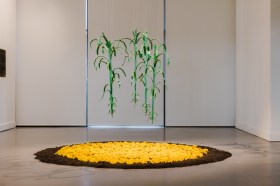
Five brand-new, site-specific art installations will be unveiled as part of the expanded gallery, putting local and First Nations artists in the spotlight. (We’re also assured that existing works, like Brett Whiteley’s iconic outdoor sculpture Black Totem II (1993), featuring a massive egg resting on a nest of twigs, will still have pride of place.)
Inaugural exhibition draws treasures from past and present
Newcastle Art Gallery is not only expecting to see visitors coming to see new artworks, but also to revisit some older pieces. The increased space will allow the gallery to put its collection on permanent display for the first time – which is actually one of the finest public art collections in Australia, consisting of over 7000 works of art and recently valued at $145 million.
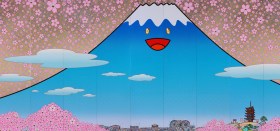
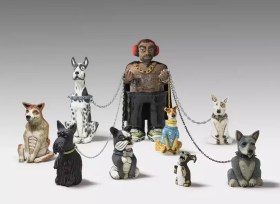
The multi-faceted expanse of treasures in the collection are also the driving force behind the new building’s inaugural exhibition. The curation of Iconic Loved Unexpected is an inspired combination of well known and loved artworks (think famous Australian painters like Sir William Dobell, Emily Kam Kngwarray, Margaret Olley, John Olsen, and more from Whiteley) alongside ‘the unexpected little gems ’ .
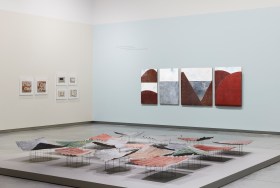
Of the latter, Morton is particularly fond of the gallery’s significant collection of avant garde, post-war Japanese ceramics from the Sōdeisha period which will now be permanently on display.
A gallery worthy of the people – and a precious $145 million art collection
Being a public gallery, Morton insists that the collection belongs just as much to the community as it does to the city. Hence, entry to view the permanent collection should always be free.
The extra gallery space, she says, ‘allows us to put our collection on permanent display for the very first time’.
She adds: ‘Previously when we’d do an exhibition, it might be up for 12 weeks or so, and then you’d be cycling through small amounts of the collection.’ It would often lead to disappointed visitors showing up to see a specific piece that had already gone back into storage.
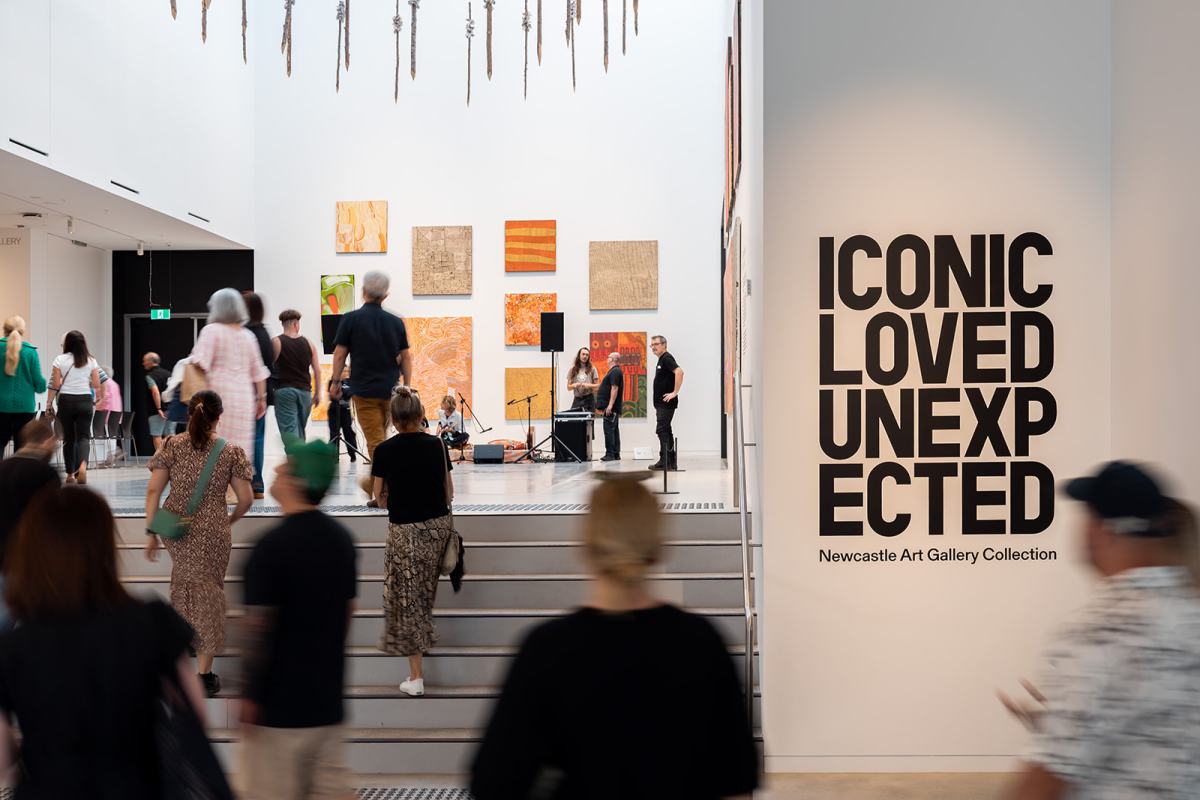
‘We also have some works currently [on loan to the] Tate Modern, so it just shows the significance of the works we hold,’ Morton says. ‘To be able to get them out for people to actually spend time viewing and bringing friends and family to see, is just a game changer.’
Newcastle Art Gallery has always sat somewhere between being considered a regional and a metropolitan gallery, says Morton. But as the institution grows, she hopes not to lose the agility and creative character that’s unique to smaller galleries.
With a total of 13 gallery spaces to work with now, the expansion allows curators to explore new formations that recontextualise different artworks – and they’re not being precious. In one case, Joseph Lycett’s prized colonial paintings are placed in conversation with Abdul-Rahman Abdullah’s provocative contemporary work, The men who sold lies (2018).
Local artists to be showcased alongside the greats
Newcastle Art Gallery also remains committed to supporting local artists, and this is reflected in the new exhibition. As Morton explains: ‘We have a really strong connection to our artists, particularly locally. There are local artists featured in Iconic Loved Unexpected, as there are national artists and international artists. It’s about understanding that they’re all equally as important. There’s no level of hierarchy.’
‘We collect contemporary works that will become masterpieces for future generations to view and enjoy!’
Speaking of which, the new international-standard loading dock means the gallery will now have the ability to bring in international loans – which hints at some exciting prospects for future programming.
‘We already have a really active external loans program. But very much, this is about making Newcastle the destination now. So that people will come from Melbourne, Brisbane, Canberra, Adelaide and wherever else to see something at Newcastle Art Gallery that they can’t see anywhere else.’