Announcing the news last week that Australian Design Centre (ADC) will close after 61 years, was heart-wrenching.
ADC has had an enormous impact over six decades of nurturing creative practice in craft and design. This impact is evident in the practitioners who have engaged with us since their early years.
In this story:
Understanding a shift in government funding priorities
In terms of funding, we have been incredibly successful in securing over $5 million in government and philanthropic grants, including the revenue we have generated through our own activities since 2016, when I started.
Our most enduring grant-givers have been the Federal Government’s Visions of Australia program, supporting our regional exhibition touring program ADC On Tour, and the incredible support from the City of Sydney, which provided rent-free space for our activities and supported many projects including nine annual Sydney Craft Week Festivals.
What we are experiencing now, is governments making decisions about what should be funded according to political policy priorities. Criteria for grant applications are set according to those priorities. Peers are required to assess applications according to the criteria.
The result is that, when the pool of available funds is shrinking and the number of applicants increasing, short term activities can receive funding at the expense of long-standing, high performing organisations providing a multiplicity of platforms for artists and audiences.
What we need is a base level of core funding for small to medium organisations that invests in their future. Anything else is short term thinking, not investment.
My sincere hope is that government will actively listen to the many and varied voices that have spoken out in support of this small, impactful organisation; that future funding will be secured to enable ADC to continue the work that shines an important spotlight on the creative energy which drives and enlivens our nation.
Ambition not limited by funding: ADC model case study
While our base level operational funding from government has been steadily eroded by increasing costs over the past decade, it is incredible to see how we have been able to make magic happen with so little.
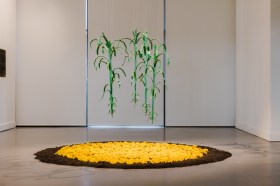
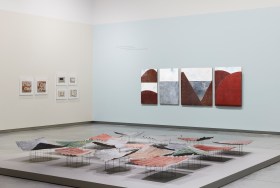
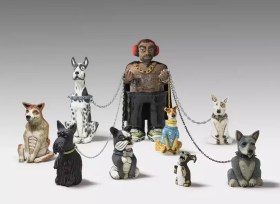
We have created platforms for thousands of artists, including exhibitions, festivals, awards, markets, talks, workshops, book publishing and a touring program that takes their work all over Australia and overseas. We also sell their work through the Object Shop.
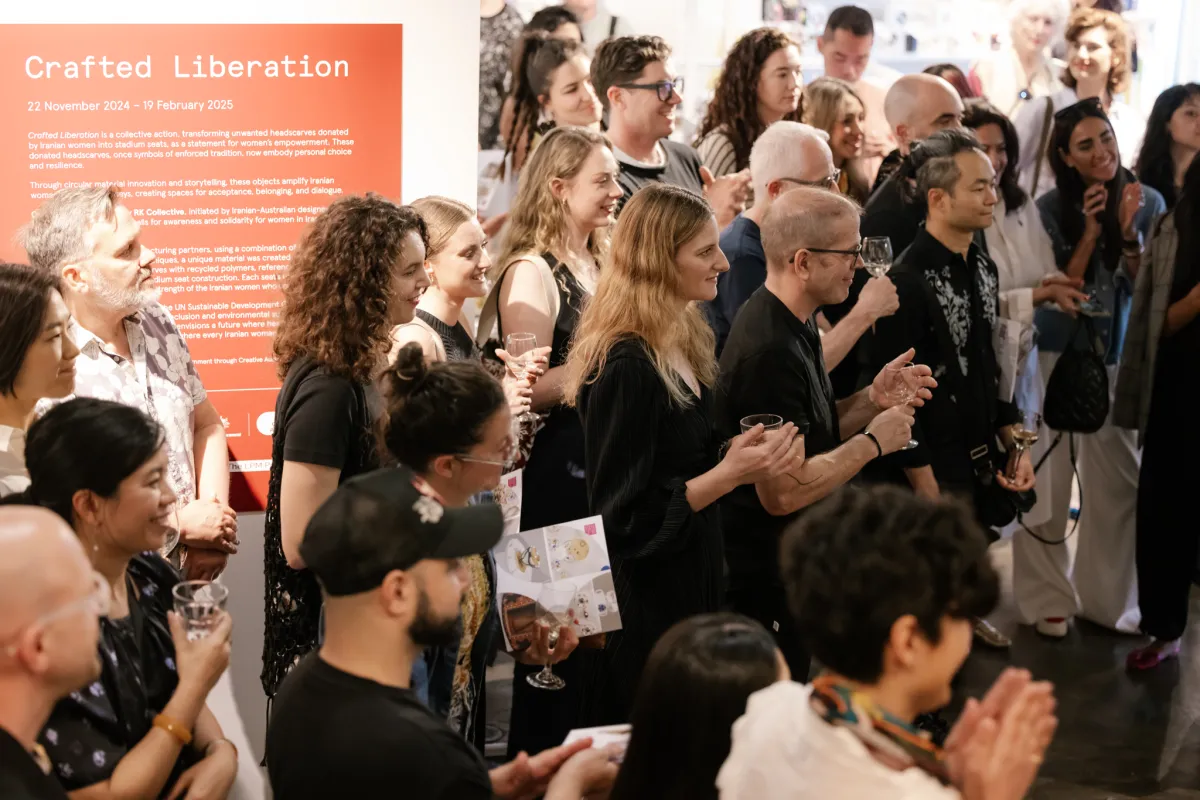
Our exhibitions are game-changers. As a young honours student in 2016, Nila Rezai exhibited at ADC in Designing Bright Futures. Walking past the windows on William Street one summer afternoon, a group from a London design collective spotted Nila’s work and invited her to Milan Design Week. Fast forward to 2025 and Nila’s design practice, RK Collective, won a design award in Seoul for her project Crafted Liberation, which we exhibited at ADC earlier this year.
Early in her career, shortly after graduating from ANU, artist and metalsmith Cinnamon Lee won an ADC New Design award in 2002. This was the beginning of a stellar career for Cinnamon, who recently won ADC’s 2025 MAKE Award: Biennial Prize for Innovation in Australian Craft and Design. She considers both awards pivotal to her current and future career success.
Similarly, current ADC Board member, artist and educator Melinda Young remembers being taken by her parents to see exhibitions, an experience which influenced her choice to study design.
Her first job in the sector was as a casual in our galleries, and after graduating she has featured in exhibitions, contributed to curatorial projects and written countless education kits that accompany ADC On Tour exhibitions, enabling teachers across Australia to amplify experiences for students.
We are so proud of the role we have played in nurturing and guiding artists like Melinda, Nila and Cinnamon to maintain the well-deserved recognition and success they enjoy today.
ADC as the conduit: the importance of community
ADC is a small organisation that is part of a broader ecology. Working within that ecology we have developed collaborations and partnerships that enable us to achieve much more than one small organisation can achieve alone – so many others have joined us in these adventures.
In 2025, these have included: our colleagues in craft and design organisations (Craft Design Canberra, Canberra Glassworks, JamFactory); university partners (UTS, UNSW, UniSA); the incredible regional galleries network across Australia; international project partners (Dowse Museum in New Zealand and Gallerie Handwerk in Germany); local organisations (National Indigenous Art Fair, Reverse Garbage and the many arts organisations across Sydney who take part on the Sydney Craft Week Festival); professional associations (Jewellery and Metalsmiths Group NSW); and sector bodies (Regional Arts NSW and Diversity Arts Australia).
Postscript: ADC’s legacy
There will always be those who think we could have done more or something different, but as an organisation we know that – together with those who have supported us and worked alongside us – we have produced intelligent, impactful and thoughtfully curated projects in the craft and design space.
ADC has always put the artists at the centre of everything we do, as well as reaching out through our many different programs to the widest possible audience, inspiring another generation of young makers and designers and encouraging everyone to try their hand at creative work.
Read: Darwin Aboriginal Art Fair makes record breaking sales result
ADC’s small team of committed professionals has continued to execute longstanding projects such as Living Treasures: Masters of Australian Craft, this year launching the 10th exhibition with internationally renowned artist Helen Britton.
We have also launched new projects like the Sydney Craft Week Festival and the Object Space window gallery on William Street, where people can enjoy the work of makers and designers from across the country night and day.
We have given space to incredible projects by Indigenous artists and those from diverse backgrounds, and have demonstrated that craft is a thriving contemporary creative practice, one that is critically acclaimed and collected by major institutions whilst remaining accessible to many people wanting to engage with the benefits and traditions of working with their hands.
A personal reflection
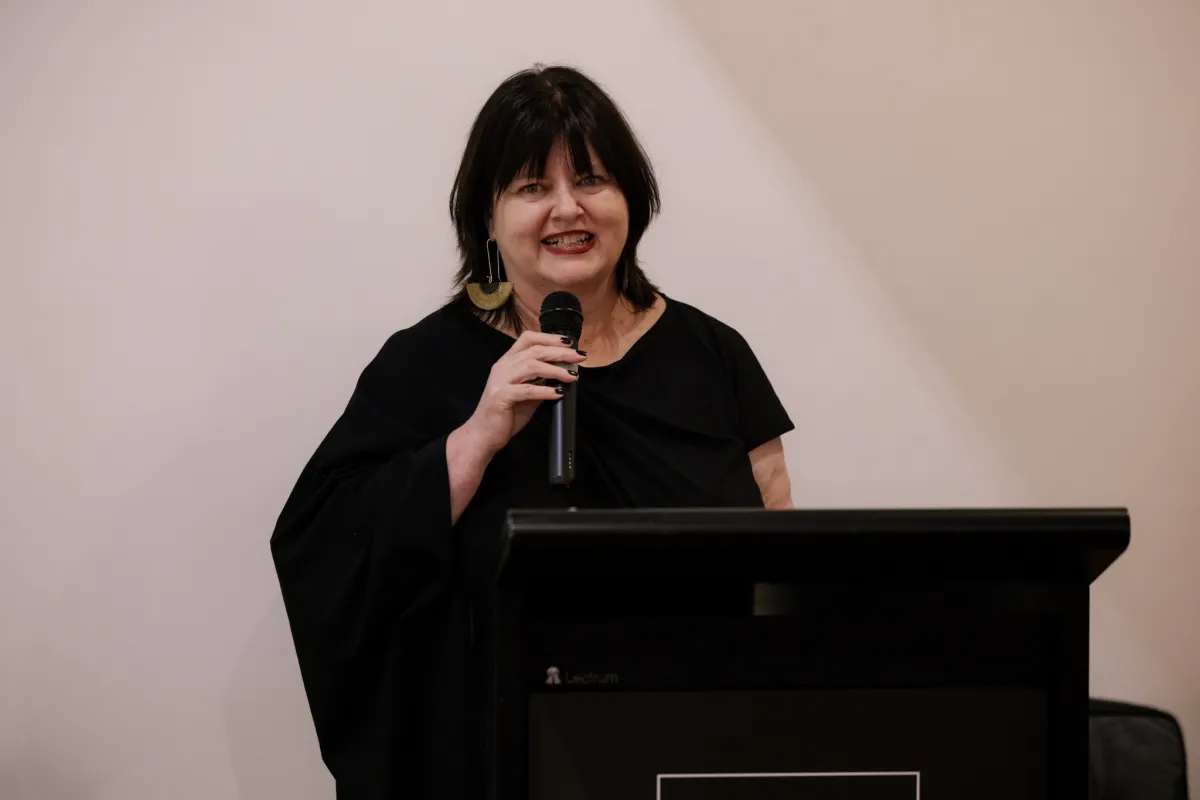
I took on the role of CEO and Artistic Director in 2016, but so many people have dedicated a good portion of their professional life to ADC, supporting creative practice and building audiences for craft and design.
It’s a privilege every day to engage with creative people who take risks and forgo other, perhaps more lucrative, paths to make our lives better through their innovative, thoughtful practice; delivering objects and experiences that bring joy and beauty, and to give us a moment of focus outside the relentless daily news cycle of geopolitics, economics and human suffering.