Vale January 2026 – quick links
Vale Dame Marie Bashir, patron
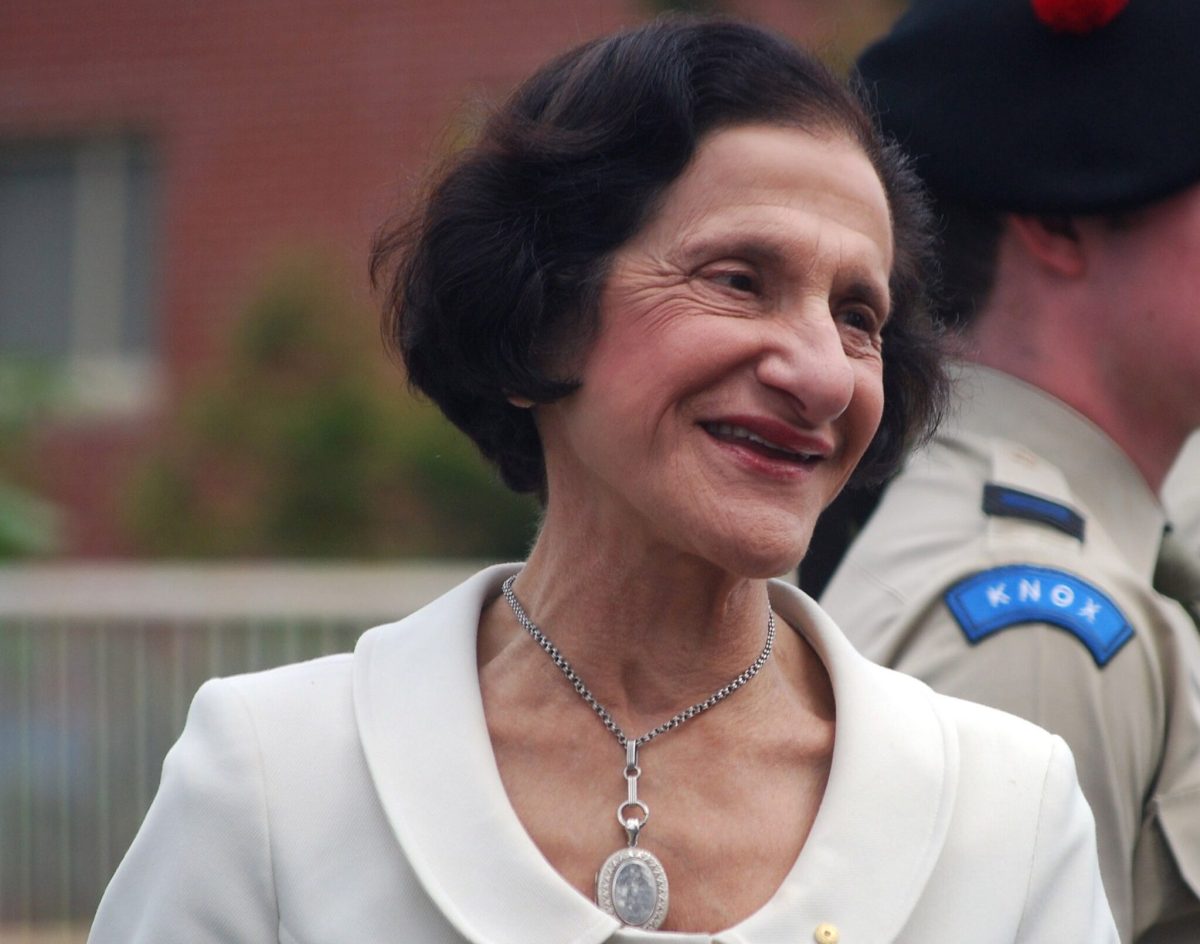
On Wednesday this week, 4 February, a State Funeral for Professor the Honourable Dame Marie Bashir AD CVO will take place at St James’ Church in King Street, Sydney at 10:30am. Bashir was the 37th Governor of New South Wales, and first woman to serve in that role. She was also a much loved patron of the arts.
In 1956, she gained her bachelor degrees in medicine and surgery from the University of Sydney, following in her father and uncle’s footsteps. ‘We were expected to learn music and learn from the lives of the great composers and understand humanity,’ Dame Marie said in an interview with the ABC in 2014.
It is not surprising she leveraged her role as Governor of NSW (2001-14) to support music, performance and cultural institutions. A former violin student at the Sydney Conservatorium of Music, she was a passionate patron of Opera Australia, the Sydney Symphony Orchestra, Australian Brandenburg Orchestra, Sydney Philharmonica Choir, Musica Viva Australia and the Sydney Eisteddfod.
She was extremely graceful, gregarious and warm spirited, proud of her Lebanese heritage and actively supporting diverse cultural expression, notably opening the Sydney Gay and Lesbian Mardi Gras Festival in 2005.
Vale Michael Gleeson-White, patron
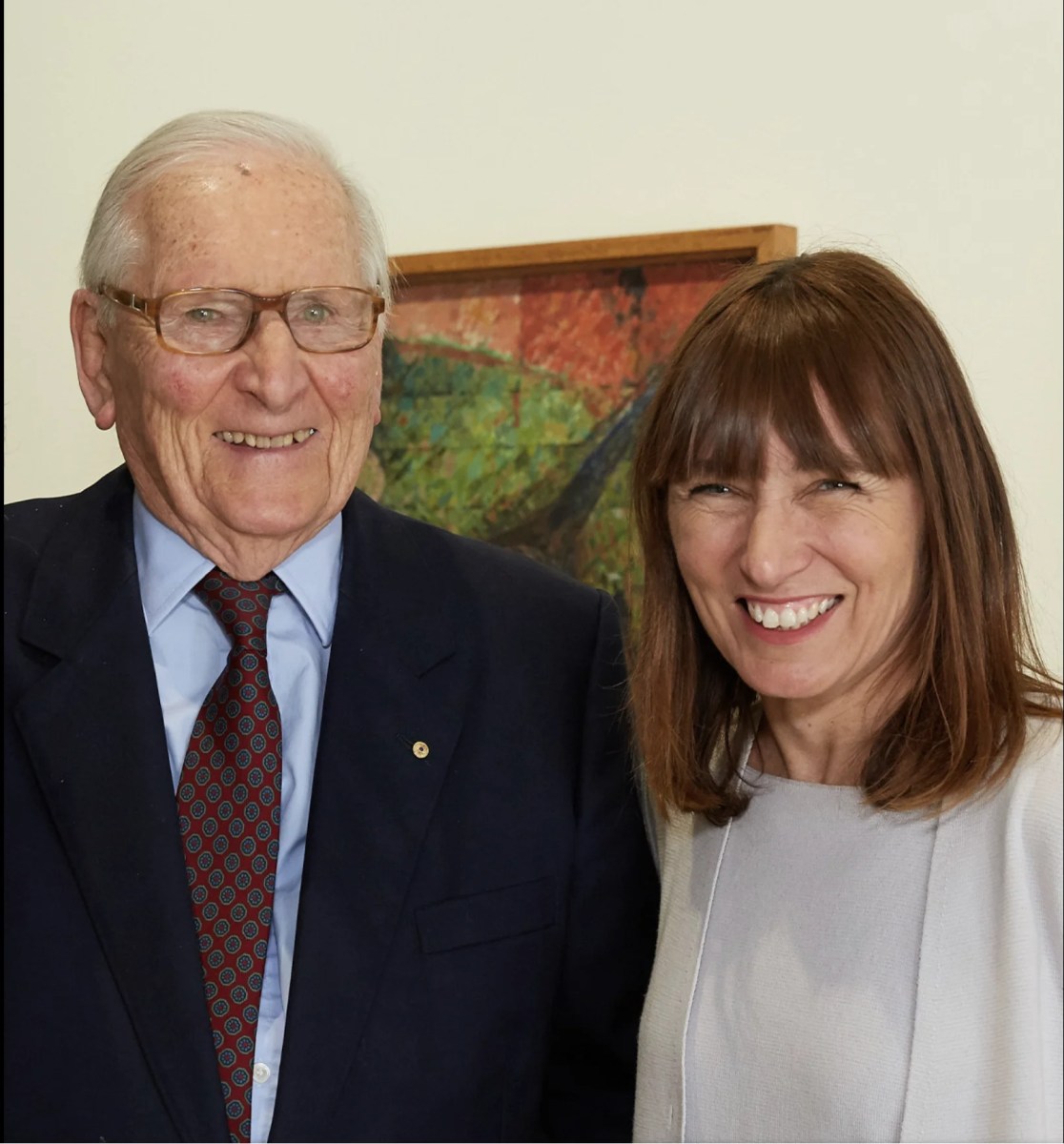
Aways full of life and ready to sit down over lunch and a good natter about the arts, patron Michael Gleeson-White passed away on 20 January at the age of 100. The former investment banker and economist had a long interest in art, which included decades-long correspondence with artist Jeffrey Smart in Rome – now held in the National Library of Australia collection.
He served as President of the Art Gallery of New South Wales Board of Trustees from 1982 to 1988, a period of significant growth and ambition for the institution, and also worked closely with Director Edmund Capon. A pioneer of philanthropy in the arts, in 1983 he was deeply involved in the launch of the AGNSW Foundation, which has been instrumental in so many important acquisitions.
In a tribute online, AGNSW acknowledged his deep contribution over 50 years, stating: ‘Through his leadership, Mr Gleeson-White successfully engaged donors and corporate supporters to raise an initial $4 million to establish the Foundation’s corpus.
‘The first work acquired under his oversight was Ernst Ludwig Kirchner’s Three Bathers, followed by many significant additions to the collection. He especially cherished the acquisition of Bronzino’s Portrait of Cosimo de’ Medici, works by Philip Guston, and the landmark additions of works by Cézanne and Cy Twombly.’
Professionally, Gleeson-White was an adviser to the Government of Singapore Investment Corporation and as an Associate Commissioner of the Australian Trade Practices Commission. Despite his incredible acumen, I warmly remembered him for long lunches with a cheeky white and homemade quiche with passionate, animated conversation and a laugh that filled the room. He had the ability to make all welcome in a shared love for art.
Born in England, Gleeson-White made Australia his home in 1939. In 1984, he was created an Officer in the Order of Australia in recognition of his services to the arts and finance.
Vale Elizabeth Newman, artist
Geoff Newton, founder of the gallery Neon Parc, broke the news of the passing of artist Elizabeth ‘Lizzy’ Newman (1962-2026) on 24 January. On social media he said: ‘Representing her work was one of the main motivations to open the gallery in 2006. She died of pancreatic cancer, aged 64.
Newton added: ‘Over the past 20 years we made shows and a few books together and I think she pushed artists at the gallery to push themselves.’
Moving between painting and sculpture, she embraced installation aspects to the presentation of her work, always questioning, always curious.
He added of her work: ‘Lizzy made tough, quiet, bold and playful works that asked questions of abstraction, art history and the self, which paid homage to other artists, openly and with openness. There was no pretension, no secret code. Lizzy and her work had a unique directness: disarming, familiar and very much by hand. In addition, her published writings have constantly been admired and referred to, as has her body of work.’
Monash University Museum of Art added on social media: ‘Lizzy’s relationship with MUMA spans decades. Her work was included in several significant exhibitions from the 1980s through the 2010s, and her practice – marked by intellectual rigour, incisive explorations of aesthetic and psychological terrain, and a distinctive formalist–conceptualist sensibility – has shaped generations of artists, thinkers and audiences.’
Newman has exhibited her work since the 1980s, both in Australia and overseas. Her work is included in major collections, including the National Gallery of Australia, MUMA, Heide Museum of Modern Art, Chartwell Collection in New Zealand, and private collections.
Vale Normana Wight, abstract painter
News of Normana Wight’s (1936-2026) passing has come just shy of her 90th birthday. She has been described as ‘a formidable painter and printmaker and a strong, clear-eyed presence,’ on social media this week.
Gallery Director and Curator Angela Goddard, who worked with her on occasion, paid this tribute on social media: ‘Normana could be uncompromising and rigorous, just like her work. But she was also warm, curious and deeply engaged with the world.
‘Her life traced significant shifts in Australian art and society: from her inclusion in the landmark exhibition The Field in 1968, to the formative impact of international travel, and her clear-eyed recollection of the moment equal pay for women was introduced – an administrative change that materially transformed her life, but perhaps not symbolically [as] she struggled to gain as much recognition as her peers. In 2019, it was a privilege to establish her Wikipedia entry at an International Women’s Day edit-a-thon.’
Vale Rob Hirst, musician
One of founding members of legendary Australian rock band Midnight Oil, Rob Hirst has been described as the ‘backbone of one of the most consistently adventurous and principled groups of the last half-century’. He passed away at 70 after a protracted battle with pancreatic cancer.
Read: Rob Hirst was not the figurehead of Midnight Oil – but he was its backbone
Other Australian talents we said goodbye to in January
Among the other Australians who deserve to be honoured for the contribution to the arts and culture sector, and who had their final bow this month, were:
- Australian Turrbal elder and mezzo-soprano singer, Maroochy Barambah, aged 70
- British-born New Zealand poet, librarian and journalist, Iain Sharp, who ended his battle with cancer at 72
- Australian Bidjara elder Albert Holt, aged 89
- Australian librarian and activist, Phyllis Papps, aged 81
- Australian journalist and author, Robert Macklin, who chose assisted suicide for his final moment, at 84
- New Zealand playwright and journalist Aroha Awarau, who left us too early at 49
- Australian radio broadcaster Brian Wilshire, known for his work with 2GB, who passed at 81
- Tim Robertson, 81, English-born Australian actor (Chances, Australia You’re Standing In It, Stingers)
- Australian actress Candy Raymond (Don’s Party, Number 96, Prisoner)
Read: Vale 2025: saluting those we lost this year
Last curtain call for our international colleagues
January also saw the passing of fashion legend, Italian designer Valentino Caravani (1932-2026). He founded his eponymous luxury fashion house in 1960 and served as its creative director until 2007. Valentino is regarded as a pre-eminent figure of both Roman Alta Moda and Parisian Haute Couture. He was 93.
Italian industrial designer Giancarlo Piretti also passed away at 85. Famed for the Plia folding chair (his best-seller exhibited at MoMA NY), Platone folding desk and DSC (106-AXIS) seating system, Piretti obtained Italy’s highest honour for his chairs, the Compasso d’Oro.
Equally iconic, the visual arts sector bid farewell to powerhouse art dealer Marian Goodman, who died in Los Angeles at 97. Artnews described her as an ‘unwaivering champion of vanguard artists … revered for her enduring commitment to the artists she represented, and for her disinclination to follow either aesthetic or business trends’.
In the music sector, drummer of the band Siouxsie and the Banshees, Kenny Morris died at 68, while co-founder of the Grateful Dead, Bob Weir, passed at 78.
Screen legends include the English visual effects and Emmy winning artist Bill Millar (The X-Files, Close Encounters of the Third Kind, Star Trek: The Motion Picture), who died at 79; American television director Tom Cherones, known for his work on Seinfeld, NewsRadio and Ellen), who passed away from complications from Alzheimer’s disease at 86; and American actor Catherine O’Hara (Schitt’s Creek, Home Alone, Beetlejuice), who died at aged 70.