The pool I visit twice a week has a hydrotherapy facility, which I invariably enter after a few laps. It’s a remarkably community-minded space and there is always plenty of cheerful chat. Recently I enjoyed a conversation with a new face, a lovely, older woman with a clear affinity for the arts. We chatted about books and the opera and it was all going swimmingly (naturally) until it came to the Melbourne Theatre Company (MTC).
My new friend, let’s call her Ophelia (just to get into the spirit of the conversation), told me she’d been a subscriber to the MTC for ever. From Union Theatre days, through Russell Street to the Arts Centre and beyond to its current home at the Sumner in Southbank Theatre.
But in 2026, breaking a near lifetime habit, she would not be renewing her subscription. Her reasoning? There was nothing in the season that enticed, she’d seen shows this year that hadn’t appealed and the whole thing had just gone too ‘woke’.
Now, the hairs on the back of my neck invariably rise when this adjective is used pejoratively and they would have here, but we were in the pool so that was a physical impossibility. I’m firmly in the Kathy Burke camp when it comes to the idea that being woke is a negative thing. ‘Be woke,’ says Burke, ‘be wide awake’ – and she throws a few choice expletives in there too.
Woke: derision
Just like political correctness before it, woke is now so derided, when really I reckon it’s just another way of saying ‘be polite, think about how what you say and do may affect others’. That’s all.
So, gently and politely, I enquired a little further and then had another look at the MTC’s 2025 season to see if I could understand Ophelia’s point of view.
The season included a mainstage veteran, Sigrid Thornton in Mother Play (which, did admittedly feature some gay themes and characters), a revival of David Williamson’s The Removalists (surely, you’d be hard pressed to find anything more dinky di Australian canon than a Williamson play … any Williamson play) and other local stage stalwarts like Genevieve Morris (in Dying: A Memoir), the intimidating Pamela Rabe (as Mrs Danvers in Rebecca), the inimitable Julie Forsyth stealing every scene in sight in Shakespeare’s Much Ado About Nothing and Marina Prior in Kimberly Akimbo: A Musical.
Ironically, it was the latter that my new friend objected to the most. And this was despite Prior’s utterly ‘unwoke’ status on our stages – indeed, you could make the argument that she’d be the musical theatre equivalent of a Williamson drama, as ubiquitous and mainstream as you could find. But the criticism was that she was miscast.
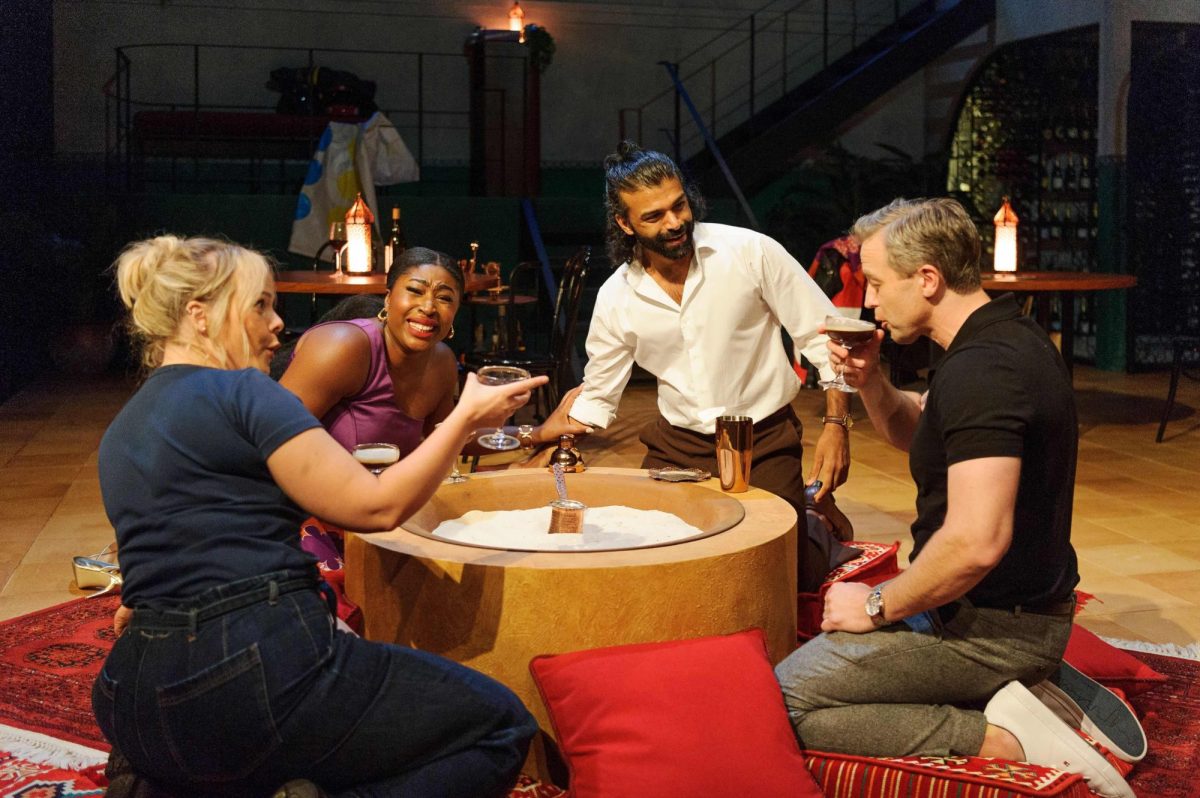
The rest of the season certainly featured plays, written by, directed by, acted in and about people of colour. Plays like Destiny, set in 1970s South Africa, The Wrong Gods by S Shakthidharan (writer of the masterful Counting and Cracking), Legends (of the Golden Arches) by Joe Paradise Lui and Merlynn Tong, a multiracial comedy (The Robot Dog), a new piece from Andrea James exploring shameful historical events involving our First Nations peoples (The Black Woman of Gippsland) and a rather splendid new transplanted English comedy, Never Have I Ever.
Does this mean that Ophelia’s objections were really all about seeing so many more faces of colour on our stages and behind the scenes? We all know that when you’ve been part of the dominant culture for aeons, equality can look like oppression. And it can take a moment to stop, reflect and remember that we’re now finally giving representation to so many more members of our beautifully diverse multicultural community.
And the arts and those who work in it can only benefit from that greater choice. Before he was cancelled, Woody Allen once made the concise, and frankly irrefutable, point that being bisexual doubles your chance of a date on a Saturday night …
Woke: my life as a performer
So, was my pool pal simply racist? It seemed unlikely for a reason I’ll get to.
Or was it just that old-schoolers take a while to catch up? And that it may be necessary for those who are leading our cultural creativity to massage them a little more carefully to bring them up-to-date, up-to-speed and along for the ride?
Is it also merely a case of perception versus reality? On this level I am reminded of the work I do as a performer and how that could be perceived as being just too woke for words if someone like Ophelia ventured away from our mainstages to witness it.
A few years ago, I played Lear in an all-female production of the Bard’s brilliant tragedy at the old prison in Geelong. That casting was a deliberate choice by the (male) director, so was he being politically correct or was he simply thinking Glenda Jackson may have just done it (we came three years after her famous 2016 production, which saw her return to the stage at 80, after 25 years as a Labour politician), but it’s still pretty rare (Kathryn Hunter was apparently the first in 1997 and recently revisited the role)?
Or was our director just much more interested in seeing what the change in gender would bring to a play that had been produced so many hundreds, if not thousands, of times with a male cast? And also bearing in mind that originally all the roles in Shakespeare’s plays were of course taken by men and boys, so giving females a chance to get their teeth into the big meaty parts might be a jolly good idea.
Remember too that out of the nearly 1000 named characters in the Bard’s plays, just over 150 are women, and the top 10 for number of lines spoken are all male characters.
So, is a little balancing of the scales every now and then woke or just fair?
Back to perceptions though. I’m currently in another show produced by the same company (the small but mighty Skin of Our Teeth Productions) – a new adaptation of Wind in the Willows (four shows left, shameless plug). And this again is an all-female production. Now, as anyone with even a passing familiarity with Kenneth Grahame’s glorious tale will know, its anthropomorphic protagonists are all identified as male.
But it was cast by fair and open auditions and the only chap that passed that test then proceeded to drop out (which is why I was able to snaffle the coveted role of Ratty, so thanks whoever you were).
We didn’t mean this to be a single-gendered production, but, as Ratty says at one point in the script, ‘Here we are, and we’ll just have to make the best of it’.
I regularly work with an even smaller company that performs in a private space in Melbourne. Over 20 years our writer/director/producer has given up writing male parts altogether (other than a small one that he can perform himself), as we’ve found it so hard to find male actors who will commit and turn up to rehearsals.
After the show in which we had to recast a male role four times, we now stick with the reliable stalwart females and tell stories that focus on them.
But would the perception be that we are also just too woke for our boots?
Woke … or something else entirely
Perhaps audiences need to look a little more clearly, or think a little harder before they decry something they see as being woke, when really they just mean they didn’t like the play or the performances.
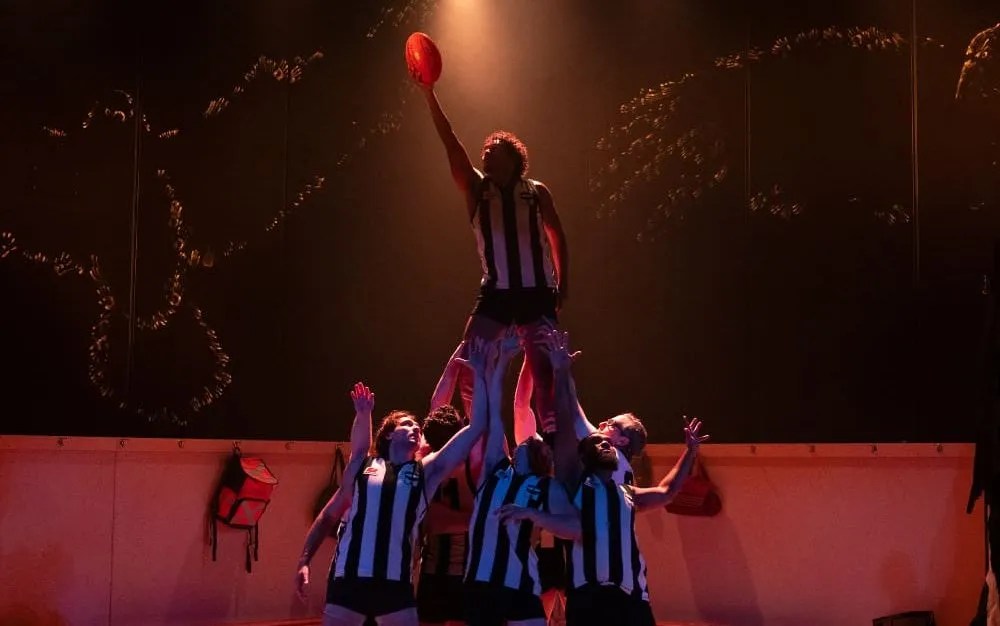
Because when I asked Ophelia of the pool if there were any MTC shows she did like this year, she was quick to respond – ‘Oh yes, 37! It was great and so well-choreographed.’
37, the twice-staged Nathan Maynard play about First Nations footy players, which Professor Barry Judd described as an ‘important contribution to the ongoing discussion of racism and Indigeneity in Australian sport’, and which received a glowing five-star review on ArtsHub.
Now surely, that would be the very definition of woke?