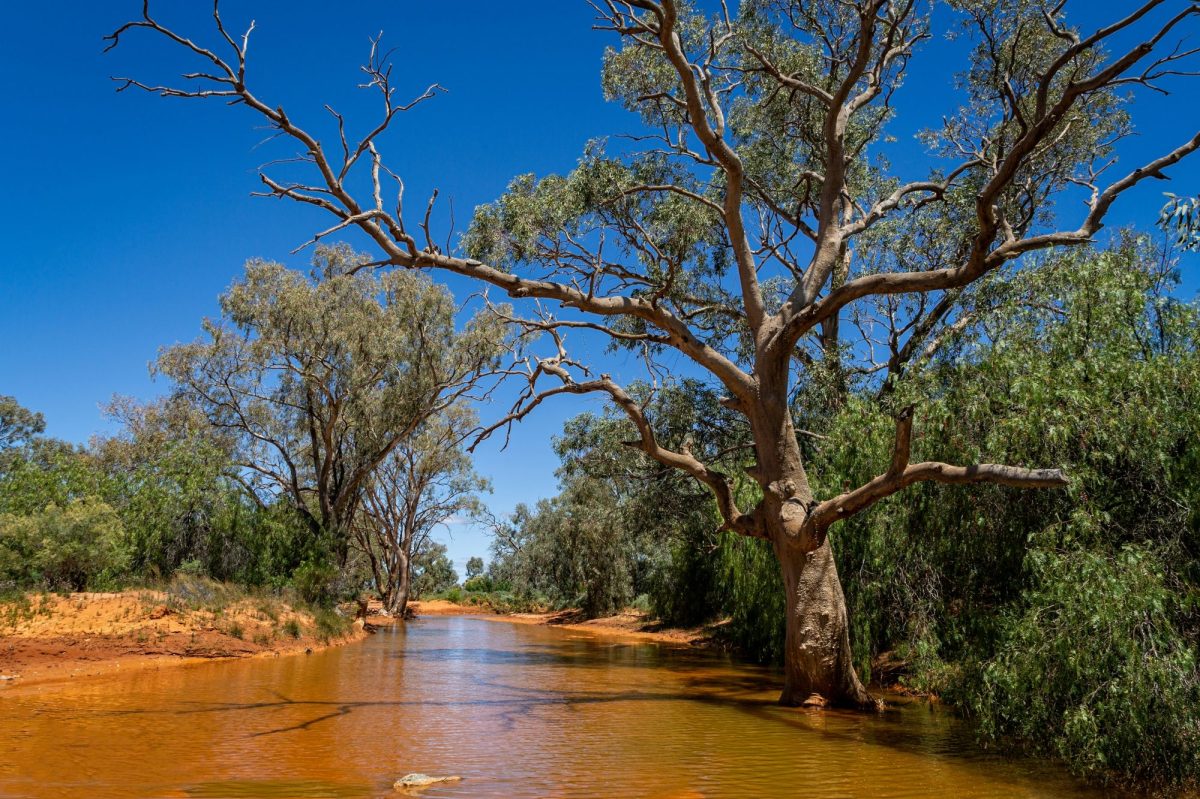
A flower has bloomed so those in the know, those initiated to the stories of Country, can tell you the fish are coming, it is time to go set fish traps, to prepare the dinghy and to go out there and collect the bounty of sea Country. This knowledge encoded in timeless story is older than history, passed down mouth to ear to mouth to ear since the dawn of time.
These are the stories that belong on Country; stories about Country; stories so powerful they can tell you not only how to survive but how to live and thrive, so ancient they have worked for tens of thousands of years. Everywhere I go I am told these stories but I cannot tell you all the details because they are not my stories to tell, of how the opening of a flower tells you a root is ready to harvest, how the arrival of an insect informs you a fish is about to migrate into your coast, how everything you need to know, your calendar and your map, are written on the land if you know how to read it. Those stories have been told for tens of thousands of years, telling you how to survive on the most inhospitable inhabited continent, but they also teach of the interconnectedness of nature.
If you knew the story you could live well.
Until now.
All around this, the oldest continent, people from the oldest continual culture have told me these things are happening now sometimes out of order, the signal is coming after the event or is not happening at all, or the event happens but the ancient knowledge no longer gives warning. The ancient order of this ancient land has been thrown out of kilter by climate change; changes wrought by Western ways of living. Many people have told me these stories, of things gone wrong, of ancient rules from tens of thousands of years ago being overturned by what humans are doing to our environment.
I want to ask you not to forget everyone on the continent of Australia is living on Indigenous land. You wake up on Indigenous land, you do whatever you do on Indigenous land, and you go to sleep on Indigenous land. We are the people of the land, we know the land better than anyone who lacks our connection to story; it is in our stories and in our bones. We have protected it, our land, and looked after it for so long the timeframe is indistinguishable from ‘forever’; land is a precious part of our selves, a part of our family. To not love and care for land is unfathomable to an Indigenous point of view.
Our climate: what’s going wrong?
Indigenous ways can tell you what is wrong and perhaps, through ancient knowledge, we might not have needed for a long time, we can tell you what to do about it, how to survive.
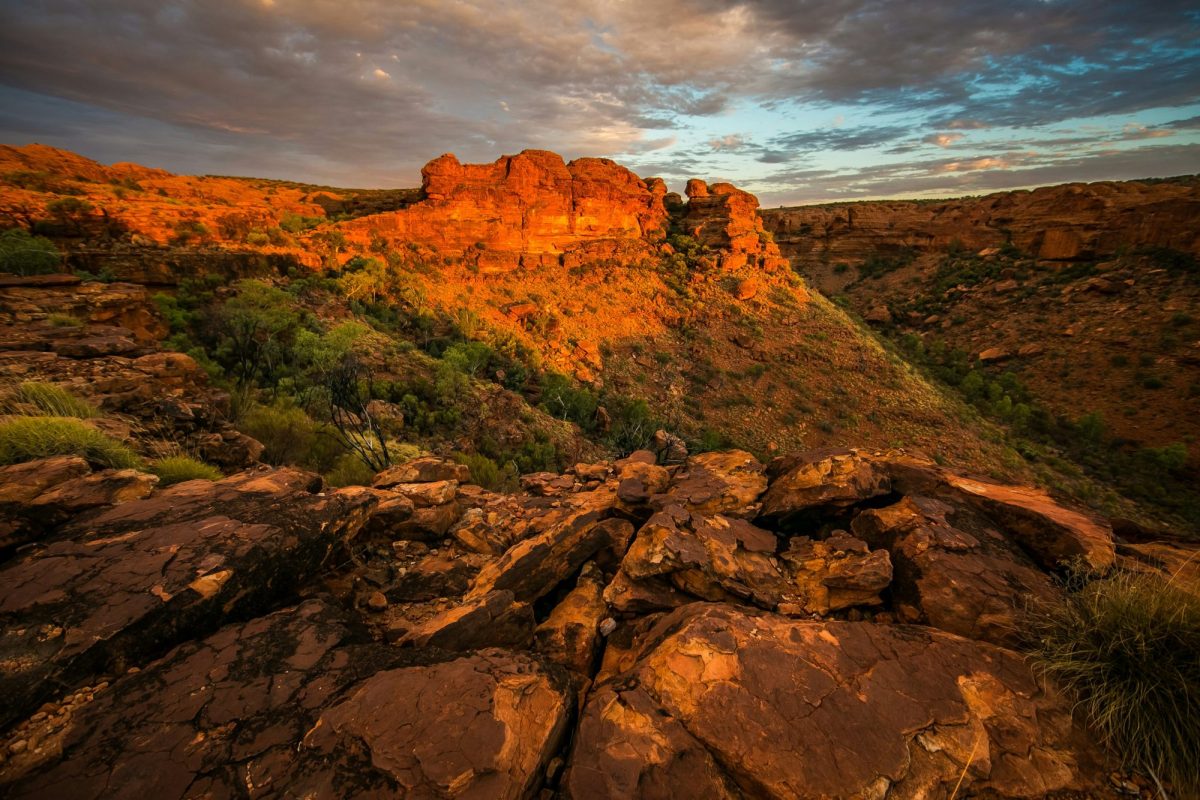
Those are not the only reasons to engage Indigenous knowledges in climate activism. Because we are the people of the land, the land lives within us and belongs in us as much as we live in and belong to the land, to perform land-based activism without considering or engaging with us is an example of the classic ‘about us without us’. Our ancestral Country is part of our identities and part of our very selves so how can you make decisions about Country without the people of the land?
When developing climate policies and performing climate activism, too often Indigenous voices have been and are being ignored. Australia, despite knowing otherwise, still pretends this continent is Terra nullius, still treats this land as either owned by the colony or as empty and untouched. What you ignore is that what you call wilderness does not exist, there is not a square centimetre of this continent that has not been lived on by Indigenous people and has not been modified by Indigenous people.
I have travelled the continent for years, exploring the land and speaking to people, learning what I can of the non-secret Indigenous knowledges, doing all that out of love. Over the last year that has become more structured, more to a purpose. Working with and for Creative Climate, I have been asking elders and artists what they want from a climate response. One thing that seemed consistent, and reasonable, is a desire to be heard.
Australia as a nation is terrible at listening to Indigenous people. The failure of the Voice to Parliament Referendum, which was literally a cry to be heard and an opportunity for the people of this nation to establish a system for Indigenous people to be heard, is testament to the desire of Australia to ignore Indigenous voices. It could in fact be argued that the systems in place for Australia, legal and institutional, are designed to ignore and deplatform Indigenous people and our concerns while the media and social media landscape punishes any Indigenous person who dares to speak up.
Our climate: cultural policy
Of course I am talking to the art and culture sector in this essay, a sector that traditionally has had more of a desire to listen to Indigenous voices. This does not absolve the reader of responsibility here – you don’t get away with just knowing you, personally, listen. Instead, the responsibility of the arts sector is to elevate the voices of people whose voice might be otherwise ignored. You have a voice and a platform, that is literally the point of art, to have a platform, so perhaps your responsibility is to use it effectively.
Indigenous artists and elders can tell you the right story if you will just listen.
The federal government is currently, up to 24 May, inviting submissions to the coming review of the national cultural policy. I invite you to submit, perhaps recommending that climate be added to the policy, because that is what Indigenous artists need. As we all do.
Even I, an Aboriginal artist already working in the art and climate space, am not free of responsibility to elevate the voices of others. I have a voice, I am listened to, you are reading this, so it is my onus to make sure other Indigenous people are heard. My voice, perhaps, does not even belong to me, I have a responsibility to others. How are you any different?