I am beginning to feel as if I’ve turned into a broken record. Vinyl, fairly well scratched across all tracks; dissolute, too, beyond the surface.
Who do I blame for the cult of the author – an exaggeration of the possible that has well and truly morphed in the last half-dozen years into an action plan for your life being changed once your book is on every bookshop shelf?
Was it the annual growth impact of the ubiquitous marketing carry-all that is social media? University writing programs that privilege an end-product? If you are buying an opportunity to pitch a book proposal in five minutes to a publisher or an agent then I think you might be being scammed.
But I might also simply remind my uncynical self where I stand in this community, or why I participate in the first place. The pleasure principle of how humans describe what’s in the world and how they use language to subvert known knowns; how they project new ways for me to understand: objects, emotions, passions and all of that thinginess we live amongst.
This is why I do my work of supporting writers to send their books out to readers in a good shape. I was 15 years a bookseller, have spent more than 20 years as a publisher, and even longer as a reader (who morphed into a writer, as you do).
I’m yet to take a wage for my work as an independent publisher but must hasten to add I’m not resentful about that. Even in the mere four and a half years since my first Upswell release, the conditions have worsened for publishers and their authors via phenomenal cost hikes in printing and freight to name but two items in our complex chain of making books.
A poignant note: one area where costs have remained steady are the fees freelance people, highly skilled stalwarts, charge independent publishers. And I think that’s because they know the value of a good book but also know how hard it is to cover costs in these ambitious ventures.
Too many books?
Australia has a population of around 27 million people. Roughly, 22,000 new Australian books are released each year. Meanwhile, Australians, and in particular younger Australians are reading less than ever before.
Do we publish too many books? The answer has to be yes. Reading tastes are narrowing and escapism is the go, whether it be sexy dragons, celebrities or crime (which might sound like a cheap joke, but is unintended). Sometimes when an industry sector starts to turn downwards it cranks up the product supply, throwing it all at the wall and hoping some of it might stick.
That is, of course, not a fair characterisation of publishing, which is all about unique voices telling stories, but sometimes trends and copycat patterns make me sceptical.
The Australian publishing industry is still in mid-adulthood. Remember that until the late 1960s most Australian authors went to London and New York to be published with their books then imported back to the Antipodes.
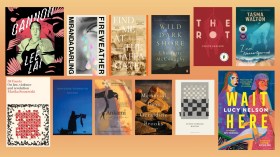
This is something I always keep in mind when the best books of the year lists are featured in our media by authors, reviewers, celebrities and booksellers. Hardly any Australian books are named, especially in those seasonal book pile photographs in bookshops or at home displaying spines as recommendations.
My pondering is about the roots of prestige and how it is earned. It’s a little bit heartbreaking for me when I read these lists and see the majority often selecting the same blockbusting books. My little loyalty button shrinks further from the explicit annual message that our local literary culture is pretty hit-and-miss. How do we strengthen our culture when what’s left of our media largely trivialises our output?
Slow-burn books are now viewed as failures. That is one of the painful results of this fervour to become an author: there are few second chances given for books that arrived at the wrong time, or in a month with too many competitors … I spent my early years reading rediscovered gems from the early twentieth century that were before their time (particularly feminist and other women’s books) and it’s good to know writing can stand the test of time.
Do books change authors’ lives?

Back to this whole business of a book changing an author’s life? It rarely does, and often when it does it’s a disastrous change. We all know examples. This is my bias, but when pitch sessions ask for this new information around categorising of the market – the comparative titles – I want to puke.
I despise this insulting blunt segmentation of creative works, but more particularly I’m against training writers to think in that way before they have even finished (or started) their manuscripts. It’s a kind of brief to write in the way that advertising gives instructions about.
What’s new! What’s on trend? These are nowadays items for consideration in new writers’ toolboxes: the expectation of elaborating on craft, how you came to be here; creating your public persona and flogging your book relentlessly on the socials and, potentially, telling too much or boring the crap out of everyone, including yourself. It rarely makes a difference, anyway, this star-making machinery.
As for me, I’m putting in a claim for more mystery around the writer, and more time in cooking new books closer to perfection.