Australian dance is undergoing a generational transfer of leadership. At the same time, First Nations choreography has never been more visible. Yet visibility and authority are not the same thing.
As companies, festivals, venues, presenters, curators and funders decide who inherits the future, the unresolved question is no longer participation. It is authority.
The future of First Nations dance – quick links
The changing of the guard
Australian dance is undergoing the most significant transfer of leadership in a generation. Across companies, festivals, presenting organisations and cultural institutions, a changing of the guard is already underway.
Artistic directors are retiring. Founders are stepping aside. New leaders are inheriting organisations shaped by decades of artistic, financial and cultural investment. The future of the sector is no longer an abstract question. It is being decided now.
That reality was impossible to ignore at the inaugural Australian Dance Biennale, presented as part of RISING in Melbourne this past fortnight.
The city was full of artists, presenters, producers, agents and programmers. International delegates had travelled from across the world. New relationships were being formed and existing relationships were being strengthened. Like any gathering of a sector in a moment of transition, conversations repeatedly returned to the same question: what comes next?
Who inherits the room
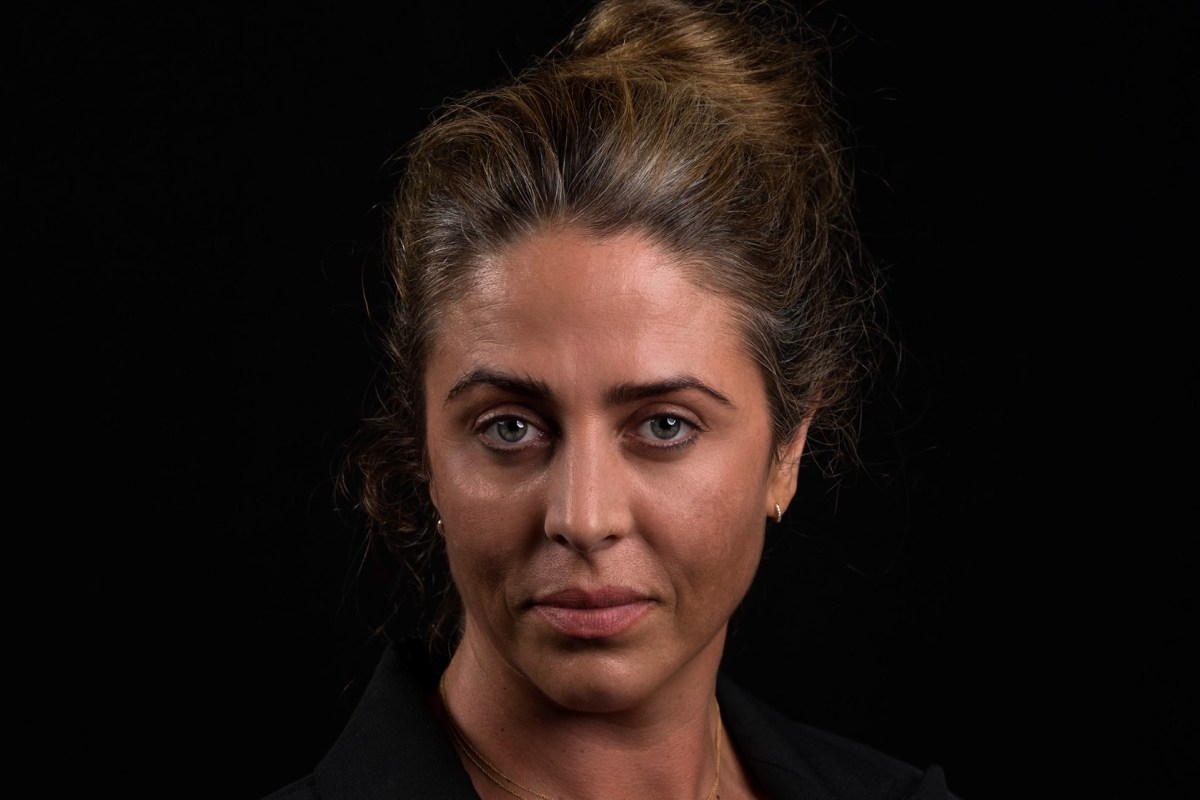
Ordinarily, I would have been in the middle of those conversations. Instead, I chose not to participate in the summit attached to the Australian Dance Biennale following the withdrawal of Blak Futures.
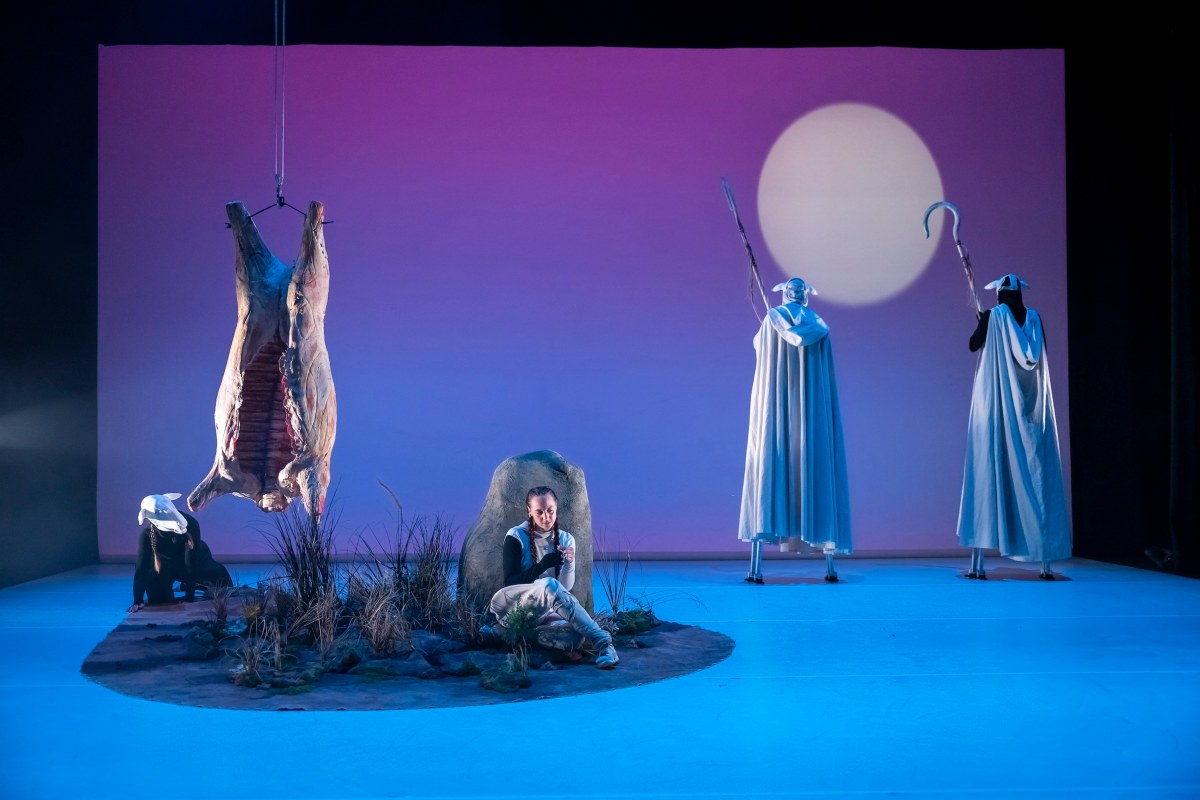
The decision was not a rejection of colleagues or artists. I still attended performances. I watched Carly Sheppard and Alisdair Macindoe’s The Shepherds, a work preoccupied with inheritance, ancestry and the stories we tell ourselves about the places we occupy. I moved through foyers and venues, caught up with friends and listened to conversations unfolding around me.
ArtsHub: Australian Dance Summit finds a sector at a crossroads
Yet there was also an undeniable sense of standing outside a discussion I would normally be inside. The more I reflected on that feeling, the more it became clear that the issues raised by Blak Futures were never really about participation. First Nations artists were present throughout the biennale. First Nations choreography was visible. Indigenous contribution was acknowledged.
Participation was never the issue.
Authority was.
That distinction matters because Australian dance has reached a point where visibility alone is no longer the central question. The more pressing question concerns what happens when First Nations artists seek not only inclusion within institutions, but influence over how those institutions imagine the future.
The conversation is shifting from representation to succession: not who gets invited into the room but who inherits the room.
The question extends beyond dance companies. It reaches festivals, venues, presenters, curators, funders and every institution involved in determining what work is seen, supported and remembered.
Visibility versus authority
In many respects, Australian dance has changed dramatically over the past two decades. First Nations artists are more visible than they have ever been. Their work is programmed at major festivals. They lead important creative projects. They occupy positions of influence across the sector. The story of Australian dance is no longer told without them.
This progress matters. Any serious analysis must begin by acknowledging it.
Frances Rings leads Bangarra Dance Theatre, one of Australia’s most significant cultural institutions. Daniel Riley has reshaped Australian Dance Theatre through his own artistic vision. Across festivals, funding bodies and producing organisations, Indigenous leadership is increasingly present in ways that would have been difficult to imagine a generation ago.
ArtsHub: $100,000 dance fellowship announced by Shaun Parker & Company
Yet visibility and authority are not the same thing. Authority operates at multiple levels. In many Western institutions, authority is often understood as the power to make decisions. First Nations concepts of authority are frequently grounded less in control than in responsibility. Authority is earned through relationships, cultural accountability, knowledge and obligations to community. It is not simply about who leads. It is about what responsibilities leadership carries.
Artistic authority emerges through practice. It is the authority an artist develops through the quality, consistency and influence of their work. Institutional authority emerges through organisations. It is accumulated through infrastructure, audiences, networks and longevity. Curatorial authority determines what gets programmed, commissioned and how work is contextualised. Governance authority shapes priorities, resources, investment decisions and long-term direction.
These forms of authority often overlap. They do not always move together.
An artist may possess enormous artistic authority while having little influence over institutional decision-making. A community may be acknowledged within a program while remaining absent from governance structures. Cultural expertise may be celebrated without altering who decides what gets commissioned, funded or presented.
Together, these forms of authority create the conditions through which artistic futures become possible. They determine not only what reaches audiences, but whose ideas are repeatedly invested in over time. This is where many of the tensions currently shaping Australian dance emerge.
The sector has become increasingly comfortable with visibility. It has become increasingly comfortable with Indigenous knowledge, Indigenous artists and Indigenous contribution. It has also made important shifts in leadership. But authority remains unevenly distributed.
The significance of the Blak Futures conversation was not that it revealed exclusion. It revealed the distance that can still exist between participation and decision-making. Questions about programming, resourcing and leadership are ultimately questions about authority.
Who decides what matters?
Who decides what the future looks like?
And who decides who gets to decide?
Those questions become particularly important during moments of succession. Because leadership transitions do more than replace individuals. They redistribute authority.
Who inherits institutions?
Institutions do not simply support artistic practice. They shape it.
Every major dance organisation in Australia has spent decades building audiences, commissioning artists, developing relationships with presenters, cultivating philanthropy and establishing public trust. What appears natural today is the result of long-term investment.
The Australian Ballet did not inherit its audience. Sydney Dance Company did not inherit its national profile. Bangarra’s authority was not inevitable. Each organisation built influence over time through sustained support, repeated opportunities and institutional continuity. The same is true of leadership.
Stephen Page did not become one of the most influential figures in Australian performing arts through a single commission. His authority developed through decades of artistic practice, institutional support and cultural leadership. Frances Rings inherited an extraordinary legacy while establishing her own. Daniel Riley’s appointment to Australian Dance Theatre demonstrates that leadership transitions can fundamentally reshape organisations without diminishing them.
These examples matter because they reveal something important about succession. Authority is rarely produced by a single opportunity. It accumulates. A first commission demonstrates possibility. A second commission builds confidence. A third begins to establish authority. Over time, repeated investment creates leaders.
This is why conversations about the future of Australian dance cannot be separated from conversations about institutional inheritance.
Institutional structures and the artistic reality
Consider the choreographers already shaping the field. Gary Lang‘s contribution spans decades of choreographic practice and community leadership. Vicki Van Hout has profoundly shaped the intellectual and artistic foundations of Indigenous contemporary dance. Jacob Boehme has established a nationally and internationally recognised practice that brings together choreography, cultural knowledge, language, community participation and place-based performance in ways that continue to expand the possibilities of Indigenous contemporary dance.
Joel Bray has developed a distinctive body of work that challenges assumptions about participation, ceremony and contemporary performance. Carly Sheppard’s choreographic practice continues to expand contemporary dance through collaborative and interdisciplinary approaches that engage deeply with place, history and collective memory.
Amrita Hepi continues to influence conversations across dance, visual art and performance nationally and internationally. Jasmin Sheppard continues to redefine disciplinary boundaries through choreography, performance and cultural practice.
Thomas ES Kelly is developing a distinctive choreographic and movement practice that is expanding contemporary understandings of Indigenous embodiment, technique and performance.
These artists are not waiting to become authorities. They already are. The question is whether institutional structures are evolving at the same pace as artistic reality. This is why the significance of organisations such as Joel Bray Dance and Karul Projects extends beyond individual productions. They represent artistic authority acquiring organisational form. They represent choreographic visions developing the infrastructure necessary to endure beyond individual projects.
The same logic applies to Creative Australia’s multi-year funding rounds. Too often these discussions are reduced to debates about winners and losers. Yet multi-year investment also functions as a succession mechanism. It provides the stability required for artistic authority to develop into institutional authority.
The future of Australian dance will not be determined solely by who makes the strongest work. It will also be shaped by who inherits audiences, donor relationships, commissioning networks, presenter confidence and institutional legitimacy accumulated by legacy brands across decades. Succession is never simply about replacing leaders. It is about deciding what forms of authority will shape the next generation.
Knowledge without authority
The conversation becomes more complicated when authority moves beyond institutions because authority is not only organisational but also cultural.
One of the most striking developments within contemporary performance over recent decades has been the increasing willingness of artists to engage with knowledge systems beyond their own immediate experience. Contemporary dance regularly draws inspiration from mythology, ecology, ritual, spirituality and diverse cultural traditions.
This openness is often one of the field’s strengths. The more revealing distinction lies elsewhere, between inspiration and accountability. Inspiration allows ideas to travel; accountability asks what responsibilities travel with them.
For many First Nations artists, knowledge is inseparable from relationships. Stories remain connected to people, communities and obligations. Authority is exercised through responsibilities that continue before, during and after a work enters the public. This is not an administrative burden. It is a governance system.
The sector has become increasingly comfortable acknowledging Indigenous knowledge. It has been far less comfortable redistributing authority at the same pace. Cultural expertise can be celebrated while governance structures remain largely unchanged. Indigenous perspectives can be welcomed without fundamentally altering who holds authority.
Knowledge moves. Authority often moves more slowly. This distinction helps explain why contemporary debates are no longer primarily about visibility. The question is not whether Indigenous knowledge belongs within Australian dance. The question is what happens when the authority connected to that knowledge seeks equal recognition.
The choreographic landscape was never empty
As I think back to Melbourne, I return to The Shepherds. Not because it offered solutions, but because it kept returning to questions of inheritance. What survives. What is carried forward. What responsibilities accompany the stories we tell ourselves about the worlds we inhabit. Those questions sit beneath every conversation about succession.
Who inherits institutions? Who inherits audiences? Who inherits authority? And what do they inherit responsibility for?
These questions eventually lead beyond dance. They lead back to Mabo. The significance of the Mabo decision was never that it proved Aboriginal people existed. Nobody seriously disputed that Aboriginal people existed. Its significance was that it recognised systems that already possessed authority.
Law already existed. Governance already existed. Responsibility already existed.
The decision did not create those systems. It acknowledged them. Australian dance increasingly acknowledges Indigenous artists. It increasingly acknowledges Indigenous knowledge. It increasingly acknowledges Indigenous leadership. That progress is real.
Yet the deeper question concerns authority itself. Not whether it exists. Whether it is recognised, distributed and inherited. The future of Australian dance does not depend on whether First Nations choreography is included. It depends on whether First Nations choreographic authority is allowed to shape the field itself. Australia has accepted that the land was never empty; the dance sector is yet to accept the stage wasn’t either.


![[GAMEBOY] from choreographer Amy Zhang tours as part of ORBIT 2026. Photo: Supplied.](https://www.artshub.com.au/wp-content/uploads/sites/2/2026/08/7.-ORBIT_ARTWORK_gameboy-by-Amy-Zhang.webp?w=280)