Over the last couple of years, certain hallmarks of the Y2K era have been demonstrating a dogged determination to come back into vogue. The horrors of low-rise jeans and a preoccupation with extreme thinness being chief among the most concerning aspects.
However, there is one trend that we’re pleased to see making a comeback – and that is the art of proving the enduring appeal of Shakespeare by taking his plays and turning them into modern dramatic teen comedies.
The late 90s and early 2000s gave us such enduring bangers as 10 Things I Hate About You (loosely adapted from The Taming of the Shrew) and She’s The Man (after Twelfth Night, and arguably Amanda Bynes’ best work). And while stylistically they feel worlds apart, these films all belong to a canon that was started when Baz Luhrmann and Catherine Martin’s Romeo + Juliet burst into cinemas 20 years ago and broke all of the rules. Audiences were prompted to ask ‘wait, is Shakespeare cool?’ and the studios were prompted to ask ‘wait, can this make us some money?’
Hence, it actually shouldn’t come as a total shock that Australia’s leading theatre company specialising in the works of William Shakespeare, Bell Shakespeare, would invest in a sparkly teenage twist on Macbeth set in 2006. Much less, that it totally works. In fact, it’s rather delightful.
Mackenzie and Macbeth – quick links
Lusting for the crown, or stardom?
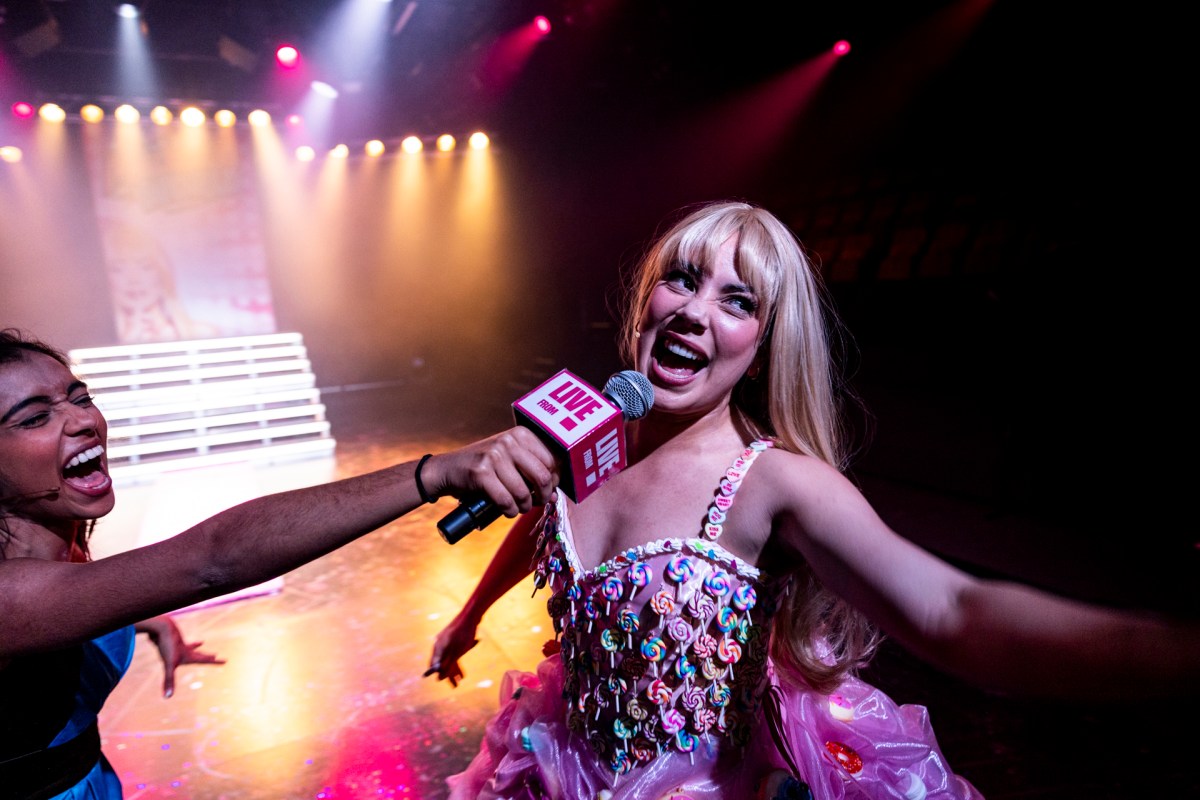
Mackenzie takes Shakespeare’s tortured Scottish general and turns him into an anxious 13-year-old girl on the cusp of teen stardom, with her ruthlessly ambitious stage mother taking the place of Lady Macbeth, as she charts her destined path from playing background loser on a kids TV show to becoming the pop superstar of the world.
Delightfully camp and deceptively twisted, don’t let all the pink and glitter and adolescent emotions fool you – Mackenzie is underscored by a dark sense of humour and a reverence for its source material, shining a new light on Macbeth’s universal themes of power, guilt and the cost of ambition.
In the cut-throat world of children’s entertainment, there are some fates worse than death – and this script gets creative with how it pays tribute to some of Macbeth’s most gruesome events and famous lines (particularly Lady Macbeth’s ‘out, damned spot!’ moment).
Mackenzie also lands on stage as revelations come to light about the dark side of the noughties and the child acting careers at the centre of it.
It could easily be a companion piece to Quiet on Set, the recent docuseries that unveiled the toxic workplace culture behind the biggest children’s television shows to come out of the US in the 90s and 2000s; or I’m Glad My Mom Died, Jeanette McCurdy’s breakout memoir about the difficult truths behind her childhood career as a Nickelodeon star and her relationship with her abusive mother. (Indeed, I’m yet to hear about a stage mum who didn’t have at least a spot of Lady Macbeth’s narcissism.)
Adding music to Macbeth
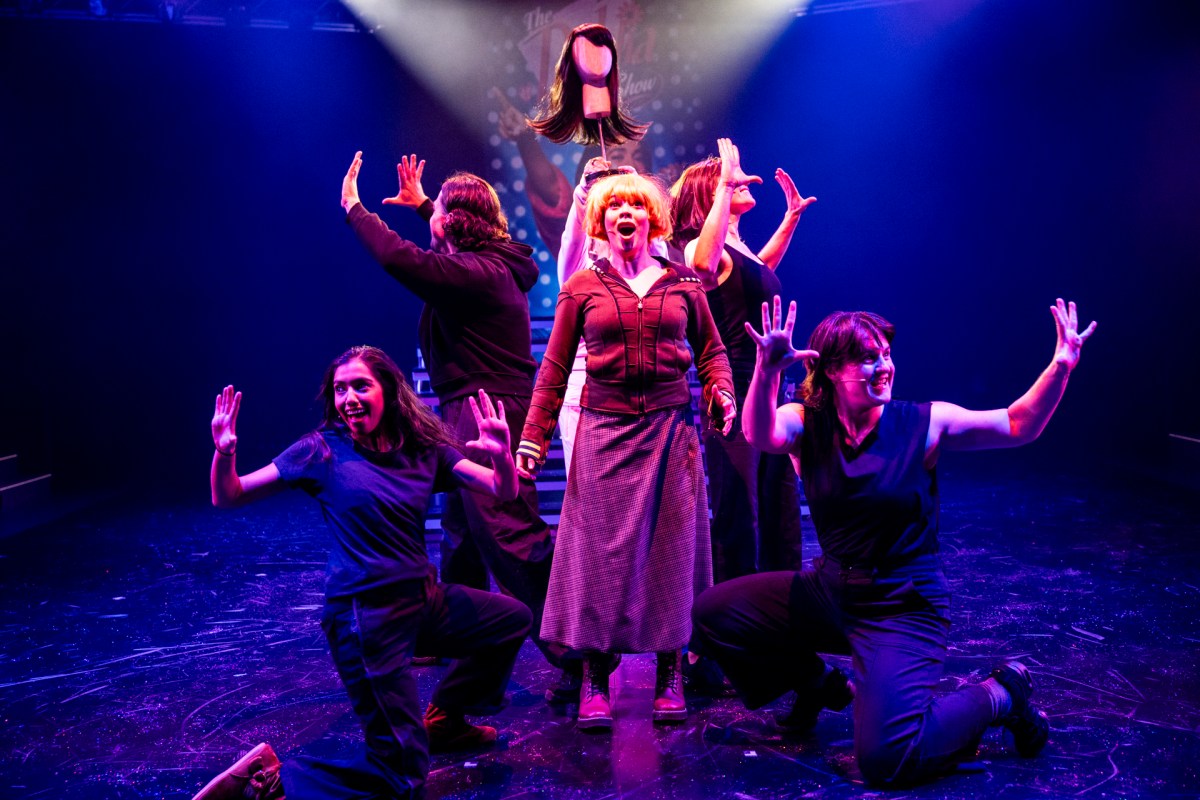
It makes sense that a young woman grappling with the intense pressure of making her next big career move would become the subject of the first script penned by Yve Blake after the success of Fangirls. Blake was just 26 years old when the hit musical debuted in 2019, going on to win multiple awards and tour Australia three separate times before it played to packed out crowds at London’s famous Lyric Hammersmith Theatre.
Featuring five original pop songs, Mackenzie is a ‘play with songs’ rather than an all-out musical. This less-is-more approach works well, and each musical number feels intentional.
The songs don’t quite pack the same emotional impact as, say, those written for The Lovers – the pop-musical that takes after A Midsummer Night’s Dream, created by fellow break-out Australian musical theatre writer Laura Murphy, and also first staged by Bell Shakespeare.
However, Mackenzie’s musical numbers serve their purpose well, channeling the oddly nostalgic, commercial pop sound of the era – especially with the rather Disney Channel-esque Mackenzie’s World. It’s a homage as much as it is a parody, with sound designer Tom Lowndes (aka Hot Dub Time Machine) weaving the alternatingly euphoric and foreboding vibes throughout.
A talented team

Mackenzie is not merely Blake’s difficult second album, but a more refined offering with the potential to appeal to broader audiences (while also delighting the tween crowd, who made up an enraptured contingent of the full house in Melbourne on the casual Tuesday night this reviewer made it along).
Beloved industry icon Virginia Gay (Calamity Jane, Cyrano) is in the director’s chair, and she breathes her infectious energy and charm into this production, keeping the action moving at a pleasing clip while still holding space for each ensemble member to put their all into the physicality, hold tension in the play’s more emotive moments, and flex their comedic timing on the delivery of some genuinely hilarious and memorable one-liners.
With seven actors sharing the stage, the cast is made up of some of the country’s most versatile musical theatre performers – most of them doing double time, playing a handful of small parts in addition to their main roles – and many who have honed their craft on the humble stage of Sydney’s Hayes Theatre, where some of the country’s most exciting theatrical talent has cut their teeth.
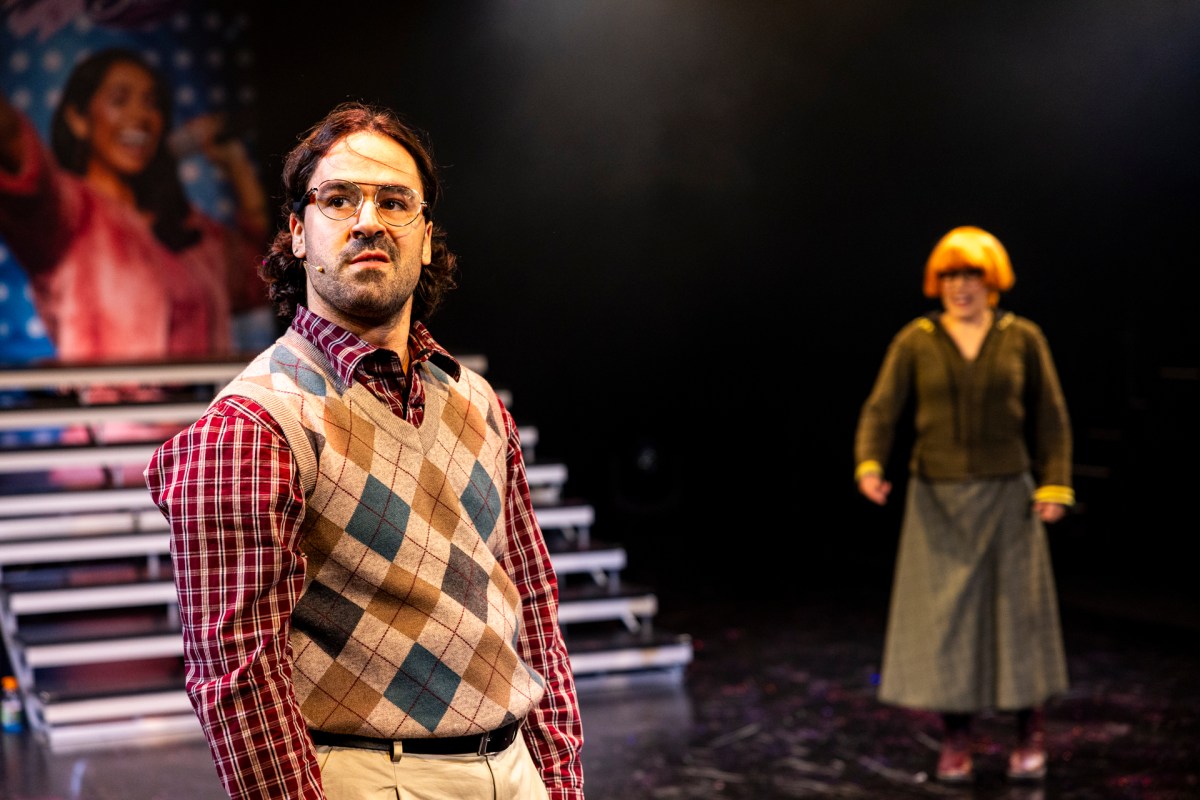
Kimberley Hodgson (Six the Musical, Miss Saigon) holds the spotlight as Mackenzie, convincingly taking the tortured teen from an awkward, apologetic background actor to a power-hungry pop star plunged into extreme burnout before she even turns 18. Ryan Gonzalez, always a magnetic stage presence, brings great charm to the role of Beau (Mackenzie’s on-set friend, and the show’s answer to Macbeth’s Banquo).
Billie Palin’s portrayal of Gayle – the lovable lesbian who heads up the catering department on the set of Mackenzie’s show and acts as a surrogate parental figure to the kids working on set – is another standout. This character is clearly developed from a place of deep affection for a particular soft-butch sapphic archetype – never punching down, and also gifting us with a distinctively queer twist on the famous prophecy: ‘None of woman born shall harm Macbeth.’ (And whoever is in charge of the show’s merchandise knows exactly who they’re targeting with the Gayle-inspired pink carabiners on sale in the lobby.)
This is a production that is taking (almost) all the right risks, at a time when the Australian industry is in crisis. The high cost of staging and touring big theatrical productions has seen planned national tours cut abruptly short, and the cost of living also has many – including younger audiences – questioning whether they can afford to take a risk on a new show. (Bell Shakespeare has clearly taken this into consideration with Mackenzie, offering discounted tickets for under-18s, as well as midweek discounts for under-35s.)
ArtsHub: Profits or losses for state theatre companies: key trends revealed
The challenge of taking Mackenzie on tour
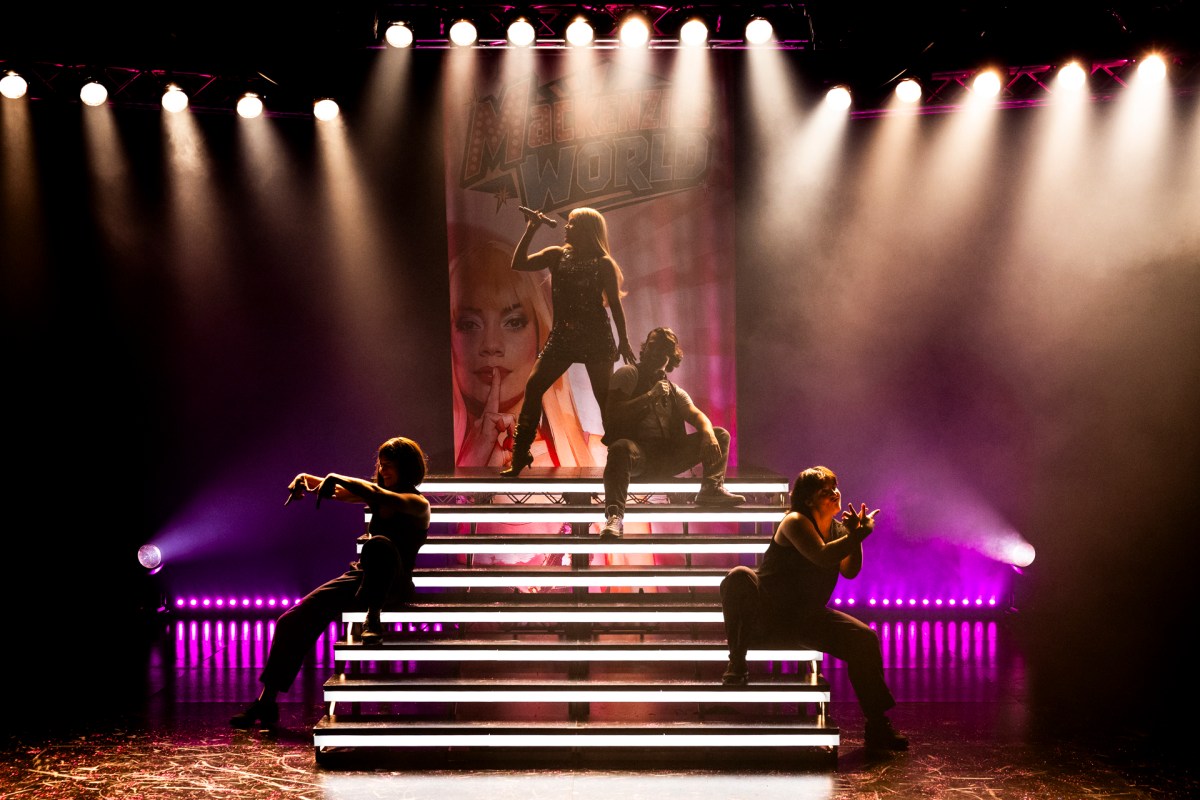
The show has clearly been designed with touring in mind, the set being fairly un-fussy. This is promising for the hope that the show will travel beyond Melbourne, where it has landed for a two-and-a-half week run after debuting in Sydney. However, it does feel like there’s been some missed potential for a more grandiose presentation. Mackenzie’s ‘world premiere’ (a point heavily pushed in the marketing materials) deserves more glitter, more lights, more budget!
But for any structural bells and whistles that we might be left wanting, this production more than makes up for it with its theatrical charms – filling the stage with an infectious energy that filters into the aisles, coaxing the audience into feeling like participants in a studio audience for a live television taping (a cute gimmick that could have been taken even further).
And perhaps, that’s what the Bard himself would have wanted? After all, his plays were meant to be seen by everyman, not only a buttoned-up privileged few.
This is Shakespeare told for an audience living in a post-girlboss, post-Barbie-movie, sort of body-horror-revival era of late-stage-capitalist delirium – packaged into a tight, tour-ready production that leaves audiences feeling uplifted without watering down the tragedy’s blood-splattered impact.
And like all of the best teen adaptations of Shakespeare, it doesn’t need more than about 90 minutes to accomplish pretty much everything it sets out to achieve, wrapping it all up in one fabulous act.