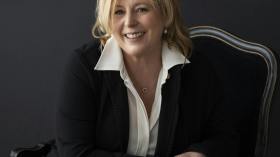
When heavy rain fell on the Bangalow Showgrounds last August, Byron Writers Festival Artistic Director Jessica Alice and her team faced a decision no-one ever wants to make.
After a very wet first day, with muddy ground and power cuts to tents, the final two days of outdoor events were cancelled. Some sessions were restaged on Sunday, with author appearances moving to the local bookstore.
Still, it was another blow for a region already worn down by years of weather-related cancellations and a reminder of the uncertainty extreme weather brings to not only outdoor cultural events, but the entire community.
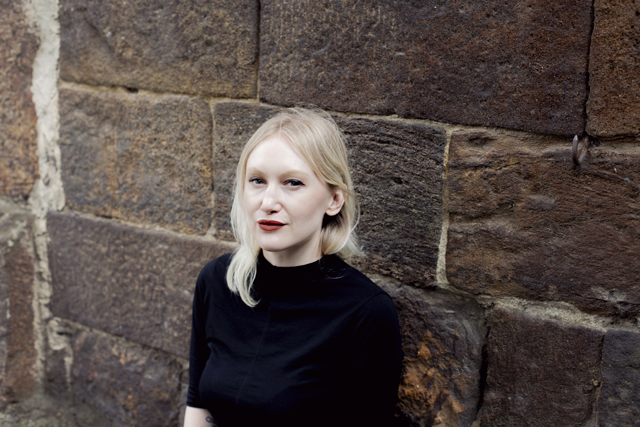
Alice says: ‘One of the awful parts of living through climate change is that you not only experience devastating events like floods, but you also discover all of the knock-on effects that impact daily life, which is something that people understand so well here in the Northern Rivers.’
But one year on, Alice and festival organisers have turned it all around and done something remarkable.
ArtsHub: The show must go on, unless it’s cyclone season
For its 30th year, Byron Writers Festival has reinvented itself. Leaving the showgrounds behind, the three-day festival will unfold throughout the heart of Byron Bay itself, transforming the entire town into an arts and culture precinct.
‘It feels like a real celebration with the community,’ Alice says.
And it’s a vision intrinsically linked with the traditional name for Byron Bay itself. Cavanbah, in the language of the Arakwal people of the Bundjalung Nation, translates to ‘meeting place’.
The new model invites festivalgoers to wander between venues such as the iconic Surf Club, Beach Hotel, Byron Theatre, galleries, outdoor marquees and a free foreshore stage, while Railway Park becomes the festival hub with markets, music and free programming designed to welcome people who may never have bought a festival pass before.
It’s a cultural treasure hunt, where locals and out-of-towners can bump into award-winning authors in cafes and bookstores or share a party wave with them in the surf.
Byron Writers Festival – quick links
Bringing people together through literature

This idea that literature can bring people together had shaped Alice’s career long before she took up the Artistic Director position at Byron Writers Festival three years ago.
Growing up in Melbourne in a house full of books and lively dinner-table debates, she was a committed reader from childhood. In her teens she attended the St Kilda Festival, where, experiencing live poetry in a beer garden for the first time, she realised that writing could also be a communal art form.
From there, she immersed herself in youth literary culture through organisations such as Voiceworks and Express Media, spaces she describes as ‘cheeky and deliberately kind of radical’.
‘Having that community of peers who were all so dedicated to the art form, they start to create that ecosystem in the art sector that you need, that then creates all the other infrastructure around it.’
Building sanctuary at Byron Writers Festival
That thinking now forms the foundation of Byron Writers Festival’s rebuild, with the 2026 theme, ‘sanctuary’.
The event intends to be exactly that: a safe space for readers and writers in these uncertain times. In a world unsettled by the climate crisis, cost of living and the rise of artificial intelligence, Alice feels strongly about protecting the increasingly rare experience of gathering together to think deeply about the literary artform and share ideas in person.
‘Writers festival audiences want to be challenged, and they want to come away knowing more or differently than they did before.’
This year’s Byron Writers Festival will see international guests arriving from seven countries, including Chilean poets Julio Carrasco and Faumelisa Manquepillan Calfuleo, Indian novelist Geetanjali Shree, New Zealand writer Ingrid Horrocks and transnational novelist Thammika Songkaeo.
They’ll be joined by Australian literary luminaries Antoinette Lattouf, Amy Remeikis, Steve Toltz, Meg Mason and Luke Bateman, alongside festival favourites Trent Dalton, Richard Flanagan, Kerry O’Brien and the Hon Bob Carr.
The festival also celebrates the voices closer to home, with Arakwal Bundjalung custodian Delta Kay, Miles Franklin Award-winning Goorie author Melissa Lucashenko, Goorie and Koori poet Evelyn Araluen as well as playwright, theatre director and Chair of Creative Australia Wesley Enoch AM.
ArtsHub: Blak & Bright Writers Festival asks who has the right to offend?
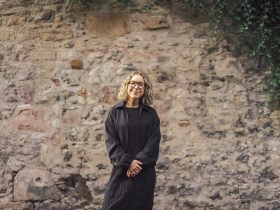
Alice says: ‘I’m driven by the ways that we can be even more connected to place and country, being on Bundjalung Country, and how we can use all of our beautiful natural environment and the uniqueness of this location to create an event that is so distinctive.’
The program opens on 14 August, the morning of the new moon, with a Calling to Country event, followed by a sunrise Saltwater Cleanse and intention-setting on 15 August and yoga on 16 August. This expanded free programming invites locals into the festival, whether they hold a ticket or not.
Alice says that ‘we’re building something here’, a call back to her first festival theme three years ago, ‘from the ground up’.
In many ways, she’s recreating the feeling she discovered all those years ago at St Kilda Festival, when poetry became more than just words on a page.
‘I love hearing those intergenerational stories of people who say they were brought here as a kid by their parents and now they’re bringing their children. It’s beautiful there is that community ownership over the event. Everyone, even people who are maybe not the classic audience, have a connection.’
And as she looks towards the future, Alice is energised by the possibilities.
‘We’ve got to make something new, so let’s make something really great.’