Given its prominence in our media and its place in our national psyche, you might expect that sports would often be depicted on our stages. Yet with some prominent exceptions, such as Nathan Maynard’s acclaimed 37 and David Williamson’s often-staged The Club, our sporting codes have made relatively rare appearances in theatre and comedy.
A fresh crop of works, however, are bucking this trend and finding inspiration on the sporting fields. Whether used as the central subject matter or to provide a relatable backdrop, sports stories can make for compelling drama with inbuilt stakes and narratives that intersect with broader questions of identity and inclusivity.
ArtsHub talks to four creatives telling sporting stories on Australian stages.
Sports on Australian stages – quick links
The Ballad of Dan O’Malley: A Football Tragedy
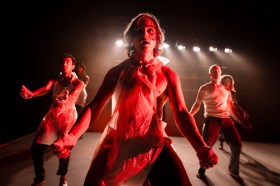
Offering a fictionalised version of the 2009 tanking scandal involving AFL team Melbourne Demons, The Ballad of Dan O’Malley: A Football Tragey, which is coming to Explosives Factory in August, promises to be both a sporting tale and a study of human nature.

‘Paul [Mitchell, the playwright] is interested in talking about ways of being a man,’ says Director Theresa Borg. ‘It’s about honour, mentoring, the nature of teams, what it means to be a leader and – most interesting to me as a dyed-in-the-wool theatre kid – what it means to be on the frontline as opposed to being behind a desk.’
Borg doesn’t consider herself a massive footy fan but has had an interesting personal history with the sport. ‘I really wanted to love footy because I could see that it was socially binding,’ she says.
‘I played at school in year 7 to 9, and I loved how rough and fast it was. But then we were banned because we were girls! We held a strike in year 12 because we, the girls, had to go and watch the boys play, and they never had to come and watch us play anything. The creation of the [AFLW] was like seeing Kate Mulvaney play Richard III; a moment of total vindication.’
As well as covering the backroom machinations at the club, The Ballad of Dan O’Malley will feature plenty of on-field action and training scenes. Borg says Mitchell has been given the honorary title ‘Director of Football’ in his role helping stage the football scenes. ‘The whole cast will be involved in – for want of a better word – choreographing the action. It’s using the poetry of footy to help tell the story.’
While the worlds of the arts and sports may seem poles apart, Borg got her favourite way of looking at her field from a radio sports program she heard. ‘I think it was Bob Rose, and his take was that community participation is the cake, and what we see in big arenas is the icing. It speaks to me about the place where most of the stuff happens, whether that’s Auskick or your local stage school, and how you can’t have the icing unless you have the cake.’
FAAG: Footballers are a Godsend

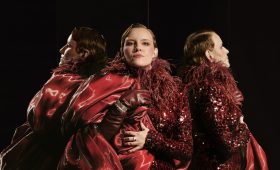
Recounting his experiences in country football through musical comedy, Samuel Roberts’ cabaret hour both celebrates Australian Rules and examines its lack of inclusivity for queer players.
‘When I was ready to be who I am, I quit,’ Roberts wrote of his time in football for a piece for Q News. ‘The idea of being a gay footballer didn’t exist.’
Roberts originally started working on FAAG when he returned to university to study musical theatre. ‘At that point I’d given up playing footy, I wasn’t enjoying it. It’s been using the expression of theatre to figure out my relationship with footy.’
In the show’s initial iteration, Roberts imagined himself as the first openly gay AFL player. After Mitch Brown came out as bisexual in 2025, Roberts worked with director Wes Snelling to update the show, and his story has connected with many.
‘It was very exciting when Mitch Brown hugged me on stage after my opening night in January,’ he says. ‘But I’ve had such wonderful feedback from 60- to 70-year-old men who wanted to share stories; a lot of them were coming out in their 40s after living in that world, playing footy, getting married and all that. I came out at 27, and I used to think I was so old when I came out. But the further back you go, the harder it was to do.’
Roberts was heartened to see the recent story of former NRL player Kane Evans coming out. ‘We know [gay footballers] exist, but there hadn’t been any progression or change. With Kane Evans, he was able to articulate so well the level of stakes for men to come out in elite sport. The online responses were always going to be rough, but I’ve enjoyed seeing wonderful responses from people in the rugby community that seem to be taking it a lot more seriously.’
FAAG has toured comedy and fringe festivals across Australia, but the next stop is special: a show in Roberts’ hometown of Sea Lake, Victoria.
‘I’m packing myself,’ Roberts laughs. ‘But it’ll be fine. There are some parts that I want to change to acknowledge the [football] community and how much they gave me a home for all those years. A lot of the wives and girlfriends have come to see the show, but only a select few of the footy boys have seen it. It’ll be interesting to do it for them all. So long as they don’t take it too literally, we should be fine!’
ArtsHub: read our review of 37
Coach

Basketball has been a near-constant in comedian and presenter Josh Earl’s life. He started playing when he was just five and kept going until his late teens.
‘I was going through a bit of a bad patch in 2015, 2016, and I went and saw a therapist, and she asked me when I reckoned I was actually the happiest,’ Earls says. ‘I said, “Probably when I was 14, playing basketball with my friends.” That really got me back into following the sport and really loving it.’
One of the Earl’s favourite jobs across his varied career was writing for The Project, where one of his tasks was to compile the weekly sports wrap with Liam Ryan. ‘Getting paid to watch sport, write about it and be funny about it? That was the best.’
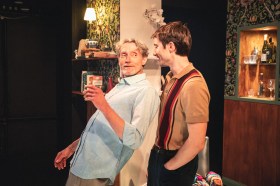
Given his enthusiasm for the game, he was a natural to put his hand up as coach for his son’s team. While his son stopped playing a few years ago, Earl continued as coach. The experience has given him plenty of new material for his upcoming show, aptly titled Coach, which is premiering at Comedy Republic in August.
While youth sport at this level is designed to be social, Earl says there is always someone who takes it too seriously. ‘One coach I’ve coached against – and this is in under 10s – told his kids to refuse to shake our hands after we beat them. They only beat us once, and then he got all his kids on the court in a circle, chanting “Revenge!” It was the weirdest thing ever.’
Earl hopes that his new show could appeal to people outside his usual audience. ‘That was the goal going in, because every Saturday morning, I’m in basketball halls, and there are hundreds of parents coming in and out, and so many of us have this same kind of routine. I thought there’s a market there of people who find the humour in basketball and have this lifestyle where we sacrifice our Saturday mornings just to drive around kids who never once realise how much of our weekend we’re giving up.’
He adds, ‘For people who aren’t fans of basketball and come along, they’ll understand it, because it’s about community, bonding and the male role models – positive and negative – in my life.’
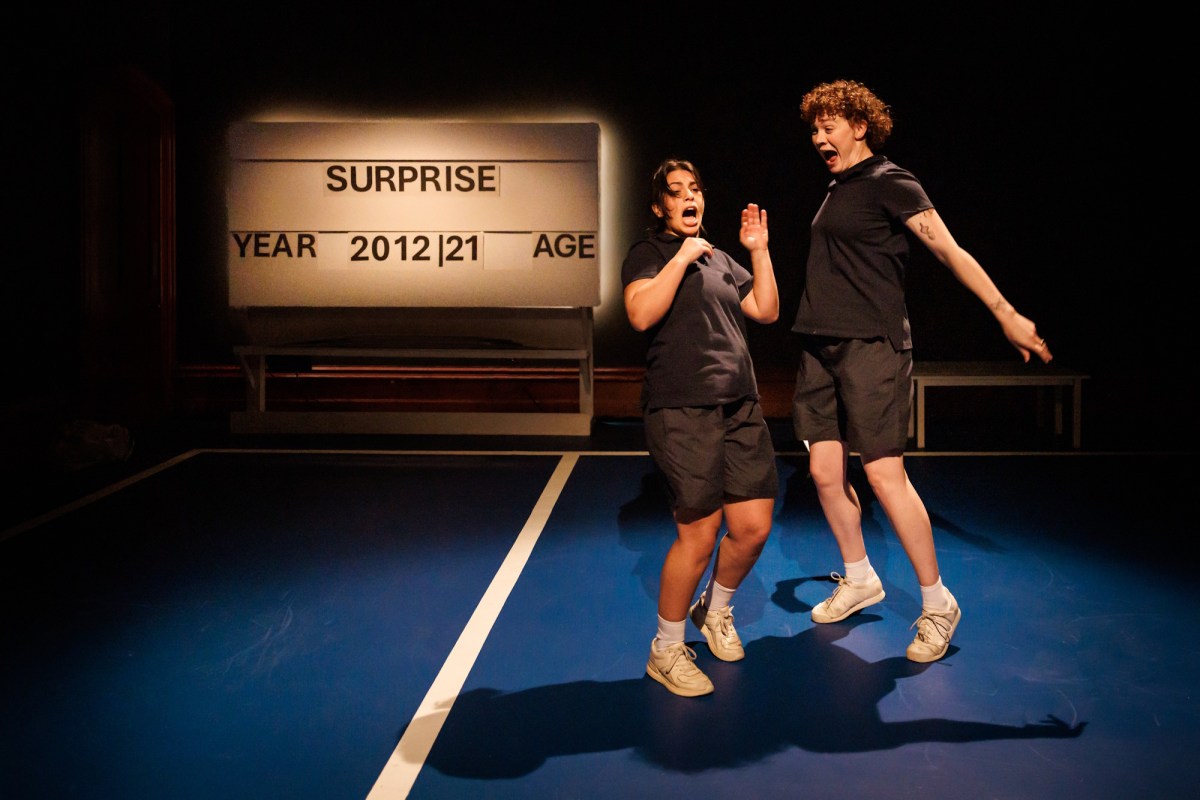
Ballkids (or scenes from a friendship)

Inspiration struck director Julian Dibley-Hall when watching the Australian Open. But it wasn’t the stars of centre court that grabbed his attention, but the diligent ballkids who retrieve and supply balls to the players every game.
‘I mentioned to Liv [Satchell, playwright] that there were some wonderful videos of the training and tryout sessions for ballkids, and within about 30 minutes, Liv was down an internet rabbit hole, and within a day or two, we had started to put together the idea,’ he recalls.
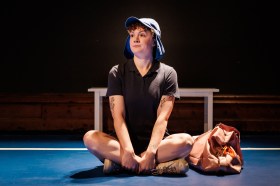
Despite the play’s origins, Dibley-Hall says Ballkids (or scenes from a friendship), which is returning to La Mama Theatre this September, is more a universal story than a tennis-specific tale. ‘Sport plays a role in the show, but it’s very much a framework through which to explore the friendship of these two young people as they grow up together.’
Dibley-Hall says every play comes with its own unique challenges for the director. In the case of Ballkids, he needed to help the actors create a believable chemistry and organised some hangouts for the two actors, including a trip to an exhibition at the Australian Centre for the Moving Image, to cement their friendship. He also drafted in Movement Director Xanthe Beesley to guide the actors through the process of portraying characters who age 20 years across the show.
While the play wasn’t conceived with this intent, Dibley-Hall says having a sporting backdrop may have helped it find an audience. ‘Certainly the feedback that we got from the first season of the show at La Mama has been that it lowered the barriers for some people who may not take a punt on a show about two friends, but will go “I know tennis” or “I know sport” and feel more engaged and invited into the space.’