Ryan Presley lands $100,000 Telstra NATSIAA Art Award with a Renaissance-inspired artwork

What does this year’s Telstra NATSIAA prize list reveal about the future of Indigenous art?
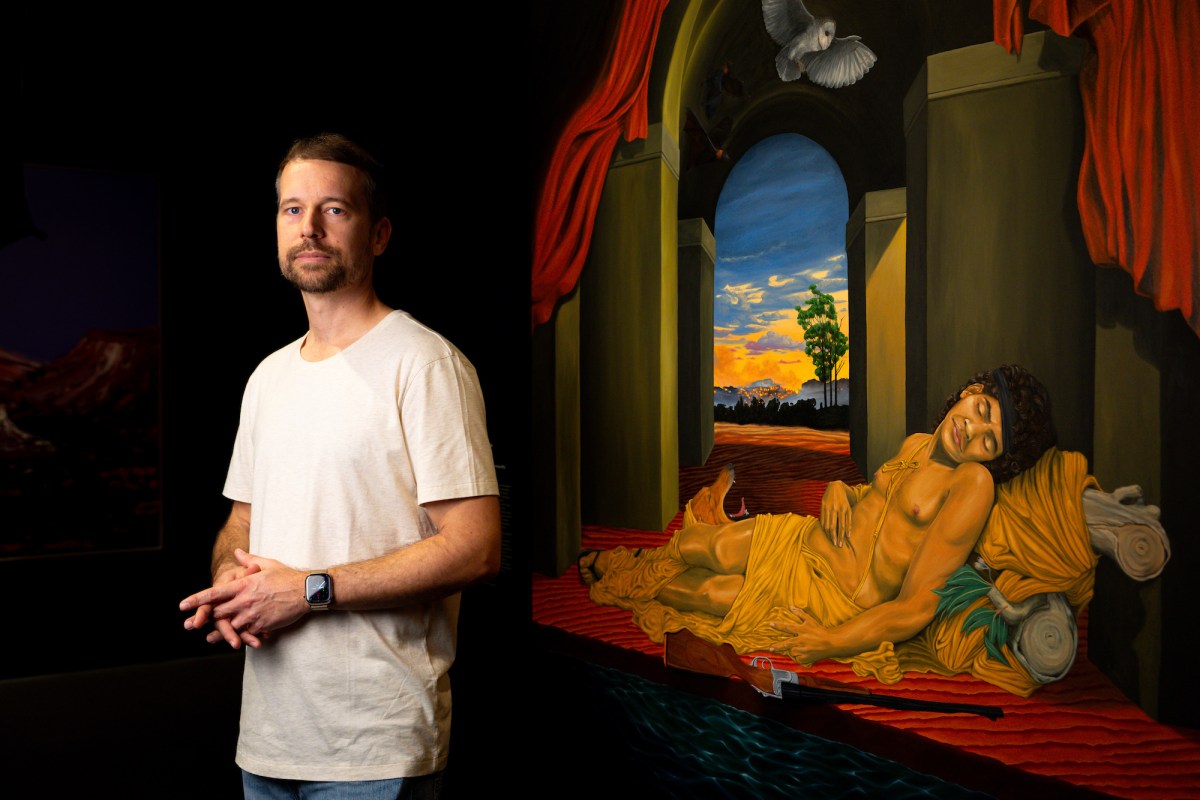
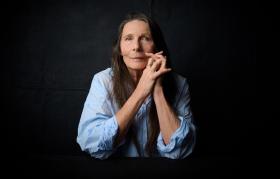
Ryan Presley with his winning Telstra Art Award painting, Our lifestyle of tranquillity undisturbed (2026), oil on canvas. Photo: Charlie Bliss.

Every year, the Telstra National Aboriginal and Torres Strait Islander Art Awards transform Garramilla/Darwin into one of Australia’s most important cultural gathering places.

Yet, while the winners inevitably command the headlines, Telstra NATSIAA has always been about something larger: artists reconnecting across communities, generations and practices, taking the pulse of contemporary Aboriginal and Torres Strait Islander art, and revealing where it is headed next.

This year that pulse felt distinctly different. It is in part due to the major prize-winning work by Marri Ngarr artist Dr Ryan Presley, an oil painting that takes its cue from an Italian Renaissance painting.

A shy Presley thrust into NATSIAA spotlight

Presley’s win is both unexpected and credible. What is certain, is that it will get people talking and asking questions.

His painting Our lifestyle of tranquillity undisturbed (2026) has all the hallmarks of the Western art history canon, but Presley appropriates its visual language, using it to create space for reflection on cultural survival and inherited power.

It embodies Telstra NATSIAA agenda that culture is not just being remembered here; it is being actively carried forward.  ‘I’m interested in changing the meaning and elements of those older works,’ Presley tells ArtsHub. ‘Past, present and future sort of overlay. Time becomes like a spiral.’

Chosen from 64 finalists, Presley’s conceptual bent is an unsurprising choice by the judges, artists Julie Gough (a Trawlwoolway woman from Lutruwita), Yhonnie Scarce (Kokatha and Nukunu peoples, based in Naarm) and Warraba Weatherall (Kamilaroi man based in Meanjin). They described his work as holding viewers in ‘affective contemplation’.

Ryan Presley, Our lifestyle of tranquillity undisturbed (2026), oil paint on polyester, 183 x 152.7 cm. Courtesy of the artist. Photo: Katherine Travis.

Turning to a 16th-century painting by Italian master Domenico di Pace Beccafumi, The Annunciation, Presley’s dreamlike composition refuses easy reading.

A sleeping Classical figure lies in sanctuary while bushfires rage in the distance, a rifle sits precariously in the foreground and omens gather around him. ‘It’s not this grand scene; it’s sort of a quieter power, and then there’s turbulence in the background. I wanted the painting to be a mix of beauty and unease, where tension and horror and release all merge together,’ Presley says.

His win also speaks to the long arc of NATSIAA itself. Presley was first selected as a finalist a decade ago, in 2016, returning in 2020 before claiming the major prize this year. ‘NATSIAA has always loomed large in my mind,’ he says. ‘I grew up in the Alice Springs and it was a big part of my family story. One of my uncles was a finalist in 2007.’

He adds: ‘The quality of work was always so high. I always wanted to be part of that.’ That sense of belonging – to a lineage rather than a competition – echoes across this year’s winners.

The Telstra NATSIAA category winners in short

On top of the main prize, six additional category prizes of $15,000 each, are awarded. This year’s recipients are:

  • Wandjuk Marika Memorial 3D Award: Napuwarri Marawili
  • Telstra General Painting Award: Vanessa Inkamala
  • Telstra Multimedia Award: Colin Heenan-Puruntatameri
  • Telstra Work on Paper Award: Jenna Mayilema Lee
  • Telstra Bark Painting Award: Barayuwa Munuŋgurr
  • Telstra Emerging Artists Award: Guruwuy Murrinyina

‘We are honoured to have these three powerhouses on board to select this year’s Telstra NATSIAA winners,’ said Telstra NATSIAA Curator Dr Shannon Brett.

The 2026 Awards mark 35 years of Telstra’s sponsorship, today with a prize pool of $190,000.

Jenna Mayilema Lee, ‘Taking back taken’ 2026. Courtesy of the artist. Photo: Katherine Travis.

Jenna Mayilema Lee joins Presley in reshaping the NATSIAA conversation

Larrakia, KarraJarri and Wardaman artist Jenna Mayilema Lee received the Work on Paper Award for Taking back taken (2026), weaving British Museum visitor wayfinding maps into delicate danala, dilly bags.

Rather than reclaiming cultural objects themselves, Lee transforms the museum’s own materials into vessels that question colonial collecting and museum hierarchies.

‘I knew when I took those maps that I wanted this to become a NATSIAA work,’ she tells ArtsHub, explaining she began collecting them in 2020, and it has taken until now to get enough, with the help of friends and family travelling through London.

She adds: ‘This is not theft for theft’s sake, but conceptual restitution, an act that asks: what does it mean to take from an institution built on taking?’ 

Lee deliberately leaves words such as ‘museum’, ‘map’ and the British Museum logo partially visible. ‘It’s about using their own material, to then make the objects that had been collected under duress,’ she says.

The gesture is quietly radical in principle, but calls on traditional techniques and forms, demonstrating that conceptual practice and cultural practice can sit comfortably together. Lee is a three-time finalist before this year’s win.

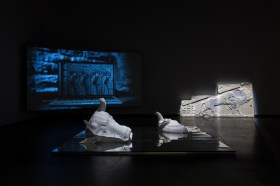
Colin Heenan-Puruntatameri with ‘Ngirramini Ngini Amparruwu (The story of the widow)’ 2026. Courtesy of the artist and Jilamara Arts and Crafts Association. Photo: (l-r) Katherine Travis and Charlie Bliss.

Colin Heenan-Puruntatameri shows how technology extends tradition

Tiwi artist Colin Heenan-Puruntatameri received the Telstra Multimedia Award for a work pairing carved fighting sticks with digital performance and song Rather than seeing technology as a threat to tradition, he treats it as another place for culture to live.

‘It’s important to us so that we can put culture on to a different platform,’ he says. ‘The younger generations are looking more into screens. We must put culture there so we can feed language, traditions and culture to the next generation.’

The work also preserves a song passed down by his late aunt, demonstrating how digital media can become another form of cultural continuity. ‘I wanted to keep it alive. Even though she has passed, this is one way of maybe showing that things will live longer than the moment in the world.’

Barayuwa Munuŋgurr with his work, ‘The hidden reef at Yarrinya’ 2025. Courtesy of the artist and Buku Larrŋgay Mulka. Photo: Charlie Bliss.

40 years of 3D Award

Similarly, Yolŋu artists – who have always had a stronghold across the finalist exhibition – remind audiences that inheritance is never passive. A great example is the work of Barayuwa Munuŋgurr, who was awarded the Bark Painting category.  

A nine-time finalist, his win is overdue and deserved. His bark, The hidden reef at Yarrinya (2025), partially conceals and exposes clan stories of a hunted whale. His incredible physical discipline, mirroring the very story it seeks to pass down – a cautionary warning about the dangers of greed, and the necessity of self-restraint.

His Elders are the people who won the sea rights case of 2008, to stop his home being destroyed by commercial fishing. ‘I feel strong,’ he says of the pride of keep those stories alive today with this win. ‘The painting should make you value that place.’

Yolŋu artist, Napuwarri Marawili, received the Wandjuk Marika Memorial 3D Award – celebrating 40 years since the category began – for Djambatj – Deadly hunter (2025).

His carved reef herons capture capture the precise posture of the reef heron, embodying both the ancestral hunter and living dancer. It honours both the teachings of his late father – the great artist Bakulaŋay Marawili – and the ongoing responsibilities embedded within Yolŋu cultural practice.

Today’s win marks his second, after his 2018 Telstra Bark Painting category award.

The importance of including emerging artists

Perhaps nowhere is that sense of continuity more moving than in Emerging Artist winner Guruwuy Murrinyina. Living in the tiny homeland community of Gäṉgan – which is a mere cluster of ten homes four hours from Yirrkala.

She began painting after the death of her mother, acclaimed artist Malaluba Gumana – a former NATSIAA winner herself (2013 bark category prize and 2019 3D award).  When asked how it felt following in her mother’s footsteps, her response was characteristically understated. ‘A little bit good,’ she says quietly. It is a typically Yolŋu expression of humility, but one carrying immense emotional weight.

Her towering larrakitj, Prismatic Arc (2026), honours that legacy while establishing her own visual language. Depicting Wititj, the Rainbow Serpent, across almost four metres, the work demonstrates remarkable technical confidence.

Vanessa Inkamala, ‘Arrkurla Nukala / Lyaarta Ntema’ 2026. Courtesy of the artist and Iltja Ntjarra Many Hands Art Centre. Image Katherine Travis.

Western Arrernte artist Vanessa Inkamala, winner of the General Painting Award, similarly bridges generations. A great-niece of Albert Namatjira, she paints onto discarded road signs, reflecting on how roads, phones and contemporary travel have changed relationships with Country without diminishing them.

‘We’ve got everything now,’ she tells ArtsHub. ‘Phones and bitumen. Before it was bush life.’ Yet what matters remains unchanged. ‘The Country knows us,’ she says. ‘When you come back, you feel that little breeze coming. That’s Country saying thank you.’

The text across her diptych of panels reads ‘before’ and ‘nowadays’. She adds: ‘I take photos on my phone … Sometimes I take them back to the art centre and use them to make paintings. Before phones we would just see the living Country, or we would see it in our memory.’

Taken together, these works challenge one of the oldest misconceptions about Aboriginal and Torres Strait Islander art – that tradition exists in opposition to innovation. This year’s NATSIAA proves precisely the opposite: Museum maps become woven vessels. Songs become digital archives. Renaissance composition is used to interrogate colonial history. None of these works abandon culture; they extend it.

If there is a defining message from this year’s Telstra NATSIAA, it is that connection to family, Country, language and community remains the foundation from which innovation grows. Standing in the galleries at MAGNT, that living continuity is unmistakable.

2026 National Aboriginal and Torres Strait Islander Art Awards (Telstra NATSIAA) exhibition is showing at Museum and Art Gallery of the Northern Territory (MAGNT) until 27 January 2027.

The exhibition is free to visit, and a Virtual Gallery is now live.

The exhibition was curated by Dr Shannon Brett (Wakka Wakka, Butchulla, Gurang Gurang peoples), with Gail Mabo and Dean Greeno assisting Brett in shortlisting the Finalists.

The writer travelled to Darwin as a guest of Telstra NATSIAA.

Discover more screen, games & arts news and reviews on ScreenHub and ArtsHub. Sign up for our free ArtsHub and ScreenHub newsletters.

Gina Fairley is ArtsHub's Senior Contributor, after 12 years in the role as National Visual Arts Editor. She has worked for extended periods in America and Southeast Asia, as gallerist, arts administrator and regional contributing editor for a number of magazines, including Hong Kong based Asian Art News and World Sculpture News. She is an Art Tour leader for the AGNSW Members, and lectures regularly on the state of the arts. She is based in Mittagong, regional NSW. Instagram: fairleygina