Every director begins a new project with an instinct, a vision or an idea. The real work of directing is in realising there may be more to it than that.
‘It’s the key thing I took from my training at NIDA,’ says Claudia Osborne, who graduated from the Master of Fine Arts in Directing at NIDA in 2019 and is now the inaugural Young Artist Program Director at Opera Australia.
‘I’ll always come with an initial idea but I never assume my first idea will be the best one. It’s always just the starting point; you have to start somewhere. Collaboration, conceptual world-building, any of it, is an ongoing iterative process, and that process is really important to me.’
NIDA’s MFA programs – quick links
Directing is a process of refining ideas
It’s a deceptively simple philosophy, but one that has guided Osborne’s career across theatre, opera and screen. Whether she’s creating an intimate play or directing large-scale theatre or opera, the process always begins with asking questions, testing ideas, and being open to where the collaboration might lead.
That approach also sits at the heart of NIDA’s MFA in Directing. Over 18 months of full-time, on campus study, students are immersed in the practice of directing across theatre, screen, opera and devised performance, developing their craft through studio projects, placements and intensive collaboration with other students and industry professionals.
‘My experience of studying at NIDA was great, but it was hard,’ Osborne says. ‘And that’s what life is like working in this industry. If you really want to do it, you have to be prepared to work really hard.’
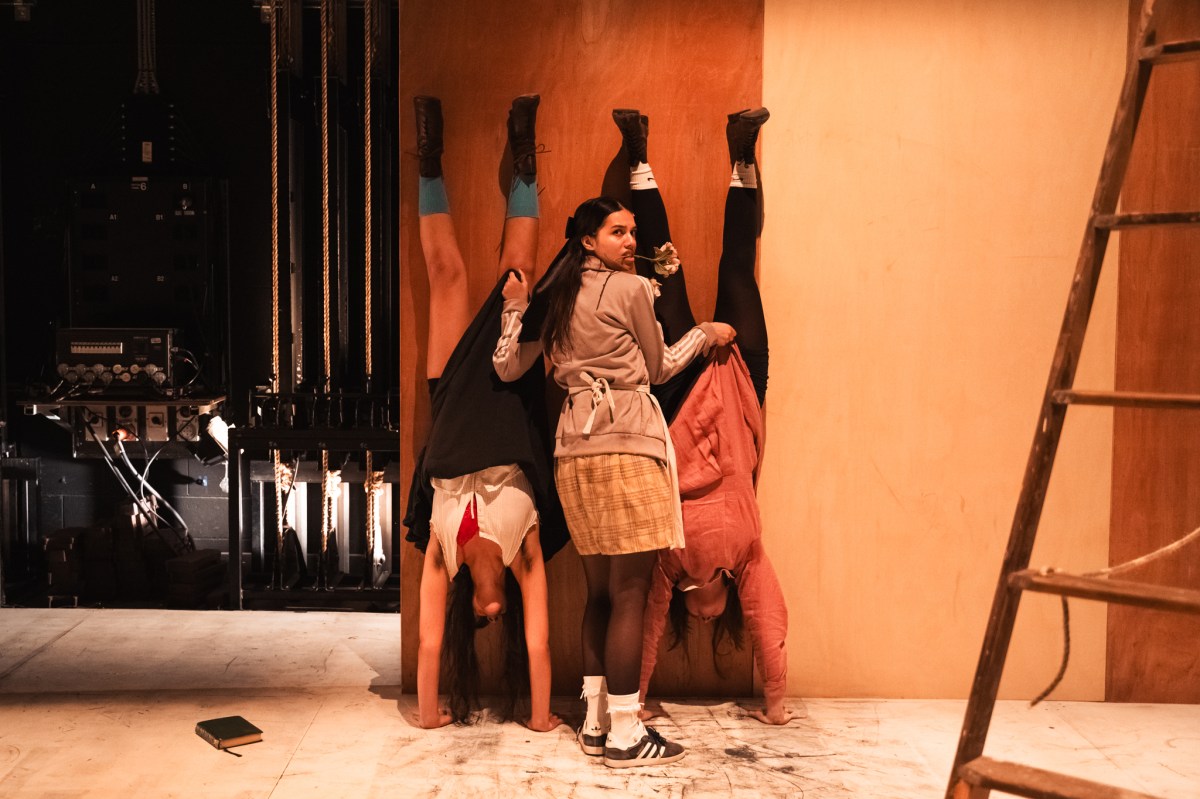
That work ethic set Osborne in good stead during the course.
‘The hours were incredibly long, but I never wanted to leave because I was always working on something I was genuinely excited about. It was enriching and fun and exciting, but all-consuming.’
Led by award-winning director, playwright and educator Dr Benjamin Schostakowski, the MFA program is designed to give aspiring directors the skills and confidence they need to develop their own distinct practice.
Forging lifelong connections
For Osborne, the greatest gift of NIDA wasn’t learning the techniques of directing, it was all about the people.
‘I think the most important thing you get from drama school is your cohort,’ she says. ‘They become your lifelong collaborators. So many of the people I graduated with, the designers, the technical production students, they’re all still people I still work with today.’
As one of the leading educators for careers in the arts, NIDA also has many industry professionals on staff.
‘Many of my colleagues who also teach at NIDA have become people I regularly collaborate and work with outside the institution. It really does feel like an extension of the industry, which is so helpful,’ Osborne says.
Theatre as a ‘three-dimensional sculpture’
Osborne studied broadly, earlier achieving a double degree in Arts and Fine Arts – including creative writing, sculpture, ceramics, installation art and performance – before turning to directing and her MFA at NIDA.
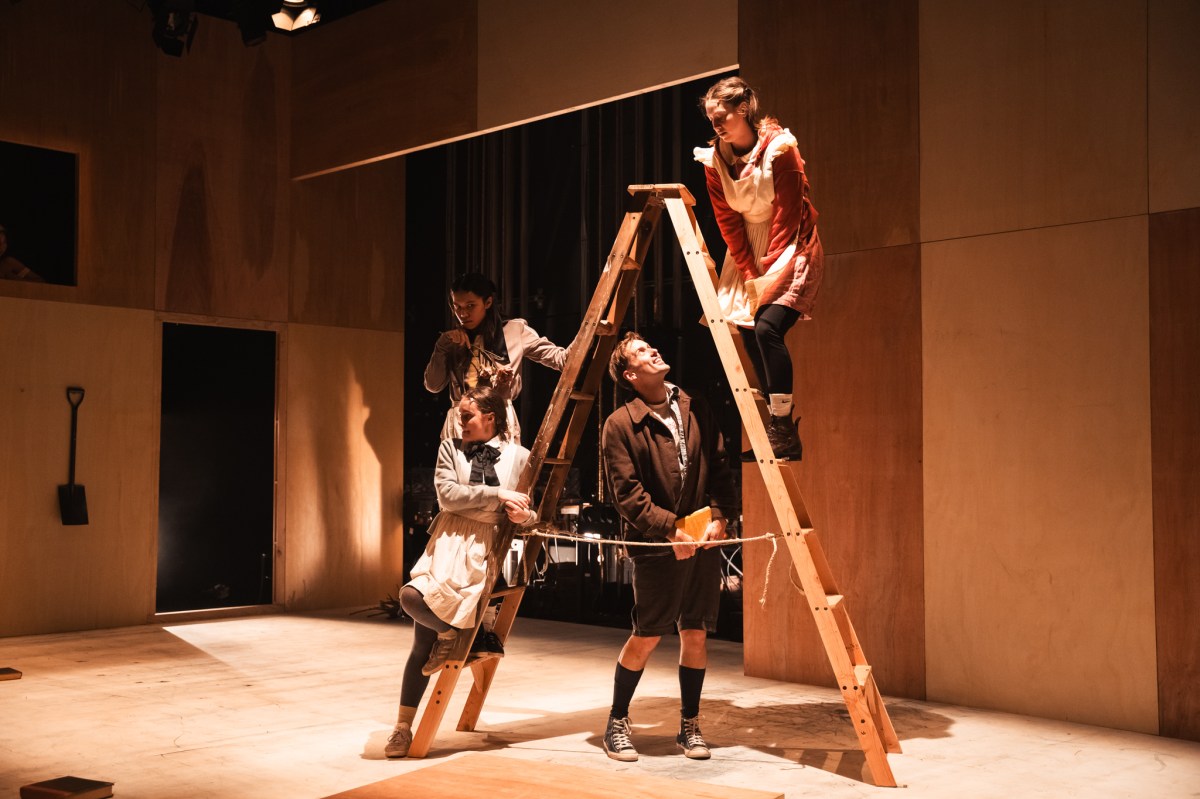
That perspective continues to inform her work. ‘For me, theatre is a three-dimensional sculpture, particularly now I’m working in opera where the scale is bigger,’ she says. ‘I always approach it like I’m making a painting in three-dimensional space.’
It’s a reminder that directing is as much about ways of seeing as it is about technical skill. The MFA program at NIDA encourages that breadth of thinking, exposing students to multiple forms of performance while fostering the curiosity, leadership and collaborative practice demanded of contemporary directors.
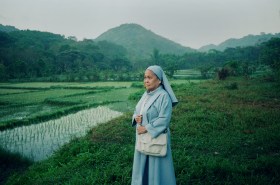
In 2024, Osborne wrote and directed Rash, her first short film, which was met with significant acclaim. It premiered at the Festival des Antipodes in Saint-Tropez; won the AFTRS Award for Best Screenplay in an Australian Short Film; and received a Highly Commended as an Outstanding Emerging Female Director at Flickerfest International Short Film Festival.
‘The film deals with big issues of grief and mental health but shown on a very small scale, seen only through the lens of two little boys spending an afternoon with a babysitter. I’m really drawn to that, taking something that could easily be told on a big, grand scale and trying to capture it in a very small, intimate way.’
Hands-on experience
Whatever the project, Osborne believes there is no substitute for actually getting hands-on and making work.
‘The way to learn is always by doing it yourself,’ she says. ‘So much of directing is about reading faces, managing a room, and collaborating and you can only learn that by doing it. That’s also what makes a program like this one at NIDA so valuable, because you are constantly doing it.’
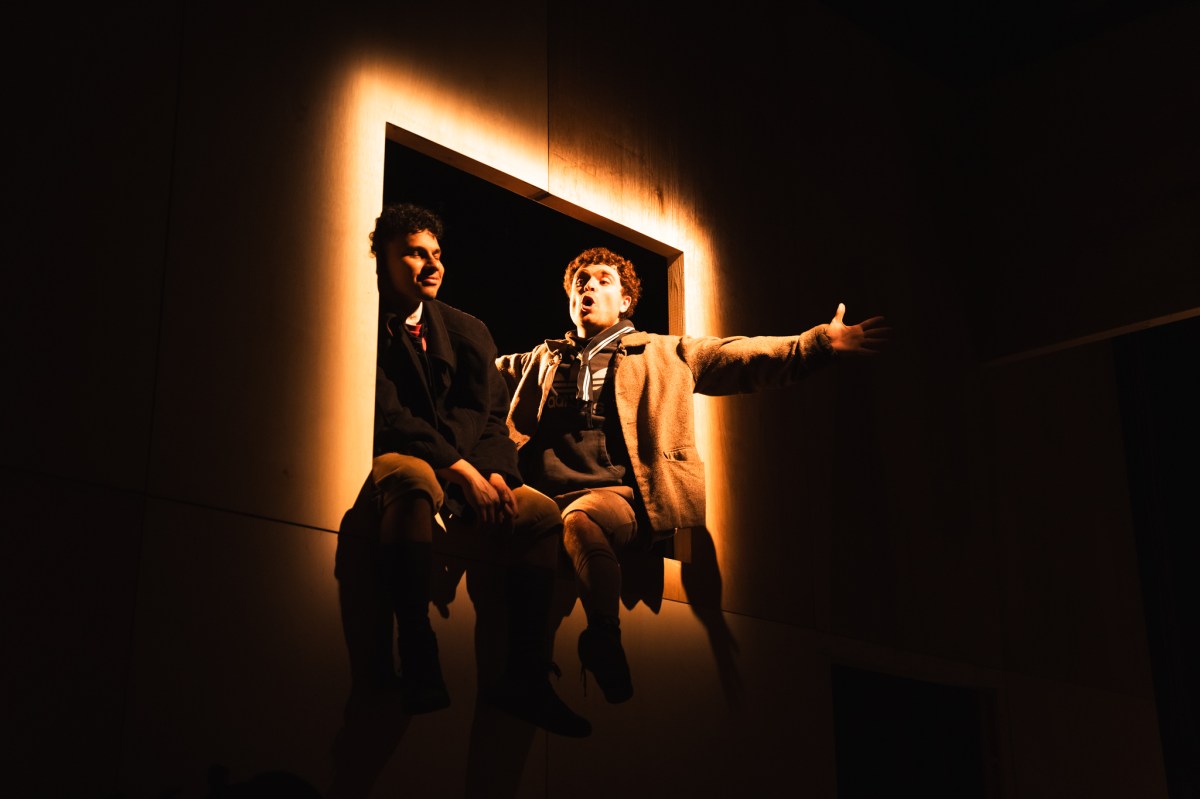
Osborne encourages aspiring directors to always capture new ideas whenever they can. ‘Even if you can’t do them now, you might come back to them in 10 years’ time. It means when opportunities come up you’re not starting from scratch, you have something to pitch.’
Later this year, Osborne is returning to NIDA to direct Maurice Ravel’s opera L’Enfant et les Sortilègesis (The child and the toys) in November.
‘I’m so excited to be working on this. It’s a surrealist dream about an angry little boy. My big question from the outset was, why is he so angry? We’ve leaned into the period in which it was written and tried to weave a little of Ravel’s own biography into the work. It’s definitely a much darker version of this opera than people might be used to. There are no giant teacups, sorry!’
For those looking to follow Osborne into directing, NIDA’s next postgraduate information session is on 25 August at 6pm, offering a chance to meet NIDA’s course leaders. The session will also share first-hand insights into how the course can accelerate your career in the arts and cultural sector and provide helpful tips on putting together an application.