As concern grows around ever-decreasing levels of government arts funding in Australia, where statistics show our government’s per capita public arts spend has dropped 6.8% over the past two decades, ArtsHub spoke to two artists based in regions typically associated with larger arts budgets and greater public support for artists’ work.
Independent performing artists Ahilan Ratnamohan and Quindell Orton have been living and working in Europe – in Antwerp, Belgium and Munich, Germany respectively – for over a decade, and both say that overseas arts scene has afforded them opportunities they wouldn’t have encountered in Australia.
Yet their career paths have not been without challenges, and this raises interesting and provocative questions about whether the grass is really greener for Australian artists working in Europe, and whether they’re happier calling that region home.
Australian artists in Europe – quick links
Getting started as an independent artist in Europe
Originally from Perth, the dancer and performance-maker Quindell Orton says the desire to chart a path as an independent artist emerged early in her career.
As she tells ArtsHub, she knew she wanted to be an independent from the time she was a university student at WAAPA in the late 2000s.
‘I did a secondment with some independent artists in Perth. I thought it was exciting and rewarding to work as an independent, but also demanding and precarious,’ Orton says.
‘There’s great freedom in being an independent. But there’s also a lot you take on yourself because there simply aren’t the resources and infrastructure to support you getting help, and I would say that’s just as true of being an independent in Australia as it is in Europe, too.’
Yet despite what can be scarce resourcing for independent artists in Europe and elsewhere, since moving to Germany 13 years ago, Orton says that sustaining oneself as an independent in Europe is a far more viable prospect than it is in Australia.
‘When I first arrived in Berlin 13 years ago, I only knew one other person here, who was another Australian artist living in Germany,’ she explains.
‘But I‘d saved up a bit of money to see me through the first few months of classes and auditions, and after that, I was really lucky to start getting regular work as a freelance performer, and that’s how I was able to set myself up here.’
Orton adds that her pathway to ongoing work and eventual residency in Germany was fast-tracked by her Dutch passport (her mother is Dutch). She also took German classes when she first arrived, but says that since then, most of her work is conducted in English rather than German.
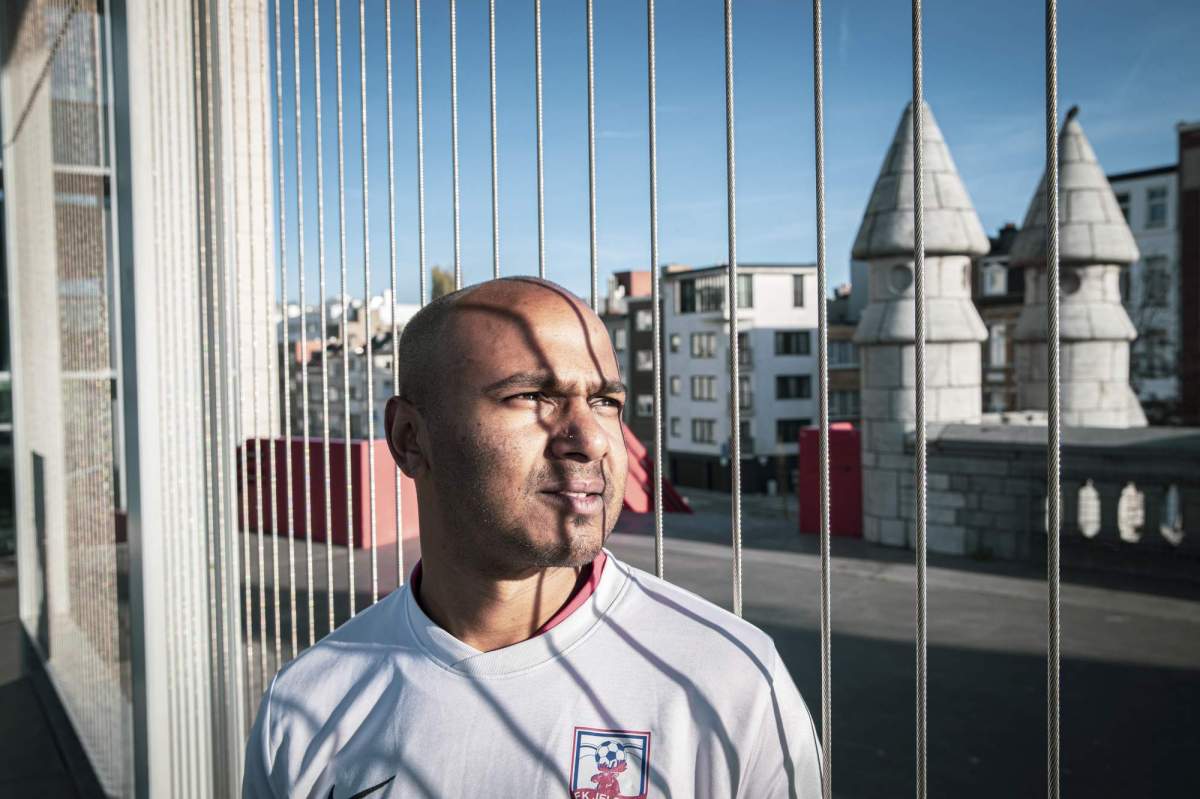
But for Antwerp-based, Sri Lankan Tamil-Australian artist Ahilan Ratnamohan, despite being raised in an English-speaking environment in Sydney, he was determined to speak the local Flemish language from the start of his European stay.
As he tells ArtsHub, it’s a decision that has proven influential to his career.
‘Some artists arrive here with the idea that they can get by speaking only English, and you can do that to a certain extent. But I think my decision to speak Dutch [Flemish] with the people I met professionally early on made a big difference to how I built relationships with them.’
Another interesting difference between Orton and Ratnamohan’s relocation experiences is that Ratnamohan’s move to Europe was more of a surprise than a planned outcome.
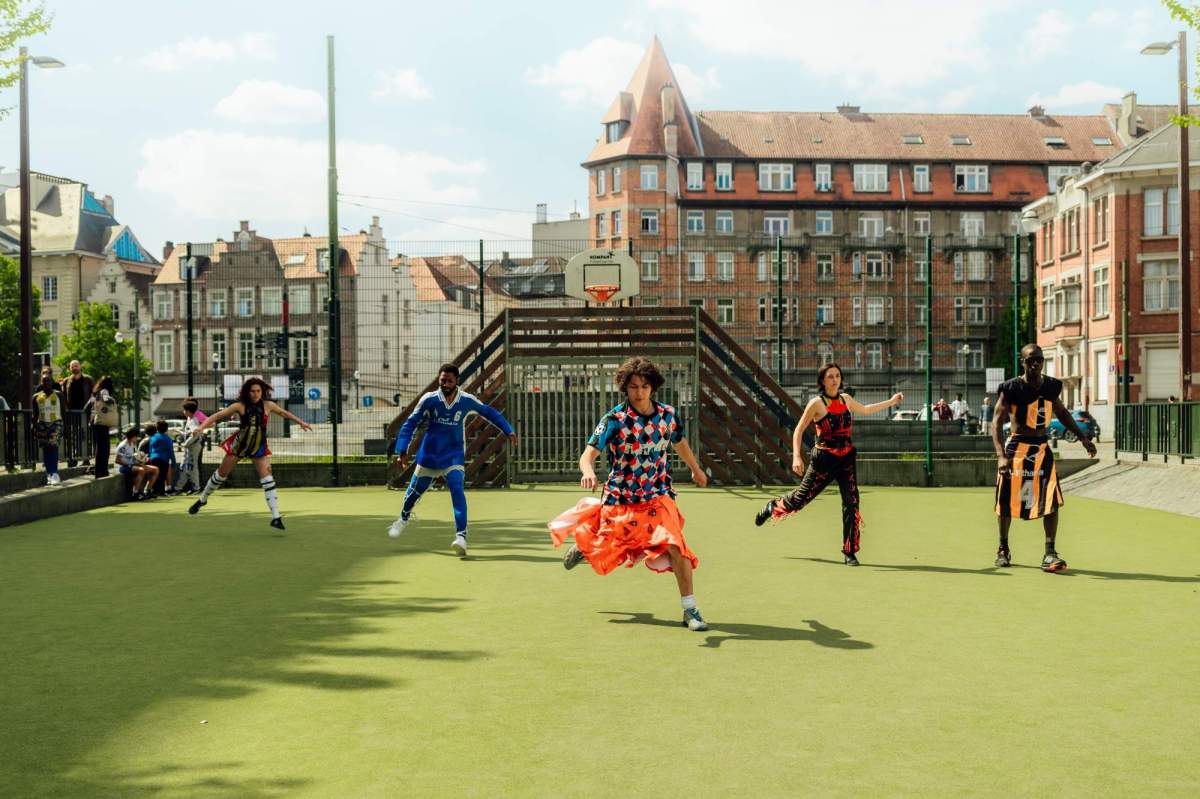
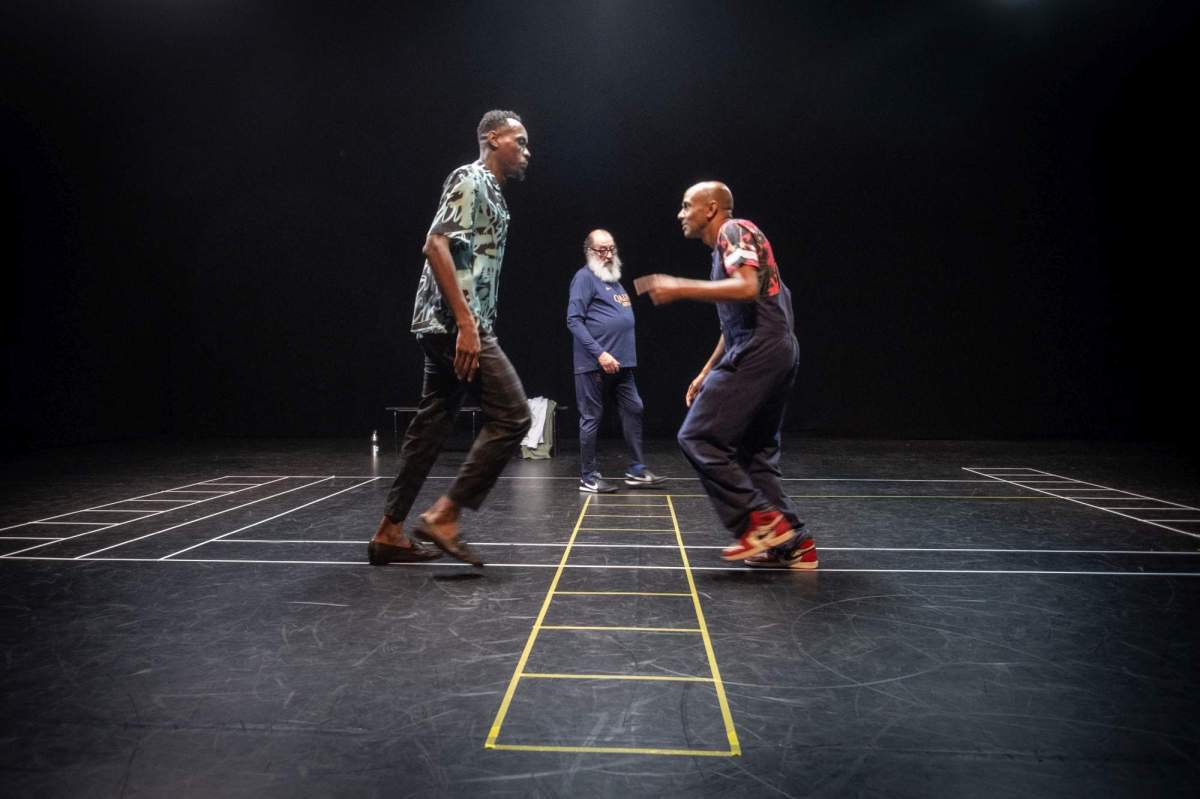
As he tells ArtsHub, ‘In 2012 I was in Antwerp working on the project Michael Essien I want to play as you… [commissioned by Urban Theatre Projects]. It was a piece that involved a group of Nigerian footballers living in Antwerp, and it was the first work I had ever directed.’
He continues, ‘When we showed that work in Antwerp, it ended up being fairly successful.
‘On the last night of its season, the director of a theatre here called the Monty asked me to have a meeting about making my next piece. And that’s something that can happen here in Europe – someone can see your work and say, “This person deserves the chance to make another piece” and that process can start very quickly.’
Once Ratnamohan received that initial support in Antwerp to produce his next work, momentum grew to the point where he and his Belgian partner and two children settled there on a more permanent basis.
‘I remember in the early days trying to get support for my work as an independent was pretty hard,’ Ratnamohan admits.
‘I’d send out a lot of emails to presenters and directors to try and get my work programmed, and I’d receive a response from maybe 10% of them. But now [after more than a decade in Antwerp] having had my work presented at some major European venues and festivals, it’s a different story.
‘So, it took me while to break in and become known enough that producers and directors would come and see my work and program it, but I’ve had a constant flow of support for my work since then.’
Sustaining an arts practice in Europe
Ratnamohan and Orton have built their overseas careers in slightly different ways, yet it’s clear both harbour the same resolve to maintain their independent arts practice.
For Ratnamohan, that has meant making some sacrifices and lifestyle changes, especially in the early days when pursuing European touring opportunities with very little financial support.
‘I don’t look back on those early days in Antwerp as being especially hard,’ he tells ArtsHub. ‘But we lived simply, and on reflection, I think we accepted some [touring] deals that probably were below what we should have been being paid. Also, when we were on those tours I took my whole family, and we’d all stay in the same room.
‘So in that way I guess I adapted to a different way of life. But I was always getting enough work as an artist to survive. I’ve never had a second job at a café or anything like that. I’ve worked hard, but I’ve always had enough work to live on as a performance-maker and artist here in Antwerp.’
That said, in recent years, Ratnamohan has started receiving the Belgian government’s support payment for artists, called the Art Work Allowance, which entitles him to a government payment for the weeks he is not earning artist income.
‘I applied and started getting that payment in 2019, and although it has some downsides – like the administrative work you have to do to get it, and the way it make you feel like you’re unemployed – it’s been helpful,’ he says.
‘But most of my income still comes from co-productions and touring opportunities of my work, which is not something that would be happening if I was working in Australia.’
While Ratnamohan has built a solid base for himself in Belgium, across the border in Germany, Orton has found a similarly steady stream of work as an independent performing artist. Yet unlike Ratnamohan, Orton’s work has come through freelance jobs with other European independent artists, where she works as either a performer or a movement coach.
In addition to this, she has been choreographing and presenting her own work for the past two years. ‘I’ve started attracting government funding for my own projects recently, which has been great,’ she says.
She adds that while government arts funding in Germany is competitive, it’s been of huge benefit to her independent practice, especially in allowing her to develop her latest full-length work, which has just premiered at a local arts festival.
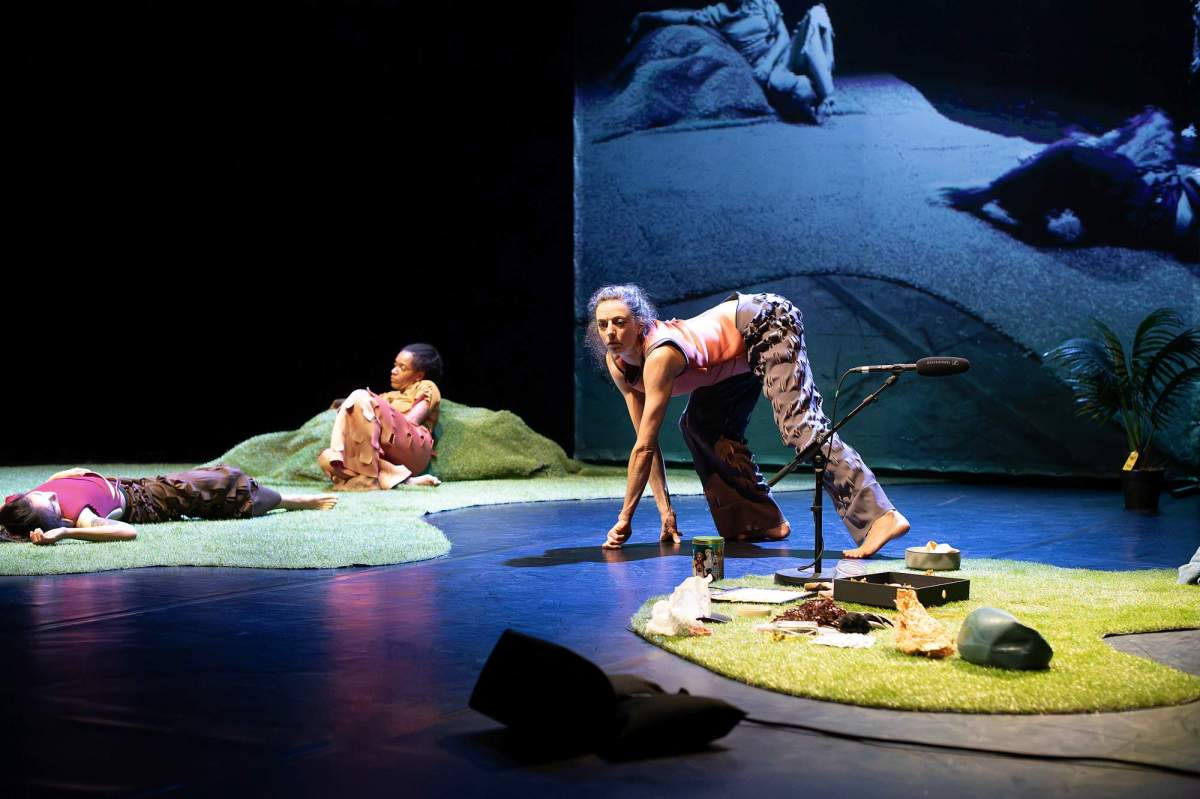
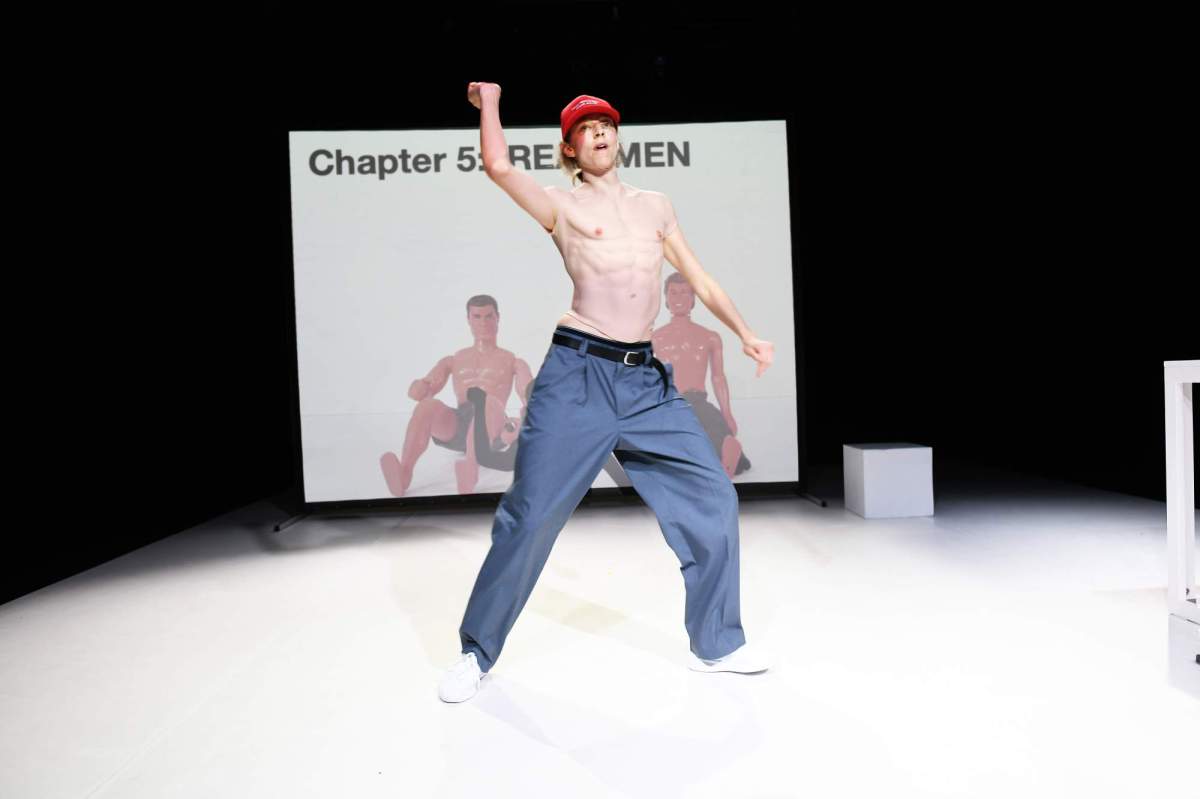
‘My latest work is called Making of an Animal and it’s a project I started in 2024,’ she tells ArtsHub. ‘Initially I received an artist stipend [grant] from the City of Munich to do some research on my idea, which I did in blocks of time between my other work.
‘Then, once the concept of the piece was developed, I submitted project proposals for larger government grants [in 2025] which allowed me to develop and complete the work.’
On reflection, Orton says she feels lucky to have been so successful with this level government funding.
‘The funding allowed me to engage a team of nine in total [three cast, six crew] but for sure, they could and should be paid more for what they do. However, I think that’s the nature of working on independent projects wherever you are in the world.’
Is there really more government support for artists in Europe?
Despite this seemingly stubborn problem of bare-bones budgets for independent projects no matter where in the world you are, both Orton and Ratnamohan say their base in Europe has afforded them more government and presenter support than they would be receiving if they’d stayed in Australia.
Ratnamohan has found steady co-production support from Belgian and international presenters, which has been vital to keeping his independent practice alive.
‘While I lament the gate-keeping that is involved in Europe, I’ve been able to build my practice steadily and build a reputation around my work after touring it in Europe for some years now,’ he says.
‘There’s also nothing like dealing with presenters and directors face-to-face,’ he adds. ‘It’s often those meetings with people that happen right after they see my work, which quickly lead to more opportunities.’
It’s a slightly different story for Orton, whose practice has been influenced more by what she sees as the greater number of government arts grants on offer in Germany compared to Australia.
‘In Australia, it feels if your grant application isn’t successful in one of the few state or federal [funding] rounds, you won’t be working,’ she observes.
‘But in Germany, there are more pots of money, so artists can apply for multiple funding opportunities from different government grant programs, and if one [grant] doesn’t come through, there’s a chance another one might. So, it’s easier to get new work happening.’
Orton’s latest project, Making of an Animal speaks directly to this, in that it has attracted several forms of government support that don’t exist in Australia.
‘In Munich, at least in dance or theatre, the City [of Munich] offers artists €8000 [AU$12,700] tax-free research stipends,’ Orton explains.
‘To be awarded a stipend, you have to submit an application of what you’re going to work on, and if it’s accepted, you can use the time to research your ideas and start testing them out in preparation for properly developing your project.’
For Orton, that research grant led to a number of other grants from the German government and the City of Munich to help her further develop and then present the work.
But if that sounds like a dream run, the artist is quick to point out that government funding in Germany is still hugely competitive, and her previous project (Making of a Man) failed to secure some of the government grants she applied for during its two years in development.
‘We managed to make that work happen anyway by combining money we received through smaller grant opportunities,’ she says. ‘We also borrowed equipment, downsized the project, and I did a lot more of the technical and production work myself, with great support from my partners and others in the scene.’
Orton adds that none of this support for her independent projects has come her way overnight.
‘It’s taken me time to build a profile as a performance-maker to the point [where I] can secure [funding and presentation] opportunities. I also think it’s helped me this time that directors know me and my work from my previous project, so they were willing to collaborate [and co-produce] this latest work.’
That said, Orton senses a growing disquiet in parts of the German arts sector, as some regions experience unprecedented political swings to the right.
‘It’s interesting to reflect on when I moved to Berlin 13 years ago, when people living there were saying, “It used to be much cheaper to live here. There were so many more jobs and auditions.” But now there’s more of a squeeze on arts funding and it’s an uncertain time,’ she says.
‘So, actually, I’m not sure that if I moved today to Berlin today, it would be the same situation for me. There is definitely a greater feeling of unease for many artists here right now.’
Discover more screen, games & arts news and reviews on ScreenHub and ArtsHub. Sign up for our free ArtsHub and ScreenHub newsletters.