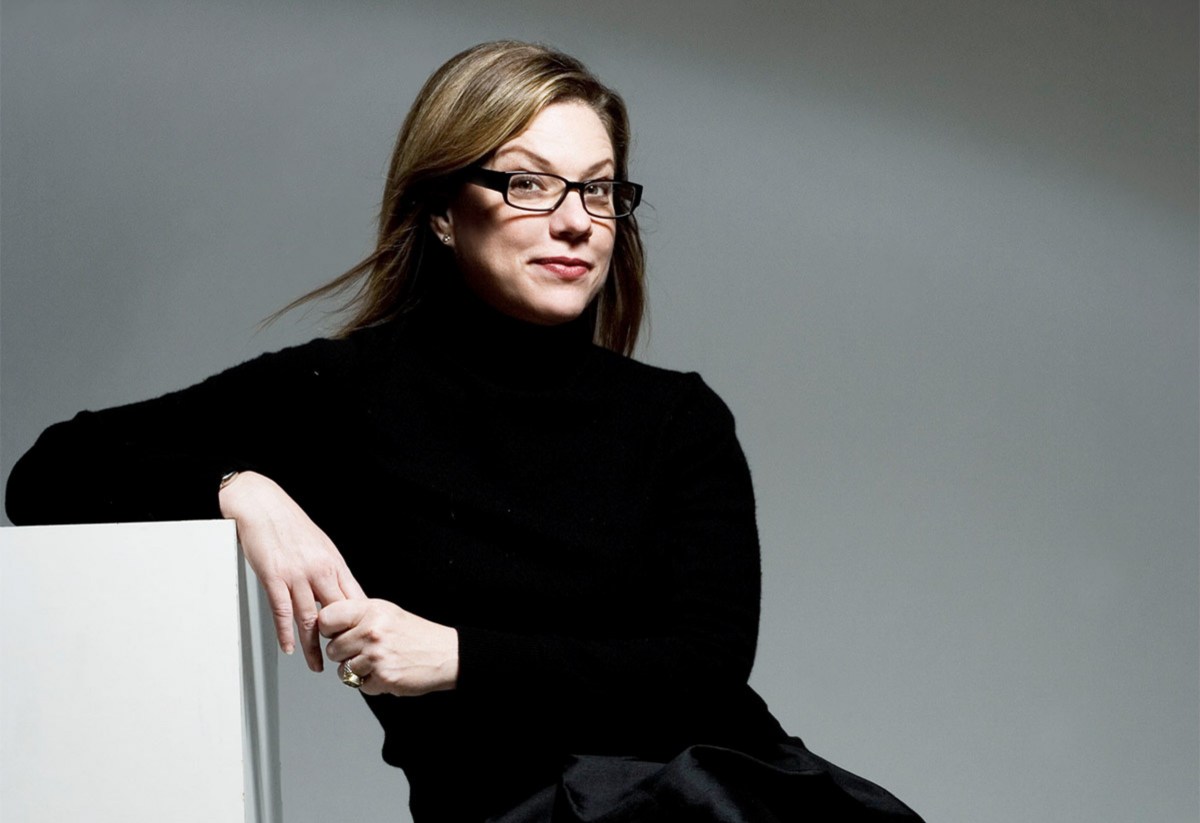
Debbie Millman, artist, designer and host of the acclaimed Design Matters podcast, is set to deliver a major keynote talk at Vivid Sydney 2026 on designing a creative life and the importance of creative freedom and expression.
Over the years, Design Matters has hosted luminaries like artist Ai Wei Wei, writer Cheryl Strayed, musician David Byrne and actor Claire Danes, among many others.
Ahead of her trip to Sydney, ArtsHub spoke to Millman about her multi-faceted career, and how fostering our creative skills can help us engage in the world and with the people around us.
5 questions for Debbie Millman – quick links
With the Design Matters podcast, you focus on the human connection to design and creativity, and how it shapes our lives. In the modern era, where technology like AI is encouraging users to delegate their art and thinking processes, is it now more important for people to embrace their creativity and its uniqueness? Why should people keep creating art for themselves?
Debbie Millman: I think it is more important than ever for people to remain connected to their own creativity – not because everyone needs to become a professional artist, but because creativity is one of the deepest ways we understand ourselves. Making something is a way of saying: I was here.
AI can generate astonishing things very quickly, but speed is not the same as meaning. A machine can produce an image or imitate a style, but it cannot experience heartbreak, longing, awe, grief, desire, memory, contradiction or love. Human creativity comes from lived experience and our consciousness.
I think we sometimes forget that the value of making art is not only about the response to the final artefact. The value is in the process itself.
The act of making helps us metabolise our lives; it helps us pay attention, and become more fully ourselves. Even if no-one ever sees what you create, the act of creating changes you. And in a world increasingly shaped by automation, preserving that inner imaginative life is absolutely essential.
How can creativity help people in times of such uncertainty and change? What does art and design allow us to learn about our fellow humans, and the world we occupy?
DM: Creativity gives shape to uncertainty. It allows us to transform confusion, fear, longing and hope into something we can hold, examine and share. During difficult periods in history, art has always helped people survive emotionally. And it reminds us that other people have wrestled with the same questions we are wrestling with now.
One of the things I love most about art and design is that they allow us to encounter another person’s interior world. A painting, a poem, a building, a song, a film, even a beautifully designed object – all of these are evidence of another human communicating something about what it means to be alive.
Design, in particular, reveals what a culture values. It shows us how people want to live, what they fear, what they aspire to, what they romanticise, what they respond to and what they ignore.
Art and design become emotional and cultural records of humanity. I think creativity also helps us resist numbness. It keeps us curious. It keeps us connected to wonder. And wonder is one of the most powerful antidotes to despair I know.
What advice would you share for those looking to begin their own journey into creativity, whether to understand themselves, or the world around them? Can anyone make worthy art?
DM: I believe creativity begins with paying attention. Before people worry about talent or originality or mastery, I think they need to learn how to notice. Notice what moves you, what breaks your heart and what you return to over and over again.
A lot of people assume creativity belongs only to a gifted few, but I don’t believe that. I think creativity is fundamentally human. We are meaning-making creatures.
We tell stories, arrange objects, decorate spaces, sing songs to children, cook meals with care, write letters, plant gardens: these are all acts of creation.
Not everyone will become famous, and not every piece of work will be extraordinary. But worthy art does not have to be monumental. Worthy art can simply be honest. It can simply carry evidence of genuine attention and feeling.

My advice is to begin before you feel ready. Read widely. Look carefully. Make things badly at first. Allow yourself to be influenced and inspired. Allow yourself to make mistakes, even to fail! Free yourself from judgement, if you can.
Most importantly, make work because you want to discover something – not because you want applause.
What inspires you to make your own art and share it with the world? What about the work of others inspires you? Why should people learn widely about the art and design of many creatives?
DM: I am inspired by the possibility of connection. Whenever I make something – whether it is a piece of writing, a drawing, a podcast interview or a book – I am trying to reach toward another person and say: Have you ever felt this too?
Much of my work is rooted in curiosity, and I am endlessly fascinated by how people become who they become.
I think that fascination is what has sustained Design Matters for so many years. Every creative person carries a private mythology – a set of memories, wounds, obsessions, influences, ambitions and contradictions that shape their work – and I never tire of exploring that terrain.
The work of others inspires me because it expands my sense of what is possible. Sometimes another artist gives you language for something you could never articulate yourself. Sometimes they challenge you, sometimes they comfort you, sometimes they completely alter the way you see the world. But they nearly always expand what I think and assume.
I think it’s important to learn broadly about many kinds of artists and designers because creativity does not happen in isolation. Every creative field cross-pollinates with another.
Music influences typography. Architecture influences fashion. Literature influences film. Fine art influences branding. The more widely we look, the more expansive our thinking becomes. This expansiveness reveals that there is no singular way to experience the world.
What’s one piece of advice or philosophy you’ve encountered that has had a significant impact on your work? How has it shaped your approach, or changed your practice?
DM: One idea that has deeply shaped my life is something the writer Elizabeth Gilbert once said: that you don’t need to be fearless to create – you only need to be brave enough to proceed while afraid. I think many people wait to begin until they feel confident. But creativity rarely works that way.
I think confidence is overrated. Most meaningful work is made in uncertainty, and from my experience, artists are full of doubt much of the time.
That notion changed my understanding of courage. Courage is not the absence of fear; it is the willingness to move forward despite fear. I have carried that idea into almost every aspect of my work – interviewing, writing, teaching, public speaking, making art, even starting new projects later in life.
I also think it has made me more compassionate toward myself and in guiding students. You do not have to arrive fully realised to begin making meaningful work. You simply have to begin.