While many Australians grapple with the increased cost of personal essentials like food, fuel, health insurance and car insurance, the performing arts sector is facing its own bespoke cost burdens that are causing immediate headaches and also signalling there could be more problems on the horizon if pressures are left unaddressed.
As shown by ArtsHub’s financial analysis of state theatre and contemporary dance companies, the majority of these organisations are managing their tight budgets responsibly, but in some cases the cost pressures are influencing programming decisions and leading to spending cuts in areas that directly affect artists’ livelihoods.
Also, as evidenced by a spate of early closures of some commercial musical theatre seasons, it’s clear cost pressures are not only affecting not-for-profit performing arts companies, with larger-scale commercial productions also feeling the pain.
For a closer look at which costs are worrying Australian performing arts companies the most right now, ArtsHub spoke to a range of company executives about their greatest concerns, and how they think the sector can curb these negative trends over the long term.
Rising costs in the performing arts – quick links
Increased touring costs top of list for many
For Monkey Baa children’s theatre company Executive Director Kevin du Preez, it’s the rising costs of touring that are dominating his front-of-mind concerns.
‘Freight, accommodation and ground transport costs increases are the most obvious ones for us,’ du Preez tells ArtsHub.
‘Our touring logistics costs, freight, accommodation and ground transport rose around 44% between 2024 and 2025, with freight alone going up close to 60%,’ he adds.
While acknowledging that Monkey Baa’s tours vary in size and scope year to year, du Preez says the majority of the company’s increased touring spend reflects genuine market price hikes.
He also says that out of all these expenses, recent fuel price volatility is having most widespread effects.
‘Fuel price increases do not just affect freight and vehicle hire,’ du Preez says. ‘They flow through the entire touring ecosystem, increasing the cost of moving artists between venues and lifting accommodation costs in the communities we visit.’
On the other side of the country, Western Australia-based Barking Gecko Arts is managing similarly tough touring budget scenarios.
Its CEO, Ryan Taaffe, tells ArtsHub that higher travel and accommodation costs are directly affecting the organisation’s regional touring output, as well as its artist residencies and its capacity to bring interstate artists to WA.
‘Freight, technical services, venue costs and compliance requirements are all increasing for our touring activity,’ Taaffe explains, adding that ‘our increased spends on airfares and accommodation is especially challenging given these prices can change rapidly between the time a program or project is budgeted for and when it’s actually delivered.’
Also in WA, West Australian Ballet Executive Director Lauren Major describes that company’s recent freight costs as ‘somewhat of a lottery’, telling ArtsHub of a recent situation where the company brought forward the shipping of some items it will need for its 2027 program, fearing fuel costs will continue to increase later this year and further inflate the price of freighting these items.
As Major tells ArtsHub, ‘We’re shipping these items well ahead of time, and we’re looking at ways to store them as best we can.’
Insurance hikes beyond companies’ control
Another alarmingly high cost area is companies’ insurance policies, some of which have skyrocketed in the past few years despite no change in the company’s output or insurance claim history.
While many individual Australians are seeing their health, home and car insurance policies rise on average 5% to 8% per year, some arts companies’ insurance costs increases are closer to being 50% per year.
As reported by Monkey Baa’s Executive Director, its workers compensation premiums rose about 35% year-on-year, which is faster than its payroll grew over the same time period.
Similarly, as Bell Shakespeare Company’s Executive Director James Evans noted in ArtsHub’s recent survey of the financial state of performing arts companies, his company’s insurance costs have risen 81% over the two years from 2024 to 2026.
ArtsHub: Belvoir St Theatre’s devastating storage fire
While the Federal Government’s ongoing inquiry into small business insurance shows there is awareness of these issues at government level, there has so far been no specific government support announced for the numerous performing arts companies whose rapidly rising insurance premiums may soon start to affect important areas of their core operational budgets.
Salary and super rises welcome, but hard on budgets
Next on the list of spiking expenses is that high-value, vitally important budget line that no company wants to reduce.
As Barking Gecko Art CEO Ryan Taaffe puts it, ‘our people are our greatest asset’. Yet even he concedes the company’s most significant costs pressures relate to staffing, ‘particularly wages, superannuation and the cost of engaging artists and specialist creative workers appropriately’.
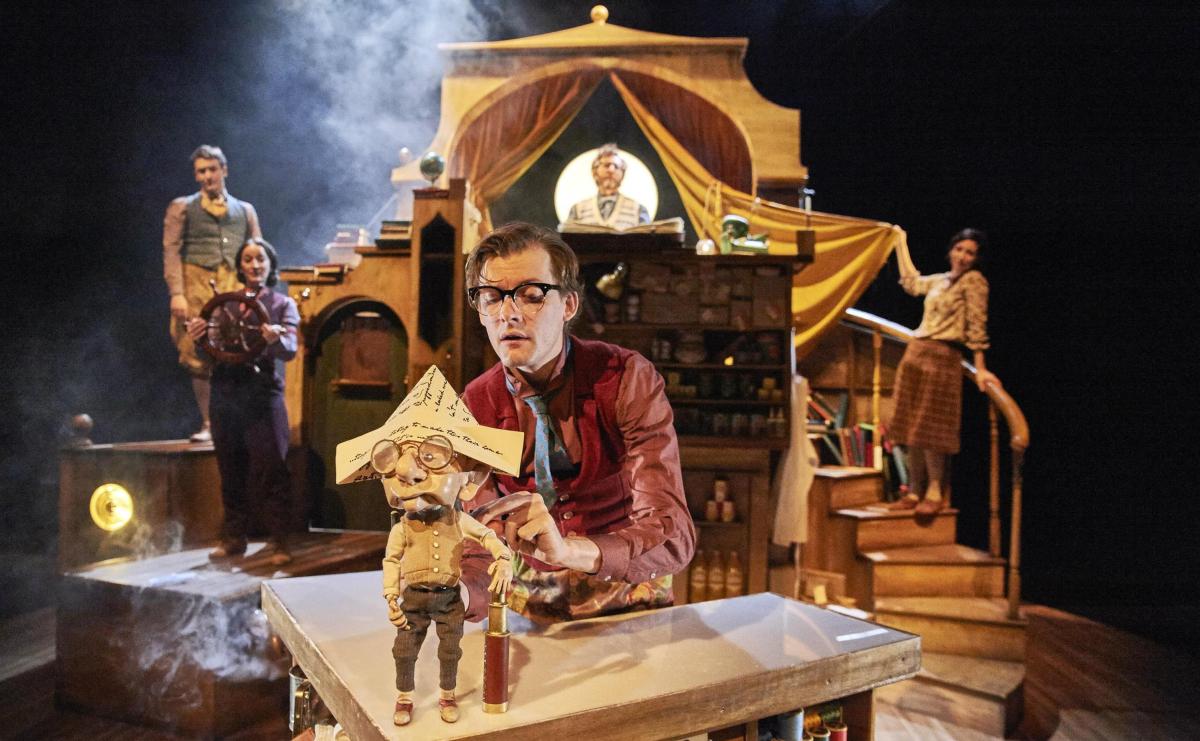
For Lauren Major at WAB, the ballet company’s staff salaries are also a tricky budget area, not only because of recent legislative change that has increased wages and superannuation for the company’s employees, but also because those same wage increases are impacting costs incurred by the company at the theatres where it presents its work.
‘Theatre costs have risen above 20% in the last 12 months despite the venues’ efforts at cost control,’ Major says.
‘This is largely driven by wage increases, which are then passed [from venues] through to companies, and these additional overheads are not sustainable for us.’
That said, Major says WAB is in a fortunate position in comparison to other WA performing arts companies, which are also absorbing similar in-theatre cost increases. That’s because, along with the other federally-funded National Performing Arts Partnership Framework companies in WA, WAB has recently confirmed a ‘boost’ funding payment from the WA Government for the next three years, in recognition of the fact this core government funding has not been indexed in-line with inflation for over a decade.
‘While this “boost” payment doesn’t cover what the full amount of indexation would have been, the recognition of the issues we are struggling with, and the impact that the major arts organisations have, is very welcome,’ Major tells ArtsHub, while also conceding that, since 2023, WAB has shed seven dancer positions through attrition (as artists have retired or left), and has lost another 10 roles across its administration and production roles through a combination of attrition, redundancy and improvements in WAB operational systems.
‘This means we are now in a position of producing more work with fewer people, and this is without doubt putting strain on our organisation,’ she says.
Can we curb longer-term damage to sector sustainability?
Among the consensus concerns raised by the arts executives ArtsHub spoke to for this story, there was also a shared worry about the prospect of longer-term, sector-wide impacts resulting from these current cost pressures.
As Barking Gecko Arts CEO Ryan Taaffe said: ‘Our greatest concern is the widening gap between the real cost of producing and presenting work and the level at which programs are funded.
‘If that gap continues, companies will be forced to deliver less, transfer financial risk to artists and casual workers, reduce regional and accessible activity, or rely on staff regularly working beyond their paid capacity.
‘None of those responses is sustainable or acceptable.’
For Kevin Du Preez at Monkey Baa, one way to potentially alleviate current pressures on individual organisations is for the sector to work more closely together, as more of an interconnected system rather than a group of smaller separate entities.
‘We need mechanisms that can direct support towards the communities where the need or the potential impact is greatest, rather than leaving that to whether an individual venue can carry a fee in a given year,’ he tells ArtsHub.
‘That means thinking about funding upstream, rather than only at the point where a venue books a show.
‘It also means being willing to share what we know with each other. We all hold data about audiences, about touring costs, about what works in which communities, and very little of it moves between us.’
ArtsHub: Funeral Flowers review – a one-woman masterpiece at Red Stitch
On that note, du Preez says he would also ‘gently question some things the sector has been told for many years in that, with the best of intentions, we have been urged to diversify their income’.
While the Executive Director believes there is truth in this advice, it is only effective ‘up to a certain point … [because] if diversification is taken far enough becomes it fragmentation’.
As he argues, ‘You can end up with a small team chasing a dozen income streams, with each one requiring its own relationship, its own acquittal and its own compliance. But none of them are large enough to change anything, and the cost of holding that all together is often invisible in the company’s official accounts. But it is nevertheless a very real cost.’
Du Preez says Monkey Baa’s own recent experiences show how it is working to counter this fragmented approach in its strategy to zero-in on its key strengths and consolidate its revenue streams around them.
‘Private giving to Monkey Baa nearly doubled last year, and our private income overall grew by around 45%. Roughly one dollar in five now comes from private sources,’ he comments.
‘That support gives us the ability to take risks and make work we otherwise could not’, he says, adding that it ‘takes real effort for an organisation our size, and it only works because we are clear about what we are asking people to invest in’.
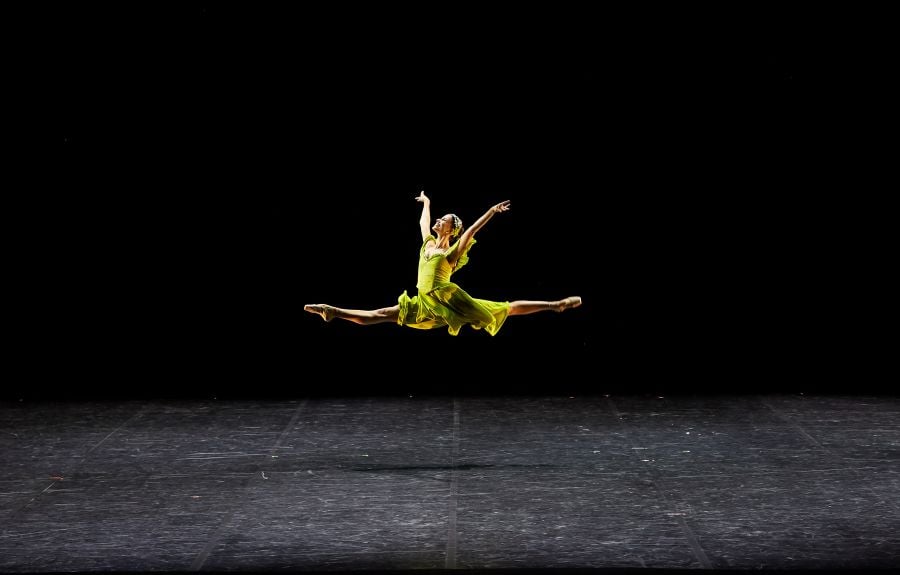
As well as a call for companies to work stronger together than apart, the other potential game-changer on the horizon to boost the sustainability of the sector is a new policy suggestion being pushed by Live Performance Australia, among others, which could help attract serious new investment to the scene.
As WAB’s Executive Director notes, the proposed 40% live performance rebate scheme currently under discussion could be a very powerful mechanism for the Australian performing arts industry, especially as a pathway to support the creation of more new Australian work.
‘I can’t say enough how important this [policy plan] is, and I sincerely hope it’s adopted in the next [federal] budget process because of the positive impact it would have, both on the amount of new work developed and on everyone’s bottom line,’ she says.