
Generative AI is currently being used in AAA video game development worldwide, despite the protests of ethics-conscious audiences and the wishes of developers reportedly forced into using these tools. Nobody seems to want it, and most agree that it’s not particularly useful and can be actively harmful when it comes to creating cohesive gaming experiences.
In recent months, we’ve also seen an odd pattern emerge, where game studios uses GenAI in artwork development, seemingly intending these ‘placeholder‘ assets be replaced prior to launch. These images include typical hallmarks of GenAI – melting faces and bodies, extraneous limbs, muddy crowd scenes, and off-kilter perspectives – but are just realistic enough to pass QA, so they stay in the game.
Inevitably, players notice and the backlash kicks off in earnest. Players frequently express a dislike for AI use, citing both laziness and ugliness, as well as deeper concerns for the environment, and the security of artists. And so, a press release is issued. It usually goes like this:
‘We used GenAI in the game’s development process as a placeholder, to help with ideation and tone. We did not intend to include this artwork in the final release, and will be removing it with human-made artwork in a future update.’
‘Placeholder’ is the common excuse – but as many developers tell ScreenHub, this isn’t an excuse at all. Rather, placeholder artworks play an essential role in game development, for conveying tone and intention, while also speeding up progress.
GenAI and placeholder artwork – quick links
The importance of human-made placeholder artwork
‘Every placeholder fills my heart with joy because they’re often made by members of the team not tasked with art duties (programmers, producers and designers) and I love getting a peak into their creative process,’ developer and artist Lucy Mutimer says.
‘Scrappy sketches or placeholders also grant me new insight into what another team member is thinking when they’re designing a feature or asset, which is always something I really enjoy seeing, and often gives me new ideas on how the final asset should look.’
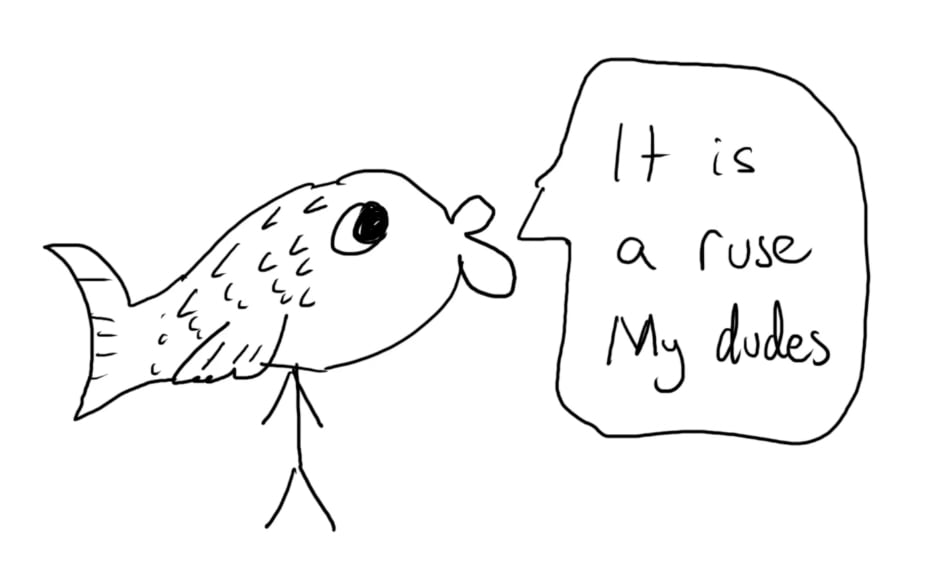
Per Mutimer, placeholder artwork isn’t only a scrappy or obnoxious piece of artwork that screams to be replaced. It provides that core insight into intentionality, and creates a bridge between non-artists and the art teams.
While working on the shooter 420BLAZEIT:2, Mutimer worked alongside designer Jack Wilson to create the esoteric, slapstick tone of the game. Placeholder artwork like the above ‘fish man’ helped to nail down the humour of the adventure, even if when it was just in stick-figure form.
‘I was knee deep in our final weeks drawing 30-plus memes for the game and in order for a joke to land we needed a Legally Cool goldfish saying a very 2000’s movie line to test a scene with a giant… SMOKING VASE and bowling ball,’ Mutimer explains.
‘I was working on other areas, so Jack sketched this very funny fish man as a placeholder.’
As Mutimer describes, rough placeholders can be an important a step in a game’s design process. ‘Art, like every other part of making a game, is iterative,’ Mutimer says.
‘If you jump straight to the end with a fully rendered “snazzy” (to the AI-enjoying eye) piece of art then you’ve devalued a core piece of video game development and robbed your art team the time to iterate on their ideas the same way a programmer or designer would.’
Mutimer adds, ‘Using GenAI artworks, even as placeholders, is anti-collaboration and anti-iteration, which are two pretty key factors in making something as creative and convoluted as a video game.’
Robbing the creative process
Ghoulish studio director and artist Mickey Krekelberg, currently working on the bug-filled adventure game Parasensor, has similar thoughts, describing use of GenAI in game development as ‘fundamentally at odds’ with the purpose of being creative.
‘I believe it is poison to the creative soul and intellect,’ Krekelberg says. ‘I also think that using GenAI as a shortcut in the creative process robs developers of the most rewarding parts of making games.’
When studios are ‘caught’ using GenAI without prior disclosure and forced to backtrack, a core message is often that GenAI is an essential tool for iteration, which saves time and allows developers to work on other parts of games. But as Mutimer and other developers tell ScreenHub, placeholder assets can be anything that properly informs game direction and tone. They’re already quick by design.
‘A placeholder poster from the MONA archives could end up informing something about a character narrative later,’ Mutimer says.
‘A nicely sketched greyscale drawing of a room can be used to test where the character should sit in the player’s eyeline in a 2D game, and a very silly goldfish man hastily scrapped together by a designer can help the artist get through her workload, let us test a scene, and make our final shipped game joke WAY funnier.’
Krekelberg says: ‘To explore tone and atmosphere without final artwork, we spend A LOT of time in creative development in all departments: thumbnail sketches, color palettes, narrative documents, music sketches and a shitload of moodboarding.
‘The goal is that we establish a common vision in the minds of everybody on the team, so that they can look at a placeholder and envision what the final game will look, sound and feel like based on our prior explorations. If we do our job right, the game world already exists in our minds and all the questions of creative direction are easily, naturally answered.’
Traditional artwork as placeholder in game development
Fine Feathered Fiends, the team behind Dracula-inspired visual novel Drăculești, also uses existing artwork and characters to determine tone and function as placeholder in game development, as well as using fast sketches for iteration.
Speaking to ScreenHub, developer Mads Mackenzie shares that Mr Bean once served as a placeholder figure in development, embodying a ‘quintessentially British man’ in the game.
‘Sometimes our placeholders are more about preserving tone than literally conveying what the final image will be,’ Mackenzie says.
‘For instance, sometimes for emotional scenes we’ll have placeholders that are just a colour or a texture (like a mysterious dark square) so we can test things like text [and] audio against an image with the right mood, rather than a more literal representation of the final asset might look like.’
In line with Mutimer and Krekelberg’s thoughts, Mackenzie says using GenAI as a placeholder can become a constraint, as there’s little room to move and iterate on design. If a placeholder is ‘too good’ then there’s little chance for experimentation, and the temptation remains to ‘keep it in’ out of convenience.
‘The paradox of placeholders is you need something that is representative but is also distinct enough from the final intended asset that you still feel motivated to not only make the real asset, but put the effort into thinking about how it should look,’ Mackenzie says.
They pointed to the practice of ‘temp tracking’ in film music as example. Using pre-existing music to test out different tones and emotions can work, but this leads to situations where the ‘final’ music feels familiar, as it’s obvious it was based directly on another track but changed just enough to pass as original.
‘When artists, and musicians and so on, are asked to “make a replacement” for a placeholder that’s trying hard to look [or] sound like it could be in the final product, I think it can limit their imagination – or how much autonomy they feel like they’re allowed,’ Mackenzie says.
To create the tone they aim for, the Fine Feathered Fiends team will create stick figure drawings, or turn to traditional artworks for inspiration. When the narrative of Drăculești called for a ‘woman in a blue dress,’ they came up with a drawing and an adjacent artwork, using them as points of inspiration that would later be replaced.
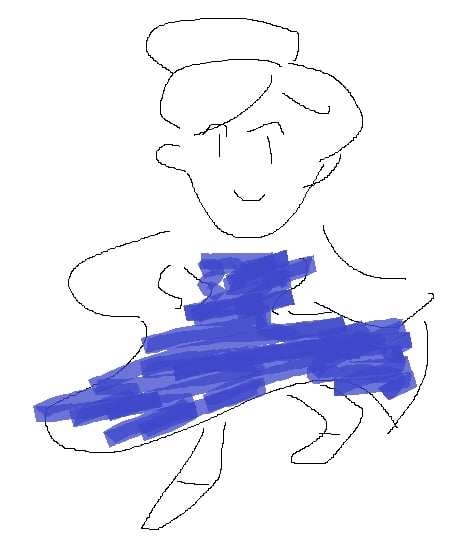
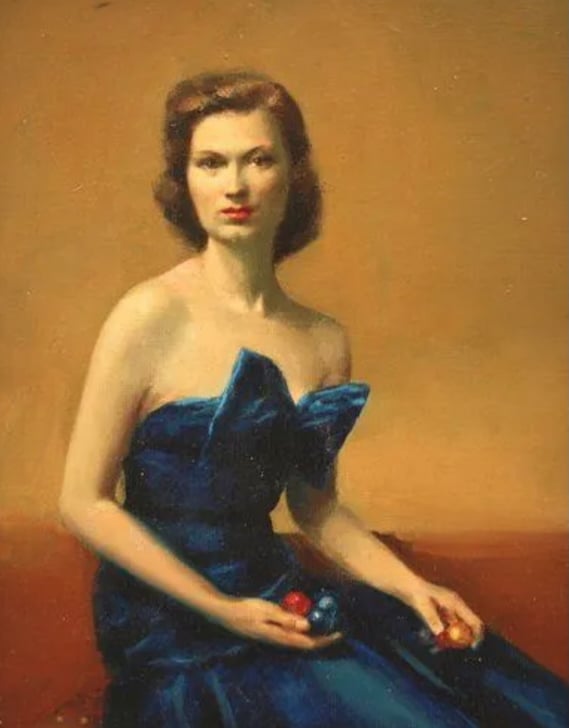
‘Using placeholders no-one will “get attached to” is extremely beneficial to the creative process, even outside all the risk management stuff,’ Mackenzie says.
GenAI placeholder assets encourage forgetting – but it’s not a legitimate excuse
Developer T-Dog Extreme, currently working on relationship sim Clownbaby, underlines the problems with ‘forgetting’ to replace GenAI in finalised work, whether intentionally or due to its seemingly ‘complete’ nature.
‘You’re using fully rendered images as placeholders, meaning that you’ll likely forget to change it,’ they say. ‘You’re also more likely to lose the overall vision due to lack of iteration and potentially conflicting styles across the placeholders.’
‘You start getting a better eye for it as you go. It’s not obvious until you’re a few months into development and looking back at where you started. If your images are fully rendered, it’s hard to step back and get an idea of how to iterate, it’s a lot of visual noise.’
Beyond the practical, T-Dog also points out that using GenAI within such a creative process can stagnate creative muscles.
‘You’re losing a huge chance to find something else that makes your game unique, under the assumption it has to look a specific, full-rendered way,’ they say. ‘Your imagination and creativity is a muscle that needs to be flexed. Use of AI means you’re losing that ability to see solutions.’
Taking studios like Ubisoft and Pearl Abyss at their word, the placeholder assets that have recently caused controversy were mistakes, and were intended to be replaced.
Avoiding GenAI and using more traditional placeholders remains a much safer bet during development, as these rough placeholders are intentionally obnoxious or different in a way that begs replacement.
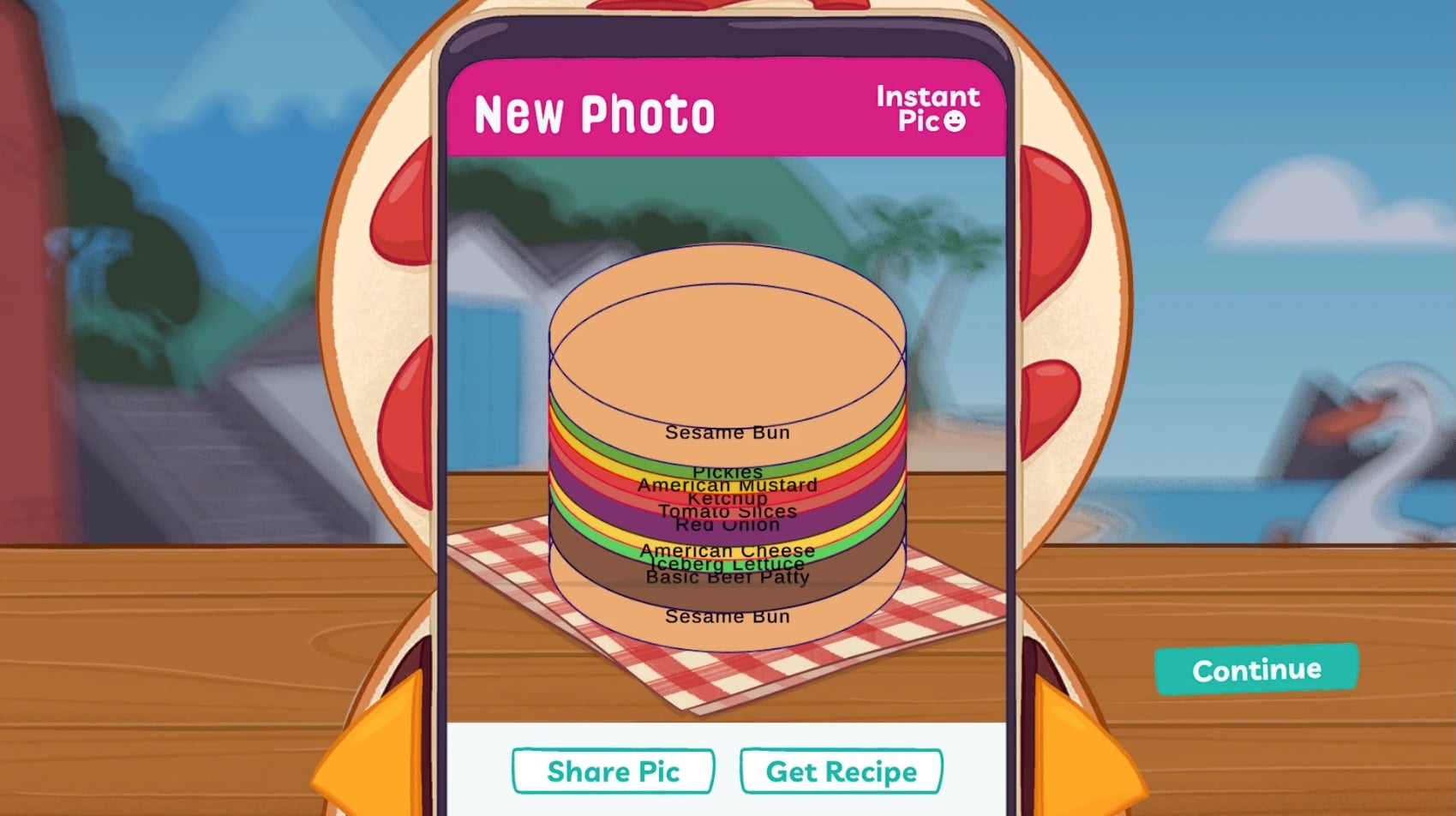
‘Placeholder art needs to be obvious when you use it so that you’re inclined to change it as development continues,’ T-Dog says. ‘That’s why you see cyan or magenta frequently in a lot of progress updates of games. Even the sad Unity grey can sneak past you.’
Ben Ee, art director for Summerfall Studios, adds, ‘It’s kind of like using a sandal to keep the door open before fetching an actual doorstop. The role of a placeholder can just exist to fill a slot so that everything can be built around it.’
As Ee explains to ScreenHub, placeholder art is for many purposes: to communicate ideas, to give the art team agency, and to allow breathing room for interpretation. It’s also the job of placeholder artwork to ‘go away’ once the job is done, so that a brighter idea can flourish.
Krekelberg agrees. ‘The placeholders should be ugly enough that the artists wont let us ship with them,’ they say. ‘All the characters in Parasensor start off as a poorly drawn sprite of Ghoulish’s mascot, which we replace with concept sketches once those are done.’
Speaking to developers, it becomes incredibly clear that not only is GenAI artwork inessential, it actively stifles creativity and iteration in any game’s design process. It limits the ability of developers to communicate their ideas, and to see tone and vision develop over time.
‘To me, developers that use GenAI seem focused on the product rather than the process,’ Krekelberg says. ‘A game’s “end product” should emerge from the creative process, shifting and changing with the whims of the creative team. Shortcutting this process eliminates the space where disciplines are in conversation with one another.
‘What the designer sees as important should be conveyed in the placeholder, then the space that is left is where the artists do their most important work.’
In the era of apologies, where studios caught out for using GenAI are forced to issue statements to satisfy frustrated fans, placeholders should be better understood as artefacts that contribute meaning and intent, to help shape new artful, creative endeavours.