What exactly is ‘visible storage’ in today’s museum environment of greater accessibility, and how is it changing how museums are being designed and refitted?
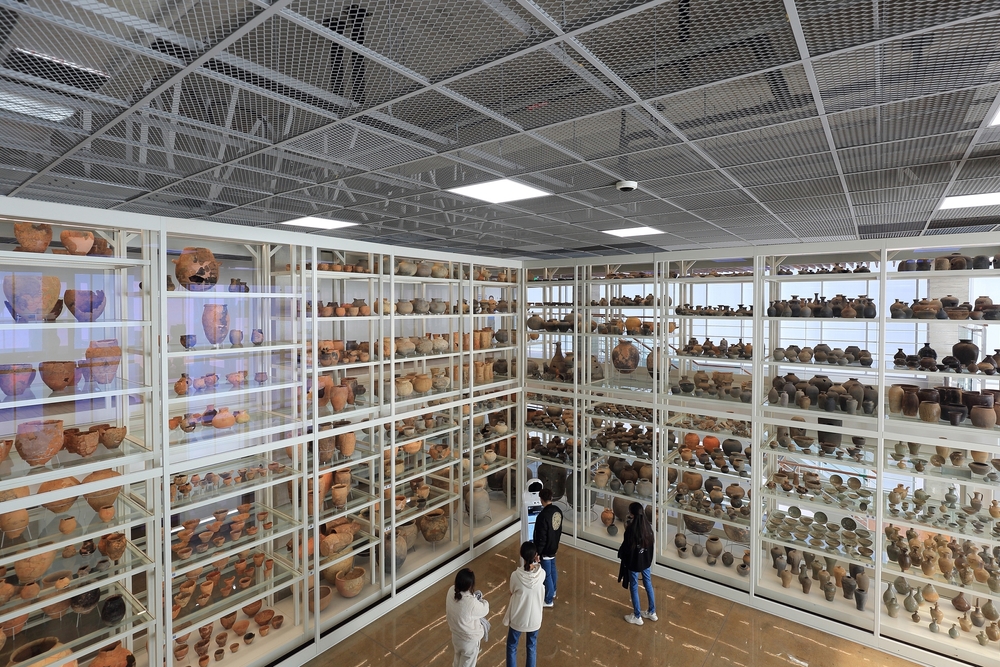
Ungjin-dong, Gongju-si, Chungcheongnam-do, South Korea, 2022: ceramic bottle relics on the storage shelf with glass window at Gongju National Museum. Image: Shutterstock.
It could be said that museums started as Wunderkammer, or ‘cabinets of curiosities’ – room-sized displays that emerged in the 16th century. They were defined by their clustered, eclectic collections of objets d’art and artefacts, largely amassed during merchant and aristocratic expeditions.
Gina Fairley is ArtsHub's Senior Contributor, after 12 years in the role as National Visual Arts Editor. She has worked for extended periods in America and Southeast Asia, as gallerist, arts administrator and regional contributing editor for a number of magazines, including Hong Kong based Asian Art News and World Sculpture News. She is an Art Tour leader for the AGNSW Members, and lectures regularly on the state of the arts. She is based in Mittagong, regional NSW.
Instagram: fairleygina