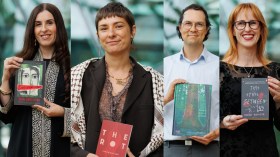

When it was recently announced that Queensland University of Technology will be Meanjin‘s new publisher, following the withdrawal of support from the journal’s former backer, Melbourne University Press, many writers and readers were relieved.
While the finer details of how the journal will be run under QUT are still under wraps, the university says it will ‘appoint an editorial board to ensure Meanjin’s independence … and recruit an editor through a national competitive search’.
The journal’s resurrection marks a small, and welcome, win for the embattled Australian literary sector.
ArtsHub: Should Melbourne lose its City of Literature status?
But it’s worth considering the fate of our next generation of writers who are currently in training at universities across the country. While these emerging writers might one day see their work published in Meanjin’s pages – or in one of the other few literary journals supporting new writing in Australia – where else might they expect to get published and build their careers?
Where are the literary career paths? – quick links
‘We are all competing with the internet now’
Meanjin’s former editor Esther Anatolitis believes a prime reason for the decline in professional writing opportunities in Australia in recent years is the rise of digital media and some vastly increased raw costs for publishers and distributors.
‘Publishers are really struggling at the moment because the costs and constraints associated with global distribution have increased, and the cost of paper has also become more expensive,’ Anatolitis says.
‘In terms of employment opportunities, it’s been tough for a while because people who employ writers, such as the media, have long been dumping journalists – especially in regional areas.
‘They have been using content aggregators to cut costs. And they are no longer just competing only with each other – everyone is competing with internet “content” now.’
ArtsHub: Should Melbourne lose its City of Literature status?
As the former Sydney Morning Herald writer Stephanie Wood revealed in her recent long-form essay for Art Guide Australia, she took a voluntary redundancy package from SMH about a decade ago, after which she had ‘a reasonable, if not well-paid’ stream of writing commissions. But she notes that, since 2025, freelance writing opportunities have dramatically decreased.
Wood believes this reality is being ‘driven by economic factors and uncertainty maybe’, but is also strongly linked with the advent of AI.
Author and researcher Kaz Cooke says that while AI might be part of the problem, the collapse of traditional media revenue streams is the most obvious cause.
‘It’s just awful for me to look at the current state of play as someone who used to be a columnist,’ Cooke says.
‘That was a long time ago now but I loved it and it’s something I’m really proud of. But I think a lot of “columns” now are one-off opinion pieces, often being produced for low or no pay by people who are not professional writers.’
‘They are writing about a personal incident in their lives, or an issue they have a vested interest in. It’s filler and spin and it has totally debased the quality of writing on media sites.
‘It also means new writers are not getting training, and are often not even getting editing support, by the looks of it.’
Cooke sees the depletion of editors’ roles as a big factor in the dearth of opportunities for writers across the board.
‘Having an editor is a huge luxury these days,’ Cooke says.
‘But it absolutely shouldn’t be because it makes the writing so much better and makes a big difference to the quality of what people get to read.
‘A lot of the sort of work [that is] getting published in the media now is simply not getting edited. It’s just getting spat straight out, and that’s compromising a lot.’
Subscription model not an option for emerging talent
Amid the plethora of unedited, influencer-style content we now see, Cooke also notes the discouraging reality of writers’ fees.
‘The last time I looked at what you get paid to write an opinion piece, the amount was exactly the same price as I was getting in the 1980s, and I am not making that up.
‘That tells you the rates of pay have actually gone backwards by a lot.’
Meagre pay rates have compelled some writers to pursue self-publishing options to generate income for their columns and opinion pieces, using online subscription platforms like Substack.
But as both Anatolitis and Cooke point out, this model is not a viable option for early career emerging writing talent.
As Cooke observes, ‘Writers who have already made their names have a much easier path to Substack.
‘I’m seeing a lot of middle-aged male writers or young female influencers doing well on platforms like that, but if you’re a new writer with no profile it’s going to be very hard for you to attract a paying readership via that style of model.’
ArtsHub: Constellations: Not Writers’ Week – Adelaide’s alternate book festival gets ready
Anatolitis agrees that the online self-publishing trend is difficult for emerging writers to break into, and contains risks for writers at every stage of their career in terms of their readership and public debate.
‘On the one hand it’s great that writers are using the technologies we have to form little online media companies like ETTE Media and like Deep Cut, who are using a subscription model where you can read some stuff for free and then there are some subscriber-only stories,’ she says.
‘But its downsides are multiple.’
‘First, platforms like Substack rely on social media to spread the word, and we know that social media’s algorithms are increasingly politically and financially biased and are directing us to specific content.
‘It’s also atomising our reading experience, because you have to seek out the writer you want to find.
‘If you are reading a journal or a newspaper, you might be drawn there because of the work of that particular writer, but you will also encounter other writers there in ways that are contextual and that have been properly edited and fact-checked.
‘So in many ways the trend to online small media platforms is continuing the collapse of mainstream media – which is a big problem.’
Creative courses axed, but enrolments holding up
Despite all of this, it seems there is no shortage of young people hoping to enter the writing and publishing workforce via tertiary study in creative writing.
While some Australian universities have made concerning cuts to their creative arts offerings in the past 24 months, most tertiary and postgraduate creative writing courses across Australia are surviving and their enrolment numbers are holding up.
As described by Professor Meghan Kelly, Head of School, School of Communication and Creative Arts at Deakin University, while her department’s creative writing student numbers can fluctuate, ‘all in all, over the course of a number of years, [enrolments] have tended to remain the same’.
Dean of the School of Media and Communication at RMIT, Professor Lisa French, makes similar observations, telling ArtsHub that RMIT’s Creative Writing offerings ‘reflect a strong enthusiasm among the next generation of Australian writers to study writing at tertiary level, including certificate and diploma pathways’.
French reports ‘significant demand and sustained program growth’ in RMIT’s undergraduate creative writing courses, and that ‘numbers are considerably up’ in RMIT’s Creative Writing Masters this year – a trend she describes as ‘unusual for postgraduate programs, which are generally shrinking’.
She adds that RMIT’s Masters program could well accept even more students if it had more staff and space, with its popularity and success likely due in large part to its high quality in-house book publishing set-up (Bowen Street Press) and its high employability results for graduates moving into the publishing industry.
Yet, as described by independent book publisher Terri-ann White (of Upswell Publishing) in a piece for Griffith Review last year, the already tiny Australian literary publishing industry – employing only around 3700 people by White’s guess – appears in freefall with ‘fewer and fewer authors reach[ing] what they expected in financial and career-building stakes, even for those [whose books] are considered mainstream’.
ArtsHub: In 2026, can we please have fewer books published in Australia?
Bright spots around romantasy and young reading groups
Despite these signs of hardship for current and next generation Australian writers, both Cooke and Anatolitis can see some rays of light ahead.
As Cooke tells ArtsHub, ‘One bright spot I can see is that young people are reading things like romance fantasy, or romantasy, in great numbers and they’re forming their own reading groups around that, which I think is great.’
As recorded by global e-book reader company Rakuten Kobo in its 2025 reader survey, Australians are indeed engaging with escapist fiction more than ever before. It found a 34% year-on-year increase in Australian readers’ engagement with science fiction and fantasy genres in 2025 – making escapist fiction the fastest-growing genre in the country.
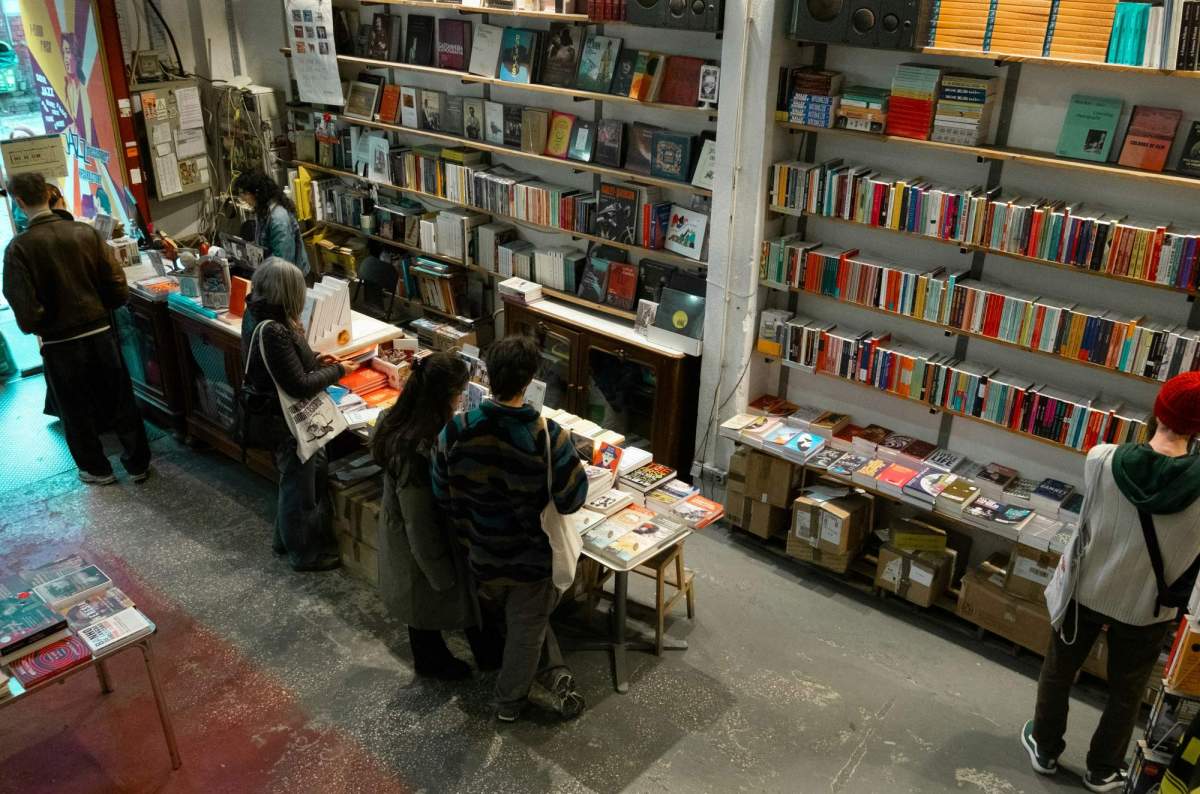
As well as these readership trends, the launch of Creative Australia’s new peak body for Australian writing, Writing Australia, is another welcome sign of change.
Anatolitis describes this new federally funded strategic investment body as hugely important.
‘It’s fantastic that Writing Australia’s new programs offer much-needed funds for the sustainability of journals and for journals to employ editorial staff – because that is urgently, urgently needed.’
‘We simply don’t have a literary sector in Australia without journals.’
Writing Australia recently announced its first tranche of new investment opportunities for Australian writers, which includes a new $2 million Australian Publishing and Promotion Fund for independent publishers, a Literary Journals Capacity Building Fund, supporting journals to build capability, stability and reach, and a Writers’ Festival Author Travel Fund, supporting writers to connect with audiences through festivals and touring in regional areas and capital cities.
These new investment programs will roll out alongside Creative Australia’s existing grant opportunities for literature projects through its Arts Projects for Individuals and Groups, Arts Projects for Organisations and Fellowships. Applications for writing and literature project grants in this latest round have just closed (on 3 March 2026).
ArtsHub: Best opportunities and grants for writers in 2026