How children’s authors are managing the fallout from Craig Silvey’s guilty plea

In a difficult time for the Australian KidLit community, authors are having much-needed conversations to keep connections with young readers thriving.
Photo: srinivas bandari on Unsplash.

Last week, when young-adult and children’s author Craig Silvey pleaded guilty to charges of possessing and distributing child exploitation material, many long-time fans took to social media to express feelings of betrayal and anger – some vowing never to engage with his books ever again.

Aside from widespread feelings of hurt – especially among parents and educators – Silvey’s story has cast a shadow over the Australian KidsLit community who find themselves grappling with its potential impacts on their own careers.

Questions of how their school visit opportunities may be affected, and to what extent teachers and parents will want them interacting with young people and children are among prominent concerns.

Read: Craig Silvey has pleaded guilty to child exploitation – what do we do with his books?

As authors navigate the situation, there are strong signs of sector solidarity as well as some timely suggestions from writers on ways forward.

One author’s response to reassure readers, schools and libraries

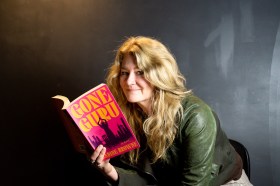
For Melbourne-based author of bestselling books for middle grade and young adult audiences Danielle Binks, the news of Craig Silvey’s guilty plea left her sickened by his crimes but also compelled to take action to overcome her feelings of helplessness amid the torment.

As the author described in a recent substack post, one of her most recent moves in the wake of the news has been to seek out valid Working With Children Checks (WWCCs) for every state that she travels to for her work.

Author Danielle Binks. Photo: Janis House.

While not at all standard practice, nor something that any library, school or festival has asked her to do, Binks says she has felt compelled to acquire the checks in her own time and at her own expense to show preparedness and professionalism in the current context.

However, she admits that so far, it’s not been a straightforward or economical process.

‘Acquiring the checks in some states is [administratively] trickier than in others,’ Binks tells ArtsHub.

‘Each application costs $140, but in some states you have to show your documents to them in person, so there have been flights involved.’

‘But this is just my way of responding and trying to figure out what I can do, because I’m assuming that libraries, schools and festivals will, quite rightly, be feeling discombobulated and on edge.’

Exposing a gap in state-based child safety checks

Interestingly, Binks’ inclination towards Working With Children’s Check-preparedness has led her to consider Australia’s state-based child safety check systems more broadly.

What she’s discovered in her research has triggered alarm bells on several levels.

As she tells ArtsHub, ‘I soon realised there are gaps and loopholes in the current Working With Children Check system because we don’t have a national register, and so state police aren’t sharing information about these Checks with police in other states.’

Binks cites the 2025 inquiry into sexual abuse cases in childcare centres in NSW as another example of where state-based Working With Children Check systems have proven problematic.

‘If you look at what happened there, perpetrators of abuse could more easily move between states and territories because each state and territory’s police force has limited ability to talk to each other and coordinate with other around these cases and investigations.’

‘I’m not saying that a national Working With Children Check register would have captured people like Craig Silvey,’ she continues.

‘But I think it’s something we need to think about as part of our response to this, to help schools, libraries, parents and guardians feel safer.’

A lot to lose if schools close ranks against visiting authors

Another front-of-mind concern for Binks in the wake of Craig Silvey’s guilty plea is the risk that schools might rethink their longstanding traditions of inviting authors for in-person talks and discussion with their students.

The fallout from Craig Silvey's guilty plea Photo: Akram Huseyn on Unsplash.
The fallout from Craig Silvey’s guilty plea continues. Photo: Akram Huseyn on Unsplash.

While such plans would be unsurprising for schools to consider in coming days and weeks, Binks worries what a diminished presence of authors in schools would mean if it became a longer-term trend.

As she comments, ‘When I do school visits I often find that students just want to say to you “thank you so much for writing that story”, or “thank for including that character – I felt so seen with that book”.

‘So we don’t want to take away that outlet for them to say thank you, and to acknowledge how your book has moved them or how it’s reflected parts of their life.’

Read: Best opportunities, grants & awards for creatives this week

The author adds that these moments of dialogue are often just as important for the artists involved as they are for the students, and are arguably a fundamental part of their vocation.

‘As an author, you don’t want to be going in to schools feeling like you have to have your guard up and put all this armour on,’ Binks tells ArtsHub.

‘Because part of being an artist is showing your readers and students that vulnerability is strength, and showing them that creating art with your heart of your sleeve is kind of the point.

‘So, we absolutely don’t want to cut off that oxygen and those conversations.

‘But at the same time, as an author, you also need to be clear about what is and what’s not appropriate.

‘So I think one thing we can do right now as a sector is find more ways to share our common sense approaches to upholding these appropriate standards of conduct for our school visits, and maybe even look at establishing a Code Of Conduct, to helps encourage awareness of these standards.’

If this article has raised issues for you, or if you’re concerned about someone you know, call Lifeline on 13 11 14.

Discover more screen, games & arts news and reviews on ScreenHub and ArtsHub. Sign up for our free ArtsHub and ScreenHub newsletters.

ArtsHub's Arts Feature Writer Jo Pickup is based in Perth. An arts writer and manager, she has worked as a journalist and broadcaster for media such as the ABC, RTRFM and The West Australian newspaper, contributing media content and commentary on art, culture and design. She has also worked for arts organisations such as Fremantle Arts Centre, STRUT dance, and the Aboriginal Arts Centre Hub of WA, as well as being a sessional arts lecturer at The Western Australian Academy of Performing Arts (WAAPA).