Arts boards in crisis: how have we landed here, yet again?

As the Adelaide Writers Week crisis worsens, many are asking why arts boards aren’t taking note of others’ past actions.
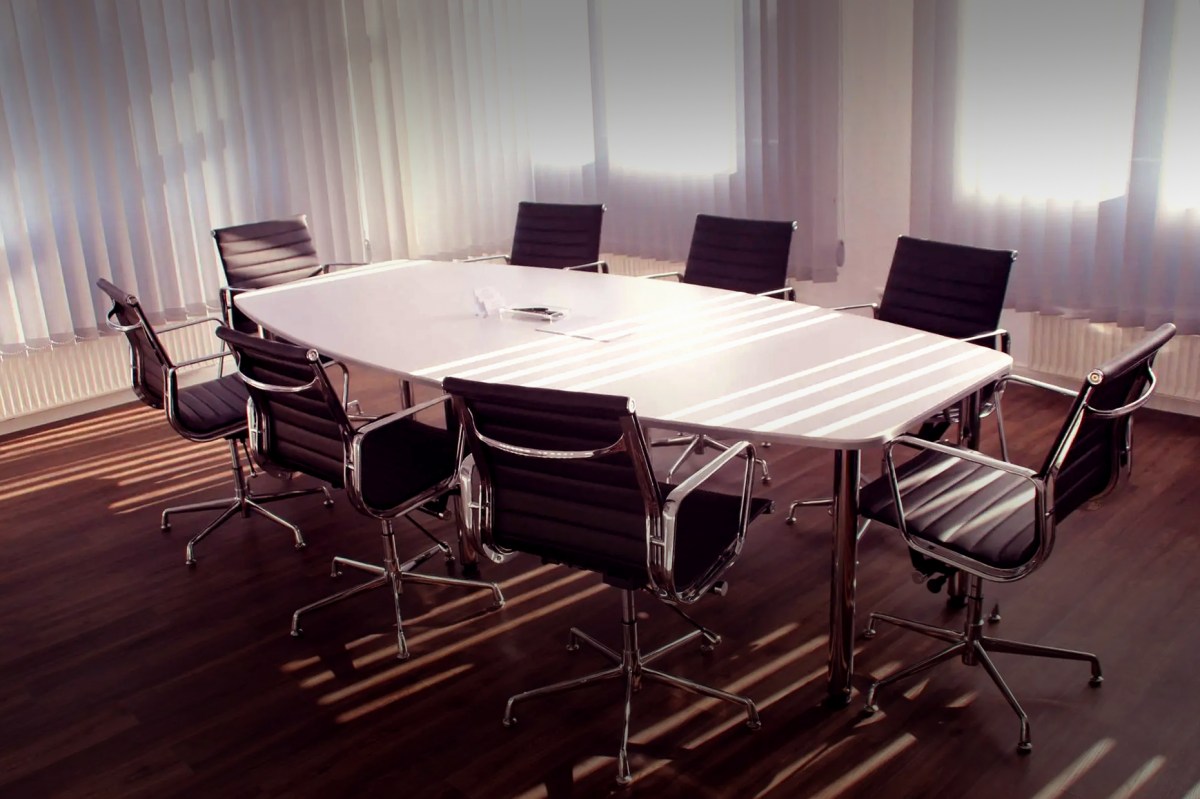
arts board in crisis: a photo of a room with an empty board room table. It's a white oblong table with 8 executive style black chairs around it.

Of the many reactions reverberating through the Australian arts sector amid the Adelaide Writers Week fiasco, the one with perhaps the greatest irony behind it is the feeling that we have been here once or twice (or 67 times) before, and that the Adelaide Festival Board should have known better after a plethora of recent arts board controversies that have harmed artists, programs and organisations.

While there is a long list of cautionary horror stories to choose from, one could start with the spectacular outcomes of the Melbourne Symphony Orchestra’s (MSO) handling of political comments made by pianist Jayson Gillham in August 2024, which led to the departure of the company’s Managing Director after a vote of no confidence in the Orchestra’s senior management by its musicians. This was followed by an external review of the events and an ongoing court case between Gillham and the MSO.

There was also State Library of Victoria’s decision by their management and Board in May 2024 to cancel its Teen Writing Bootcamp workshops due to its view that some of its workshops, led by authors who had publicly broadcast political statements, posed “child and cultural safety” concerns. This cancellation sparked accusations of censorship and discrimination from many Australian authors against the Library, including some who said they would no longer be supporting an institution they had cherished for the best part of their lives.

And of course there are the actions of Creative Australia’s Board, who rescinded the Venice Biennale invitation of its chosen 2026 Biennale artist Khaled Sabsabi in February 2025; an act which triggered strong arts sector backlash and prompted a costly independent review of the Board’s process and ultimately resulted in the Board’s decision being reversed. Sabsabi was reinstated as Australia’s 2026 Biennale representative five months later.

There is also the more recent example of Bendigo Writers Festival in August 2025, and its attempt to impose a restrictive Code of Conduct on Festival participants, the result of which means the Festival will not return until 2027.

After such prominent cases of arts boards’ risk management processes turning sour, how have we ended up in this situation… again?

For guidance in this area, ArtsHub spoke to two arts management experts who specialise in board strategy, policy and cultural safety. Each offers timely advice on ways forward.

Key approaches arts boards are ignoring at their peril

Kate Larsen is an arts and cultural consultant with 25 years’ experience in arts governance.

Among her observations of the Adelaide Festival Board’s decision to rescind author Dr Randa Abdel-Fattah’s invitation to its 2026 Writers Week, is that its actions show a striking ignorance of the wider operating environment, and concerning hypocrisies in terms of the festival’s purpose and values, fiduciary duties and duty of care.

‘There isn’t a single arts organisation in Australia who shouldn’t be paying attention to the issues of censorship, artistic freedom of expression, financial sustainability and broader arts sector survival right now,’ Larsen tells ArtsHub.

‘It’s been more than two years since these issues started making mainstream news headlines. Organisations should have been spending that time getting ready for dealing with their own version of this [Adelaide Writers Week] crisis. If they haven’t, they have been negligent.’

For Larsen, at the heart of the current situation is the problem that many arts boards appear unable to face the hard reality that the management strategies they may have applied to similar crises in the past, are not applicable to present and future business operating environments.

‘We cannot take a business-as-usual approach to governing our organisations within the [global] poly-crisis that we are in,’ she explains.

‘We must also acknowledge that many of these current situations are really just new manifestations of old issues that we have actually known about for some time,’ she adds.

Read: Message to arts boards in wake of MSO crisis (from Sept 2024)

As evidence of this, Larsen describes the long-time decline in numbers of people who are willing to sit on low or unpaid arts and cultural boards in Australia.

‘Those numbers were decreasing even before the pandemic [in 2020],’ she says, ‘and this is only getting worse.’

She explains that due to the drop-offs in numbers, the sector now has a situation where, in the context of the global poly-crisis, ‘we are relying on fewer and more burnt-out arts board members to make ever more complex decisions at speed whilst being actively lobbied in ways they’ve never been lobbied before.

‘Essentially, it means we’ve got unprepared and burnt out people making bad decisions – and that is just one part of what’s wrong with the current picture,’ she adds.

While Larsen’s insights into these current governance-related predicaments are many (too many for one article), she says that the Adelaide Writers Week events have reminded her of three key things: that we need to get better at risk and crisis management; that organisations need to invest in repair, not just reversals; and the need for big-picture structural changes to the way arts boards function in this country should be a more urgent industry priority.

Read: Director Louise Adler quits as Adelaide Writers Week crisis deepens

‘It’s also important to acknowledge that we don’t currently have an alternative board or governance model that will necessarily work better,’ she says.

‘All board models have their issues… But it’s clear the Adelaide Writers Week crisis is another example of the approaches we are currently missing.’

Can arts boards’ risk management include more open dialogue?

Cultural equity and cultural safety consultant Veronica Pardo, who has previously led peak organisations such as Arts Access Victoria and Multicultural Arts Victoria, and worked for over two decades with arts boards in the conflict resolution space, has similar views to Larsen, though her experience in having ‘difficult and uncomfortable conversations’ is particularly pertinent to the Adelaide Writers Week situation.

As she tells ArtsHub, ‘Boards today are navigating extraordinarily complex, emotionally charged, and often traumatising issues. But our governance systems are no longer fit for purpose.’

She adds, ‘Whether we’re talking about people’s psychological or cultural safety, this is the new milieu that we are all operating within, and so it is astounding that boards are not training themselves to manage these kinds of contexts better, because these dilemmas are coming for everyone – not tomorrow or sometime in the future, but today.’

Pardo is also bewildered that so many boards – both inside and outside the arts – continue to focus on what she calls “governance 101” training at the expense of what is the arguably more difficult work of strengthening their ability to sit in deeply uncomfortable conversations as a means to repair conflicts and crises.

‘No one seems to understand the urgency of the need to move through conflicts in ways that disrupt the most common [historical] outcome of “separation and withdrawal”,’ she says.

‘We continue to see this “separation and withdrawal” dynamic playing out at board level, when we should be more open to processes where we stay in the room, and build better understanding of each others’ points of view, and work on changing and transforming ourselves.’

Read: The case for those with the battle scars to sit on arts boards (from Nov 2024)

Unfortunately, Pardo is seeing little evidence of the sectors’ tolerance for these uncomfortable conversations right now.

‘How can we in the arts be on a path of culture building, rather than culture breaking?’, she comments.

‘In a climate where speech is increasingly framed as harm, we risk avoiding conversations that are simply uncomfortable, rather than unsafe, but I think it’s worth asking whose discomfort is being centred, and why is it that discomfort is so readily being conflated with danger?.

‘Perhaps what we need most right now are conversations that are safe because they are held with care, but still willing to stretch us,’ she concludes.

Discover more screen, games & arts news and reviews on ScreenHub and ArtsHub. Sign up for our free ArtsHub and ScreenHub newsletters.

ArtsHub's Arts Feature Writer Jo Pickup is based in Perth. An arts writer and manager, she has worked as a journalist and broadcaster for media such as the ABC, RTRFM and The West Australian newspaper, contributing media content and commentary on art, culture and design. She has also worked for arts organisations such as Fremantle Arts Centre, STRUT dance, and the Aboriginal Arts Centre Hub of WA, as well as being a sessional arts lecturer at The Western Australian Academy of Performing Arts (WAAPA).