Five years in the making, The Drover’s Wife – The Opera has finally received its world premiere at the Queensland Performing Arts Centre’s new Glasshouse Theatre.
Leah Purcell reimagined Henry Lawson’s original story as an award-winning play in 2016, then a novel and subsequently as a successful film. Its adaptation reframed the drover’s wife, independent Molly Johnson, and offered a new perspective on Indigenous history. Turning the narrative on its head, Purcell changed the unsavoury black man in Lawson’s story, Yadaka, to be an honourable man.
Directed by Purcell, this newly created operatic version challenges that stereotype further by revisiting the so-called truths of our colonial past and the role of women in particular.
The Drover’s Wife review – quick links
Setting The Drover’s Wife to music
Composer George Palmer has written a score that brims with colourful, tuneful music, clearly defining the narrative. Complex and layered, his music is for the most part melodic and lyrical, with well-crafted, emotive arias for Molly, Yadaka and Molly’s son, Danny, the latter a positive addition to this operatic story.
Musically, it is less successful in realising the harsher, violent episodes of the story, not assisted by some poorly staged fight scenes. Where we need to be shocked and appalled by elements of brutality and bad language in the drama, the emotional response appeared muted in the score.
Conductor Tahu Matheson did a sterling job in the pit with excellent and highly-charged playing from the Queensland Symphony Orchestra, who were in fine form. However, one could have wished also for some powerful elements of Indigenous music to balance an overall western sensibility, occasionally jarring with the intent of the lyrics.
Meanwhile, the joint Palmer and Purcell libretto (sung in English with surtitles) mostly worked well within Palmer’s musical framework.
Nina Korbe shines as Molly
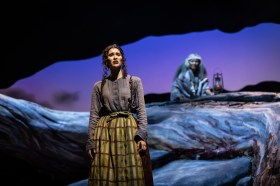
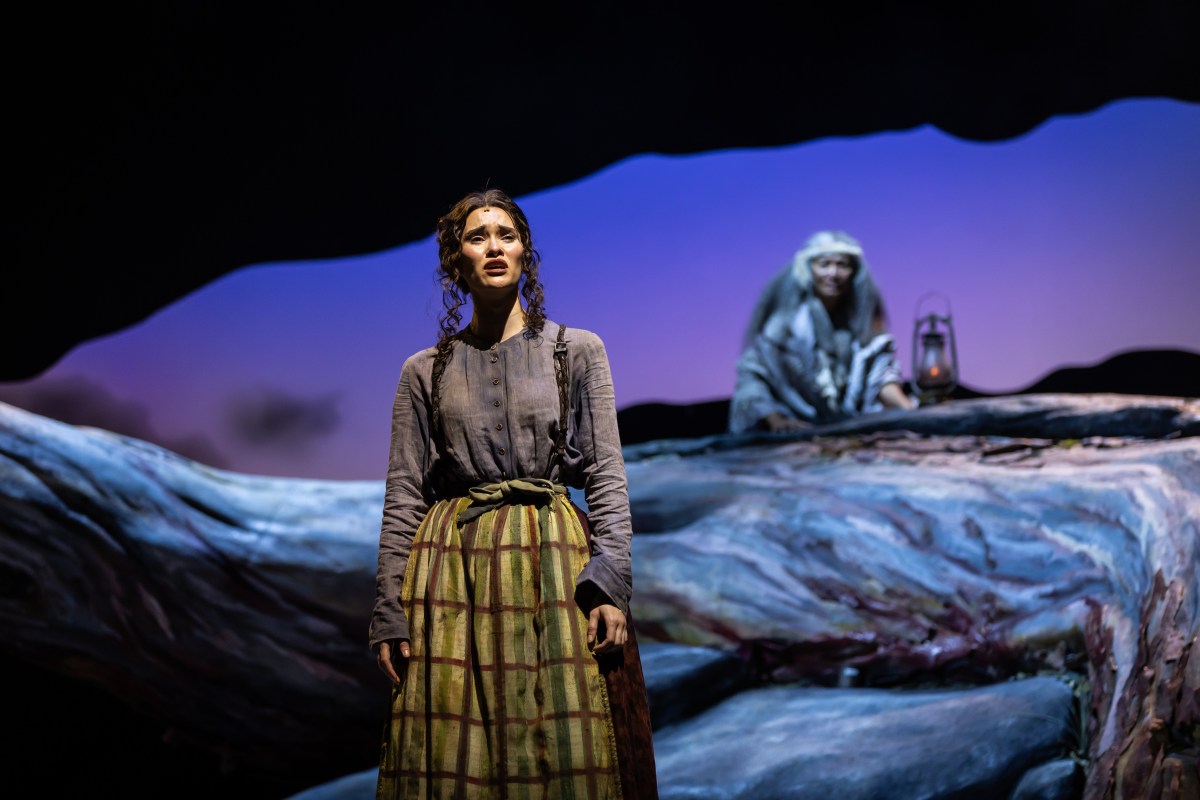
Leah Purcell’s direction was tight and well staged, complementing the narrative provide a clear sense of the characters. In particular, she directed a tough but vulnerable Molly as she navigated a harsh Australian environment, as well as the advances of unscrupulous men, to protect herself and her children.
The singers were universally excellent. As Molly Johnson, Nina Korbe was on stage for almost the entire show and gave an astonishingly impressive and powerful performance of her highly credible character. With her strong, resonant soprano and perfect diction, she delivered evocative arias and finely paced duets.
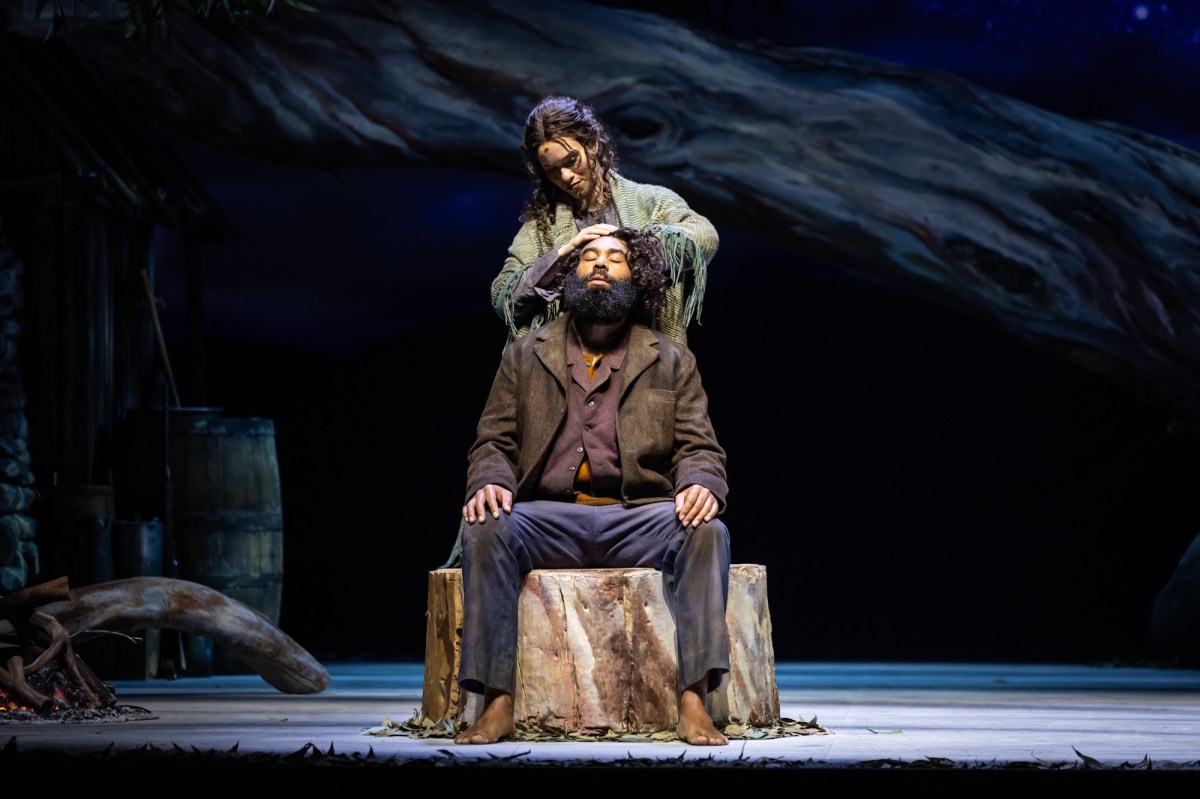
Marcus Corowa was equally her match as Yadaka, a man whom life had treated badly but whose decency shone through, offering respect and care for Molly. With a soulful and expressive voice, his arias, plus the duets with Korbe, were passionately realised.
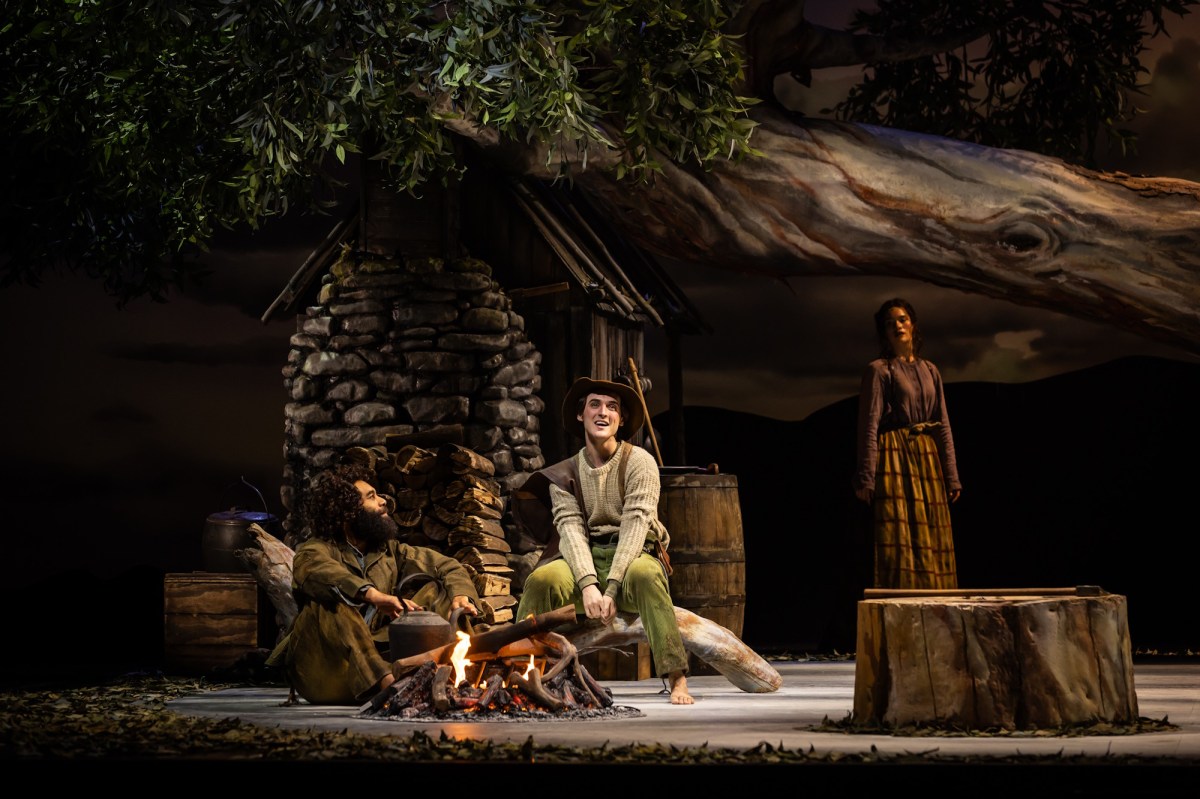
As Danny, whose role grows as the opera continues, Nick Smith gave a finely crafted and charmingly naïve performance of a fatherless young man who comes to trust Yadaka. His aria wishing to be a decent man was poignant and moving.
James Egglestone’s played Molly’s dad, Jock, complete with Scottish accent. Barry Ryan’s cocky Swaggy in the opening scene and Jud Arthurs’ repulsive Robert Parsen were strongly portrayed and well sung.
Building on Purcell’s earlier adaptations
Designed to protect Molly, the introduction of dreamtime spirits in the form of dancers was beautifully realised by choreographer Yolande Brown. In principal roles, Jeanette Fabila as Ginny May and Shauntai Abdul-Rahman as Black Mary made valuable contributions.
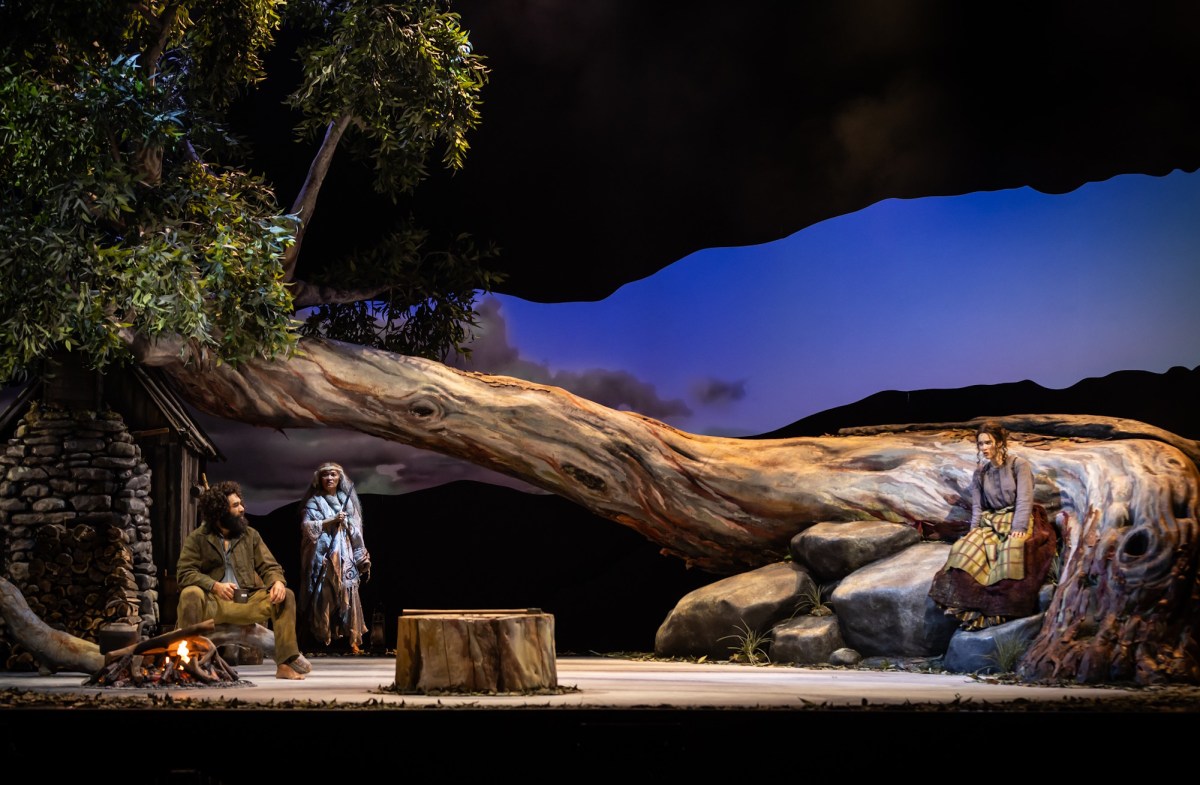
The production was stunningly realised on the Glasshouse stage by Isabel Hudson. The drover’s small shack and outside seating and fire area, shadowed by a glorious snow gum that protected a rocky headland, was well utilised.
A backcloth depicting imagery of the Australian bush was atmospherically lit by Karen Norris. A marvellous Southern starry night sky and colourful dawn and dusk settings were particularly effective. Craig Wilkinson’s video projections of landscape with forests of gum trees added texture to the overall setting. It was disappointing that Michael Waters’ sound design included radio mics for the singers, as this was prone to over-amplification.
Despite some musical and staging misgivings, being clearly a work-in-progress, The Drover’s Wife was still a well-realised new opera and will hopefully become a key feature of future Australian repertoire given its powerful historical story.