
Aboriginal and Torres Strait Islander readers are advised that this article references a person who has died.
Limber bodies writhe under what appears to be a vast fishing net, pocked with holes. The limp form is sprawled across the darkness of the Playhouse theatre stage. But soon, the net’s raised aloft, forming a bucket-like cup, and the Bangarra Dance Theatre ensemble takes flight.
Simultaneously simple in its staging and spectacular in its effect, Indjalandji-Dhidhanu and Alyewarre choreographer Glory Tuohy-Daniell’s Keeping Grounded is utterly mesmerising.
The work was first presented in Bangarra Dance Theatre’s emerging talents showcase, Dance Clan in 2023, and this new, expanded iteration marks the first movement in the company’s latest triptych, Sheltering.
Sheltering review – quick links
Keeping grounded
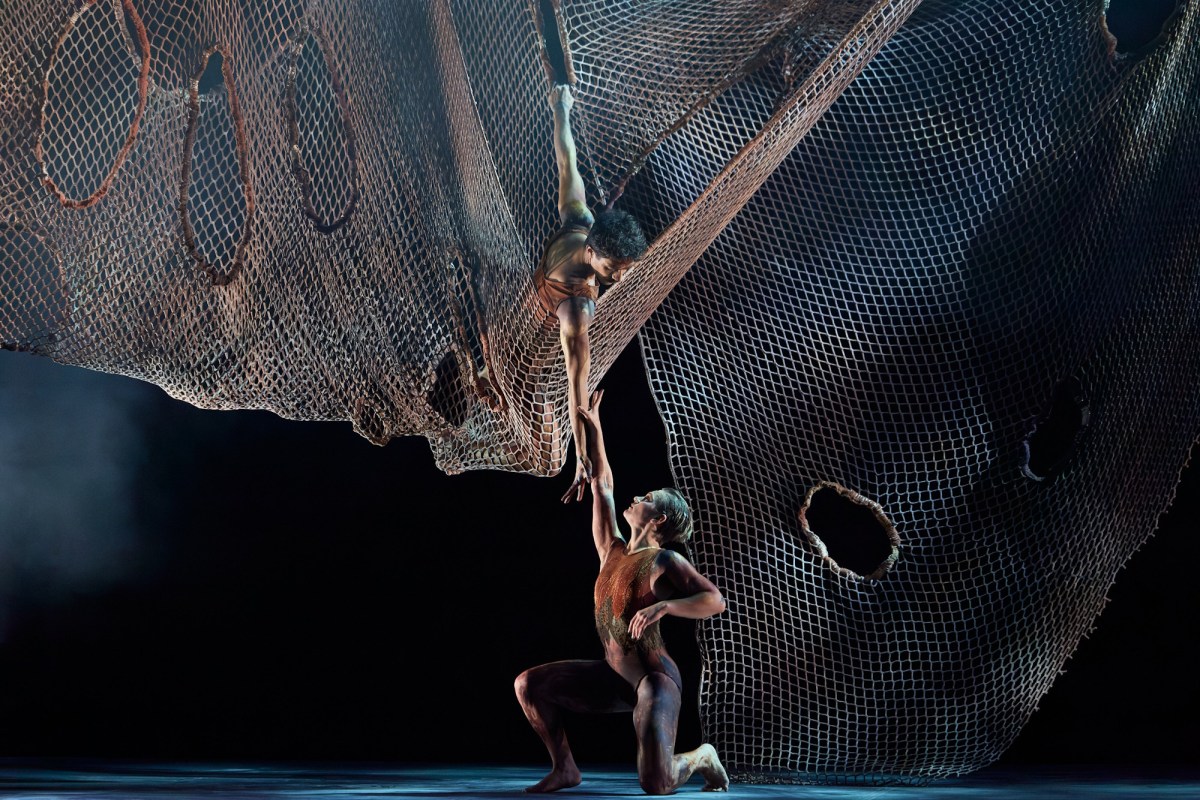
Takaringa Tiwi costumer designer Clair Parker wraps the company in pale, ghost-like ribbons of thread that echo the net’s ropes, with Keeping Grounded set to a swirling score by Wiradjuri and Gamilaroi composer Brendon Boney.
The restlessly fluctuating form of the net – crafted by Dyarubbin set designer Shana O’Brien and mistily lit by Karen Norris – is a visually stunning platform for towering talents like Gomeroi and Tongan dancer Daniel Mateo and the platinum-locked shock of Roxie Syron and Tamara Bouman, who nimbly switch from anchored to aerial excellence.
As the dancers resist the net, with those still earthbound wrestling to bring it back down, they stand tall and proud on this swaying, shifting structure. As a trap literally separating them from Country, it’s potent, provocative stuff. And yet, restaged here at Melbourne’s Arts Centre, resting as it does by the banks of the Birrarung, it’s hard not to think, also, of the peoples of Eastern Kulin Nation who fished for eels on these waterways for millennia.
ArtsHub: First Nations dance – who inherits the future?
That’s the true testament of Bangarra, led by magnificent artistic director Frances Rings. Honouring tradition in tandem with pushing the form of contemporary dance ever-forward, they are titans who acknowledge the bleak weight of history, while harnessing the hope required to write a better future.
With Bangarra to be granted the Golden Lion for Lifetime Achievement at the Venice Biennale Danza in July, the first Australian creative team to claim that title, it’s clear that Tuohy-Daniell will be a future leader of the company, with Keeping Grounded a remarkable vision that’s woven thick with wonder.
Taking shelter
Bangarra has always been willing to push the form into other mediums, as with former artistic director Stephen Page’s iridescent dance film Spear. And so, a shiver of excitement passed through the audience when a silver screen slid silently from the rafters to project the perfection of Brown Boys.
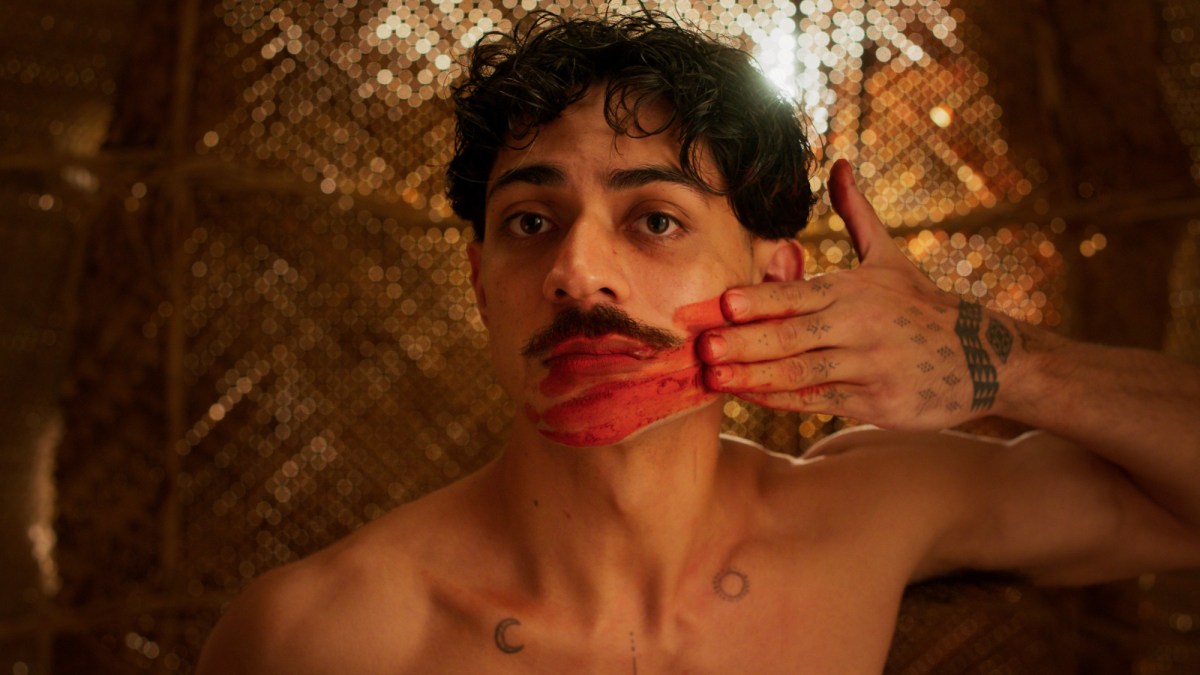
Short but mighty, this mesmeric movie – another Dance Clan offering, this time from 2024 – is co-directed by Bangarra ensemble member Daniel Mateo, alongside fellow multi-disciplinarian Cass Mortimer Eipper. Mateo also stars, solo, and personally spun the glinting gold of its mellifluous spoken-word poetry.
Appearing to play out in an ethereal, limbo-like space, awash with a blinding light that’s dazzling after the darkness that enveloped Keeping Grounded, we witness Mateo seemingly adrift in this void. He speaks of the weight of expectation placed on Brown boys’ shoulders, torn between the tradition they may not have had access to, and the damaging stigma and stereotypes slung their way by the egregiously ignorant.
Amid this blaze of white, Mateo’s Brownness is centred though his sheer willpower and by the shelter of a structure made from Fala, traditional Tongan reed mats, recreated here by set and costume designer Elizabeth Gadsby. For the majority of the six-minute piece, she clads Mateo in nude-coloured trunks, his tattoos speaking his story.
Daubing himself in ceremonial ochre, Mateo scoops up sparkling sand that runs fleeting through his fingers. An incandescent guide, he offers up surprising wisdom for one still so young – an emerging leader, like Tuohy-Daniell – noting that Brown boys must grow up so fast.
As we are drawn ever closer, Worimi composer Leon Rodgers’ pulsing score spins us into the final reveal, as Gadsby ‘dresses’ Mateo in the dirt of his ancestors. It’s at once a literal grounding and an upending of gender binaries that speaks to the artist’s other core strength: the cheeky glimmer in his sparkling eyes. Brown Boys is both a joyous interlude and a fiercely fabulous mood.
Sheltering’s deep roots
Sheltering’s final, most foreboding and longest movement, Sheoak, was first staged as part of Bangarra’s 2015 double-bill, Lore.
Drawing deep on Rings’ Mirning roots, the work relates to the ancient Sheoak trees of her people, which are both venerated, standing sentinel and strong for many thousands of years, and at risk of oblivion, no thanks to the ravages of environmental collapse and the never-ending encroachment of cruelly clawing cities.
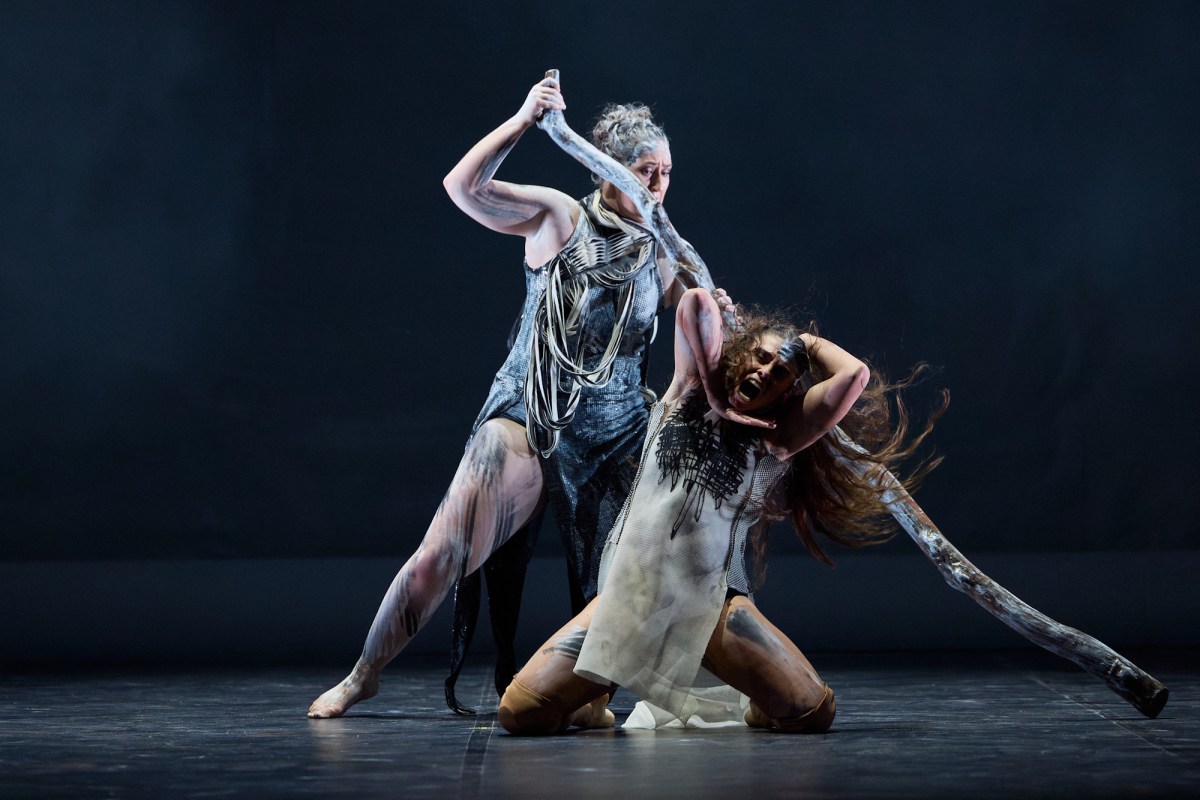
An impressively anchoring figure, Chantelle Lee Lockhart is our guide here. She bears the weight of one of the Sheoak’s fallen branches. But as with the reclamations made in Keeping Ground and Brown Boys, Lockhart also uses this branch as a staff to hold her people aloft as they shiver in the cold light of Norris’ stark illumination.
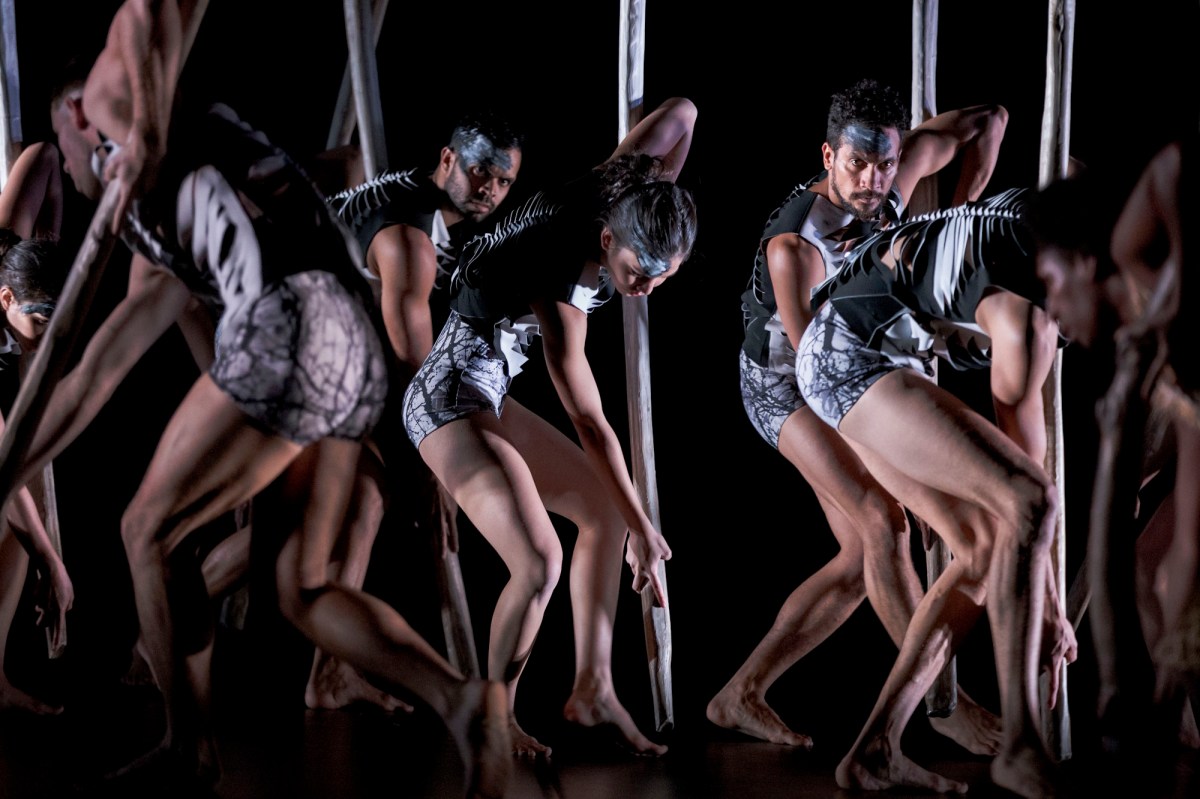
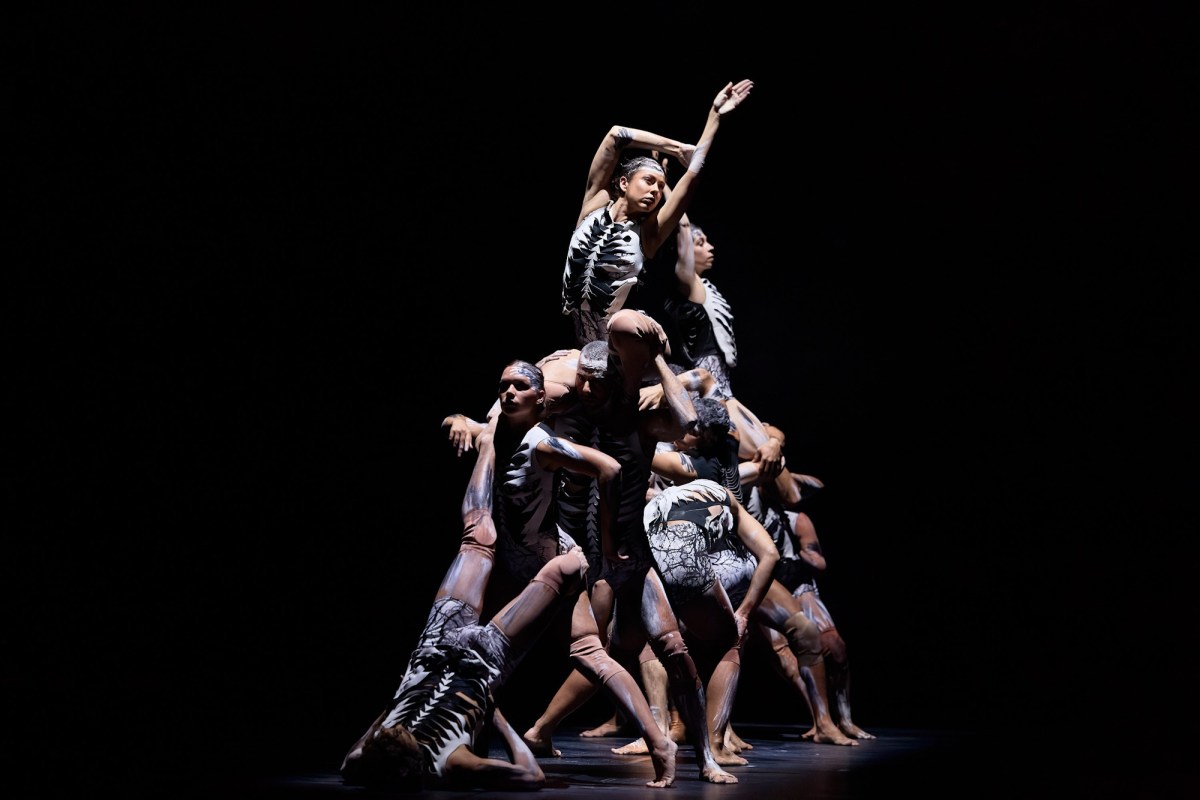
The ensemble summons forth the spirits of these lost limbs, which descend on wires from above like the ghostly ribcage of a great whale in eternal slumber on the ocean’s floor. In this way, the striking set by designer Jacob Nash, a descendant of the Daly River people, symbolically connects sky, sea and earth as Bangarra’s gifted dancers weave their magic between these wildly oscillating poles with death-defying grace.
Jennifer Irwin’s wraith-like, ribbed costumes in ashen grey accentuate the mournful tone, with the spectral figure of Wiradjuri and Darkinjung dancer Kallum Goolagong, dusted entirely in white ochre, forming an imposing counterpoint to Lockhart’s matriarchal might. But life is eternal, and the cycle begins anew as the dancers take up these fallen logs, raising them aloft on their shoulders.
It’s a fitting showcase of Bangarra’s brilliance. With the late, impossibly great David Page’s soul-thrumming score rousing us for one final rally, it’s a reminder that no-one is ever really gone as long as we remember their name.
