Schubert set his Winterreise song cycle to a selection of poems by Wilhelm Müller in a style that is reminiscent of short vignettes rather than a narrative with a distinct storyline.
The imagery from the poems presents many moods, but mostly lends itself to dark, sombre reflection expressing loneliness and isolation, suiting Schubert’s mood. He was ill and deeply depressed at the time of writing and died a year later.
The premise for the song cycle is that of a love affair that has ended badly. Having been rejected, we encounter the protagonist leaving his home in mid-winter with no clear idea of where he is going. He wanders through the cold, bleak countryside and villages while in conversation with himself.
Within his own thoughts, the wanderer is by turns melancholic and despairing, cynical yet reflective, which leads him to a final fateful resignation.
Schubert masterfully elevated the craft of song-writing with this cycle, widely considered to be one of the great works of the classical canon. Deeply evocative of lost love and the resulting pain that the protagonist feels, his music is sublimely emotive, depicting an emotionally charged journey across a frozen landscape. Prominent features include elements of the natural landscape with vivid images of trees, rivers, wind and birds.
A Winter’s Journey: Allan Clayton
In Allan Clayton we witnessed one of the great exponents of this celebrated song cycle. Regarded as one of the world’s great tenors, he has sung Schubert’s Winterreise many times admitting he finds it easier to sing work that is not completely joyous.
Perhaps the most interesting roles in great art are those that deal with more complex characters, so that Clayton can then use his impressive vocal skills to shape the multi-layers. The timbre of his voice also offers a combination of sweetness in the top register with some steely bottom notes, lending itself to themes of heartache and despair.
Clayton presents the wanderer with a judicious mix of emotions, bordering on desperation, self-doubt and eventual breakdown. His stunningly beautiful tenor rises eerily in the emotive passages, while equally caressing a vocal sob as he confronts his demons in devastating dark moments.
Every note is expertly crafted with love and feeling, every line imbued with careful consideration. He presents Schubert’s many layered musical colours in perfectly paced, well delivered phrasing. It is beautifully realised.
A Winter’s Journey: Kate Golla
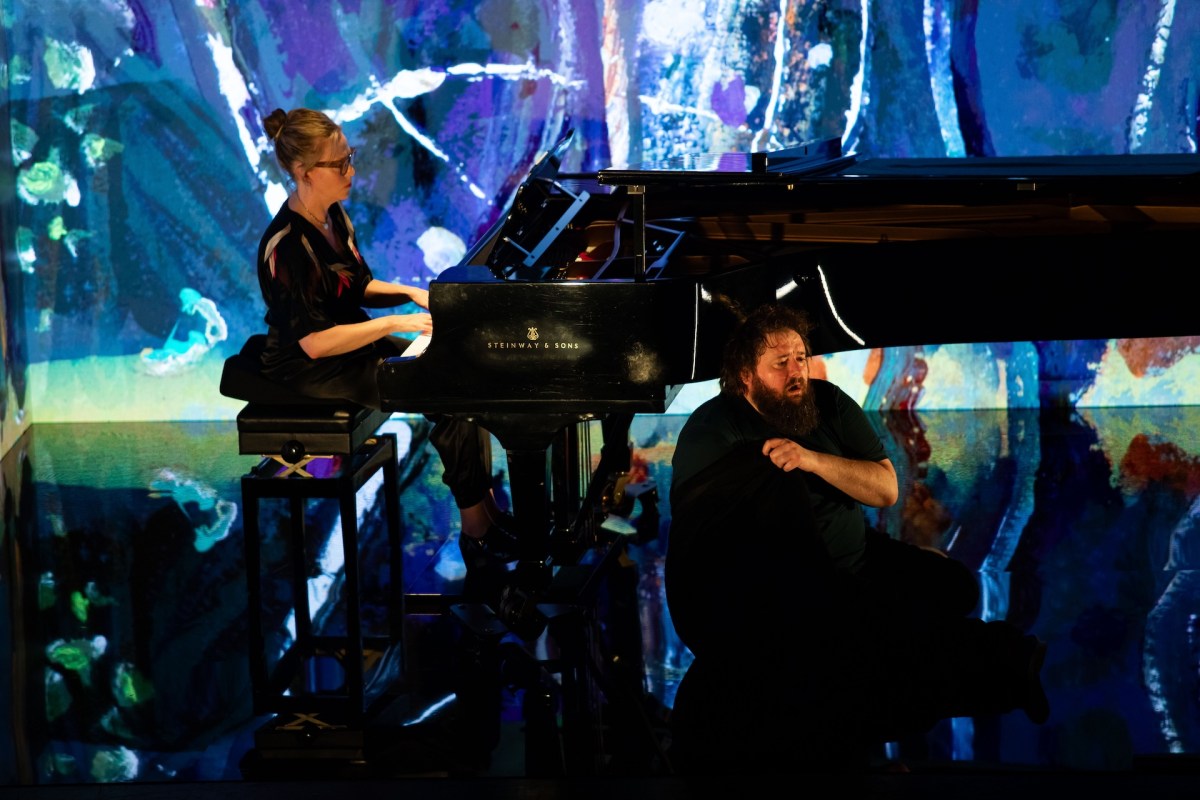
Equally impressive is pianist Kate Golla. Schubert treated this work for two voices – a singer and a keyboard. While Golla is an attentive and accomplished accompanist, she also voices Schubert’s imagery while the singer voices the words.
Golla brought out the colours of the music with delicious imagery. The inner turmoils of the protagonist are shown by an agitated, pulsing keyboard. The chill winds, icy rivers and snow are depicted by minor harmonies, while the alternating feeling of warmth and sun is in a major key.
Shrieks of birds are prominently realised in the score, while the crow circling malevolently overhead is vividly painted on the piano. A fluttering melodic piano gives us leaves falling, while the famous linden tree poem is tunefully effective.
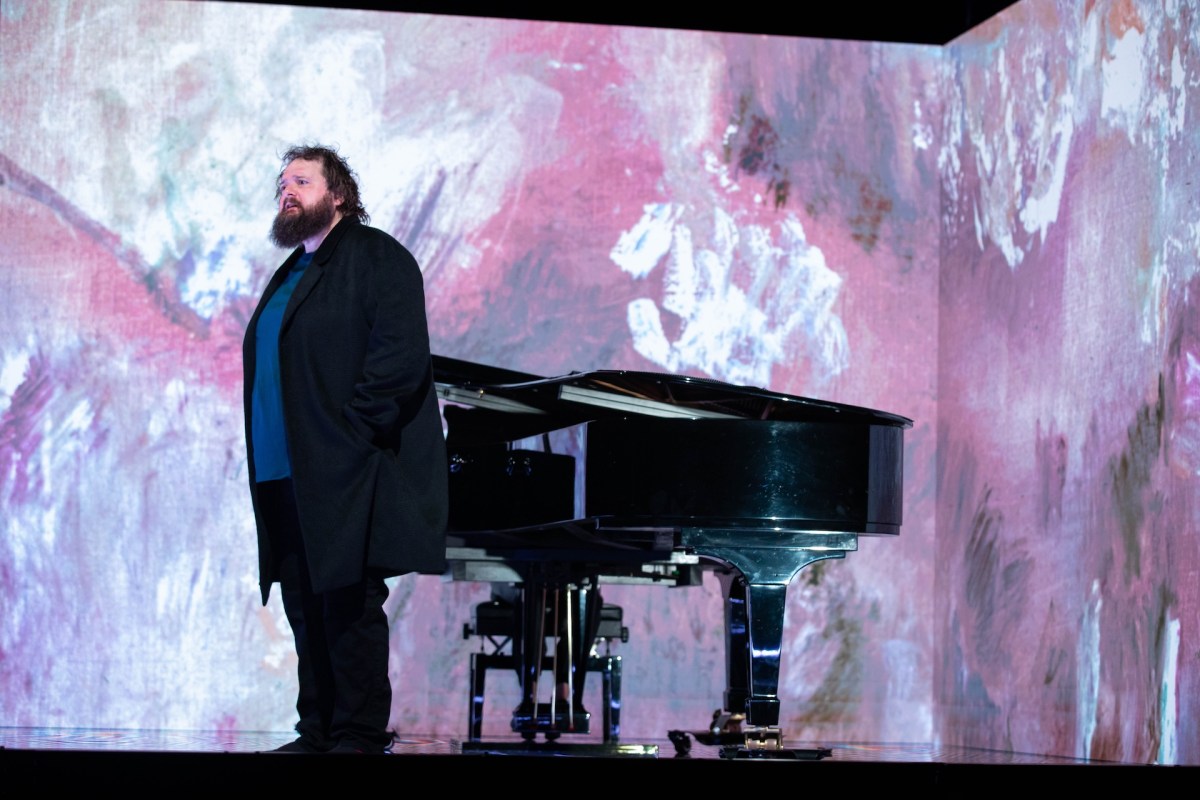
Known for the physicality of his performances, additions to this cycle include direction by Lindy Hume, giving Clayton an opportunity to relive his journey by roaming around the stage. Most effectively, he also uses the piano as a prop or piece of scenery.
It adds complexity for the singer, and yet using the stage to help elucidate the messages of the various poems never distracts from his ability to deliver the lines. In one poem where the protagonist is falling asleep, Clayton takes off his coat, folds it up and simulates sleep under the piano, while also singing in that space.
It’s impressive how Clayton and Golla could keep their joint tempi so perfectly attuned when often physically apart on the stage, seemingly not requiring any cues. It is an art that few could emulate.
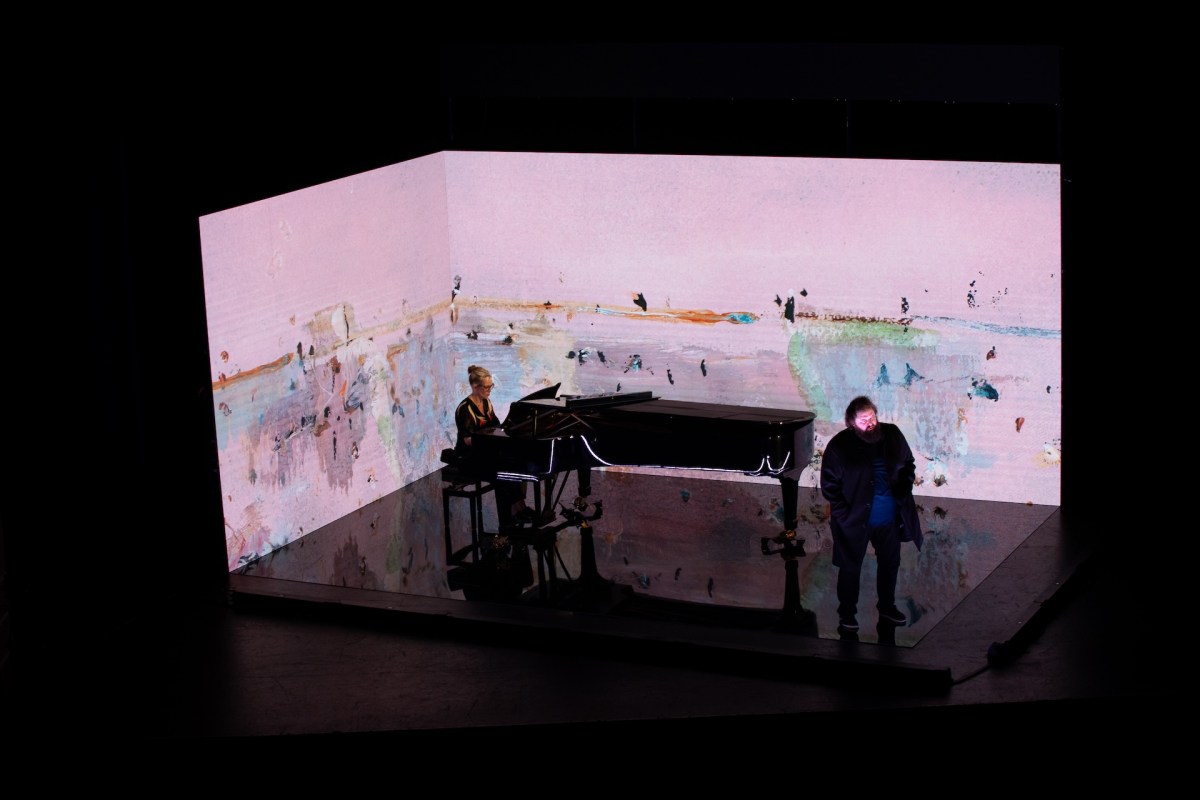
The production is assisted by some haunting and atmospheric lighting realised by Mattew Marshall. Often showing Clayton dimly in half-light or with just his face lit, it adds to the journey’s mystery. It is also effective in opening up the stage.
A Winter’s Journey: powerful images
The piece de resistance of the production is the use of a two panelled folded backcloth depicting video images of 19 of Fred Williams’ works used to both reflect and highlight the emotions of the score. With their expansive landscapes of desert and bush, alongside brilliant colours and abstract impressionism, video designer David Bergman has created a marvellous melange of powerful images.
Bergman creates pictures using small blown-up relevant sections of Williams’ works as well as impressive full vistas to great effect. Neither seemingly anachronistic nor out of place, Clayton responds positively to the images and colours as he wanders the stage.
This is one of those magical nights in the concert hall that was as mesmerising to watch as it was to hear and enjoy. It was an unforgettable experience by Clayton, Golla and their production team and should not be missed.