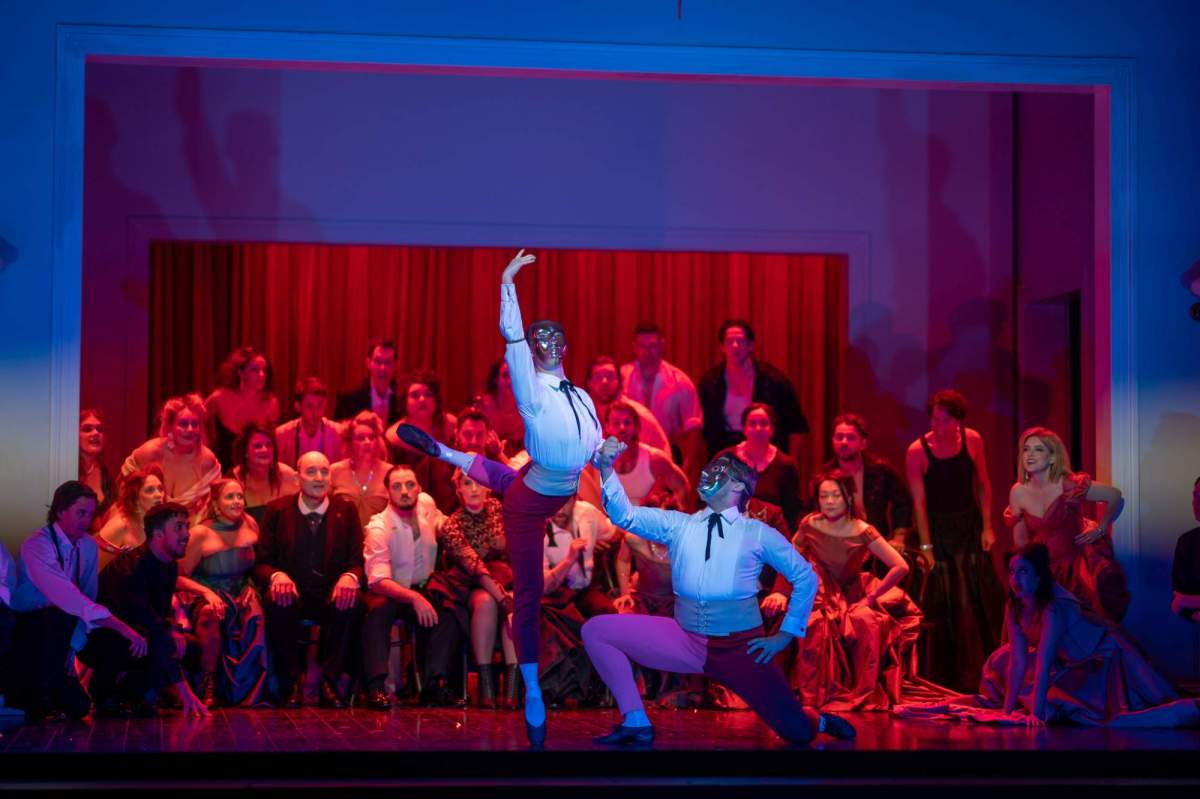
Last week, the internet almost broke over actor Timothée Chalamet’s statements that he didn’t want to work in opera and ballet because he sees them as dying artforms.
But as the Hollywood reporters piled on to quash the actor’s Oscars chances, and as opera and ballet companies turned the furor into promotional gold for their seasons, many people missed hearing some other quotes within Chalamet’s now infamous conversation with actor Matthew McConaughey that are probably more important for the arts sector at large.
While the actors’ ‘Town Hall Conversation’, filmed for Variety and CNN, was hardly hard-nosed probing debate, some questions asked by its Gen Z audience forced the celebrities to address issues that are of pressing concern to anyone working in the arts and screen sector today.
Chalamet on Gen Z arts audiences – quick links
Is Gen Z really scrolling through life?
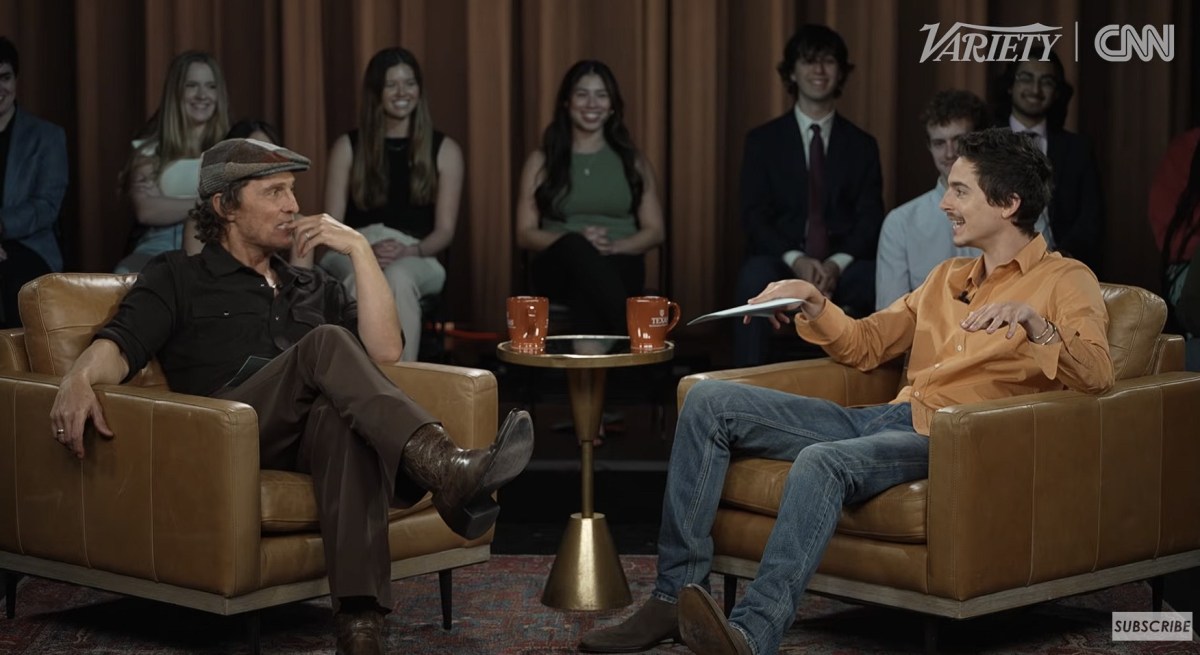
About halfway through their conversation, one young audience member asked McConaughey and Chalamet a detailed question on how they saw the film industry changing with the rise of new technology and what steps they think will be taken to make sure creatives aren’t replaced by AI.
While McConaughey’s response was basically that artists need to own themselves ‘so no one can steal [them]’, Chalamet’s words cast light on the concerning machinations in Hollywood right now.
The actor referred to the limited success that the Screen Actors’ Guild in the US has so far achieved in their ongoing negotiations with film studios about the rights of actors and voiceover artists (among other creatives) at risk of being replaced with AI. He also spoke of his concern about how film industry gatekeepers have a lot of decision-making power around the use of generative AI in the arts.
These comments were preceded by discussion between Chalamet and McConaughey about the changing face of film as an artform in itself – not only due to AI, but because of changing audience behaviours.
McConaughey wondered aloud whether, ‘in this age of shorter attention spans and vertical 12 second spots’, we ‘are losing attention for Act Ones [in films]’.
He noted that Act One is the ‘first thing that gets cut’ by film studios these days, and more scripts seem to ‘start on page 12’ leading to series and films that ‘feel abbreviated’.
On this point, Chalamet pushed back. While he agreed that film studios seem now more inclined ‘to put their biggest action set pieces up front’, whereas in the past they saved their big action pieces for the end of movies, he also sees ‘a sort of reverse thing going on’, where some audiences are ‘desiring things that are more patient and that pull you in’.
ArtsHub: What can opera offer young people?
He quoted research suggesting ‘Gen Z are a bigger movie-going audiences than Millennials [Gen Y]’, making the point that while ‘some people want to be entertained and quickly’, there is also a detectable backswing to longer-form content as an antidote to the click and scroll habits that new tech has brought about.
Opening night at the opera – who’s in the crowd?
So, what does this mean for those supposedly dying artforms like opera and ballet that Chalamet says he has no interest in being part of?
Funnily enough, just days after the controversy around the actor’s comments blew up, I found myself at the opening night of West Australian Opera’s season of La traviata, so I could see for myself the state of play for this genre.
This production of La traviata is directed by Sarah Giles and has played on stages across Australia since 2022. It premiered in Brisbane with Opera Queensland, before touring to Adelaide with State Opera SA, and had a WAO season in Perth later that same year.
Then, Opera Australia presented it at Sydney Opera House in 2025, and after its current 2026 Perth season it will be shown at the Regent Theatre in Melbourne (presented again by Opera Australia), confirming it as one of the most widely shared new Australian opera productions in recent years.
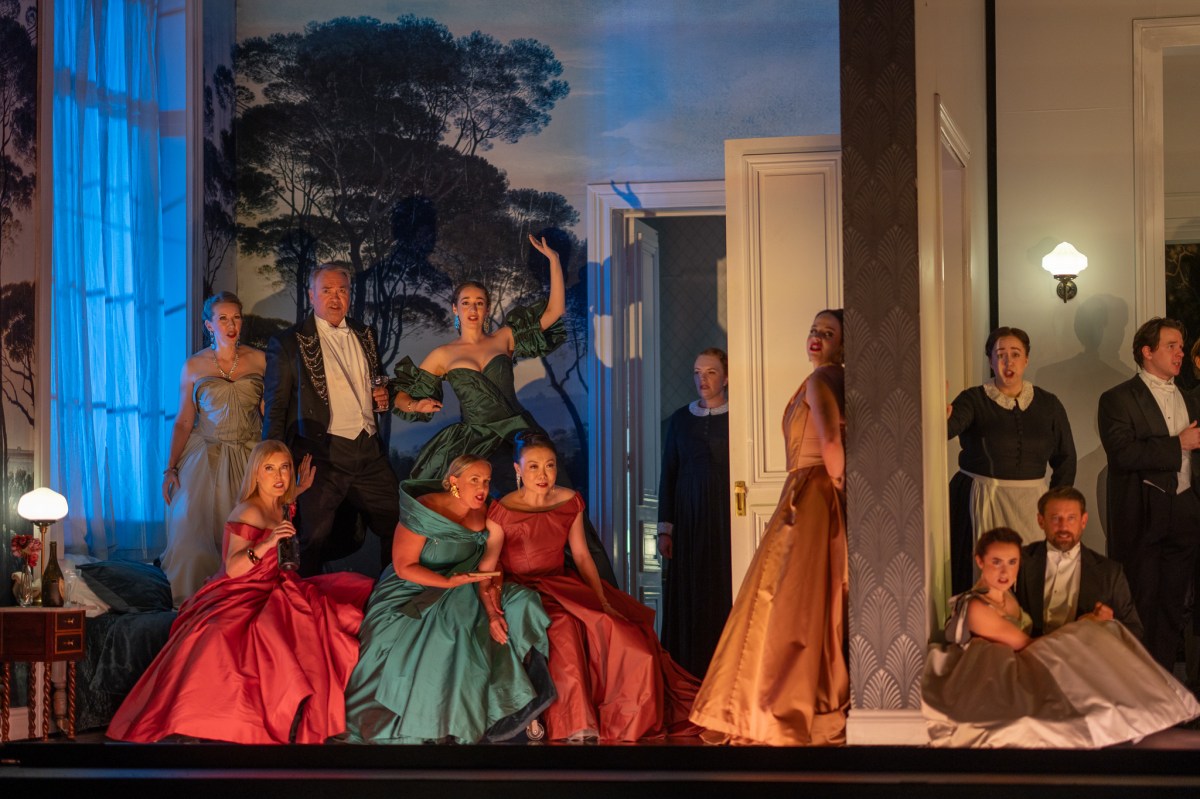
It’s clear to see why audiences across generations are drawn to Giles’ interpretation of Verdi’s masterpiece, and WAO’s opening night was evidence this production is satisfying their desires.
Yet as I sat in my stall-seat before the show, I didn’t see a packed house full of people from all walks of life. Rather, the capacity crowd were decidedly well-heeled and on the older side. But importantly, it wasn’t exclusively an older audience.
ArtsHub: Are opera audiences really in decline?
As the house lights dimmed, I saw someone finishing off their ice cream while chatting to their companion, someone checking the news on their phone, and another clasping their hands together in anticipation. While the room was on the older side, there were a number from Gens X, Y and Z.
In fact, the diversity and vibrancy of the gathering was energised and anything but dead.
Then, during the show’s interval, I saw people across generations mingling and chatting about seemingly normal topics like an upcoming outdoor adventure trip, and plans about who would be driving home. Some were looking at their phones, but most were engaged in conversation about their lives and about the first half of the show. It felt like any other theatre show.
But it did make me wonder whether some in this crowd were who Chalamet was talking about when he he commented about the increasing demand for arts experiences that demand time and patience.
Personally, as someone who is prone to nodding off during shows that stretch beyond two hours, I can’t say I was drawn to La traviata because of its two-hour-and-40-minute running time. (I was there for the experience of seeing incredible, highly trained artists perform their craft and to hear Verdi’s music live.) But my guess is that more than a few people in the audience that night were there for the reasons Chalamet was suggesting.
It’s plain to see that our noisy, tech-saturated, screen-based culture is exhausting. Theatres remain places where one can sit in the dark for an extended period and have what are hopefully transporting, communal experiences that are uninterrupted and distraction-free.
That said, the majority of people at the opera that night were there because they really like opera. If Chalamet thinks that no one cares about opera and ballet anymore, the packed house at La traviata proved some people – and not just older people – care very much (and if more people could afford tickets, they would be there too).
Should ‘old’ stories keep getting told?
While it’s clear that opera and ballet are not ‘dying’ artforms, there is a counter-argument that traditional, centuries-old stories are doing more harm than good when it comes to reinforcing outdated social and cultural notions in audiences’ minds. (Maybe that’s another reason Chalamet isn’t interested in them?)
But if I’d attended La traviata expecting its female protagonist’s life to relate to my own as a woman in 21st century Australia, I’d have left under a dark cloud of misery.
Luckily, that was not my expectation from this 19th century tale. Instead, I could locate Verdi’s opera as reflective of how things were in 19th century Europe, and I could let it remind me of the horribly sexist and oppressive nature of that society for women and ‘the working poor’.
La traviata’s leading lady is Violetta and she is essentially a prostitute who says she wants nothing but a life of pleasure and delight. When she falls for the young poet Alfredo, who is besotted with her and just wants to ‘look after her’, she decides to marry him and join his wealthy family.
Soon after, she is labelled a threat to the family’s good name and financial security on account of her past life, and faced with the choice of ruining Alfredo’s family’s reputation – in particular Alfredo’s sister’s chance at marriage – she decides to leave him and return to her life in the casino and brothel. When Alfredo eventually realises his error in allowing her to leave the marriage, it’s too late because she is now very ill with tuberculosis… and then she dies.
To suggest that this story’s plot – even in director Sarah Giles’ ‘new’ staging of the work – comes close to the realities of our society now is (thankfully) fanciful.
However, as a fellow audience member said to me after the show, the opening scene of Giles’ version hints of persistent social issues that we are still grappling with today.
In Giles’ version, the curtain rises on a stage divided by a wall with a small bedroom on one side and a grand ballroom on the other. As glamourous couples dance in ball gowns and tuxedos in the ballroom, Violetta sits on the other side of the wall in a bedroom, on the edge of an unmade bed, while an older man with his pants down sleeps next to her.
Violetta slowly takes a piece of cloth, lifts her night-dress and wipes herself before heaving herself off the bed and moving to the corner of the room. The people on the other side of the wall continue to dance and drink in a glamorous bubble of delight.
The person I spoke to said this opening scene had them thinking immediately of Jeffrey Epstein, and I couldn’t help but agree.
The two stories have clear parallels, though they also have big differences. In Verdi’s time and place, the practice of young girls working in brothels and exploitative sexual situations was part of the structure of society – it was unquestioned and normalised. These days, when the truth surfaces about sexually exploitative actions, we hope the perpetrators are held accountable and would usually end up in prison.
This comparison shows how works like La traviata can do more than remind us of how people lived in the past. They also offer moments to compare ourselves to past societies and consider how much – or how little – has changed.
ArtsHub: Why are we still watching La Bayadère?
For directors like Giles, the task of staging these ‘old’ works in ways that both tell their historic stories and are appropriate for modern audiences is quite tough. But it’s not an impossible mission, and when the work is good, the experience is just as meaningful and exciting as watching the latest film by Timothée Chalamet or his ilk.
Whether it’s TV or opera, these stories allow us to step outside of the world that is directly in front of us and prompt us to engage with other realities, whether past, present or future.
Perhaps as Chalamet ponders his recent statements on opera and ballet, he’ll realise (if he hasn’t already) that the stories he’s advocating for onscreen are not entirely dissimilar to those within opera and ballet, even if those stage narratives act more as windows into the past than as direct reflections of the here and now.