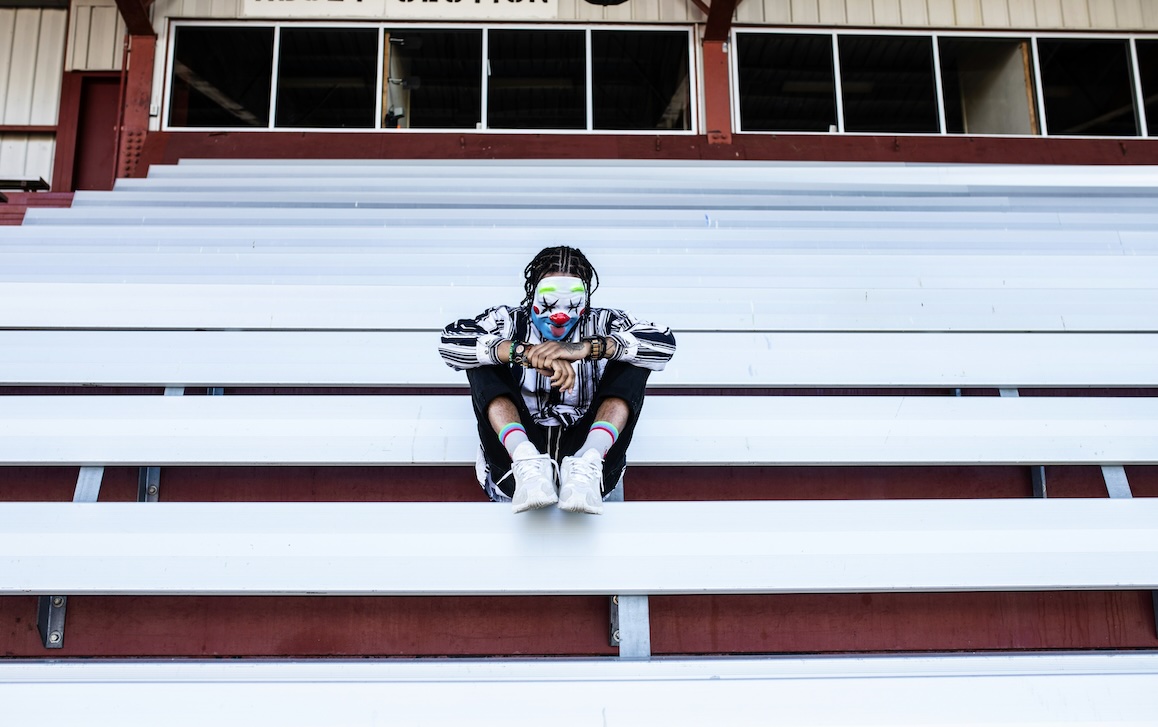
You know the joke. A man tells his doctor he is depressed. The doctor tells him to go see the circus. The great clown Pagliacci is in town; that will surely cheer the patient up. ‘But doctor!’ replies the patient, ‘There’s war in Iran, a global oil shock leading to stagflation, and climate change threatens to destroy us all! How can you think about the circus at a time like this?’
OK, I might be misremembering the punchline slightly – but can you blame me? Look at everything that’s going on right now. You want me to care about something as frivolous as the art of comedy?
If you’re reading this website, you probably don’t believe that art – even Pagliacci’s circus arts – is frivolous or unnecessary. You probably think art is, in fact, pretty damn important.
But even among folks who take art seriously, walking around a gallery or taking in a film during moments of tragedy or grief might seem to be lacking in moral seriousness. (The show must go on, but even Broadway shut down for two nights after 9/11). What right do we have to read poetry when people are dying? Shouldn’t we be doing something?
At a time of great suffering and upheaval, is it right to engage with art? Or are we using it as a way of dodging the moral realities of the world?
Art in challenging times – quick links
The virtue argument
It goes without saying that a lot of great art has emerged from awful circumstances. Just think of Picasso’s Guernica, or Edvard Munch’s paintings from the Spanish Flu epidemic, or Dario Fo’s absurdist takedowns of state power during Italy’s ‘Years of Lead’. Even the documentation of horrors can itself rise to the level of art, as Lee Miller’s war photography attests. Art can be a vital response to the suffering in the world, and a moral and political challenge to it.
But consuming art is not necessarily the same thing as producing it. While creating art may be an undervalued form of work, it’s work nonetheless. For most of us, however, going to a concert or a gallery is entertainment rather than work – and whether your tastes run to French impressionism or death metal, you might find it unseemly or unserious to indulge them when there’s so much misery going on.
There’s arguably two things influencing us here. One is what we call aretaic or virtue ethics: moral thinking that focuses on the sort of character you (should) have.
For virtue ethicists, the key question we need to ask ourselves is what sort of person we ought to be, and whether we’re living up to that standard. We might find ourselves questioning whether a virtuous person would spend their time being entertained – even in one of the more highbrow ways Timothee Chalamet doesn’t want to work in – or would instead be out there trying to comfort the afflicted and hold the guilty to account.
The utility argument
The other reason we might feel uneasy about engaging with the arts during times of emergency is the pull of utilitarian ethics. Utilitarianism claims that the right thing to do in any situation is the option that brings about the best consequences. This style of ethics has the advantage of yielding clear decisions; it’s very helpful when we’re distributing scarce resources, like deciding which of two patients should receive the one available donor organ.
But arguments from utility are notoriously demanding. You could spend your $20 on a movie ticket, or you could donate it to charity. It’s almost certain that giving it to charity will yield better outcomes overall, even if not for you personally. So strictly speaking you should never go to the movies, because there’s always some more utility-maximising use of your money out there.
The British philosopher Bernard Williams once imagined a graduate being offered work in a chemical weapons factory. To take the job would go against everything he believes in – yet a strict utilitarian might say he is morally obligated to take the job and do it badly, lest someone more enthusiastic takes it and makes more effective weapons. Williams thought that this conclusion showed up an absurdity of utilitarian thinking.
The value of art
Of course, most utilitarians would reply that it’s fine to see a movie now and again. After all, we all need some downtime – in fact, a bit of R&R will make us more able to help other people, thereby bringing about better overall outcomes. Art, in all its forms, can leave us refreshed and perhaps even more motivated.
But that way of talking may itself be the wrong way of thinking about art – which is also, I think, implicit in Williams’ argument. The unemployed chemist shouldn’t take the weapons factory job because doing so violates what he thinks is fundamentally valuable. Making chemical weapons would be a repudiation of what matters.
Likewise, treating art as just another way to pass the time misses the specific ways in which art matters – at least for those to whom it does.
If we see art as a response to the world rather than an escape or distraction from it, consuming art takes on another meaning. Seeking beauty in ugly times needn’t be escapism. Instead of being a way to avoid the horrors of life, art might be a way of defying them, a reassertion of meaning in a world that constantly threatens to overwhelm it with misery and suffering.
So, go see Pagliacci. Not because it will stop the terrors of life, but because there is a peculiarly human dignity – and even solidarity – in finding things to smile at.