After a career spanning two decades, Tony Albert opens his largest institutional solo exhibition to date at the Museum of Contemporary Art Australia in Sydney this week. It’s a landmark moment for the Girramay, Yidindji, Kuku Yalanji artist, bringing together more than 150 works, as well as a selection of ‘Aboriginalia’ from his sizeable collection.
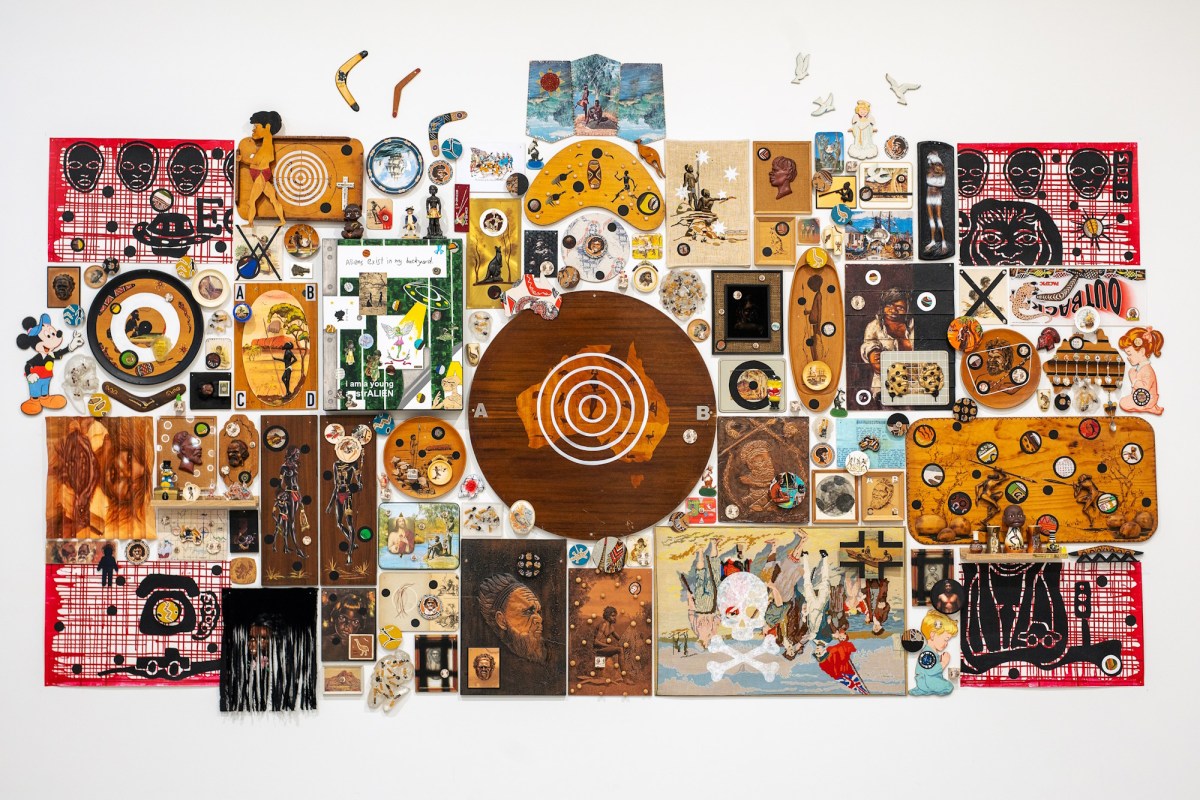
Aboriginalia is Albert’s name for the mass-produced souvenirs that sold stereotypes of Aboriginal people and culture – think tea towels, ash trays and velvet wall paintings of ‘noble savages’ or cheerful, chubby infants, cleanly detached from their family and culture.
Over the years, this personal collection has fuelled Albert’s practice and he’s frequently channelled it into assemblages and installations that expose cultural myths and power structures – often with a dose of sharp humour.
Guest curated by Wierdi man Bruce Johnson McLean, Tony Albert: Not a Souvenir ranges from 2007 to the present, including several newly commissioned works, to draw out how Albert keeps returning to stories of resistance, cultural pride and survival.
Alongside the presentation of Aboriginalia, which has been guided by Meriam Mer woman and MCA curator Rebecca Ray, Albert is also running an appeal, inviting gallery visitors to donate any objects they might have come across themselves – all part of an ongoing mission to either repurpose or remove these misrepresentations.
Tony Albert at MCA Australia – quick links
Collecting souvenirs
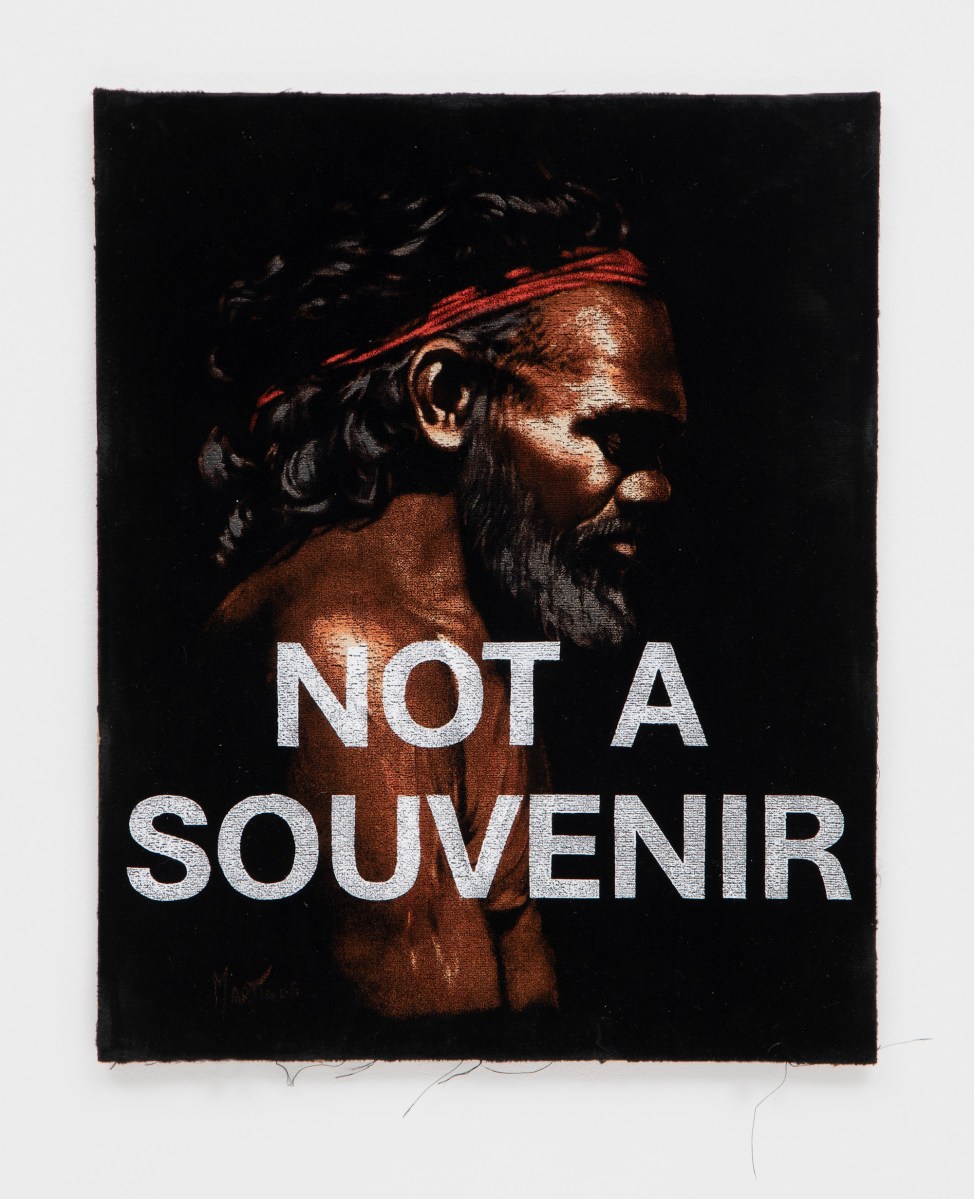
Tony Albert, Not a Souvenir #1, 2025. Acrylic on found velvet painting, 36 x 29cm. Photo: Aaron Anderson. Courtesy: the artist and Sullivan+Strumpf. 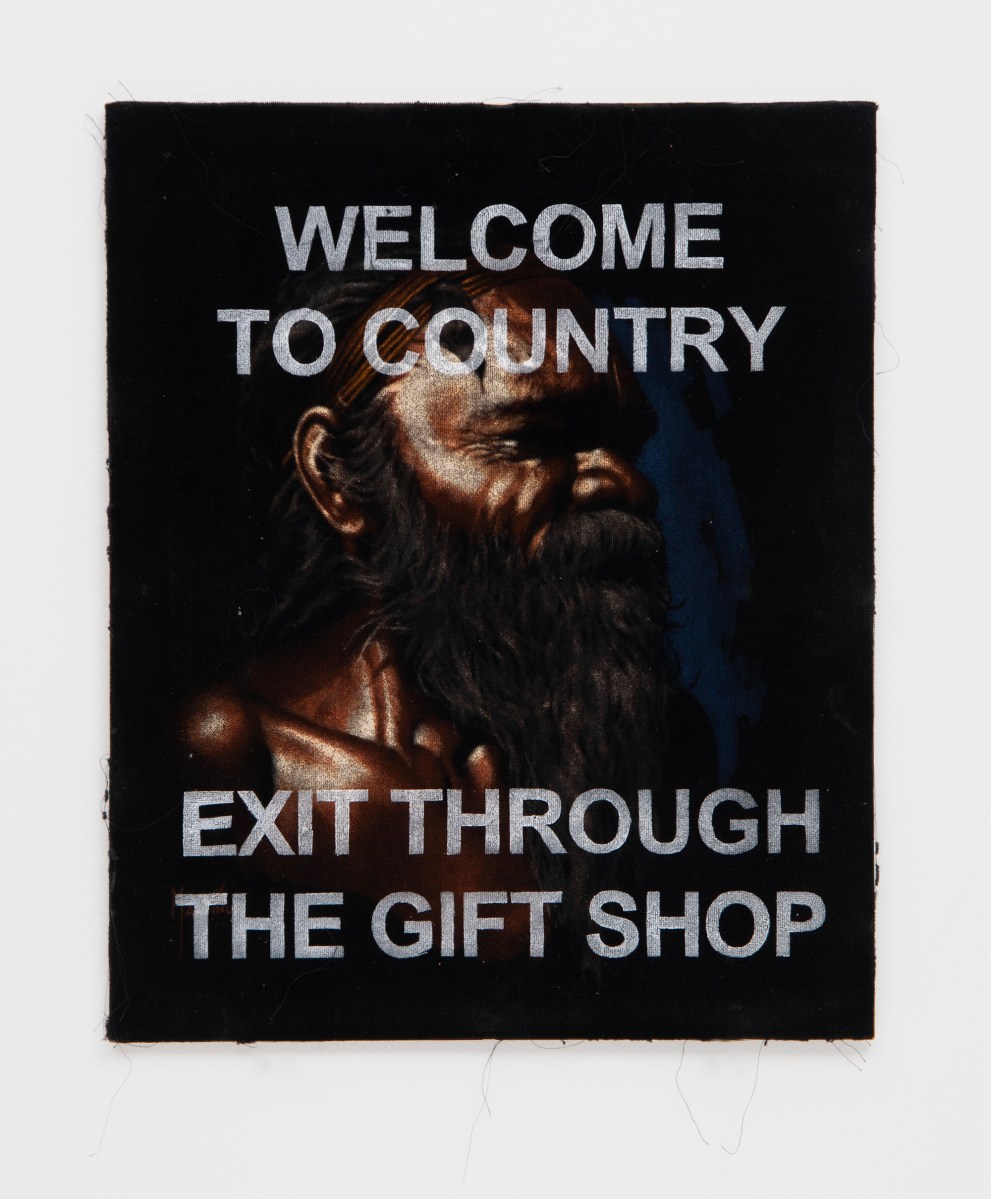
Tony Albert, Welcome to Country, Exit Through the Gift Shop, 2025. Acrylic on found velvet painting, 40.5 x 33cm. Photo: Aaron Anderson. Courtesy: the artist and Sullivan+Strumpf.
Albert started collecting Aboriginalia as a child in Brisbane/Meanjin. ‘I rarely saw Aboriginal people: not at the supermarket, not on the bus, not on television, or anywhere I went,’ he told ArtsHub ahead of the opening of Not a Souvenir.
‘So it was to my great delight, and I am sure my parents’ horror, when I discovered and began collecting from our local secondhand store all the cups, plates, trays, playing cards, statuettes, figurines – anything I could get – that were decorated with images of Aboriginal people.’
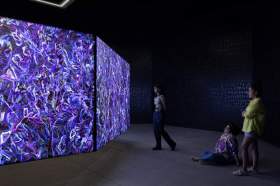
Now working across Brisbane and Sydney, Albert has returned to these objects at different points in his career. One of the major new works in this survey is Disconnected. His largest text-based work to date, it comprises more than 400 objects of Aboriginalia arranged across the full height of the MCA’s galleries.
‘I’ve been more confident going back to things,’ he says. ‘I think early in my career I was so intent on reinventing my work for each show or, you know, I felt the pressure of having to do something new every time. As I’ve grown, I’ve [realised] I actually want to revisit some of these things … or the context is so much stronger now.’
As he tells it, he had no idea when he started collecting that he might become an artist, or that the objects would end up his in works. He was just drawn to them.
‘One thing that has come through within all of this,’ he says of his evolving practice, ‘is not losing that really innocent childhood perspective of why I did start collecting this.
‘The success for me is straddling the absolute love, and my willingness to want this stuff and collect it, [and] the growth and education.’
Partly that’s been about understanding the ‘sinister undertones’ of the material, he says, but it’s also been about how to ethically work with it. Words like ‘relinquishing’ and ‘unleashing’ come up often.
‘I look at it very tidily,’ he says. ‘It’s come to me like waves, in a way; it’s washed up, but then it’s released back, but … with a voice that was never rendered in [the] original conception. I feel that’s the difference between me and a hoarder.’
The Aboriginalia Appeal
Albert has presented small parts of his Aboriginalia collection before, but felt confident to do more with Not a Souvenir because of the support of MCA Australia’s Rebecca Ray, the gallery’s Curator of Aboriginal and Torres Strait Islander Collections and Exhibitions.
‘I said very early to the MCA, really this is the first point, significant point I’ve been in, where we have our own people in these institutions that can do this work. And it needs that cultural nuance. It would not be correct for it to be done by anyone else.
‘Again, it’s reinforcing that under our own autonomy, [First Nations peoples] can be leading and having these really incredible conversations,’ he says, also pointing to the growth of First Nations-led arts criticism. One thing he finds great, he says, ‘is the greater academic rigour I can pull from now’.
While the display provides context, the Aboriginalia Appeal that runs alongside the exhibition also invites the public to donate any items they’ve found, inherited or collected themselves.
Albert says friends and family would often keep an eye out for him, but when he appeared on the ABC’s Creative Types with Virginia Trioli last year, he was inundated. ‘I woke up [the next] morning and had a thousand messages of people wanting to give me things,’ he says.
This is the first time he’s run a public appeal like this, and while he’s not sure what he’ll receive or what might eventuate, he’s particularly interested in hearing people’s stories about objects. ‘I don’t think we should have to reliquish those memories,’ he says, while talking about the huge and complex task of progressively moving forward.
For now, the appeal is about taking these objects out of circulation and looking for ways to repurpose them. As he puts it, it’s not about guilt but what we do next.
‘I would like to think that in 20 years time there is a different answer and a different solution, and that we’ve got even further on this journey in looking at and understanding our history.’
Optimism and championing First Nations art
That optimistic eye on the future has been part of Albert’s approach since he first started exhibiting in the mid 2000s. Since then, his influential practice has opened new avenues of discussion around the misrepresentation and commodification of Aboriginal people – also clearing a path for many other First Nations artists turning over how identities have been packaged and sold.
Today, he’s regularly framed as a champion and ambassador for First Nations art, a role that’s seen him named the 2025 First Nations Established Artist of the Year by Creative Australia, a French Chevalier de l’Ordre des Arts et des Lettres, and the inaugural First Nations Curatorial Fellow at the 2023 Biennale of Sydney. (McLean, the lead curator of Not a Souvenir, is this year’s fellow.)
ArtsHub: 5th National Indigenous Art Triennial review – Tony Albert setting wrongs right
In addition, proppaNOW, the Indigenous art collective he co-founded with Richard Bell and Vernon Ah Kee some two decades ago, received the Jane Lombard Prize for Art and Social Justice in the US in 2024.
To explain this impact, Not a Souvenir covers a lot of ground, bringing together Albert’s largest text-based work to date, Disconnected, along with several other new commissions, including Optimism II, made in and around Circular Quay with First Nations community members and Return to me and I will return to you, an installation made from souvenir boomerangs.
‘Tony Albert’s work has always been about the power of the image to both harm and heal,’ said MCA Australia Director Suzanne Cotter. ‘Not a Souvenir is a radical reimagining of Australia’s complex histories. Most of all, it is a joyful and deeply optimistic exhibition.’
Collaborative superheroes
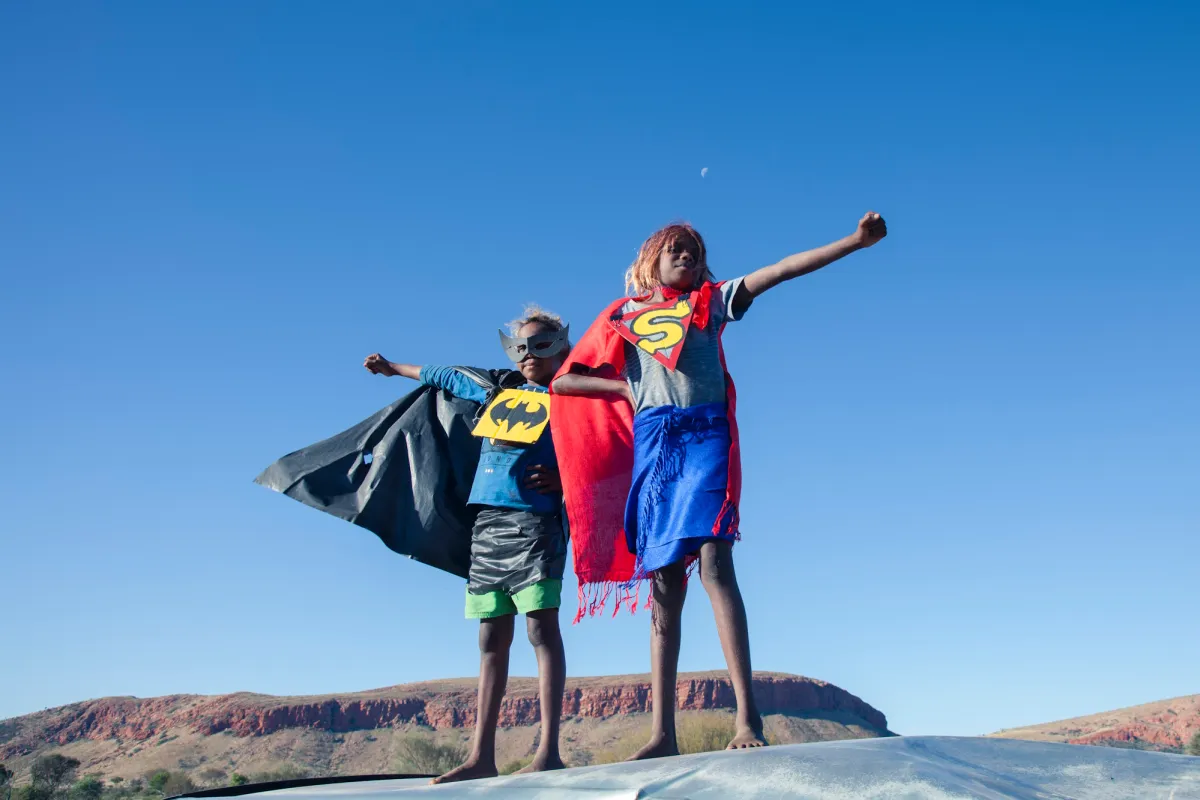
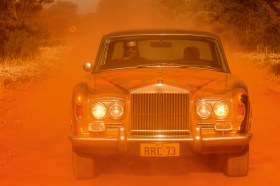
One of the highlights of Not a Souvenir will undoubtedly be the photographs from the collaborative Warakurna Superheroes series, including some that have never been exhibited before.
These works were developed as part of a 2017 residency and exhibition project with Fremantle Arts Centre, which saw Albert invited out to the Aboriginal-run art centre Warakurna Artists, located in a small town about five hours west of Uluru.
When Albert arrived, he asked what the community wanted from him – sparking a huge collaborative project that drew lots of new people into the centre. In an interview at the time, he told me, ‘I want to show successful ways of collaborating with Aboriginal people,’ acknowledging that as a city-based artist, he was coming into the small regional community as an outsider.
Collaboration has continued to run through Albert’s practice in different ways, including with the playful Big Hose public sculpture with artist Nell in Brisbane recently. Yet Warakurna Superheroes has gone on to have a life of its own, and last year was even shown at Les Rencontres d’Arles in the south of France.
Shot by David C Collins, it stars local kids wearing homemade superhero costumes and posing on top of abandoned cars. Their infectious energy is entirely their own, but the project also speaks loudly to the expansive reach of Albert’s practice and his ongoing determination to represent resistance and survival.