Community radio stations are the lifeblood of Australian music discovery, artist development and cultural connection, according to a new report from Monash and Griffith Universities.
The study, Community Radio and Australian Music: Building the music media ecosystem, found that Australia’s community radio music stations generate an estimated $153 million in added value to the music industry annually, broadcasting more than double the volume of local music played by commercial networks.
‘Community radio is doing the heavy lifting in Australian music discovery and development,’ said Monash University’s Associate Professor Shane Homan, the study’s lead author.
Community radio and Australian music – quick links
Community radio is ‘vital infrastructure for the Australian music industries’
Launched on 18 May at the Victorian Music Development Office’s Music and Data Insights Summit, the three-year Australian Research Council-funded study – the first ever economic analysis of Australian community radio – found that 292 community radio stations across the country, largely powered by volunteers, are driving music discovery, artist development, live music attendance and audience engagement.
The research, which Homan co-authored with Griffith University’s Professor Susan Forde and Monash University’s Professor Heather M Anderson, establishes for the first time the scale of community radio’s economic, cultural and social contribution to Australia’s music ecosystem.
The report found that the top 39 high-intensity music stations alone contribute more than $105 million annually through artist promotion, live performance opportunities, studio access and music industry training.
Homan said the findings highlight the critical role of community radio at a time when global streaming algorithms are making it harder for Australian artists to be heard.
‘Our findings prove that community radio is not just a broadcasting platform; it is the vital infrastructure holding up the broader Australian music industries,’ he said.
‘As digital streaming platforms dominate and local music struggles for visibility, these stations act as the ultimate champions for grassroots talent. They are the essential link connecting local artists with passionate audiences who are eager to discover new music and actually show up to support it.’
The study also found that community stations broadcast 390,960 hours of Australian music in 12 months, more than double the amount played by all commercial stations combined.
Providing ‘critical first exposure’ for artists
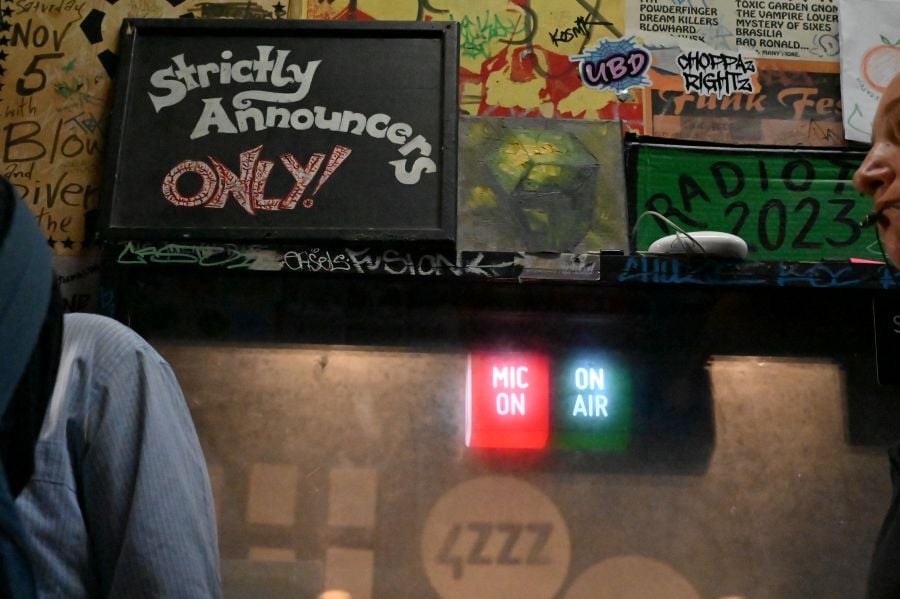
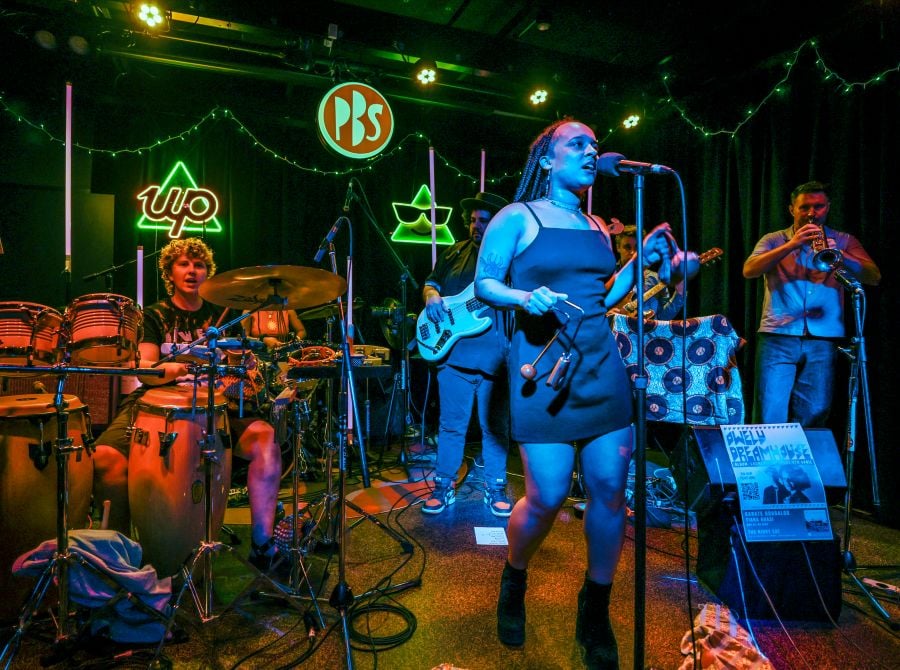
Researchers found that community radio is one of the nation’s most important pathways for discovering and developing Australian artists, especially emerging, independent, diverse and First Nations musicians. For every $1 invested in community music radio, stations generate returns of up to $5.55, with a median return of $2.47 across high-intensity stations.
Homan said the findings confirmed what artists and audiences have understood for decades: ‘These stations provide critical first exposure for artists who are often overlooked elsewhere, while also creating direct economic benefits for the wider music industries.’
Dave Houchin, Station Manager of Melbourne community broadcaster Three Triple R FM, tells ArtsHub: ‘With up to $5.55 returned to the Australian music industries in socio-economic value for every dollar invested in community radio, it makes both the case for listeners and artists to support their local station, and the case for greater multi-year government funding for the sector irrefutable.’
Key research findings
The most significant findings in Community Radio and Australian Music: Building the music media ecosystem are:
- 292 Australian community radio stations contribute $153.1 million annually to the Australian music economy.
- The top 39 high-intensity stations contribute more than $105 million annually.
- Up to $5.55 is returned for every $1 invested (median return of $2.47 for the top 39 high-intensity stations).
- 390,960 hours of Australian music is broadcast annually across the community radio sector.
- 30% of weekly listeners discovered a local or emerging artist through community radio.
- Approximately 1.3 million Australians buy tickets, merchandise or music after hearing artists on community radio.
- First Nations stations make up one-third of the most music-intensive stations nationally.
The flow on effects of airplay
The influence extends well beyond airplay. The research found that approximately 1.3 million Australians each year purchase gig tickets, merchandise or music after hearing artists on community radio.
Homan said that despite more than one million Australians stating community radio is the only broadcaster that plays the Australian music that they want to listen to, the value of this sector is being overlooked by the broader music industry.
‘These listeners aren’t just passive consumers; they are a dedicated audience that the commercial platforms are failing to serve. Community radio is filling a gap, providing the essential support for Australian artists that is increasingly absent elsewhere in the industry,’ he said.
Our national sound
The research project also informed the development of the Community Broadcasting Association of Australia’s Community Radio: Our National Sound project, a new podcast series featuring Australian musicians reflecting on the important role community radio has played in their careers and creative journeys.
The series features conversations with Sarah Blasko, DOBBY, Mo’Ju, L-FRESH The LION and others, and highlights the unique relationship between Australian artists and community broadcasters.
Australian hip-hop artist and producer L-FRESH The LION said community radio delivered direct audience outcomes for emerging artists.
‘If we went and did a live performance on air at a community radio station the day before the show, we were selling a minimum of 20 to 30 tickets the next night. And that’s huge when you’re trying to break into new spaces,’ he said.
Artists including Courtney Barnett, Amyl and the Sniffers and Sampa the Great also built early momentum through the support of community stations.
Blasko said, ‘I’ve had almost no commercial airplay. So my whole career has been built on community radio and ABC stations.’
First Nations stations prove representation matters
The report also highlights the critical role of Indigenous community radio stations – of which there are more than 120 across Australia, including Melbourne’s 3KND, Darwin’s First Nations Radio and Sydney’s Koori Radio – identifying them as among the most music-intensive broadcasters in the sector and deeply embedded within their communities.
First Nations stations account for one-third of the top 39 most music-intensive stations nationally, with audiences reporting strong feelings of ownership, representation and belonging through dedicated First Nations music programming and artist-focused content.
First Nations rapper DOBBY said, ‘Seeing is believing. Representation matters.’
The case for strategic long-term investment
Researchers say the findings will provide governments and industry bodies with the strongest evidence yet that community broadcasting is a vital part of Australia’s creative industries infrastructure and deserves long-term strategic investment. The report comes as Sydney station 2ser negotiates an uncertain future after one of its main backers, Macquarie University, pulled its funding. This week, an emergency funding model was rejected.
Beyond its cultural and financial impact, the community radio sector serves as a critical training ground for Australia’s future music media workforce.
In an average year, 136,687 volunteer hours are logged across the project’s 10 case-study stations. Much of the on-the-job training gained by volunteer program hosts and producers makes them employable in the commercial and public service media sectors and is equivalent to the cost of a one-year Diploma qualification.
The research by Monash University and Griffith University was conducted in partnership with the Community Broadcasting Association of Australia, the Community Broadcasting Foundation, Creative Australia and APRA AMCOS.