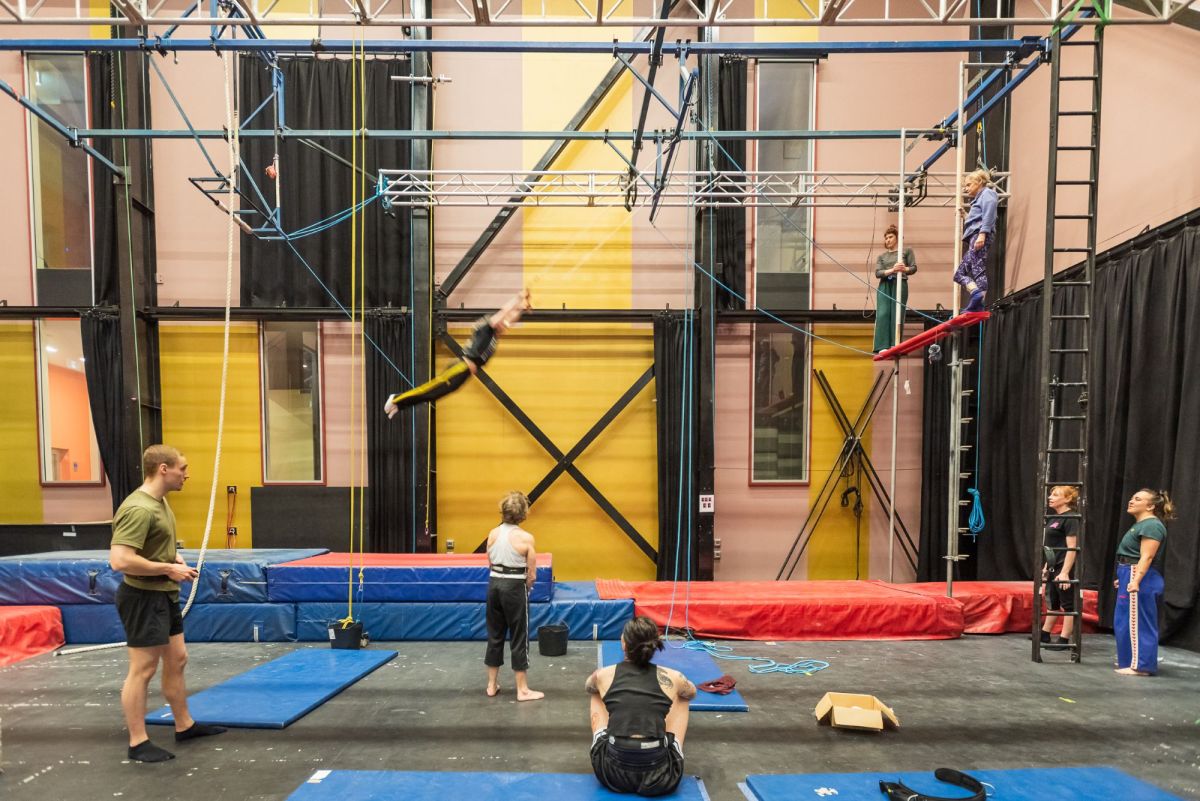
Circus Centre Melbourne, originally designed as a home for Circus Oz, has reopened as a home for the broader contemporary circus and physical theatre sectors – a space where circus artists can meet, create, train and perform.
The rebranded building in Perry Street, Collingwood is a key part of the Collingwood Yards arts precinct, and is now managed by Albury-Wodonga’s Flying Fruit Fly Circus, as previously reported by ArtsHub.
The Flying Fruit Fly Circus is not relocating to Melbourne. Instead, a Collingwood-based team will manage the building, with several key appointments already in place. Circus Oz remains in residence at Circus Centre Melbourne, albeit with a reduced footprint on the site.
Circus Centre Melbourne’s facilities include The Hub, a large, centrally placed training room for circus classes and community groups; a smaller but still spacious space known as The Studio and intended for rehearsals, creative developments and performances; co-working spaces, smaller studios and meeting rooms.
Circus Centre Melbourne – quick links
Circus Centre Melbourne’s Manager, Steph Cox, believes the reopened building will help strengthen the Victorian circus sector.
‘The Victorian circus community is known for creating different kinds of work, using different kinds of apparatus [and] creating different apparatus,’ Cox says. ‘By opening up a new home, a training space and rehearsal facilities – and making sure that [the circus community] can access that in an affordable, accessible way – that will build back those existing sides of the artform that maybe diminished in visibility during the Covid lockdowns.’
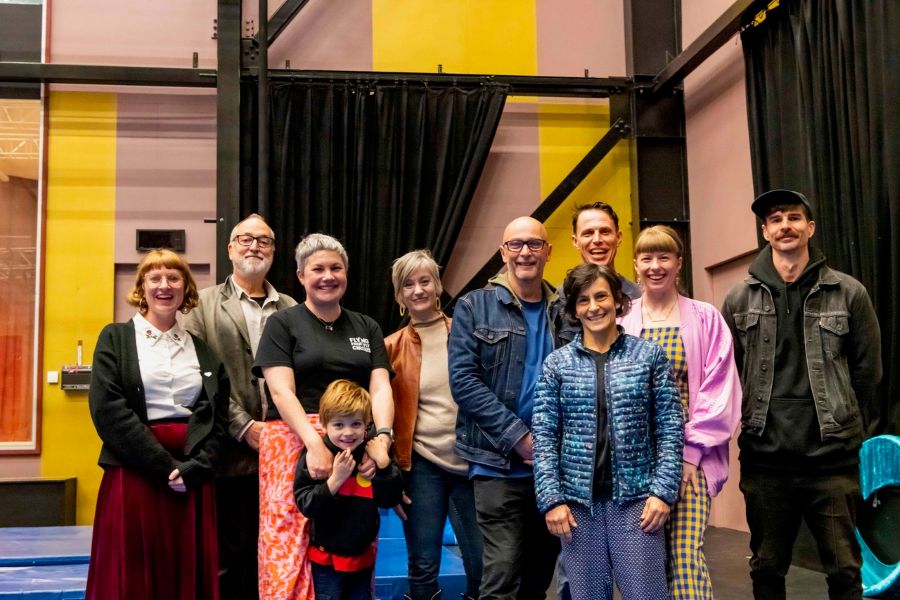
As additional programs are activated in the coming months, Circus Centre Melbourne will help the sector grow in other ways, Cox adds.
‘We’re going to have programs for artists to create work [and] do cross-sector collaborations and labs with other artforms. We’ll have creative spaces to make props costumes [and] programs to develop skills and fill existing gaps in the sector.
‘Hopefully between all of those things, we’ll see the artform flourish in different ways – and then it’ll be about connecting that to audiences,’ she tells ArtsHub.
Circus Centre Melbourne will play a role in reaching those audience but as Cox says, ‘we won’t do that alone.’ She’d like to see the centre working with partners to get ‘the full breadth of the artform out into the world.’
Circus Centre Melbourne: a space in demand
Circus Centre Melbourne’s lowkey opening on Monday morning (13 October) was attended by members of the broader circus community and representatives of other Collingwood Yards organisations, and began with a Welcome to Country hosted by Wurundjeri man Willy Xiberras followed by a smoking ceremony.
Fruit Fly Circus CEO Richard Hull tells ArtsHub that developing and opening Circus Centre Melbourne is ‘one of the most exciting projects I’ve ever been involved with because I think it not only means so much to our company, the Flying Fruit Fly Circus, but it also is so important for the sector and for the industry to have this building thriving and open again.’
Read: Canberra Youth Theatre tour explores fast food industry’s ‘disastrous consequences’
The circus sector’s hunger for the space is illustrated by the fact that the first training room induction took place within minutes of the centre’s opening. The studio was in use even earlier, with Casus Creations using the space last week.
‘It was really exciting to see the studio being used for creative development and it worked really well,’ Hull says. ‘We’ve had a lot of interest in hiring the space and other rooms that we have because it is a big studio and not everybody needs that size or that scale. We’ve got other rooms … that are also available to hire for creative developments and rehearsals, for meetings, for whatever you want to do.
‘Really, we want this space to be a creative hub and an incubator for new work, for collaboration, where people can meet and connect … and chat and make new friendships, you know, spark new ideas.’
From a home for Circus Oz to a home for the circus sector
Working with Circus Oz to transform the Perry Street building – originally opened in March 2014 and purpose-built for the company at a cost of $15 million – into Circus Centre Melbourne has been a complicated task, made easier by the long-standing relationship between Circus Oz and the Flying Fruit Fly Circus.
‘Downsizing is a is a stressful and challenging task,’ Hull says. ‘Circus Oz have been so generous and so good spirited and good humoured about the whole thing. And because we’re friends, and because our two companies have a shared history – we’ve known each other since the late 1970s, we’ve worked together, personnel have cross-pollinated both organisations – I think it’s made us able to deliver this in a really collaborative and positive spirit. The result of that is that we’re here, we’re open on time and we’re all still friends, and I think that’s a big achievement.’
He adds: ‘I really want to give Circus Oz a shout out for the way they’ve approached this difficult task not only practically, but emotionally.’
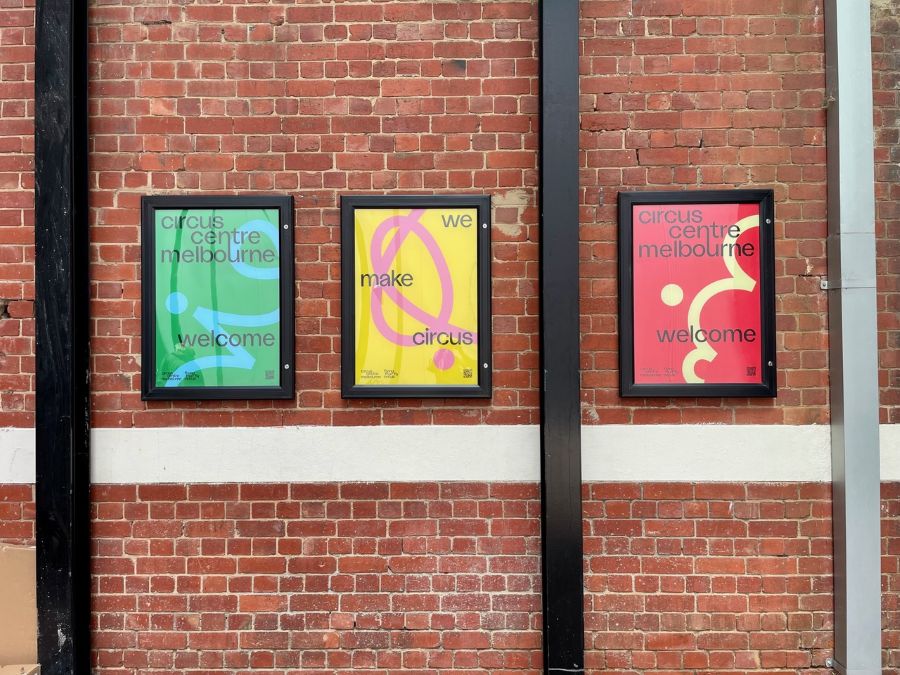
Circus Oz Chairperson Regina Hill tells ArtsHub: ‘Circus Oz is excited to join the circus community in celebrating the opening of the Circus Centre Melbourne at 50 Perry Street, Collingwood. Circus Centre Melbourne will ensure the future of the Perry Street building as a vibrant creative epicentre for circus in Australia. It is wonderful for the circus community and the people of Victoria that this purpose-built circus building will continue to operate as a training and creation space.
‘Circus Oz applauds the significant impact that the Fruit Flies have had on the development of circus nationally and internationally. Over the years there has been a great exchange of people, knowledge, skills and resources between our two organisations. As an ongoing resident of 50 Perry Street, we are enthusiastic about the possibilities that Circus Centre Melbourne offers and looks forward to being part of a great future for our artform.’
Circus Oz is currently fundraising to take its 2025 production Non Stop (praised as ‘clever, exhilarating Australian circus’ in ArtsHub’s 4 ½ star review) to New York’s New Victory Theater in December. The campaign is running as part of Creative Australia’s nationwide initiative AusArt Day.
Circus Centre Melbourne: a focus on community and the broader circus sector
The decision to transform the central training room, where Circus Oz previously created and developed new shows, into community-oriented space The Hub illustrates how the Perry Street building has been reimagined as a home for the wider circus sector.
Hull explains: ‘For the model that we’re using here, where open training and public classes are the core business, it seemed logical that the larger space would be open to the community. For a performing arts company that was making shows all the time, like Circus Oz, it made total sense that they would use that big space to create their shows. But for us, we’re refocusing the use of the building. Both studios are huge but the smaller of the two is now called The Studio and that will be for hire for creative developments, rehearsals and for performances.’
Cox adds that the centre will have ‘a very strong focus and remit on circus artists, but also about assisting people to discover circus’.
She continues: ‘So that’s performances outside in the amphitheatre, inside the building, even work-in- progress showings breaking down the artform for the public, as well as teaching circus. We’re looking at doing workshops and classes for the full, broad general public, but also looking at finding the people who are potentially interested in taking that next step with circus as a career or a study option, and showing them the pathways that are available.’
In time, The Studio will be equipped with a permanent lighting rig and retractable seating bank so that it can be quickly and easily transformed from a rehearsal and development space into a performance space.
Cox concludes: ‘I’m hoping by the end of 2026 that we can really start seeing [The Studio] as a performance space and before then, maybe a bit more informally, more casually, maybe as a testing ground for new work and works in progress – showings while we wait to get it ready for that next level of performance.’