After several years of construction, most of us are familiar with the exoskeletal façade of Powerhouse Parramatta, which is scheduled to open later this year. However, few have an idea of what the visitor experience will be inside this signature building, designed by Franco-Japanese architects Moreau Kusunoki and Australian architecture firm Genton.
ArtsHub had the opportunity to do a hard-hat tour this week to coincide with the announcement of the Australian designers now charged with shaping the spaces and experiences inside the new museum. More than 50 designers have been brought on board, with the commissions valued at $2.5 million.
Powerhouse Parramatta’s designers – quick links
Steel, glass and concrete dominate the design
It is still early days in terms of taking a critical read on the Powerhouse Parramatta experience. It has only been two weeks since the chief architects handed over the keys to Powerhouse Chief Executive Lisa Havilah, signaling the start of the final stage of the building’s delivery.
One thing that’s clear is that the Powerhouse Parramatta building is defined by a minimalist, neutral palette – essentially, it is all grey – and celebrates concrete, steel and and aluminum.
The detail will come down to the textures and patinas of the materials selected by the designers – from waterglass finished concrete floors and the hand-applied textured oyster shell render that skins the walls (created by a Noosa-based company), through to the slick, sweeping, curved aluminum ceilings in the main restaurant and wayfinding signage that leaves its technology bare.
As Havilah tells ArtsHub: ‘The palette is very limited and I think that creates a very calming space when you move through, but also is restricted enough that it creates a backdrop for museum activity, programs and exhibitions.’
The overall impression is a lofty and light-drenched interior. The spaces always have a shoulder to the glass facade, allowing the landscape and city skyline to permeate the building.
The idea is that the programming and energy of museum-goers will ‘colour’ the atmosphere. Will that be enough? We have to wait until the year’s end for that final reveal.
Australia’s design community celebrated at Powerhouse Parramatta
What is exciting about this week’s reveal of the designers who are involved in the gallery fit-out – that is, everything from the reception areas to seating, lighting, signage, uniforms, retail spaces, dining spaces, education areas and residences – is that Australian talent will define the human touchpoints for this building.
It will also mean that Australian design will be projected onto the global stage, with Moreau Kusunoki’s building clearly marked to become an international destination venue.
The commissioning program has been supported through a generous $2.5 million gift to Powerhouse Parramatta from an anonymous donor.
Havilah says, ‘As a museum of applied arts and sciences, it is the museum’s role to engage and support the Australian design industry.’
She adds: ‘We have a long history of championing and supporting Australian design, so that was one of the things we wanted to celebrate in the creation of this museum. And we also take very seriously our responsibility to the Australian design industry, so we are really honoured with the collaborations and the designers that have created something very special for Powerhouse Parramatta.
‘For me, to see Australian design practice really at the front edge internationally is important as well.’
Most designers are in the final stages of production ahead of fit-out in the coming months.
Deeper dive on the Parramatta Powerhouse design details
Public areas, retail and dining
The first experience for visitors entering Powerhouse Parramatta will be the ground floor public areas, including the welcome court, retail spaces and dining areas. George Livissianis has created the look for the Powerhouse restaurant, choosing aluminum, leather and cork as the primary materials, and working with Chunk Design to create a hand-surfaced finish to the wall panels.
Here, industrial designer Adam Goodrum has designed a series of stools and tables, including The Bow Tie Table constructed from stainless steel and cork. And Grazia & Co has created over 800 chairs to be used across the museum precinct, marking their largest commission.
Argentine-Australian designer and founder of Derlot, Alexander Lotersztain, has designed a unique retail environment that will be a large, internally lit, cylindrical volume of brushed stainless steel. Annie Paxton Studio has designed a series of table lamps that play off the concrete surfaces, while Eatscape has designed the museum’s 200-seat Vitocco Kitchen.
The Residences and cinema
Perhaps one of the most exciting – and surprising – aspects of the new Powerhouse Parramatta is how it has integrated 30 accommodation spaces for visiting scientists, researchers and creatives, known as The Residences. In addition, accommodation for students will be provided at the Lang Walker Family Academy, which will have capacity for 10,000 secondary students annually, and will work hand in hand with STEM learning programs.
It is definitely a world first to embed learning in the gallery this way, and Melbourne-based studio Fiona Lynch has designed the overall concept for the academy, working with denHolm to create bespoke stools and recycled multifunctional tabletops for the workspaces, and with FEARON to produce custom aluminium bunk beds.
With The Residences, architecture and interior design studio YSG were commissioned to oversee the apartments fit-out, integrating elements from collaborations with over 20 designers and fabricators – from rugs to furniture to lighting – all original design for this environment. They including Maiden Co using Australian hardwood timbers for desks and built-in wardrobes, Tait Enterprise, Adam Goodrum, Ka-Ra design, Tantri Mustika, Maryam Moghadam, Jonathan West, Olivia Bossy, Dowel Jones, Anna Varendorff and Five Mile Radius.
Completing the line-up, Tom Fereday has created the furniture for the Medich Foundation Cinema and bar, designed with a subtle touch of a deep green.
ArtsHub: Powerhouse Parramatta set for late 2026 opening
Extending to the Parramatta River
Surrounding the building, multidisciplinary Australian firm Tyrrell Studio has designed a landscape connecting Powerhouse Parramatta to the Parramatta River, working with cultural guidance from the Kalari Clan of Wiradjuri nation, Emily McDaniel and Powerhouse Director First Nations Beau James, and in consultation with Baramadagal elders and Dharug community representatives.
Master blacksmith and founder of Eveleigh Works Matt Mewburn will create a custom-built fire cooking area for the museum’s rooftop terrace.
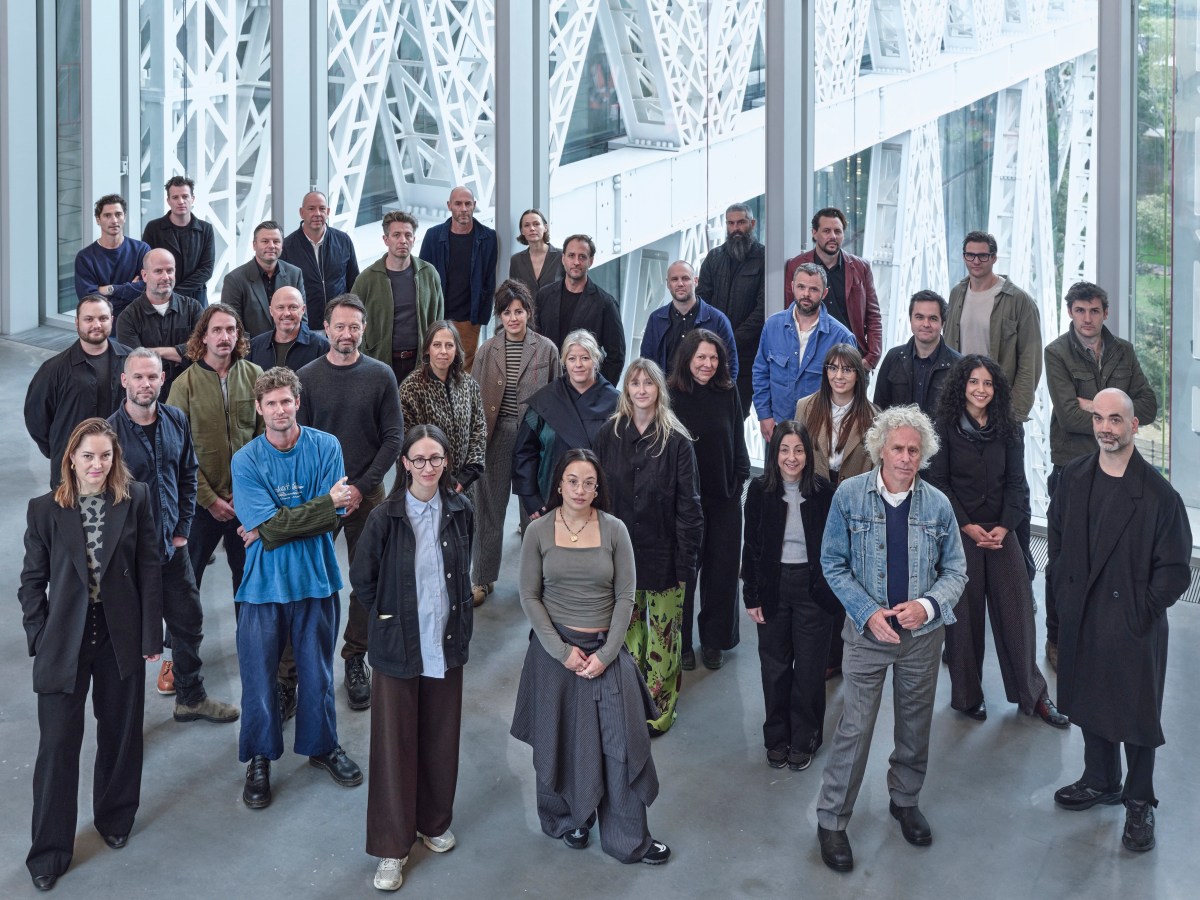
Designers pictured above
George Livissianis, Alexander Lotersztain (Derlot), Tom Fereday, Fiona Lynch, Yasmine Ghoniem (YSG Studio), Mark Tyrrell (Tyrrell Studios), Wendy Lewin, Philip Coxall (McGregor Coxall), Donn Salisbury (Electrolight), Catriona Venn (Electrolight), Ben Kluger (Studio Ongarato), Grazia Materia (Grazia & Co), Gordon Tait (Tait Enterprise), Matt Mewburn (Eveleigh Works), Gabriel Ulacco (Eveleigh Works), Nick Karlovasitis (Design By Them), Sarah Dealson (Design By Them), Jack Fearon, Henry Wilson, Adam Lynch (Dowel Jones), Tina Fox (YSG Studio), Olivia Bossy, Adam Goodrum, Maryam Moghadam, Katrina Ramm (Ka-Ra Design), Tantri Mustika, Jonathan West, Huw Bennett (Worktones), Andrew Toole (Worktones), Alice Tait (YSG Studio), Nicholas Morof (Genton), Steven Toia (Genton), Scott Burns (Maiden), Nick Burns (Maiden) and Steven John Clark (denHolm).