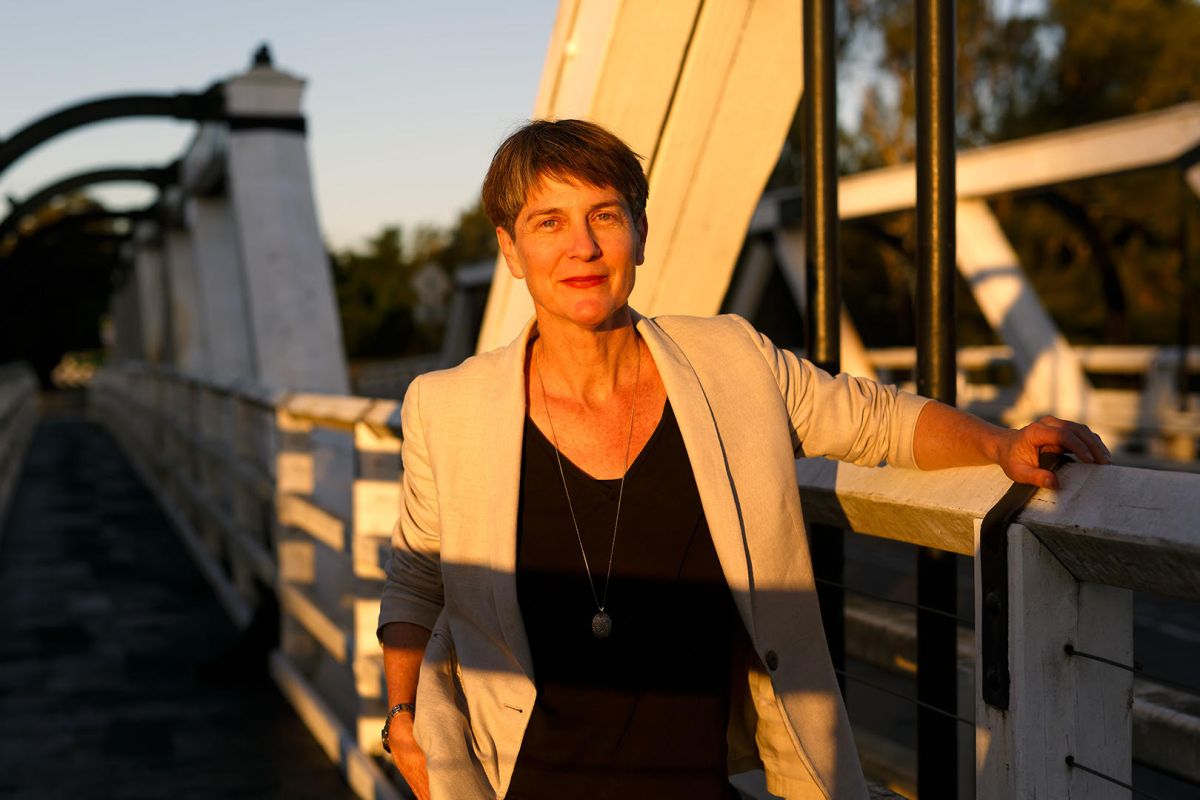
Rosie Dennis is one of Australia’s most experienced place-based arts leaders. Her career has been defined by ambitious, community-embedded works that shine a light on often disadvantaged or marginalised places and people.
Recently appointed as Executive Director of Arts Northern Rivers, she now has a remit to coordinate arts and cultural development across a region marked by extraordinary socioeconomic diversity. ‘You couldn’t have greater disparity,’ she tells ArtsHub.
Within this footprint, Byron, Tweed and Ballina rank among Australia’s wealthiest local government areas, and Richmond Valley, Kyogle and Clarence Valley toward the other extreme.
Sitting amid that complexity is Lismore, the city at the epicentre of the Northern River’s devastating 2022 floods that displaced thousands of residents and impacted many businesses, including 35 cultural organisations. It’s also where Dennis and her partner decided to settle, buying a home directly on Lismore’s floodplain.
‘It’s a fascinating place to live and a really deliberate decision to place ourselves here,’ she says. ‘I felt that to do the job well, it was important to be amongst it and to be having incidental and anecdotal conversations with people who had this life-changing experience.’
Rosie Dennis on Arts Northern Rivers – quick links
When the rivers rose
Lismore is not an entirely new proposition for Dennis. She grew up in the Northern Rivers – in the Tweed Shire on the border between New South Wales and Queensland – and has memories of visiting Lismore for school sport and excursions. She also directed the 2014 NORPA theatre production My Radio Heart at Lismore City Hall.
But this time, as Executive Director of Arts Northern Rivers, she has returned to a region undergoing a transformation so profound that even long-term residents who have experienced many floods are still taking its measure.
Four years on from the floods, the NSW Government’s Reconstruction Authority continues to reshape the Northern Rivers’ social landscape through its buyback scheme. Houses bought from flood-affected owners are either sold for relocation or demolished. Conversations about the future use of this now-vacant land are only now gathering pace.
Dennis often cycles the short distance from home to her Lismore CBD office and is stunned by the nature and pace of the change underway. ‘You’re watching a city’s footprint change,’ she says. ‘By the afternoon, a house I passed in the morning is gone – literally removed, done.’
What were once vibrant and affordable neighbourhoods by the river are disappearing. For artists, who were disproportionately concentrated in the most flood-affected areas precisely because of lower rents, the losses have been acute and ongoing.
‘Even though the community has a sense of positivity, optimism, opportunity, there’s still great sadness. And you can feel the heaviness,’ she says. ‘You can’t get away from that tension, because it’s about being human.’
Post-flood snapshot
The flood recovery brings a dizzying complexity to her role, made easier perhaps by the landmark two-year creative sector report Who We Are, produced in 2023-24 by Dennis’ predecessor, Jane Fuller.
Fuller steered Arts Northern Rivers through Covid and the flood with its long, grinding aftermath. It was a period that would test any organisation, but she led ANR with strategic clarity and care for the sector. The Who We Are report provided the first in-depth mapping of the Northern Rivers’ creative sector in over 15 years, delivering a post-flood snapshot of the sector’s size, cultural and economic value and areas of change.
Home to nearly 5000 cultural workers, the region is Australia’s largest creative hub outside any capital city. In 2021 – the year before the flood – the sector was growing at twice the national rate and had generated $900 million in economic impact for the region.
While the data underpinning the report largely predates the flood and its extended impacts, it shows the sector’s resilience and financial sustainability have been significantly impacted.
Cultural tourism was slowly recovering. In 2023, the region drew 598,000 visitors, who generated $435 million, but that was 18% below pre-flood levels and continued to predominantly benefit coastal councils.
For Dennis, the Who We Are report has been an invaluable tool in her first 100 days, identifying the sector’s most pressing needs and helping her hit the ground running.
‘What a piece of work. Extraordinary,’ Dennis says, noting its immediate and practical value in providing compelling data in council meetings, grant applications and during donor conversations. Yet she’s also clear-eyed about its constraints.
‘The Who We Are data is four or five years old now. Things have shifted.’
Where to begin
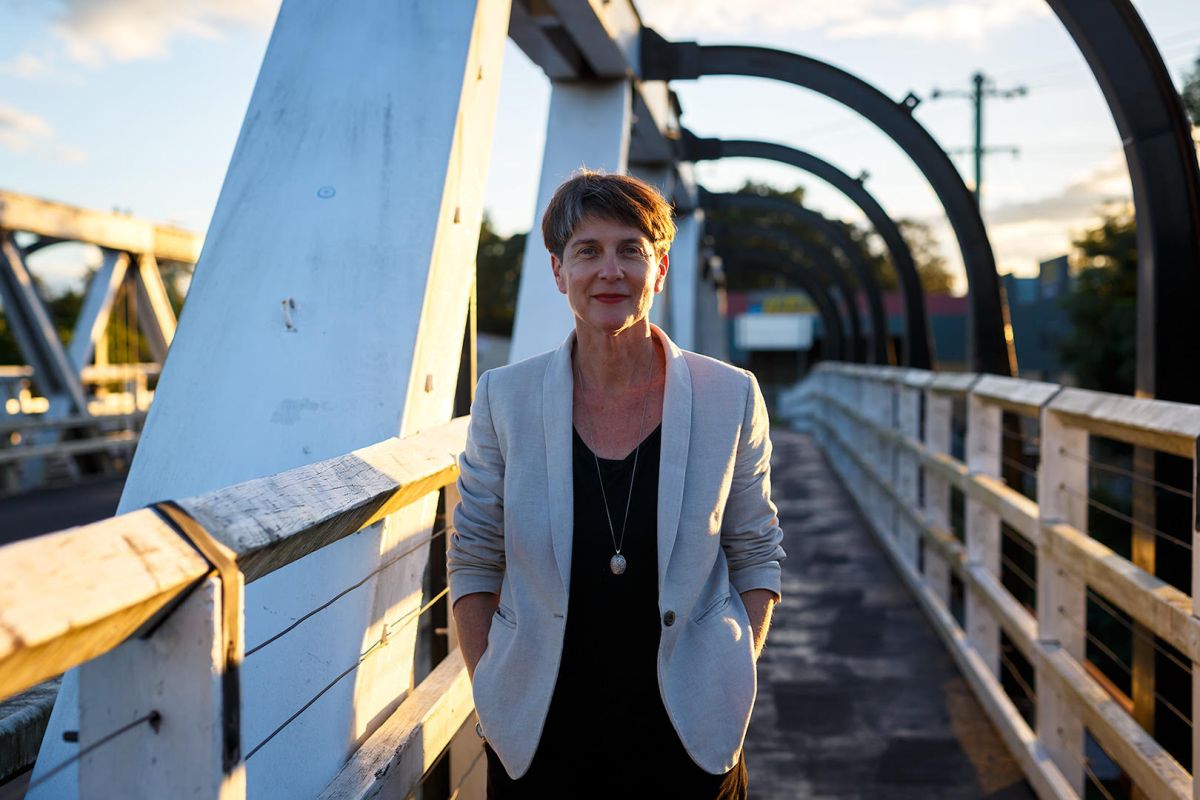
Among the report’s 12 key findings, Dennis has marked four threads for immediate attention over the next 12 to 18 months: affordable space, sector capacity, cultural tourism and strengthening First Nations-led cultural development.
Dennis is deliberate about that short timeframe. For a region still in flux, she says, a tight, action-oriented horizon feels more honest than a sweeping 10-year vision.
‘A lot will change. We might have another flood – and people don’t talk about whether it’s going to flood; they talk about the next time.’
A month after her February start, Dennis undertook a listening tour across all seven LGAs, comprising an area of roughly 15,600 square kilometres, which spans Bundjalung, Yaegl, Gumbaynggirr and Githabul Country.
Conversations from these gatherings confirmed those targeted concerns she wants to address.
Making space for the arts
Space remains, overwhelmingly, the number one ask from the sector. Dennis is already moving on two fronts: mapping underutilised spaces across the region for possible use by artists, and piloting four three-month artist residencies in Tweed Heads over the next year.
These join ANR’s week-long residencies at Grafton Regional Gallery, which were introduced in 2024 to offer flood-impacted artists respite and studio time away from the flood zone and arduous recovery processes.
Dennis hopes to address the bigger question of affordable space in conjunction with opportunities opened by the ongoing flood reconstruction.
ArtsHub: Exhibition review – Karla Dickens, Rise and Fall, Wollongong Art Gallery
The NSW Reconstruction Authority announced this month that Northern Rivers councils will begin community consultation on future use of cleared residential lands, focusing on their conversion into parks, community hubs or environmental projects. Commercial or industrial uses may be allowed, where flood risk can be strictly managed.
‘I am interested to work out the role of arts and culture, of how and what it does here,’ Dennis says.
She wants the arts and creative sector to form ‘an essential bridge’ between people and place, to ensure future developments are grounded in culture and community.
‘Creative activation of vacant land creates opportunities for participation, storytelling and shared ownership, helping the community feel connected to change rather than displaced by it.’
Building the capacity and skills within the sector
Her second focus is building the capacity of the sector through a program placing Northern Rivers artists with major cultural organisations.
Dennis wants to move beyond the business-of-being-an-artist framing that dominates professional development programs and invest more broadly in artistic practice.
Arts Northern Rivers has already brokered short-term opportunities with Carriageworks, Ensemble Offspring Penrith Performing and Visual Arts, Newcastle’s New Annual Festival, Performing Lines and Moogahlin Performing Arts.
‘[For] someone having a placement at Carriageworks in the programming team, [that] will be hugely beneficial for that person but also they’ll be bringing what they learned back to the region,’ she explains.
Dennis has also initiated constructive conversations with the NSW Government about long-term investment in delivering critical support for the operations of regional arts and cultural organisations and programs.
‘It’s wonderful to partner with our peers and colleagues in the metropolitan centres, however, there is often a capacity issue when it comes resourcing the delivery end of the project.’
First Nations-led arts programming
The Who We Are report was also unambiguous that Blak-led programming, Blak-owned spaces and expanded First Nations-identified opportunities in mainstream spaces were not optional extras but essential to structural change.
While Dennis notes that Arts Northern Rivers’ existing 2026 First Nations program is proceeding – the Art on Bundjalung market, guided by its own Indigenous reference group, is to be held in Grafton in November – she makes clear that ANR’s organisational infrastructure needs to catch up with these ambitions.
To achieve this, a First Nations reference group is being established to feed directly into strategy, connect with the board, and support ANR’s First Nations staff and programming. This will ensure Indigenous self-determination drives First Nations program delivery for the region.
‘It’s not really for us to determine what the program looks like and how it’s delivered,’ Dennis says. ‘That’s really important.’
Promoting the region as a cultural destination
Dennis also wants to reframe the Northern Rivers as a cultural destination offering compelling tourism alternatives to food experiences, beaches and national parks.
‘The conversations I’m having around storytelling Northern Rivers through a cultural lens have definitely captured the imagination of people I’m talking to,’ she says.
Her vision is for curated cultural itineraries that might include micro gallery experiences and off-the-beaten-track cultural encounters, developed in partnership with each LGA.
‘It’s also in how we story-tell the region, how we tell our story, and how we continue to elevate the practice of artists here,’ she adds.
Destination NSW North Coast has invited Dennis to pitch the concept to tourism and economic development directors across the region.
Still early days
As she has travelled around the region, Dennis has discovered a creative community that is at once exhausted and still grieving, but alive with possibility.
‘People view the day ahead, what might be possible, as a great opportunity,’ she says. ‘And that is an amazing energy to be part of.’
First though, Dennis wants to connect with the many artists in the region that aren’t aware of Arts Northern Rivers or what it can offer.
‘Some people are really well-versed on what we do,’ Dennis says. ‘But we’ve got work to do for the people who don’t know us at all.’
Raising the profile of Arts Northern Rivers so the creative sector can access its services, she has concluded, is as important as raising the profile of arts in the region itself.