Growing up in the industrial town of Newcastle, opera wasn’t something I was exposed to. No-one in my family listened to it. It wasn’t talked about in schools, pubs or surf clubs. I didn’t speak the languages being sung. But the first time I experienced it live, I understood why people dedicate their lives to it.
At 18, I found myself working in the props department of Opera Australia productions at the Arts Centre Melbourne. While also studying theatre production at the Victorian College of the Arts at the time, these productions encapsulated everything I wanted the arts to be. Sets towered over you. Costumes were exquisitely extra. Voices vibrated through your entire body as worlds appeared before your very eyes.
I always wanted to work in theatre because it could make people think differently. But opera, I realised, made you feel differently. It allowed emotion to move through you before logic could intervene. Yet the grandeur also felt strangely contained. Opera, to me, was hidden inside theatres, behind ticket prices and assumptions about who belonged there. Why shouldn’t it be enjoyed more widely?
Someone who shares this sentiment is Patrick Nolan, CEO and Artistic Director of Opera Queensland. When we met in 2024, we spoke about how opera could become more accessible, and how large arts organisations have a responsibility to help build culture, not merely preserve it. That philosophy has become a driving force behind Nolan’s direction of the company.
Opera in the outback – quick links
Opera for the here and now
Nolan is not interested in opera as a museum piece, carefully dusted off and protected from the modern world. Opera, as he sees it, is an interpretive art form, shaped by artists reimaging it for audiences living in the here and now.
Part of that mission involves breaking down the barriers around opera. Collaborations with Australian contemporary circus company Circa, for example, have merged opera with acrobatics and physical theatre, inviting in audiences who may never have otherwise bought tickets. School programs bring performers into primary schools, where children respond without preconceptions or intimidation. They are open to it because they have not yet learned that opera is supposedly ‘not for them’.
And perhaps that is the real issue opera faces. Not that ‘no-one cares’, as Hollywood actor Timothée Chalamet suggested. Not indifference, but experience.
ArtsHub: Timothée Chalamet’s words on Gen Z audiences say far more than his views on opera and ballet
That is why Opera Queensland’s Festival of Outback Opera feels significant. Now in its sixth year, it physically brings the art to communities who may never have the opportunity to experience it.
A living, breathing artform

At this year’s Festival of Outback Opera, the towns of Winton and Longreach became part of the art.
A 15-hour drive, or two-hour flight west of Brisbane, Winton is best known as the birthplace of Waltzing Matilda, with Banjo Paterson writing the national song in 1895 while visiting the remote town. Sitting on the lands of the Koa and Iningai peoples, it’s also home to dinosaur country, where 3300 fossilised footprints reveal a 95-million-year-old stampede. Locals have coined the town ‘quirky’ and I was flown in to experience it and the festival for myself.
The day began with lunch at the North Gregory Hotel and a pop-up performance in the beer garden by singers from the University of Queensland, where artists and audiences were mixing freely. While chequered kitchen tea towels swayed in the breeze on the hotel balcony, birdsong became part of the accompaniment, with young singers showing Winton that opera is in fact, not dying, it is a living breathing artform that even the local fauna can appreciate.
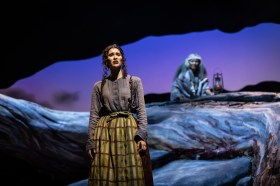
ArtsHub: The Drover’s Wife review – Leah Purcell debuts her powerful new Australian opera
A cultural conversation followed, with Artistic Director Patrick Nolan leading a discussion about exploring the unique role that opera can play in celebrating and activating the unique region.
‘One of Opera Queensland’s objectives is that when we work regionally, we are not a FIFO visitor. We don’t fly in, fly out. We want to get to know these communities in a way that shows our respect and understanding, so that what we’re doing is reflective of them,’ Nolan said.
‘It’s not just about what we bring to the community, it’s about this exchange between the community and the artist, and I think that’s central to any artistic practice that is going to be sustainable over time.’
That idea of sustainability extends beyond the art itself. The festival encourages tourism into regional Queensland while also highlighting the importance of protecting the environments that make these experiences possible.
Which brought us to the pièce de résistance of the festival.
Dark Sky Serenade
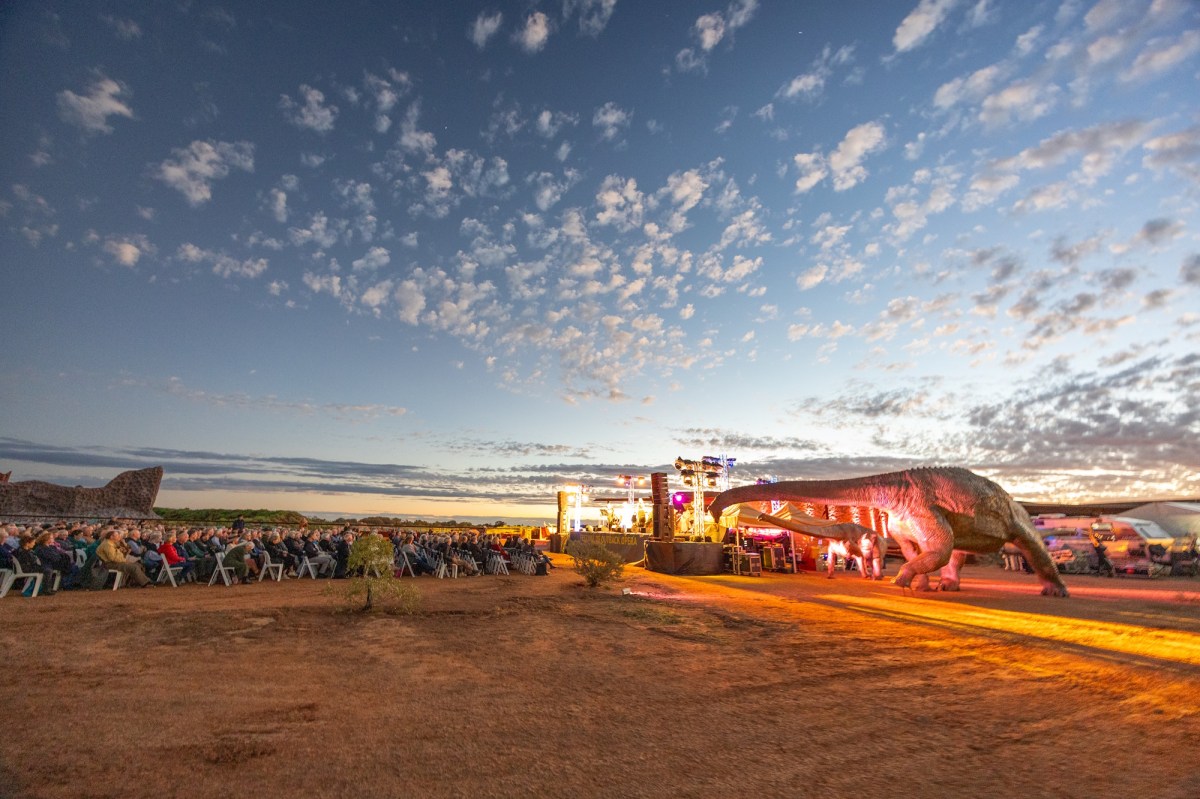
Driving down the red dirt road to Winton’s Australian Age of Dinosaurs Museum, it felt like entering another world. The ancient landscape stretched out in every direction, the air crisper, cleaner, with every sound magnified.
Locals and travellers gathered at the museum as the sun dipped behind the orchestra on stage, the sky putting on a performance of its own. It was the kind of backdrop set designers dream to recreate.
But this wasn’t just scenery. The performance of Dark Sky Serenade took place within an internationally recognised Dark Sky Sanctuary, protected for its exceptionally dark skies and fragile nocturnal environment. Here, sustainability is not a buzzword, it’s embedded. You notice the absence of light pollution. You hear insects and birds between arias. The environment itself becomes part of the score.

Conducted by Richard Mills and accompanied by Camerata – Queensland’s Chamber Orchestra, the gala featured opera favourites by Verdi, Puccini and Bizet, performed by internationally renowned tenor Filipe Manu alongside baritone James Roser, sopranos Katie Stenzel and Madeleine Stephens, and mezzo-soprano Aylish Ryan.
What made the evening so memorable was its openness in every sense. Richard Mills spoke to the audience between pieces, describing each work in cheeky, relatable stories. It’s rare for audiences to hear commentary from a conductor during an opera, but it was pure delight as Mills insightfully described each work in his own words. Even if you didn’t understand the lyrics, you understood the emotion.
James Roser opened the evening with Si può from Pagliacci, his voice resonating across the landscape. Katie Stenzel performed Saper vorreste from Un ballo in maschera as a sharp breeze billowed out her gown. Filipe Manu sang Dei miei bollenti spiriti from La traviata, taking us on a transcendental journey while the sky behind him turned pink, lavender, gold and red.
After that, Aylish Ryan performed Mozart’s Come scoglio from Così fan tutte, with the rising moon shining down on the opal around her neck. By the time 24-year-old Madeleine Stephens joined the soloists in an ensemble piece from The Magic Flute, the sky had clouded over completely.

We reached a crescendo with the world premiere of Dark Sky Soundscape, commissioned by Opera Queensland and performed beneath a near-black sky with the moon glowing softly behind the clouds. The lights dimmed almost completely, encouraging the audience to stop looking and simply listen to the music and the landscape surrounding us.
The magic of the night rippled across the landscape with University of Queensland Singers taking to the stage as the Humming Chorus from Madama Butterfly, before the evening closed with Mills’ arrangement of Waltzing Matilda – the ultimate finale for the birthplace of the song.
From 75,000 years of Aboriginal culture and dreaming to the ballads of Banjo Paterson, song has always been a part of storytelling in our country. And perhaps, in remote towns, opera finally sheds the elitism that has followed it for decades. Out there, it becomes what it was always meant to be: a connection between people and place.