Melbourne Fringe has always been a place for artists to take creative risks. But as the city’s independent arts ecology has changed, the festival has increasingly found itself doing something else, too: filling the gaps in the scaffolding of the arts industry as they appear.
Danny Delahunty, Melbourne Fringe’s Acting Creative Director and CEO, has a particularly long view of that evolution. His first experience of the festival was 22 years ago as a performing artist. This year marks his first in the top job, stewarding the program while longtime Melbourne Fringe boss Simon Abrahams takes parental leave.
‘I’ve been lucky enough over the past 10 years to be involved in a lot of the growth of what Melbourne Fringe is,’ Delahunty tells ArtsHub.
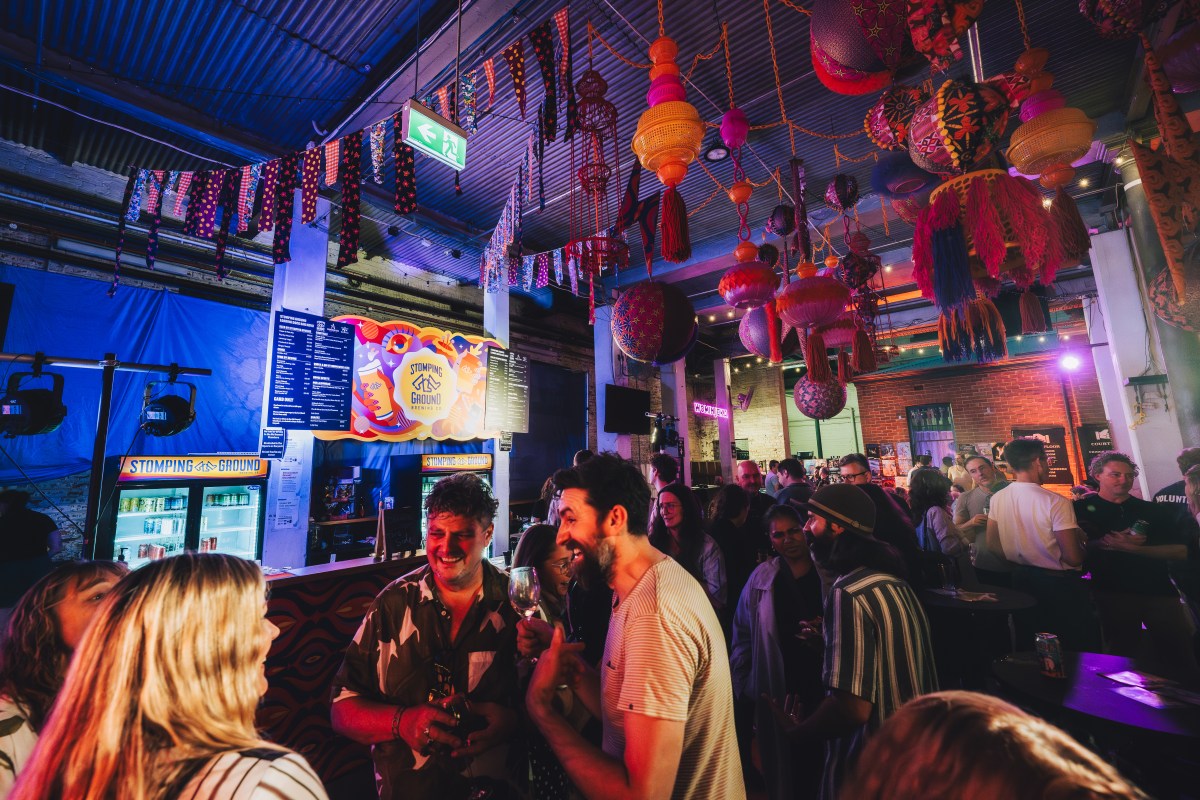
Rather than enact ‘radical change’, he sees his current role as an opportunity to continue a ‘process of incremental growth,’ he says. At the heart of that evolution is a simple proposition: independent artists need places to make and present work.
The Melbourne Fringe Festival 2026 features thousands of artists across more than 450 events, reflecting the extraordinary breadth of Melbourne’s independent sector as well as art from around the world – from theatre, dance and cabaret to experimental performance, visual art, music and work that resists neat categorisation.
ArtsHub: Melbourne Fringe director’s picks – 11 shows to put on your radar
‘Melbourne Fringe is about the amplification of independent art,’ Delahunty says. ‘What we’re here to do is create a framework and to create a context for the presentation and experience of the kind of art that we’re not seeing happen on the mainstages.’
Melbourne Fringe 2026 – quick links
Filling the holes
The need for that framework has grown as Melbourne’s broader arts infrastructure has contracted.
Delahunty points to a period around the early 2010s, when he says more platforms existed for mid-career and established artists to present ‘creatively mature’ work in Melbourne.
Arts Centre Melbourne bridged the gap between the mainstage and the fringes with Full Tilt between 2005 and 2011; Melbourne Theatre Company hosted Neon, an annual showcase to uplift the independent theatre sector, between 2013 and 2015; and Malthouse Theatre was also putting experimental work in the spotlight with Helium from 2012 to 2014.
Meanwhile, Poppy Seed Theatre Festival ran across multiple venues between 2015 and 2018; the biennial Festival of Live Art concluded its final run in 2018; and Dance Massive, a biennial festival of contemporary dance, closed in 2019 after six editions.
‘Bit by bit, as we know with the Australian art sector… these things started to disappear, and these holes started to exist within Melbourne,’ says Delahunty.
‘We had an option at Melbourne Fringe: it was either we do nothing and we let that part of Melbourne’s very rich independent art sector just fall down with the programs, or we step in and we create platforms for those to start to live and breathe within the Melbourne Fringe framework.’
ArtsHub: Can Sydney Fringe help rebuild Australia’s indie theatre ecosystem?
The idea of encouraging established artists to see the Melbourne Fringe as more than an outlet for emerging and younger artists became the genesis of the festival’s Curated Program.
Delahunty has an unusually blunt metaphor for the role Melbourne Fringe has come to play: ‘the polyfilla of the art sector’.
‘When something disappears [from the scaffolding of the arts industry], we’ve just got to get in there until someone else can take the wheel,’ he says.
Curating without closing the door
The challenge is doing that without turning Melbourne Fringe into a conventional curated festival.
Of the roughly 458 events in the 2026 program, just 39 are part of the Curated Program. The majority are part of the Open Access program, preserving what Delahunty describes as the festival’s ‘non-gatekept core’.
The curated streams are instead designed to respond to particular gaps or provocations in the sector.
Deadly Fringe returns for its landmark 10th year of showcasing freshly commissioned First Nations art, while Radical Access reaches its fifth, continuing Melbourne Fringe’s long-term exploration of what art-making can look like when accessibility is embedded from the beginning.
Pulse focuses on contemporary experimental work that pushes at form, genre and the relationship between artist and audience. XS applies a similar philosophy to work for children, challenging the assumption that young audiences only want easily digestible or commercially familiar material.
Passport, meanwhile, brings exciting international works to Melbourne that sit outside the traditional touring circuit, and Fringe Encore: Ballarat takes festival highlights to regional audiences.
‘It’s crucially important for us to make sure that the non-gatekept core of what Melbourne Fringe is remains, while also supporting what the sector desperately needs,’ Delahunty says.
The result is a festival that increasingly operates as both platform and curator: a place where artists can simply put on a show, but also an organisation that actively identifies the work and communities it believes need greater visibility.
That expanded role means Melbourne Fringe’s relationship with artists cannot begin and end with the festival itself. For Delahunty, that is part of the festival’s responsibility to the broader independent sector.
‘We see Melbourne Fringe as an ongoing dialogue with the sector,’ he says.
It is a dialogue that has also become more complicated.
Responding to artists’ request for A Fair Cut
Earlier this year, the festival faced criticism from the A Fair Cut campaign, which released an open letter calling for a reduction to the fees charged to artists presenting at Melbourne Fringe’s Trades Hall Hub, as well as changes to how those fees are charged.
The Fringe Board rejected those requests for the 2026 festival, reasoning that artist contracts had already been signed and budgets, operating costs and related festival expenses had already been locked in.
Delahunty says the campaign has however prompted a deeper examination of the festival’s infrastructure and how it consults with the sector, adding that ‘the conversations that came out of it were really healthy’.
Two key areas of work have emerged. The first involves facilitating more robust consultation about how the festival structures and allocates its funding, venues and support structures. The second is about creating stronger mechanisms for artists and the broader sector to raise concerns directly with Melbourne Fringe.
‘For whatever reason, we had artists who had very strong feedback for us who made a decision to engage a professional publicist and run a campaign through media instead of to pick up the phone and call or to send an email and start a conversation,’ says Delahunty, speaking on A Fair Cut.
‘And as far as I’m concerned, that is a shared failing, because whatever we had in place wasn’t enough for them to feel that if they had brought it to us, they would have been heard and that we would have responded.
‘This is the festival for independent artists. Making sure that they know that they can and should have input into what it is and how we engage with the sector is important,’ he adds.
While the consultation process will feed into planning for 2027, Delahunty stresses that the eventual outcome is not predetermined.
The festival operates two major hubs – Trades Hall and Meat Market – at what he describes as a ‘significant financial loss’, with the venues intended to create an ‘economy of scale’ that allows hundreds of works to be presented across a concentrated festival period.
The question now is whether that model is delivering the kind of support the sector actually needs.
‘We only want to do this if it is really, really hitting some priorities of what the sector needs,’ Delahunty says. ‘Otherwise, it’s a lose-lose situation for everybody.’
The festival the sector needs
That tension sits at the heart of Melbourne Fringe’s current evolution.
The festival is trying to respond to a sector in which opportunities have contracted, while maintaining the openness that has historically made fringe festivals everywhere a point of entry for independent artists.
Its curated program offers one answer: intervene where opportunities have disappeared, while keeping the door open to artists who simply want to make something and put it in front of an audience.
For Delahunty, the festival’s history – and his own long relationship with it – makes that evolution feel less like a departure than a continuation.
‘Melbourne Fringe is about the amplification of independent art,’ he says.
As the independent sector continues to change, the question is increasingly how much of that sector Melbourne Fringe can – or should – be expected to hold together.
For now, the festival is still filling in the holes – and platforming some weird and wonderful art while they’re at it, too.